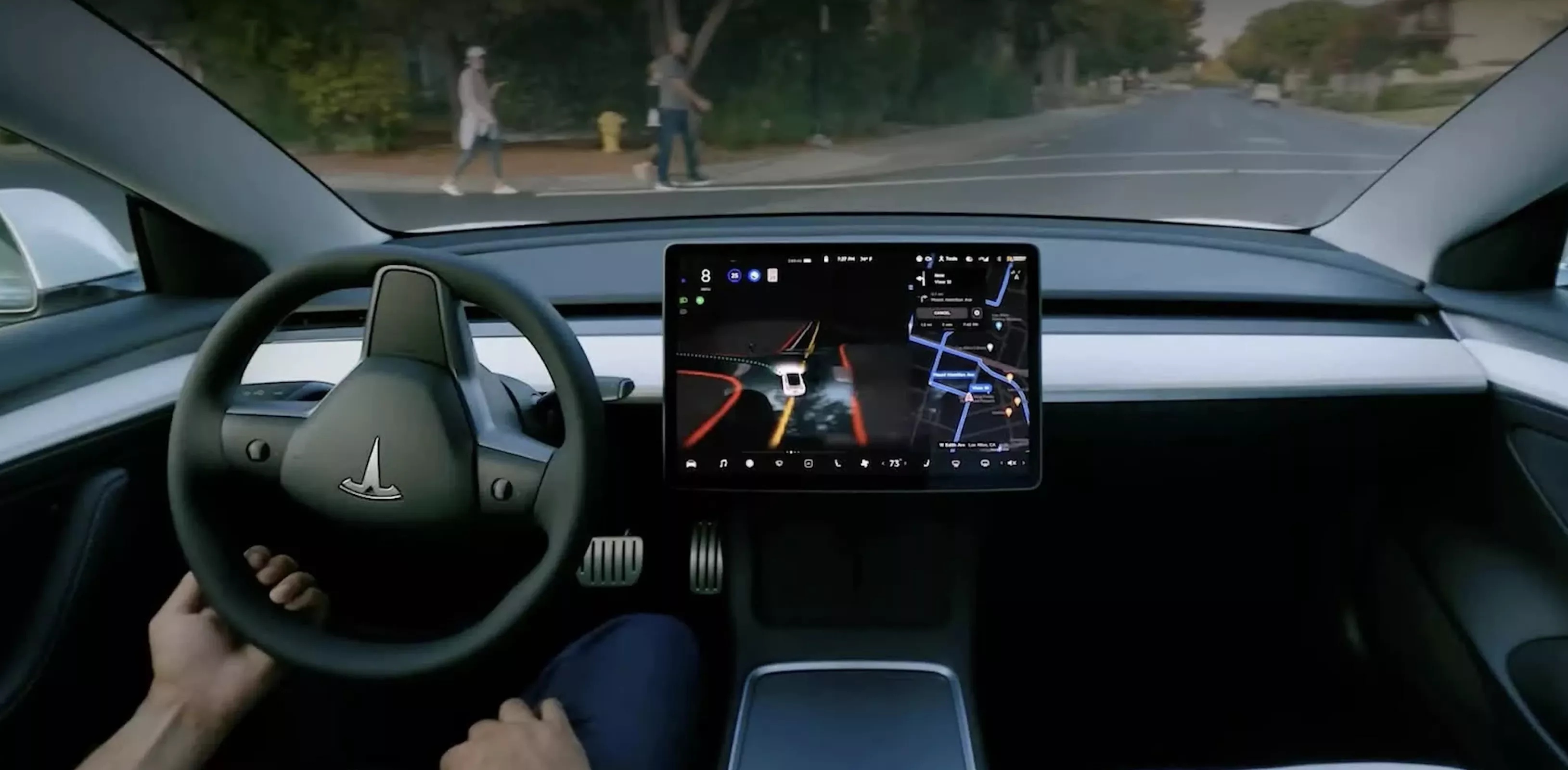
In brief: Tesla's Full Self-Driving software is still struggling with basic driving tasks, based on interviews with former employees who reviewed internal training footage and data. Their accounts, along with an analysis of Tesla's safety claims, suggest the technology is not as close to full autonomy as the company has publicly indicated. The findings also raise questions about how Tesla measures and markets the system's safety.
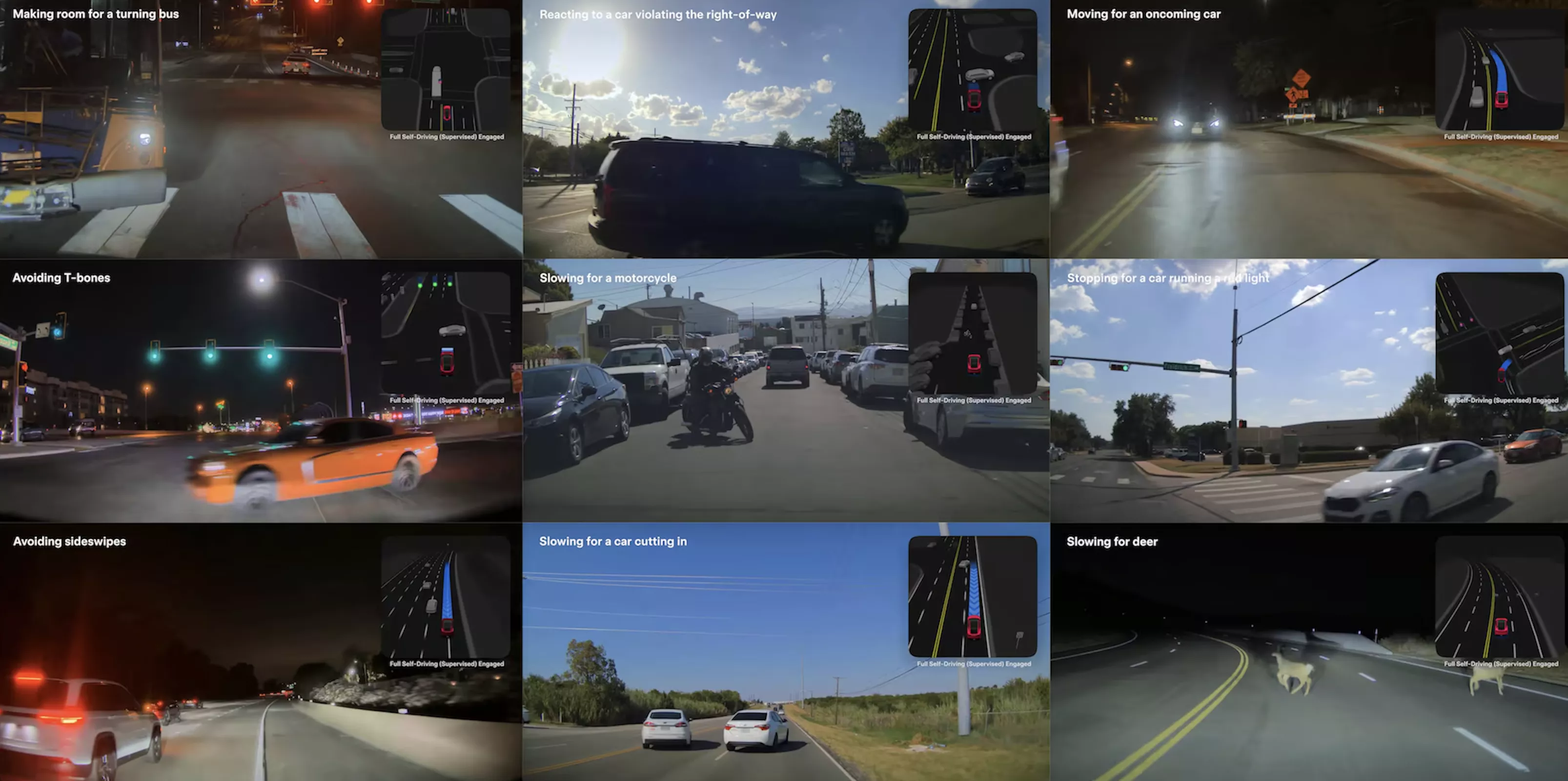
Inside a data-labeling office in Utah, hundreds of workers review footage captured by Tesla vehicles running FSD. The videos are used to train the company's neural networks, with staff tagging everything from routine driving behavior to critical failures. Former employees said those clips frequently showed the system making mistakes, including failures to respond to emergency vehicles, missed hazards, and last-second driver interventions.
Some of the footage was more serious. Workers described videos of Teslas striking animals or failing to slow down in time to avoid potential collisions with pedestrians. "We have all seen it fail," one former labeler told Reuters. Another said he wouldn't ride in a Tesla robotaxi "if you f---ing paid me." A former self-driving engineer who reviewed crash data for years was equally direct: "Definitely," the engineer said, "don't trust Elon on this."
Tesla relies on a camera-based system trained on real-world driving footage rather than lidar or detailed pre-mapped environments. The goal is to build a generalized AI model capable of handling any condition without prior knowledge of the area. But former workers said the system still has trouble with core perception and decision-making tasks, especially in more complex scenarios.
Those gaps have led to more targeted behind-the-scenes preparation, especially ahead of public demonstrations. Before Tesla's robotaxi pilot in Austin and a 2024 event at Warner Bros. studios, teams spent weeks collecting and annotating video from specific routes. Workers manually labeled lane markings, curbs, and traffic signals to help the system navigate those environments more reliably.
That level of route-specific tuning contrasts with Tesla's public messaging. CEO Elon Musk has described FSD as a "generalized AI solution" that does not require the high-definition maps used by competitors, which he has called "quite fragile." Former employees, however, said Tesla's most controlled demonstrations depended on detailed, localized preparation that would be difficult to scale.
The company has also promoted FSD as significantly safer than human driving, citing figures such as "10x safer" and "85% less crashes." A review of Tesla's methodology, supported by traffic-safety researchers, found that those claims rely on comparisons that are not directly equivalent.
Tesla, for example, counts crashes involving airbag deployment in its own vehicles but compares them with broader federal crash data, which includes less severe incidents. When comparable data is used, the gap narrows significantly. Even then, researchers said the comparison does not isolate the system's performance, since drivers can choose when to use FSD and often disengage it in more challenging situations.
Other factors further complicate the analysis. Tesla only counts crashes that occur while FSD is active or within five seconds of disengagement, while federal standards use a 30-second window. The company also compares its relatively new vehicles – averaging about four years old – to a much older US fleet.
Inside Tesla, progress on the system has been uneven, according to former employees. Metrics such as how often drivers need to intervene can fluctuate with each software update. "It would go up and down like the stock market," one worker said.
The company's robotaxi rollout reflects those limitations. In Austin, Tesla operates a small fleet within a defined, heavily trained service area, with human oversight still in place. Expansion into other Texas cities has been inconsistent, with reports of long wait times and vehicles failing to reach intended destinations within the advertised service zones.
Overall, the accounts from inside Tesla and the review of its safety data point to a system that can handle many routine driving situations but still struggles with edge cases. For now, Tesla's push toward full autonomy continues to rely heavily on human input – both from drivers and from the workers training the AI behind the scenes.