
Forward-looking: Tesla has set a new benchmark for electric-vehicle efficiency, but it did so with a vehicle that breaks nearly every convention of modern car design. The company's Cybercab, an autonomous two-seater designed specifically for ride-hailing, has been certified at 165 watt-hours per mile, according to Tesla VP Lars Moravy. That figure makes it the most energy-efficient EV in production, and not by a small margin. The next closest competitor, the Lucid Air Pure, consumes about 28% more energy per mile.
On paper, the number is striking. In practice, it reflects a very different kind of vehicle.
The Cybercab strips away nearly everything associated with human driving. There is no steering wheel, no pedals, and no expectation that a person will ever take control. What remains is a compact, two-passenger pod built around a single goal: moving people as efficiently as possible.
Its sub-50 kWh battery is smaller than what most modern EVs carry, and its body tapers toward the rear in a way optimized for aerodynamics, a profile that would be impractical in a conventional car.
Those design choices are doing most of the work.
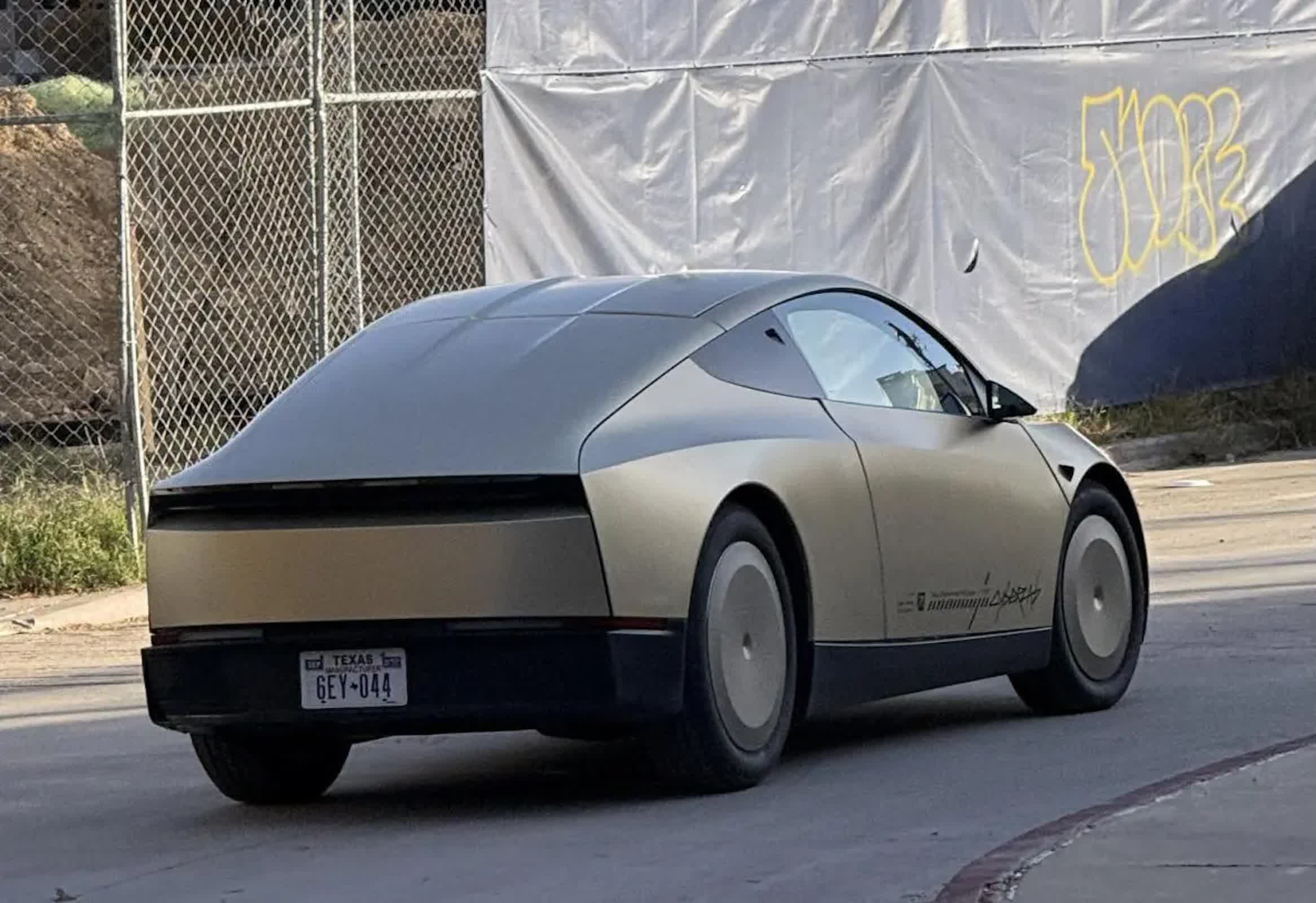
Traditional EVs, even highly efficient ones like the Tesla Model 3 or Hyundai Ioniq 6, have to balance performance, safety, passenger space, and usability. They carry additional weight from structural reinforcements, driver controls, and multi-seat configurations. The Cybercab largely sidesteps those trade-offs. Instead it's engineered for a narrow purpose for the sake of those efficiency gains.
This makes direct comparisons difficult. The 165 Wh/mi figure is real and certified, but it exists in a different category of vehicle altogether. It is less a better version of a passenger car and more a specialized tool designed for a specific operating model. That distinction becomes important when looking at cost.
Energy efficiency plays an outsized role in the economics of a robotaxi fleet. At average US electricity prices of about $0.16 per kilowatt-hour, the Cybercab's energy cost comes out to roughly $0.026 per mile. A Model 3, by comparison, lands closer to $0.038 per mile, while a Hyundai Ioniq 5 can approach $0.048 per mile.
Those differences may seem minor, but they scale quickly. Over the lifespan of a high-use fleet vehicle, the savings become material. The smaller battery also reduces production costs and shortens charging times, both of which are critical factors for vehicles expected to operate continuously.
Tesla has said the Cybercab will cost around $30,000, and its simplified design is central to hitting that price. Production began at the company's Texas facility in April, though the ramp-up is expected to be gradual.
At the same time, the broader vision for the vehicle remains unresolved. Fully unsupervised autonomous driving remains an unsolved problem, and Tesla's current supervised systems have reported crash rates roughly four times higher than those of human drivers.
Even so, the company has already produced a version of the Cybercab without any traditional driving controls, signaling where it expects the technology to land.