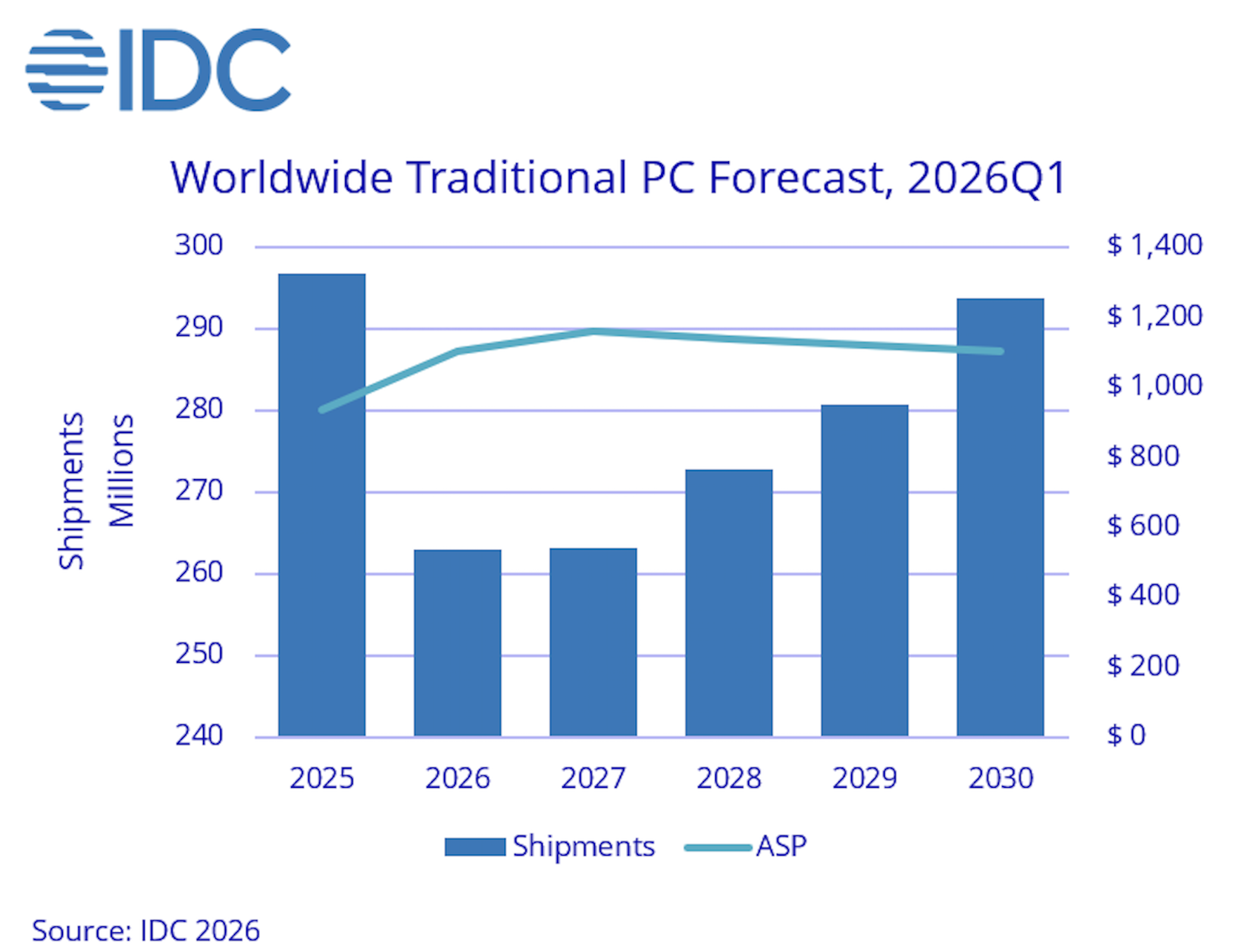
Bottom line: The personal computer market is heading into a rough stretch as a memory shortage ripples through the industry, driving up prices and forcing PC makers to rethink how they design their systems. New data from IDC points to a sharp slowdown in global PC shipments, which are expected to decline 11.3% this year. By the fourth quarter, shipments could be down roughly 20% from a year earlier – a steep drop for what has been a relatively stable market in recent years.
The main issue is supply, especially a shortage of high-end DRAM, much of which is now being diverted to AI data centers.
According to IDC, AI data centers are on track to consume 70% of global high-end DRAM output this year. That shift is forcing PC makers to compete for limited memory supplies, which is already showing up in higher prices and stripped-down configurations.
Consumers are already feeling the impact. Higher memory costs have pushed up the price of premium machines, in some cases by hundreds of dollars. At the same time, manufacturers are making trade-offs to keep systems within reach, including offering configurations with less RAM than what has become standard in recent years. In some cases, those compromises mean machines no longer meet newer baseline requirements for AI features such as Copilot, particularly when vendors drop back to 8GB configurations.
Not all companies are feeling the pressure equally; larger players with stronger supply chains and stockpiled components have managed to cushion the impact so far.
While supply issues dominate the near-term outlook, competition is also adding another layer of complexity. Apple's MacBook Neo has quickly become a disruptive force, reportedly outselling the MacBook Air in the quarter following its launch and prompting a response across the broader PC ecosystem.
"The introduction of the MacBook Neo is putting real pressure on the entire PC ecosystem," said Jitesh Ubrani, research manager for IDC's Consumer Devices Trackers. "We expect vendors to respond with a combination of new silicon, a more efficient OS from Microsoft, and aggressive promotional pricing."
That response is already taking shape. PC makers are rolling out more affordable systems designed to compete directly with Apple's latest device, often built on new chip platforms that aim to deliver better efficiency without driving up costs.
Intel's Wildcat Lake processors, for example, are expected to power a range of upcoming laptops from major manufacturers looking to hit lower price points without sacrificing too much performance.
Even with those efforts, prices are moving in one direction: up. IDC expects average selling prices for PCs to rise 17% in 2026, driven largely by sustained pressure on memory supplies and the broader cost of advanced components.
"The competitive pressure from the Neo is providing a partial offset to broader price increases, keeping some low-cost notebook options alive," Ubrani said. "But the overall trajectory for average selling prices (ASPs) is firmly upward. IDC forecasts ASP growth of 17% in 2026, and even as memory capacity expands over the next two years, pricing is unlikely to return to 2025 levels."
PC shipments could drop 20% by year's end as AI datacenters consume 70% of high-end DRAM


