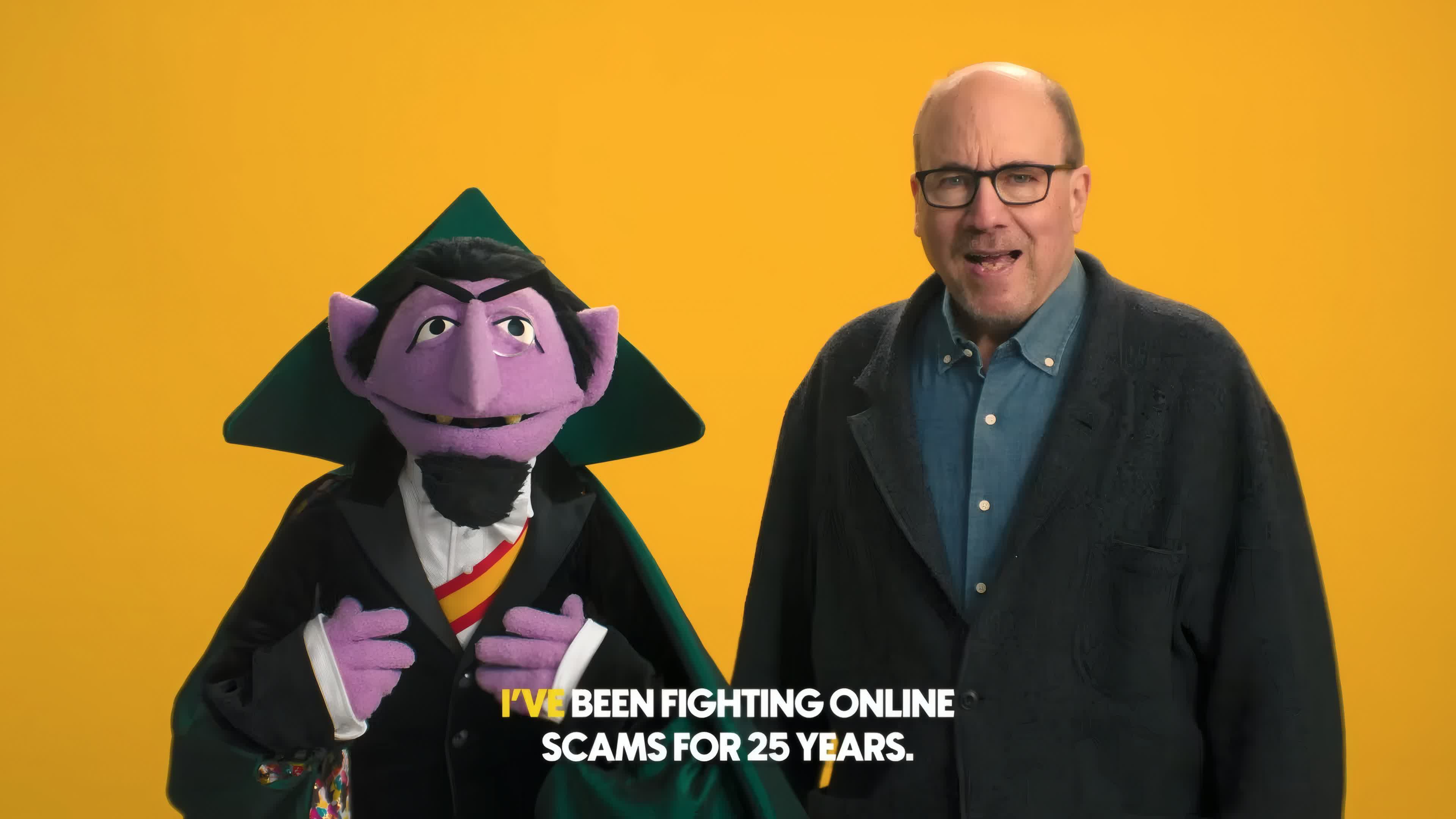
What just happened? People in general are becoming more tech savvy. But as an increasing number of us spend time online, criminals are coming up with sneakier and smarter cyber scams. Fighting back against this menace are two heroes the world never knew it needed: Craigslist founder and philanthropist Craig Newmark, and Sesame Street's number-loving Count von Count.
Newmark has founded a public service campaign called Take9, which aims to promote habits that help everyday users stay safe online. The latest push is an expansion of the campaign that Craig Newmark Philanthropies launched in 2024 with the Aspen Institute.
The concept is a simple but effective one. Take9 urges people to pause and count to nine before they click, download, or share anything suspicious. Many scams increase their success rates by creating a sense of urgency, such as by claiming victims have been charged a large sum for something they never bought, will be fined for a made-up infraction, are about to see a legitimate subscription end, need to reset a compromised password, and so on.
Helping spread the message to the masses is a face that's known throughout the world, and one that's instantly associated with counting. Sesame Street's Count von Count is fronting the latest element of the campaign, extolling the virtues of counting to nine when faced with something sketchy online.
One of the ads shows a woman receiving a text purportedly from her bank requesting a password change. Taking a 9-second pause gives her time to spot the text's 81 country code. Unless your bank happens to be in Japan, that's a big red flag.
"I started Take9 to help people understand how to protect themselves from online frauds and people who want to disrupt our country's infrastructure," said Newmark. "I'm a nerd who has been fighting online scams for more than 25 years. The Count has been counting for over 2,500 years. We are arming people with tools to protect themselves, their communities, and our country. This isn't about some future threat. It's a big deal and we're all potential targets."
While most readers of this site are unlikely to fall for scams like these, even the best of us can be tricked when the circumstances are right. In March last year, Troy Hunt, the security expert and creator of HaveIBeenPwned, said he was jet lagged and tired when he read an email that appeared to come from Mailchimp, the service he uses for his mailing list. It claimed that the company had received a spam complaint made against Hunt's personal blog letters, leading to restricted sending privileges.
Hunt clicked on the link in the email. It led him to a page where he entered his login credentials, which he notes did not auto-fill from the 1Password password manager extension. He then entered the one-time password and the page hung, at which point he realized he was the one who'd been pwned.