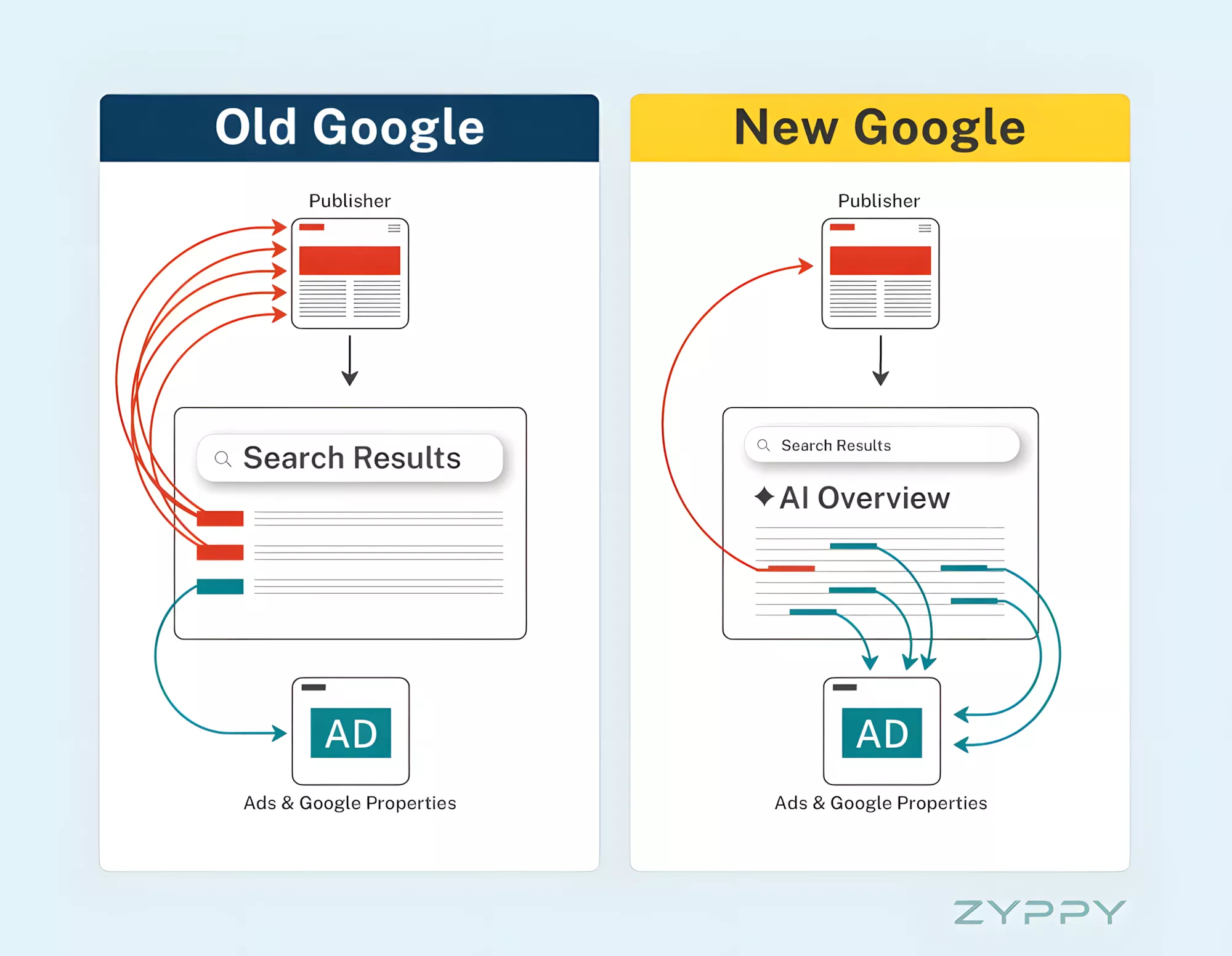
Ripple effect: Google's push to turn Search into an AI answer engine isn't pleasing a lot of people, not least the publishers it relies on for answers. Some could even decide that they'd rather disappear from Google entirely than continue handing over their data and losing traffic.
Reddit, USA Today, Reuters, Politico, The Economist, and People Inc. are among the companies reconsidering how much access they should give Google as referral traffic continues to collapse, according to The Wall Street Journal.
Reddit has discussed blocking Google from using its enormous collection of user posts for AI purposes. The two companies are currently negotiating a possible renewal of the licensing agreement they signed in 2024, which reportedly pays Reddit around $60 million per year.
Reddit's deal saw Google receive a constantly updated source of human conversations to train its models, while Reddit gained tens of millions of dollars ahead of its IPO. But things look less appealing when Google's AI products use the scooped-up data to answer questions without sending users back to Reddit.
Investors don't appear thrilled by the prospect of the relationship breaking down. Reddit shares fell as much as 5.8% in premarket trading following the WSJ report.
This isn't just a Reddit problem, either. USA Today Co. is considering blocking Google's crawler if search referrals continue to decline. Semrush data shows that organic US Google traffic to the national USA Today website fell by almost half between June 2025 and June 2026. Politico declined 23%, CNN lost around 25%, and Business Insider's traffic plunged more than 85%.

"It's time to take a stand and say enough is enough," said USA Today Co. CEO Mike Reed.
Google does have controls that allow publishers to limit how their content is crawled and used, but using them comes with a big caveat. Publishers can block content from being used to train Gemini through Google-Extended, but preventing it from appearing in AI Overviews brings the risk of losing visibility in conventional search as well.
More extreme measures such as noindex would remove pages from Google entirely, while nosnippet can also hurt their presence in results.
That problem is being addressed in the UK. Last month, the country's Competition and Markets Authority ordered Google to let publishers opt out of AI search features without sacrificing their place in traditional results.
Google says it will test the controls in Britain before introducing them globally, though it has not provided a timeline.
A Pew Research Center study last year found that users clicked traditional links in 15% of searches without an AI Overview, falling to just 8% when one appeared. Links inside Google's summaries received clicks in only 1% of searches.
Google insists that its AI features still send billions of visits to websites every week and help publishers grow their audiences. The company has also started paying more than 200 publishers for AI access and allows users to select preferred news sources. But publishers are obviously questioning the logic of an arrangement in which their work trains the systems replacing their traffic.
Cloudflare CEO Matthew Prince has repeatedly warned that AI summaries are destroying the business model that supported the web, and bots now account for around 56% of internet traffic. Blocking Google entirely is about as extreme as things can get, but for some publishers, it's better than the alternative.