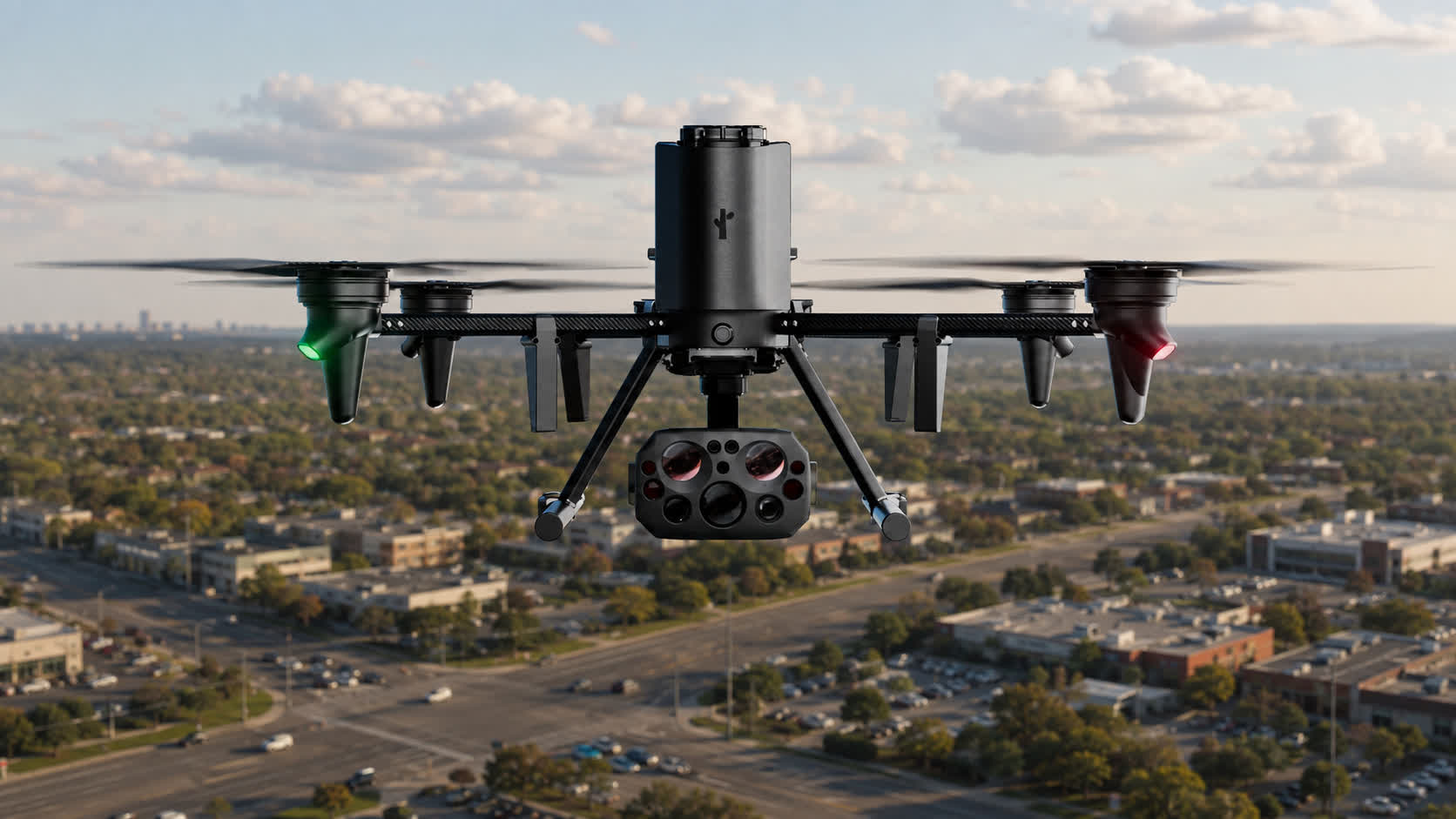
A hot potato: There have been plenty of headlines about Flock's license plate-scanning technology lately, but that's not its only controversial business. The company says its Drone as First Responder, or DFR, tech – which can also read license plates from the air – is its fastest-growing segment.
Flock is best known for the roadside cameras now operating in more than 6,000 US communities. But the company is increasingly betting on drones that can be dispatched to emergency scenes before police officers arrive.
A Flock spokesperson said the firm has secured more than 200 DFR customers, including police departments and private companies. It's also ramping up production of its US-designed drones, which will be built in Georgia.
In an interview with the All-In podcast, CEO Garrett Langley explained that the drones sit in climate-controlled rooftop docks, usually on police precincts or fire departments. "When a 911 call happens, instead of sending an officer first, you can send a drone," he said.
The aircraft can fly at 400 feet and reach 60 mph, while a 40x optical zoom allows operators to inspect the scene from a distance. Flock says its DFR system arrives in an average of 86 seconds and can resolve 20% of calls without an officer being sent.
Langley described a case in the Dallas-Fort Worth area in which a woman at a gas station called 911 after seeing a man pacing with what she believed was a gun. The drone arrived in under a minute and revealed that the object was a lighter. "Normally what would happen... is like one cop would have heard that, flip on the blue lights, race down there... and someone's about to die. Instead, they launch the drone," Langley said.
Flock presents the incident as an example of how DFR can de-escalate dangerous encounters and prevent unnecessary police deployments. It was previously reported that Dearborn, Michigan, has adopted a similar Skydio system that can reach incidents in around 2.5 minutes.
Like its numberplate-reading tech, the rapid spread of DFR programs is raising concerns. As of February, more than 1,000 public safety agencies had received FAA waivers needed to automate drone operations.
The EFF warns that the aircraft can observe people through windows, in backyards, and on roofs without their knowledge. Flock also added license plate-reading capabilities to its drones last year, effectively creating flying versions of its controversial roadside cameras. The Flock Alpha drone can read license plates from up to 2,000 feet away.
Flock says DFR only activates for calls for service and that every flight is logged, auditable, and displayed through a public-facing transparency dashboard.
Langley said most customers publish audit logs and flight patterns, albeit with a delay for active investigations. But he acknowledged that oversight remains limited. "There's very little state regulation. There's zero federal regulation outside of air safety," he said.
Flock's core cameras have produced large numbers of false alerts, while officers have allegedly used its systems to stalk partners and ex-girlfriends. Moving the same surveillance capabilities into the sky will likely amplify calls for more protections and make people even angrier.