ESA calls Anbernic-style handhelds "superfakes" and wants the US to treat them as piracy hubs

Alfonso Maruccia

Posts: 2,777   +1,081
Staff
A Pirate's Life: Every year, the Entertainment Software Association urges US regulators to address specific issues that the video game industry claims to be facing. This year's list includes some truly interesting targets, starting with Chinese-made handheld gaming devices that come with large catalogs of pirated game ROMs.
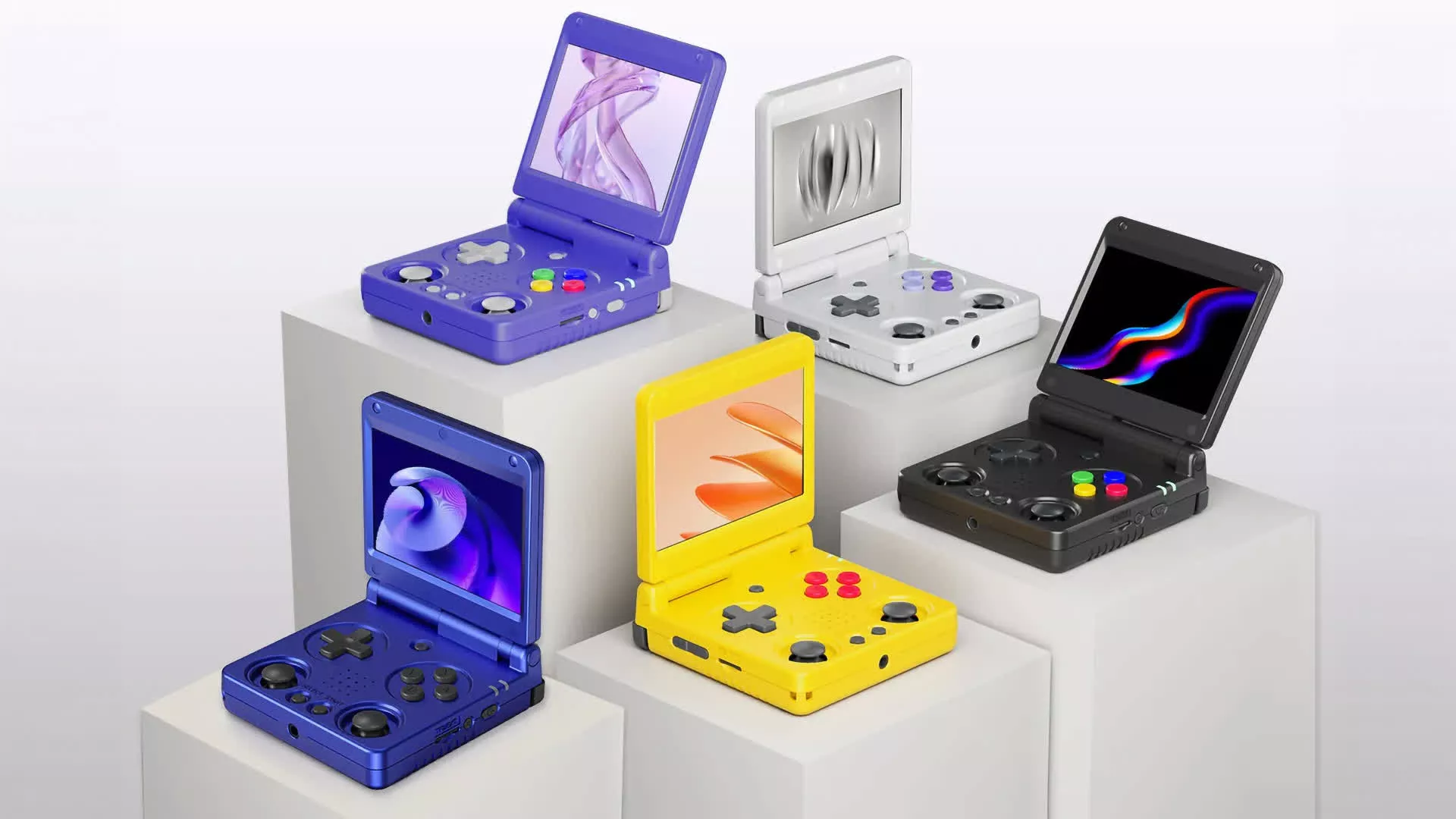
The Entertainment Software Association (ESA) recently submitted its latest recommendations to the Office of the United States Trade Representative (USTR) regarding piracy. The submission identifies major offenders accused of infringing the intellectual property rights of the US entertainment industry, focusing on people and companies allegedly involved in large-scale piracy.

The ESA's recommendations target so-called "superfakes" sold by Chinese handheld gaming device manufacturers. These plug-and-play consoles resemble legitimate, mass-produced consumer electronics. However, their main commercial appeal lies in their ability to run hundreds or even thousands of pirated video games stored directly in their internal memory.

Superfake handhelds represent a significant copyright infringement concern, but they could also pose security risks to US consumers and businesses. According to the ESA's comments to the USTR, these devices may contain insecure or flawed firmware and other potentially dangerous software components. Furthermore, they could "purposely" include malicious software developed by cybercrime groups, terrorist organizations, or even state-sponsored actors.

One of the major players in the superfake handheld market is Anbernic. The ESA told the USTR that the Chinese brand has been operating for around nine years, releasing eight to 10 new gaming devices annually. These devices typically cost between $40 and $200, while the company's official website attracts millions of visits every month. The ESA also cited an enforcement operation by Italy's Guardia di Finanza, which seized around 12,000 Anbernic devices containing more than 47 million copies of pirated video games.

The ESA argued that Anbernic's "harm extends beyond substitution for authorized game sales. Anbernic normalizes hardware-based piracy by delivering illicit catalogues through a polished consumer product, meeting the definition of a superfake as defined above."

Recommendations submitted to the USTR concerning Notorious Markets do not necessarily lead to immediate enforcement action against the targeted devices or products. However, a potential US crackdown on Anbernic could trigger a broader wave of enforcement targeting other Chinese handheld gaming devices accused of similar practices.

Elsewhere in its submission, the ESA is also asking the USTR to designate the notorious Denuvo cracker known as Voices38 as a Notorious Market. The mysterious developer, or group of developers, has undermined Denuvo's reputation among game studios by repeatedly cracking the anti-piracy technology. The ESA argues that the unnamed individual or group should be considered a "notorious market" because of its persistent release of games cracked to bypass Denuvo's DRM.

Permalink to story:

 
So let's break down what is happening. There is a massive demand for a product and people are shouting in the street "take my money". The companies who own the IP don't want to make said products to fullfil consumer demand for....what reason?


We really don't know, but they don't want to make the products people are asking for and countries that aren't beholden to the DMCA are more than happy to make said products. These products are actually completely unnecessary because they're basically just android phones with unlocked bootloader's, which every android device should be unlocked ANYWAY.

Well since android devices aren't unlocked most of the time and these games don't require very much horsepower, you can just run them in a container on top of Android with either a compatibly layer or an emulator.

This all comes back around to monitization. They didn't think they could monitize it enough so they didn't monitize it at all. These other "free market" companies come around saying "actually we can make money off of these and we will" to fill the gap that the IP owners refused to fulfill. Well now that the flood gates are now open the IP owners want to use outdated IP law to ban a device where there is obvious demand from the consumer. They couldn't make enough money so they made none and now they want to ban anyone from either having fun or making money because their greed made them miss the boat on making anything.

None of the IP holders saw this as a worthwhile way of making money and free market capitalism did what it did best, it found a way to make money. We live in a world where everyone needs to have a trillion dollar idea to make it worth buying toilet paper instead of the potential of making hundreds of millions or even billions of dollars off of similar devices where there is obvious market demand. Now people see that these items can be made cheaply and have to compete with a price they have no interest in competeing with. This could have been avoided by just making a device people wanted and you sprinkle in some compyright fees on top. They can't do that now because the market expectation of price is far lower than what they could done intially the legal way. Now instead of trying to make similar devices at a price where they can make money off of both IP and hardware, they want to ban all of them.
 
Last edited:
I recently acquired a small handheld device that has hundreds and hundreds....and hundreds of games across a nearly 2 dozen emulators. Games that have been out of circulation for years, even decades, because once those gaming systems are no longer produced the games are not produced anymore, too.

No where else to find these games except for maybe second hand markets, but then you need a functional older console to play said games which can be hard to come across. I'm okay with my handheld device, doesn't hurt my feelings if some conglomerate doesn't get anymore money for something that is out of circulation.
 
Copyright is too long anyways - personally I think it should be cut down to 20 years, to make it the same as patents. 20 years is plenty of time for any new commercial product to pay off its production budget.

That said, with current laws then yes, stuff shipping over with tons of copyright infringed games preinstalled is a pretty clear legal violation. Device makers should be shipping them over without the preinstalled copyrighted games, and let the device owners handle that side on their own.
 
You will own nothing...

I'm with China on this one. I love the idea of having all my classic games on a single system - even though the play experience isn't the same due to controller layouts.
 
So let's break down what is happening. There is a massive demand for a product and people are shouting in the street "take my money". The companies who own the IP don't want to make said products to fullfil consumer demand for....what reason?


We really don't know, but they don't want to make the products people are asking for and countries that aren't beholden to the DMCA are more than happy to make said products. These products are actually completely unnecessary because they're basically just android phones with unlocked bootloader's, which every android device should be unlocked ANYWAY.

Well since android devices aren't unlocked most of the time and these games don't require very much horsepower, you can just run them in a container on top of Android with either a compatibly layer or an emulator.

This all comes back around to monitization. They didn't think they could monitize it enough so they didn't monitize it at all. These other "free market" companies come around saying "actually we can make money off of these and we will" to fill the gap that the IP owners refused to fulfill. Well now that the flood gates are now open the IP owners want to use outdated IP law to ban a device where there is obvious demand from the consumer. They couldn't make enough money so they made none and now they want to ban anyone from either having fun or making money because their greed made them miss the boat on making anything.

None of the IP holders saw this as a worthwhile way of making money and free market capitalism did what it did best, it found a way to make money. We live in a world where everyone needs to have a trillion dollar idea to make it worth buying toilet paper instead of the potential of making hundreds of millions or even billions of dollars off of similar devices where there is obvious market demand. Now people see that these items can be made cheaply and have to compete with a price they have no interest in competeing with. This could have been avoided by just making a device people wanted and you sprinkle in some compyright fees on top. They can't do that now because the market expectation of price is far lower than what they could done intially the legal way. Now instead of trying to make similar devices at a price where they can make money off of both IP and hardware, they want to ban all of them.
The reason is licensing.

ESA has never done anything good.
 
The reason is licensing.

ESA has never done anything good.
Hear me out, the reason is licensing NOW, it was never the reason that someone could have made a similar product in the past. Everyone wanted to think their IP from 30 years ago is still worth billions and it's just not. The IP holders are rejecting the free market response of "it's not worth that much money" and the IP holders are saying "well, I just don't want to make a product for less money than I say it is worth." Then the free market came, completely avoiding ALL US regulation in the process, I might add, and said "we're gonna make this, do you want to buy it?" And people DID buy it. The problem isn't piracy, the problem is that the IP holders are over valuing the value of their IP.

There is hundreds of millions to billions of dollars to made on products like this and I want ANYONE on the forum to find anyway way to say, lets go with $100 Million dollars isn't a lot of money to made. That isn't revenue, that's profit. I want anyone in here to say "I don't want to make $100 Million dollars" and that's exactly what these previously grey market gaming handhelds did for pretty much over a decade.
 
I don’t think anyone can argue about whether these devices are illegal in the US… they clearly are.
The point is whether they SHOULD be illegal. I’d argue they shouldn’t.

The same goes for those cracking Denuvo. Yes, it’s illegal… but… should it be?
 
Hear me out, the reason is licensing NOW, it was never the reason that someone could have made a similar product in the past. Everyone wanted to think their IP from 30 years ago is still worth billions and it's just not. The IP holders are rejecting the free market response of "it's not worth that much money" and the IP holders are saying "well, I just don't want to make a product for less money than I say it is worth." Then the free market came, completely avoiding ALL US regulation in the process, I might add, and said "we're gonna make this, do you want to buy it?" And people DID buy it. The problem isn't piracy, the problem is that the IP holders are over valuing the value of their IP.

There is hundreds of millions to billions of dollars to made on products like this and I want ANYONE on the forum to find anyway way to say, lets go with $100 Million dollars isn't a lot of money to made. That isn't revenue, that's profit. I want anyone in here to say "I don't want to make $100 Million dollars" and that's exactly what these previously grey market gaming handhelds did for pretty much over a decade.
Not how this works. IP that's 30 years old in early software mostly made by small teams is a nightmare to try to sell legally today, and the demand is loud but small especially given how easy it is to emulate these games for anyone who actually wants to play them and not just collect them.

"Hundreds of millions to billions to be made", sir you are high af.
 
Not how this works. IP that's 30 years old in early software mostly made by small teams is a nightmare to try to sell legally today, and the demand is loud but small especially given how easy it is to emulate these games for anyone who actually wants to play them and not just collect them.

"Hundreds of millions to billions to be made", sir you are high af.
The ESA doesn't care about those people who made games with small teams of people. They care about the publishers who spent billions buying up the IP rights of all those smaller devs.

And do you know WHY that software is so hard to sell legally today? There is this amazing thing called the DMCA. Does anyone remember the game disks, "CDROMS" that came with "300+games" in the 90s pre DMCA?
 
Back