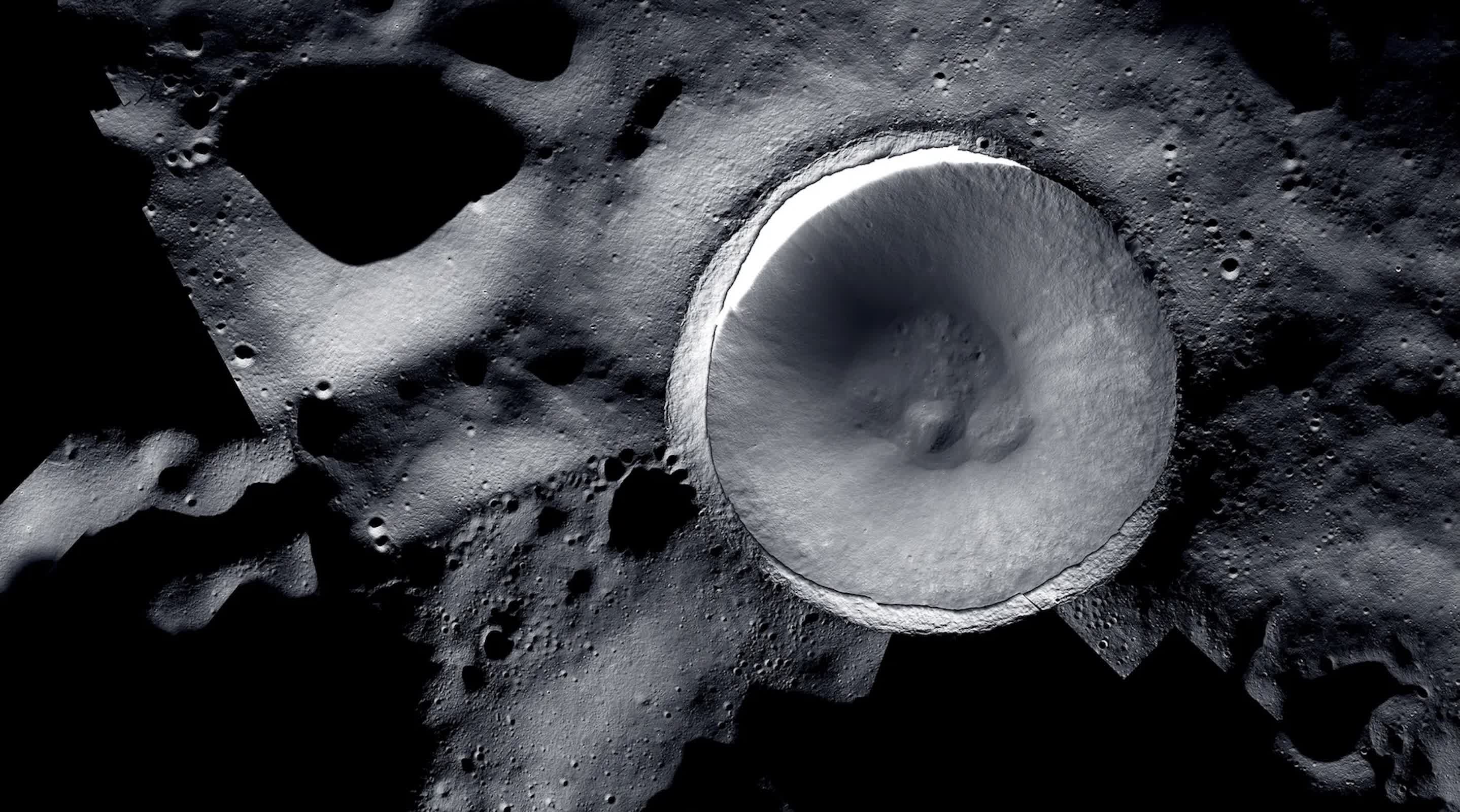
In a nutshell: NASA researchers have identified areas near the Moon's south pole where microbes from Earth could survive for days, raising new concerns about contamination as future lunar missions approach. The finding challenges the assumption that the lunar surface is uniformly hostile to terrestrial life, particularly as human exploration increasingly shifts toward the polar region.
The study, published in Science Advances, examined several areas being considered for Artemis landings, including Nobile Rim and Connecting Ridge. Researchers used data from NASA's Lunar Reconnaissance Orbiter to model surface conditions, then compared them with the known survival limits of bacteria and fungi commonly found on spacecraft.
Most of the Moon is exposed to extreme temperature fluctuations, radiation, and ultraviolet light. However, some polar terrain remains in shadow and receives only indirect light. These locations are also extremely cold, which can help preserve microbes rather than kill them quickly.
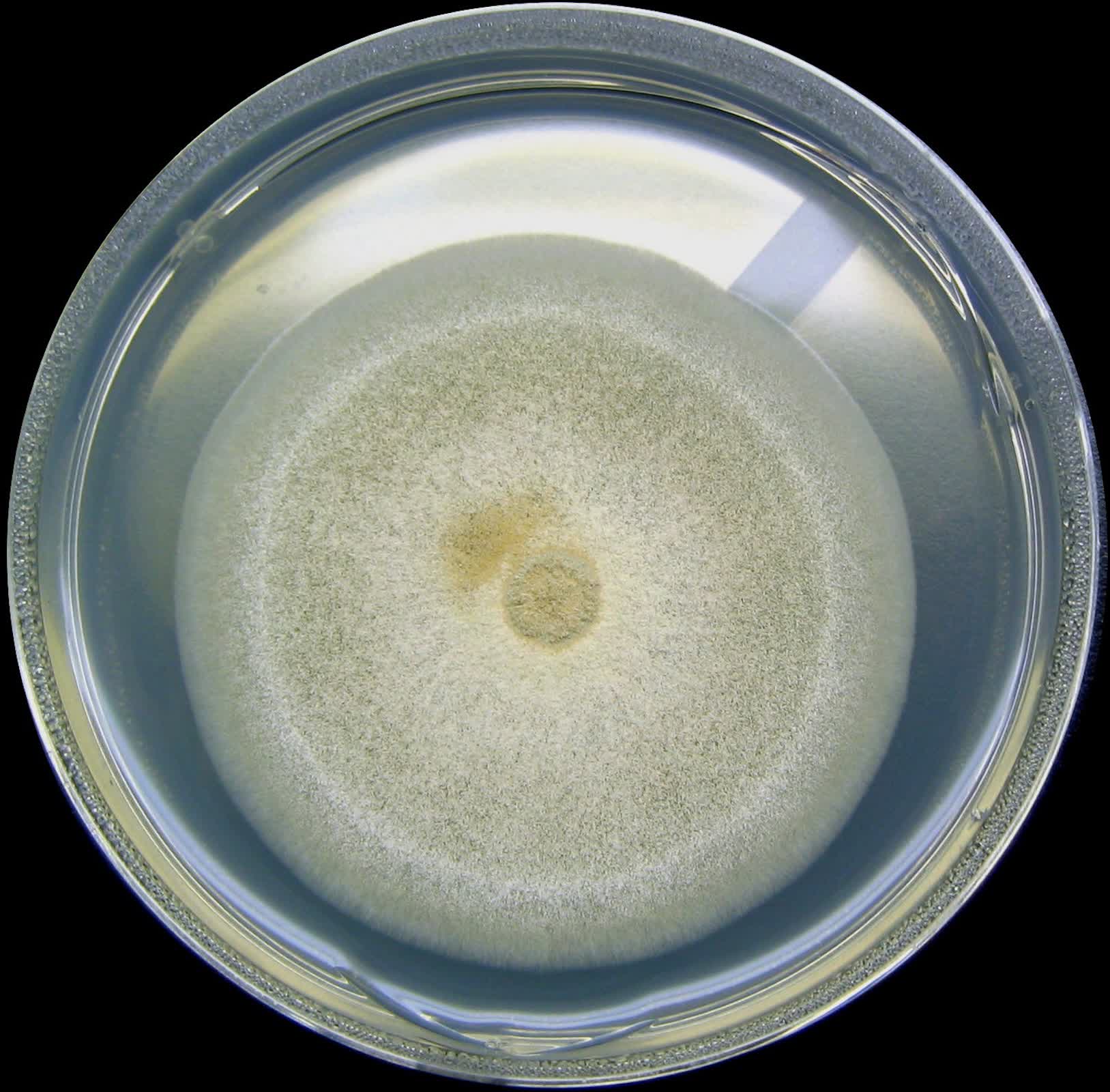
The team found that several of these sites could support microbial survival for short periods. In the models, the fungus Aspergillus survived for as long as seven Earth days in some shaded areas.
"Aspergillus was our champion, and possesses characteristics (thick walls and dark pigments that protect them from X-rays, cosmic radiation, and UV-C radiation) that make it especially well suited to survive in regions of the lunar poles," said Prabal Saxena, a research space scientist at NASA Goddard Space Flight Center who led the study, in an email to 404 Media.
The study examined survival, not growth. The microbes would likely become dormant in the lunar environment rather than reproduce or spread. Still, their ability to persist for days means spacecraft could introduce Earth organisms into areas that may be important for scientific research or future exploration.
NASA's Artemis program and a Chinese-Russian space partnership are both pursuing crewed missions to the lunar south pole in the 2030s. The region is a major target because permanently shadowed areas may contain water ice, which could be used for life support and other mission needs.
The same conditions that make these areas promising targets for ice also distinguish them from the rest of the lunar surface. Reduced exposure to sunlight and radiation could allow certain microbes carried aboard spacecraft to remain viable longer than expected.
"Recent studies have shown how unique the conditions are on the surface of the lunar poles and we realized that it was worth studying how amenable those might be to survival for certain microbes, particularly in the context of recent work on how hardy some bacteria and fungi are when exposed to space conditions," Saxena said.
The research combined studies of lunar surface conditions, microbial biology, and planetary protection. Saxena said the team drew on specialists at NASA Goddard in fields including lunar evolution, clean-room microbiology, biochemistry, and lunar lighting.
The potential survival zones were more extensive than researchers had expected.
Saxena said researchers initially expected that a small number of microbes might briefly endure in permanently shadowed areas because those sites receive limited light and radiation while remaining extremely cold. However, the modeling showed that the potential survival zones were broader, and the survival window longer, than the team had anticipated.
The findings may require mission planners to take a closer look at how spacecraft are cleaned and how landing sites are selected. Contamination could affect efforts to study the Moon's history, especially in areas that may preserve material from Earth, the Sun, and space.
The team also noted that microbes could have reached the Moon naturally through debris exchanged between Earth and the Moon.
Saxena said material is regularly exchanged between Earth and the Moon through particles and meteorites, while impacts from elsewhere in the solar system continually strike the lunar surface, making the transfer of microbes possible.
"In many ways, the Moon is a potential time capsule of the Earth, Sun and space environment over time. We should go explore it to see what secrets are waiting to be discovered!"