
The takeaway: Game Boy enthusiasts with physical cartridge libraries who are unwilling to pay $240 for an Analogue Pocket might want to consider the recently launched FPGB Mini. Although it isn't quite as versatile as Analogue's well-regarded handheld, it still plays ROMs and cartridges with virtually perfect emulation accuracy at less than half the price. It's also barely larger than a Game Boy cartridge.
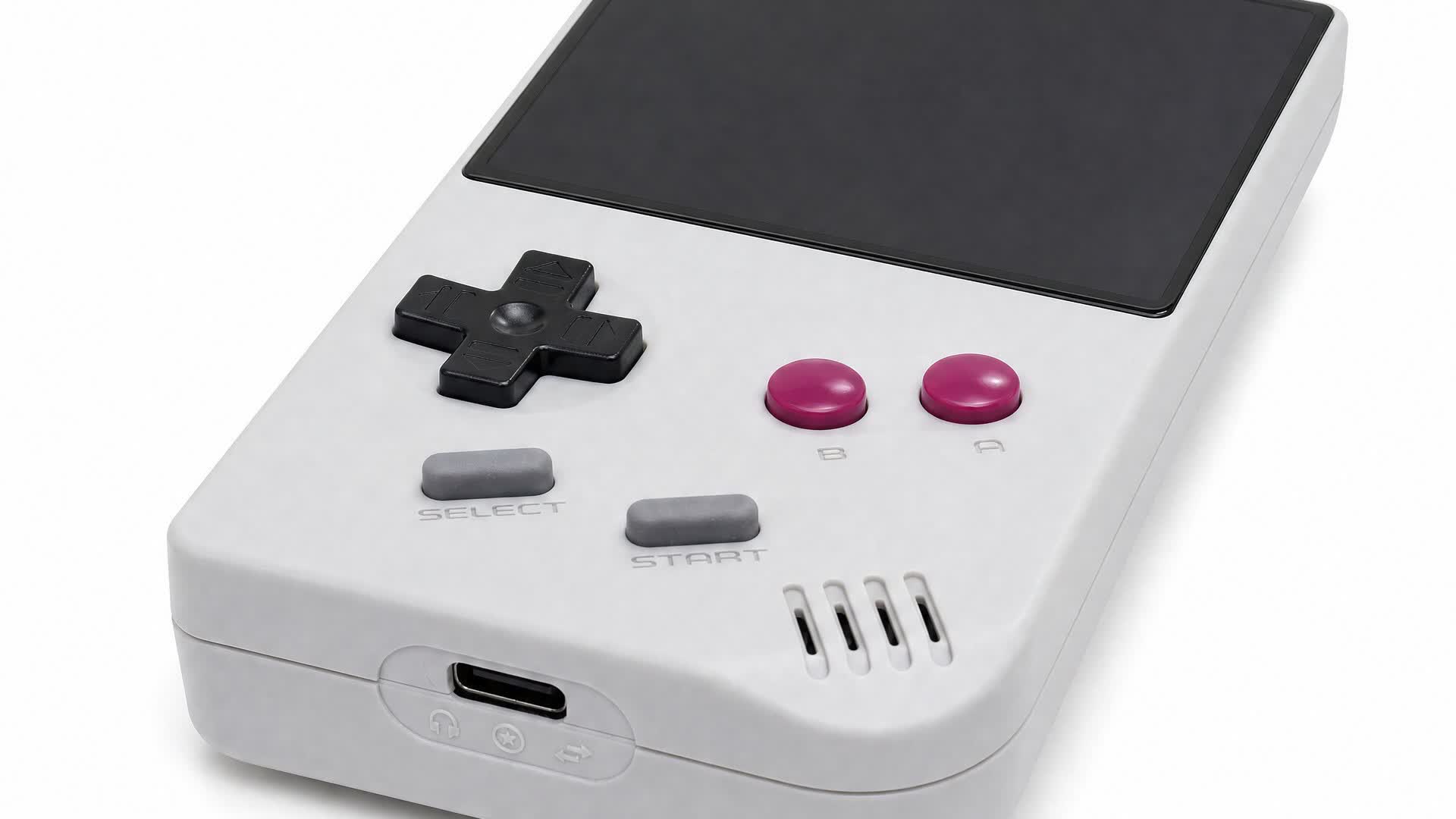
FunnyPlaying has launched a smaller version of its budget-priced rival to the Analogue Pocket. Slightly cheaper but with the same software capabilities, the FPGB Mini might be as small as a faithful Game Boy clone will ever get.
Most retro handhelds, like Ayaneo's products, emulate the Game Boy and other classic systems entirely in software, typically running Android or Linux. In contrast, devices like the Analogue Pocket, Game Bub, or FPGB use FPGA-based hardware emulation.
FPGAs (field-programmable gate arrays) are integrated circuits whose logic isn't hard-wired at the factory. As such, they can be reprogrammed at the hardware level for various purposes, including imitating retro game consoles. This lets them emulate retro devices essentially flawlessly with low TDPs, meaning longer battery life.
However, following recent price hikes, the Analogue Pocket retails for $240, while the Game Bub starts at $249 and climbs to $300 for its limited-edition color. FunnyPlaying, meanwhile, sold through its initial batch of 20 early-bird FPGB Mini units at just $69, and even its standard $89 MSRP significantly undercuts the competition.
Despite measuring just 113 × 64 × 22 mm, only slightly larger than a Game Boy cartridge, the FPGB Mini is a fully featured emulation handheld. Its 2.98-inch, 800×720-pixel IPS screen displays at exactly five times the original Game Boy's resolution, its 1800 mAh rechargeable battery promises four to six hours of gameplay, and a microSD slot (up to 32GB) handles digital ROMs and firmware updates while USB-C takes care of charging. With a USB-C adapter, it also supports Game Boy link cables.
Compared to the Analogue Pocket, the FPGB Mini's main drawback is that it doesn't support Game Boy Advance games or emulators for other retro consoles. Its tiny form factor also prevents inserting cartridges with extra hardware features such as rumble.

Also Read: GPUs vs. FPGAs: What's the Difference?
The FPGB Mini's first batch sold out within minutes, but it's expected to restock on FunnyPlaying's online store, which also sells custom and replacement screens, motherboards, batteries, and other components for official Game Boy models. Natalie the Nerd's shop is another well-regarded source for Game Boy parts and documentation.