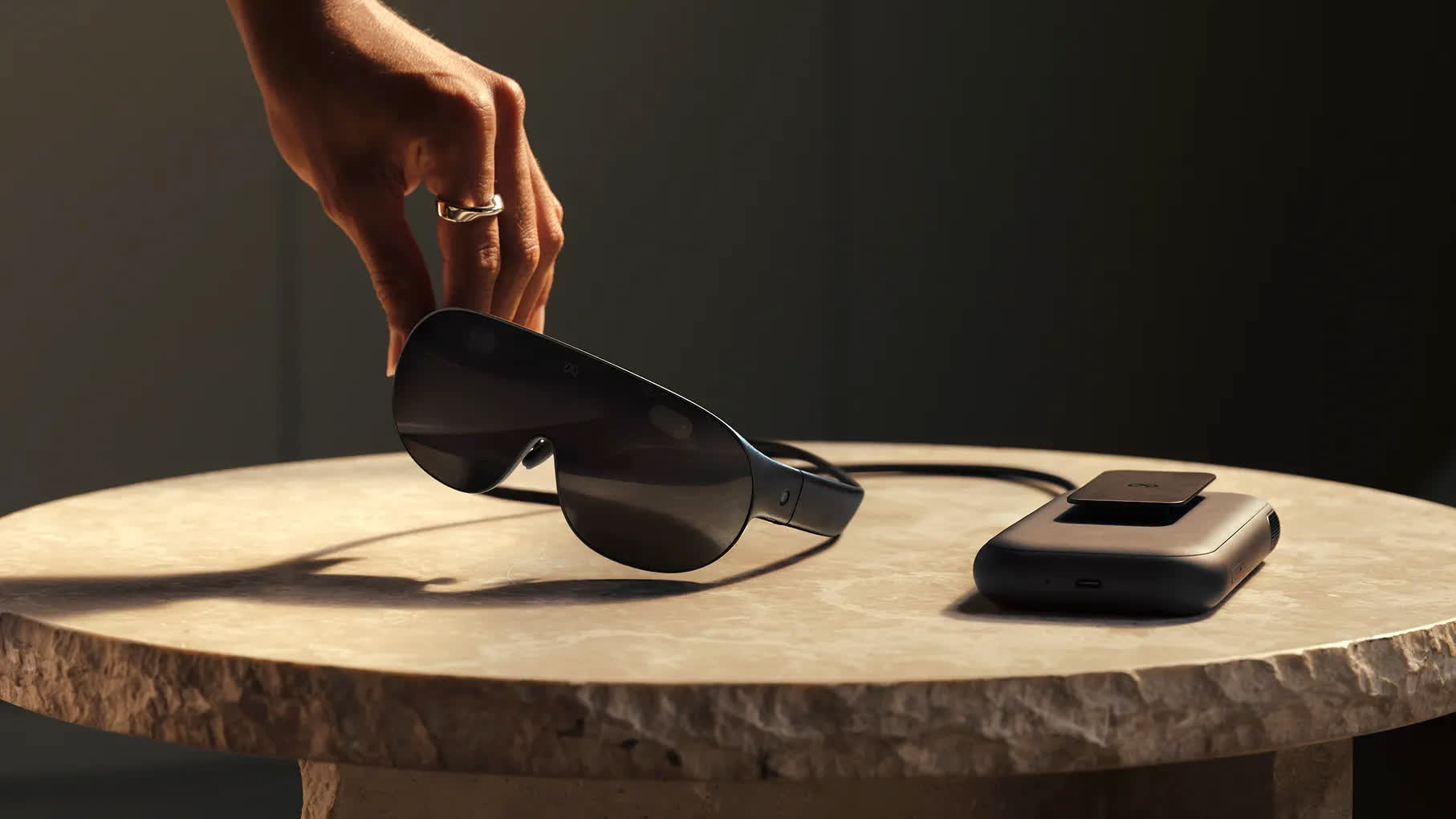
In a nutshell: Meta's Connect 2026 event aimed to address two of the biggest obstacles facing wearable smart devices: privacy for smart glasses and the size of VR and AR devices. The company's upcoming audio-only AI glasses look to put a digital assistant on the wearer's face while avoiding the surveillance concerns that have dogged previous models. Meanwhile, the company's latest VR device directly calls out Apple's failed Vision Pro.
Pre-orders are now open for Meta's recently revealed Ray-Ban Audio glasses. Starting at $349 and shipping October 13, the glasses handle music, calls, and AI functions without cameras. Meta also unveiled a VR headset that packs immersive media and productivity functionality into a form factor only slightly larger than a pair of glasses.
Meta compares the Ray-Ban Audio's functionality to advanced earbuds such as Apple's AirPods. Wearers can listen to music or podcasts, take calls, and chat with the company's AI assistant, Muse, with up to 12 hours of battery life. Muse only begins listening when users say "Hey Meta" or press the action button.
Although the Connect 2026 keynote did not highlight the fact that the Ray-Ban Meta Audio glasses don't include cameras, the omission is clearly an attempt to sidestep concerns about the privacy violations associated with camera-equipped smart glasses.
Earlier this year, New York banned such devices from courtrooms due to their recording capabilities, and Apple reportedly delayed its planned smart glasses as it wrestles with the issue. It remains unclear whether limiting smart glasses recording to audio will alleviate critics' concerns.
However, Meta has not given up on camera-based smart glasses, as the Ray-Ban Meta Gen 3 glasses are available today. Starting at $449, they include a new six-microphone array that dampens background noise by more than 90% and a 12MP camera for 3K video recording. Later this year, the glasses will even be able to record 360-degree video with Dolby Atmos spatial sound.
Meta also revealed new features coming to Ray-Ban Display. Starting later this month, users can activate turn-by-turn cycling directions with voice commands. Furthermore, instead of simply using street names, directions will describe the world around wearers to make navigation more intuitive.
Later this fall, WhatsApp and Meta AI app users in the US can show call recipients photorealistic avatars while wearing Meta glasses. The holograms use AI to determine facial expressions based on users' speech.

Meta VR glasses are coming next spring, starting at $1,299. Like Apple's Vision Pro headset, Meta VR glasses can display multiple virtual screens around the wearer, showing content from productivity and streaming apps. With 5K micro-OLED panels delivering 37 pixels per degree, Meta's device achieves the glasses-like form factor VR headsets have long strived for, weighing only 100 grams – about one-eighth as much as a Vision Pro.
Wearers can control a virtual keyboard, trackpad, remote, or game controller using gestures. Meta VR glasses will support Xbox Cloud Gaming and more than 75 VR games on day one that do not require controllers. The company is also collaborating with ESPN, Amazon Prime Video, YouTube, DirecTV, Crunchyroll, Plex, Peacock, HBO, Paramount+, and IMAX to deliver immersive, high-resolution streaming content.
Taking another shot at Apple, the glasses will also show a full-body hologram to call recipients instead of just a head and shoulders.