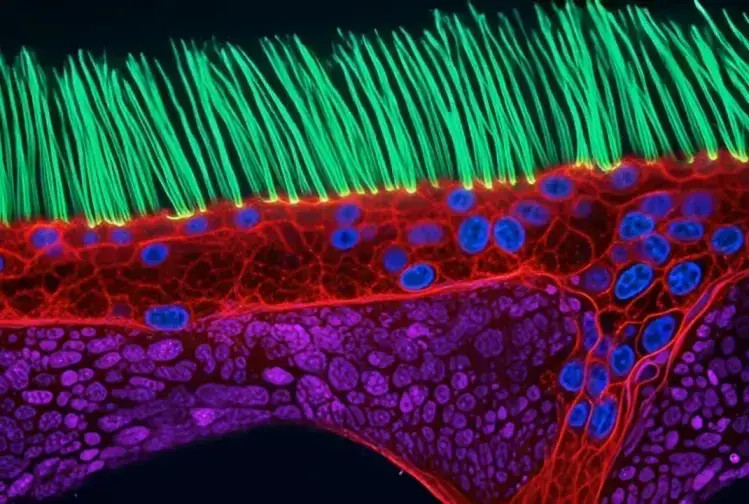
A hot potato: It seems that the once-popular trend of entering AI-generated content in competitions made for humans hasn't gone away. The winner of one of the world's most prestigious scientific photography awards has just had his title stripped from him after his entry was determined to have been created using AI.
Nikon's 16th annual Small World in Motion contest is open to any movie or digital time-lapse photography taken through the microscope.
This year's winner was Dr. Ning Xu, from Tsinghua University in China, whose video captured tiny cilia beating in the airways of a child with primary ciliary dyskinesia, a rare respiratory disorder.
But Xu's entry raised several concerns among members of the scientific community. Some researchers said there were abnormalities in the structure and size of the cells and that their features appeared and disappeared in a way not seen in cellular biology.
One associate professor at the University of Florida said some of the structures "pop in and out of existence" and the cilia "appear from nowhere," which are classic indications that a video was AI-generated.
A more damning discovery came from PhD student Ian Donovan at UT Southwestern Medical Center, who said the source image appeared to contain a distinctive watermark indicating it had been AI-generated. Two former competition judges also raised concerns about the clip's legitimacy.
In a now-deleted LinkedIn post, Xu admitted to using AI in the video, but he said it was only used to "distinguish and visualize features in the reconstructed grayscale images from the super-resolution optical imaging" during post-processing.
He added that AI had not been used to generate the video itself, the cilia, or their movement.
Xu insists that he has not broken competition rules. While enhancing the visibility of microscopic structures is common and allowed, researchers typically use techniques such as applying stains and dyes to the samples themselves.
However, Xu's explanation doesn't account for the abnormalities found in his video. Some scientists said the doubts could have been removed if Xu had shared the RAW grayscale video.
An investigation by Nikon found that Xu had violated the competition's rules, and he was subsequently stripped of his prize. The top spot has instead been awarded to Nguyen Nam Nhat of Vietnam, who entered a video of a tiny roundworm and a single-celled organism.
Following the incident, Nikon said in a statement that it plans to "revisit rules and evaluation procedures for future competition entries."
We've seen several examples of AI-generated images being entered into, and sometimes winning, art competitions going back years. A Midjourney image won a category in Colorado State Fair's annual art competition in 2022, while another creation won a photography contest hosted by Australian photo retailer digiDirect in 2023.
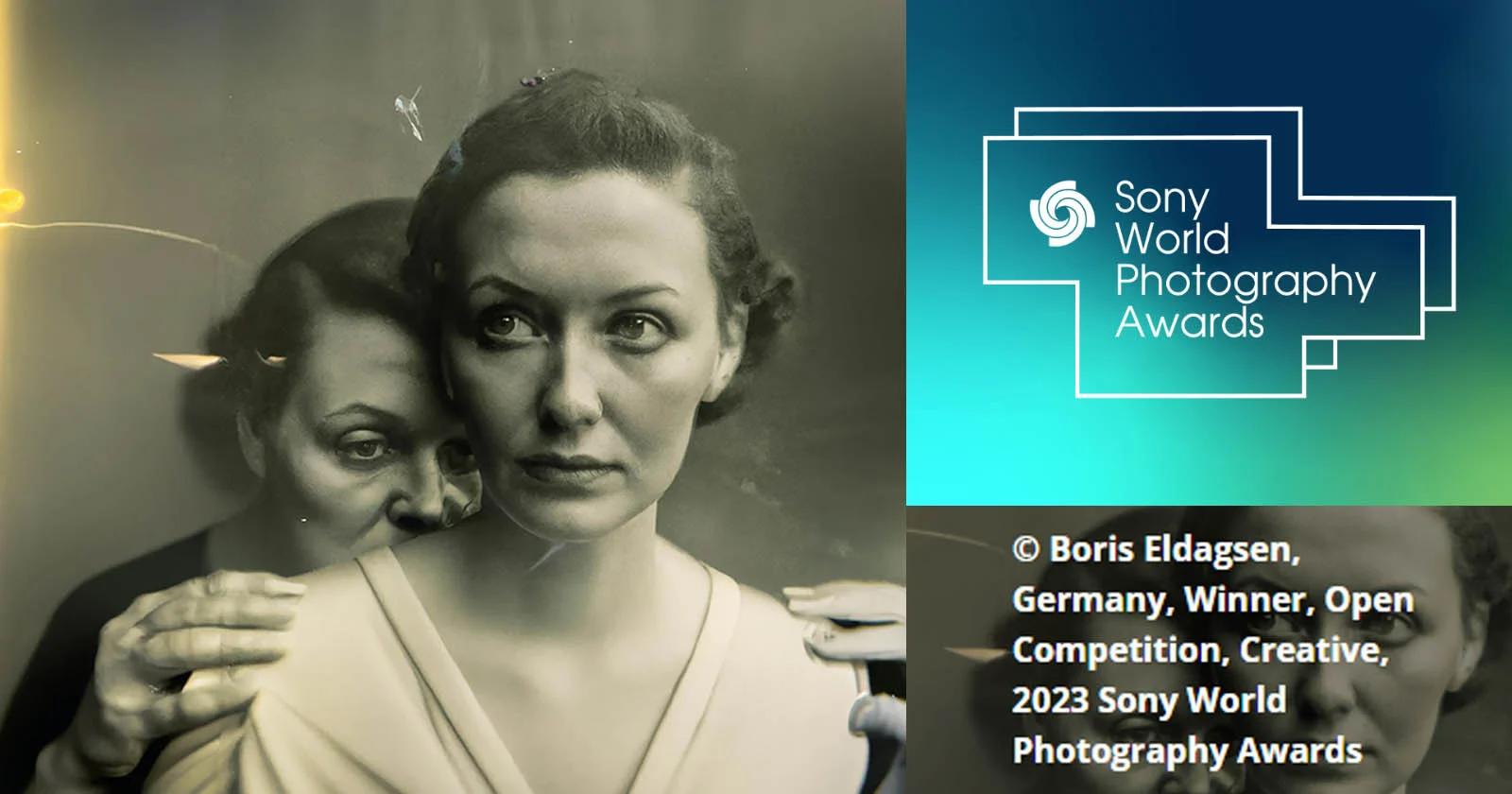
There was also the case of an artist who won a category in the 2023 Sony World Photography Awards but refused his prize because his image (below) was AI-generated – something that seems quite obvious these days.
In a more satisfying story from 2024, a man who won a digital art competition using an AI-generated image and was thoroughly unapologetic about it complained that people had started stealing his "work" and he couldn't copyright it.