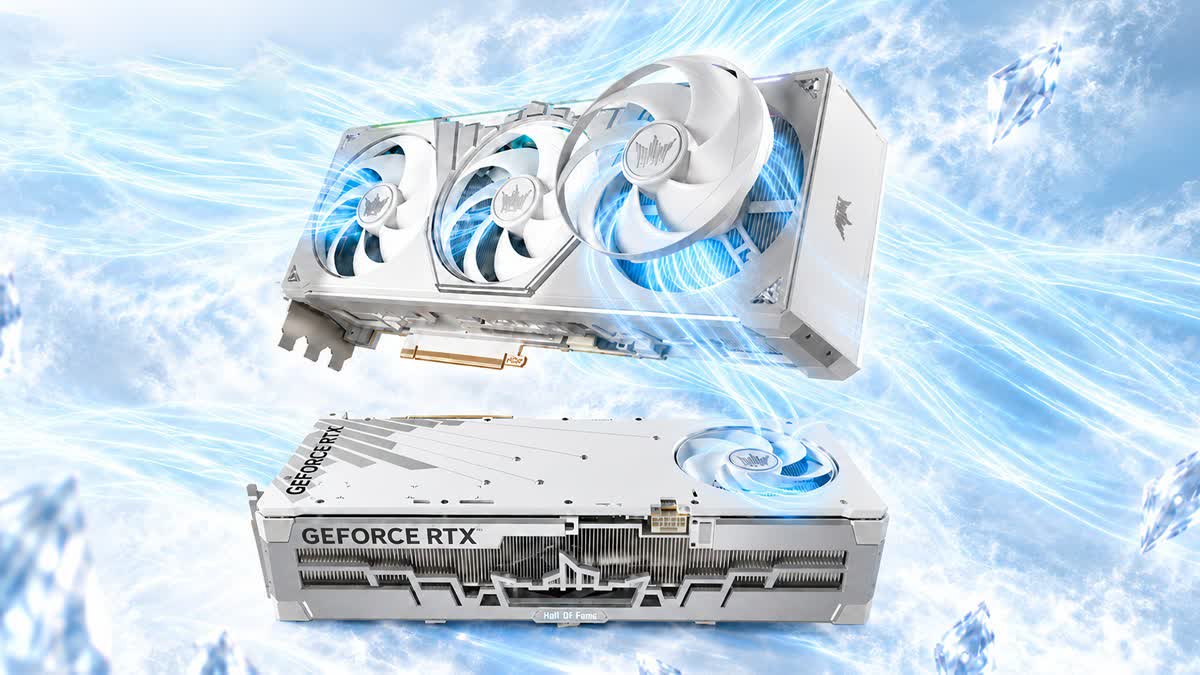
What just happened? For the second time this year, the Galax graphics card brand has been forced to deny that it's in trouble. This time, brand owner Palit confirmed that its Galax factory wasn't closing down due to Nvidia not supplying enough RTX 5000 chips, something that had been rumored.
Palit's official statement says it is aware of recent reports and speculation regarding Galax's business operations. It adds that the brand continues to operate as usual, no manufacturing facilities have been shut down, and Galax products remain available in both domestic and international markets.
The statement also notes that Galax and Palit share the same manufacturing facilities, with production and business operations continuing as normal.
The rumors stemmed from an "exclusive" news report by a Spanish outlet, which claimed industry sources had confirmed Palit was closing the Galax factory as Nvidia couldn't provide enough RTX 5000 chips to keep it running.
– 포시포시 (@harukaze5719) October 28, 2026
This would have been an especially surprising turn of events, given that Galax launched the GeForce RTX 5080 HOF Extreme - the world's first RTX 5080 with two 16-pin connectors - only last week.
It's easy to understand why people might have believed this report. There have long been rumors that Nvidia is prioritizing the GB202 chip used in the RTX 5090 for the more lucrative RTX Pro Blackwell-based models. It had even been claimed that the flagship was being discontinued, though Nvidia denied it.
Then there's the whole Palit/Galax situation. In April, Galax was rumored to be doing an EVGA and shutting down entirely. However, Palit, which has owned Galax since 2007, confirmed that it was undergoing a restructuring that brought Galax's operations directly under Palit Group headquarters in Taiwan, sparking the rumors.
The company said at the time that it would continue to develop, produce, and support the Galax, KFA2, and HOF brands to strengthen its presence in the discrete GPU market.
Ultimately, the rumor was just another effect of the AI-driven memory chip crisis that has pushed the price of graphics cards to astronomical levels. The RTX 5090, for example, is hard to find for less than $9,000 these days – and we complained when it arrived with a $2,000 MSRP.