
Sour Syrup: Geopolitical relations between Canada and the US are fraying fast, and Europe could capitalize by deepening its partnership with the proud North American nation. The new partners will likely need a lot of money, however, to make a real dent against US-based HPC powerhouses.
European Commission President Ursula von der Leyen recently confirmed that Canada is joining Europe's network of supercomputers, which is run by the EuroHPC Joint Undertaking. Canada will become an active part of the public-private network of high-performance computing (HPC) systems, and both sides should gain something from the arrangement, at least in theory.
Von der Leyen said the new cooperation will give Canadian industry privileged access to Europe's supercomputing resources, and startups and research organizations will also be able to join in. The European Union, meanwhile, will be able to tap Canada's competitive tech industry to further expand the shared AI ecosystem.
The EuroHPC network includes 14 world-class supercomputers, 10 quantum computers, and 19 "AI factories." Its umbrella covers 67 research projects, 38 participating countries, and 36 national competence centers. EuroHPC's total budget is €8.2 billion, while a further €30 billion investment is expected to add up to seven new AI data centers, with construction starting next year.
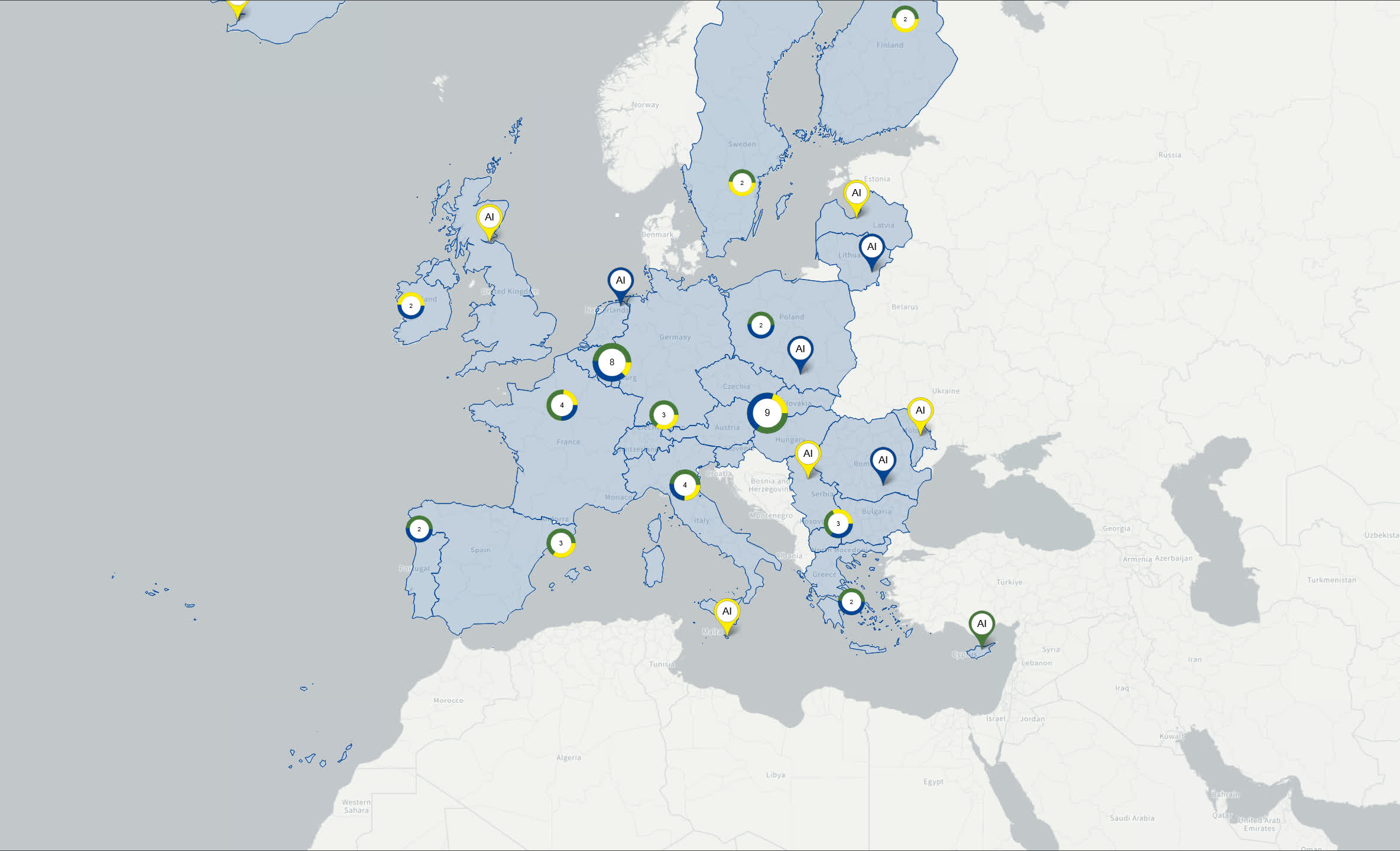
Anton Leicht, an AI expert at the Carnegie Endowment for International Peace, called cooperation among "middle powers" such as Canada and the EU one of the most obvious short-term moves toward a common AI infrastructure. He warned, however, that the new HPC-focused relationship will likely have no practical effect on US interests and dominance in the supercomputer business.
Washington will still hold significant sway over both Canada and the EU, Leicht suggested, because the US is making its own massive investments in new HPC and AI data center capacity.
"As long as the U.S. builds gigawatt-scale clusters, no amount of cooperation that doesn't result in massive buildouts will help," Leicht said.
Either way, Canada is making a significant effort to become one of Europe's most privileged partners. Prime Minister Mark Carney and von der Leyen have recently launched an Alliance for the Future, opening a new avenue for "like-minded nations" to tackle common issues.
Von der Leyen has floated making Canada the EU's first associate member, with joint HPC resources just one part of a larger initiative that is likely to rankle the US administration.