
The takeaway: Layoffs and game studio closures have surged in recent years, largely due to the hangover from pandemic-era overinvestment. As Microsoft continues its layoffs and closures and Arkane Lyon fights for its life, a new analysis suggests that most studios are worse off after being acquired. However, those game studios that have thrived under certain publishers show a consistent pattern.
Game industry veteran Sebastian Cardoso recently investigated the fates of more than 300 studios bought by large companies over the past quarter century, finding that roughly 61% sold fewer games, earned lower review scores, or faced closure post-acquisition.
Arkane Lyon risks becoming the latest example if it doesn't find a buyer by mid-December, but Ubisoft and at least two other companies have made offers for the Dishonored and Deathloop developer.
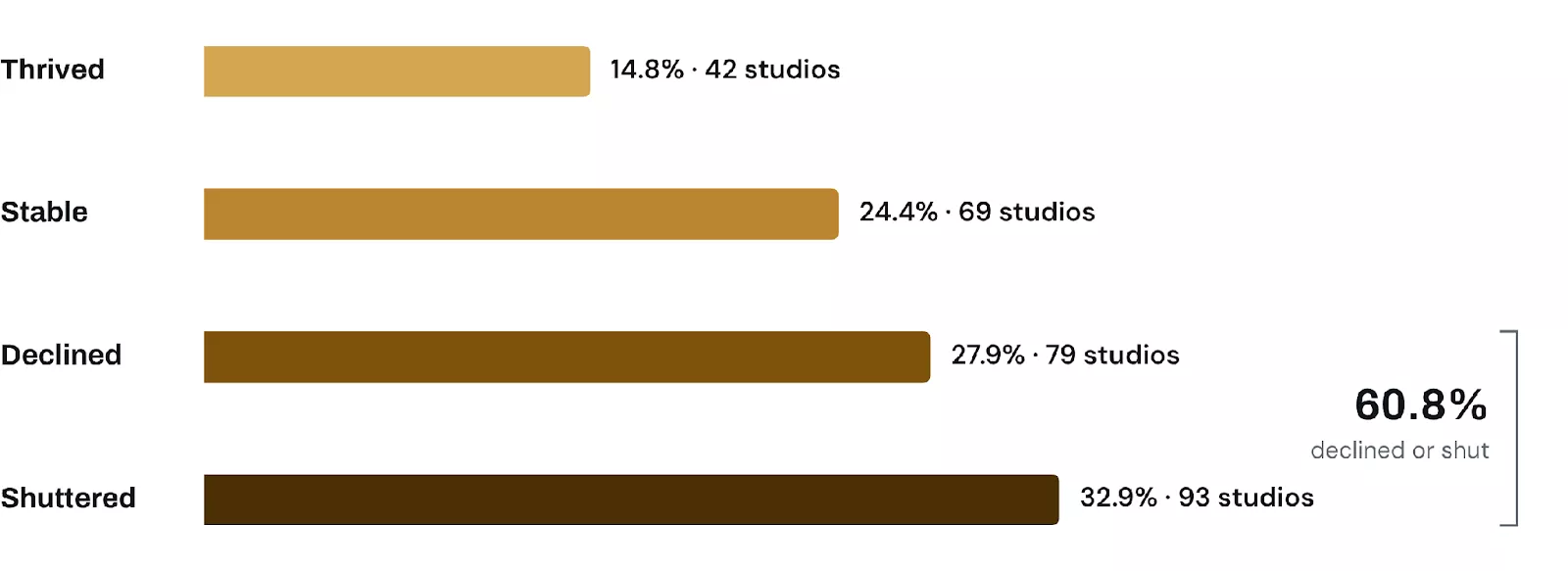
Cardoso's lengthy breakdown shows changes in output and staffing for hundreds of developers since 2000, as well as post-acquisition lifespans. Although closures and layoffs have spiked since 2023, the acquiring company's identity is easily the biggest predictor of a studio's well-being.
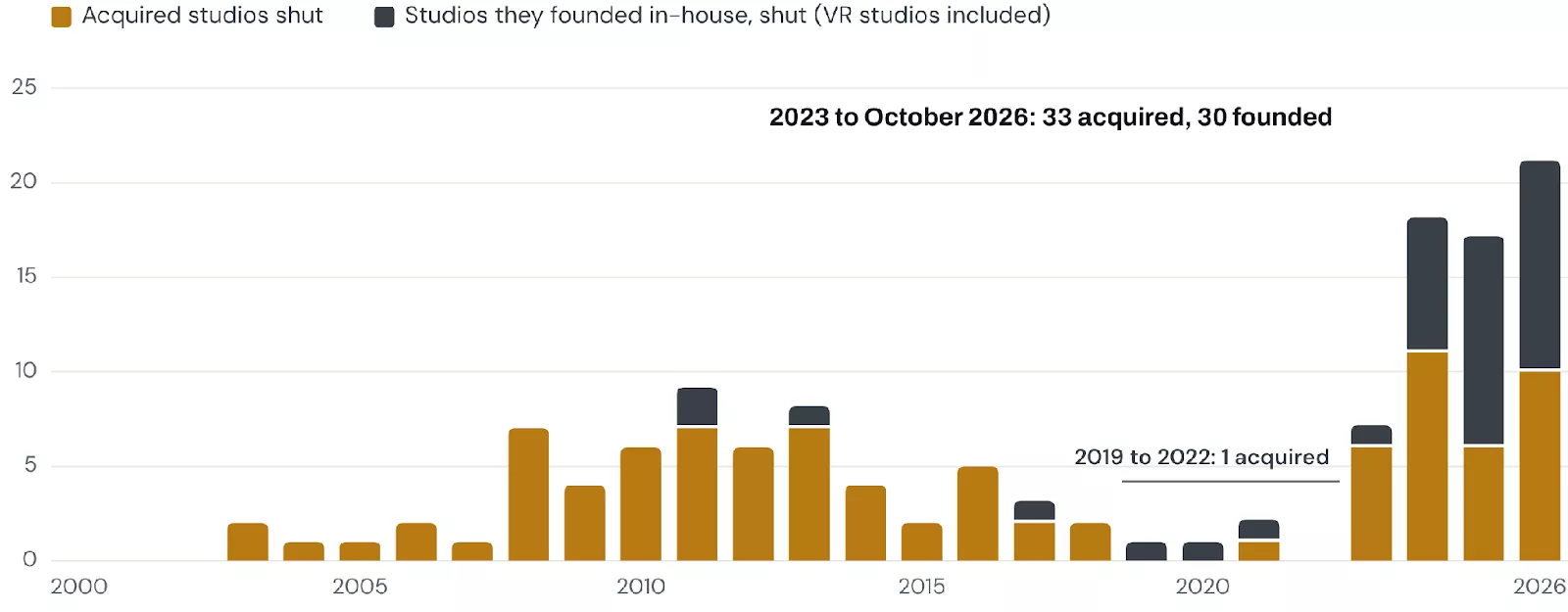
The consequences are final, the stats show: a third of acquired studios were shut down, half of those closures coming within five years of the deal. Closures were also rarity until recently: only one acquired studio in Cardoso's dataset closed between 2019 and 2022, compared with 33 from 2023 through October.
Studios that managed to buy themselves back from their owners fared far better, with none of the 18 such cases ending in decline or closure, though Cardoso cautions those studios were probably healthy enough to fund a buyout in the first place.
Activision Blizzard is the worst offender, having either shuttered or hollowed out every single studio it acquired. Developers under Disney and Midway have a 0% survival rate, while Square Enix and EA, which recently closed BioWare, aren't much better.
Cardoso found that these publishers tend to buy studios to boost existing intellectual properties, and that debt-financed buying sprees, like Embracer's, end badly too.
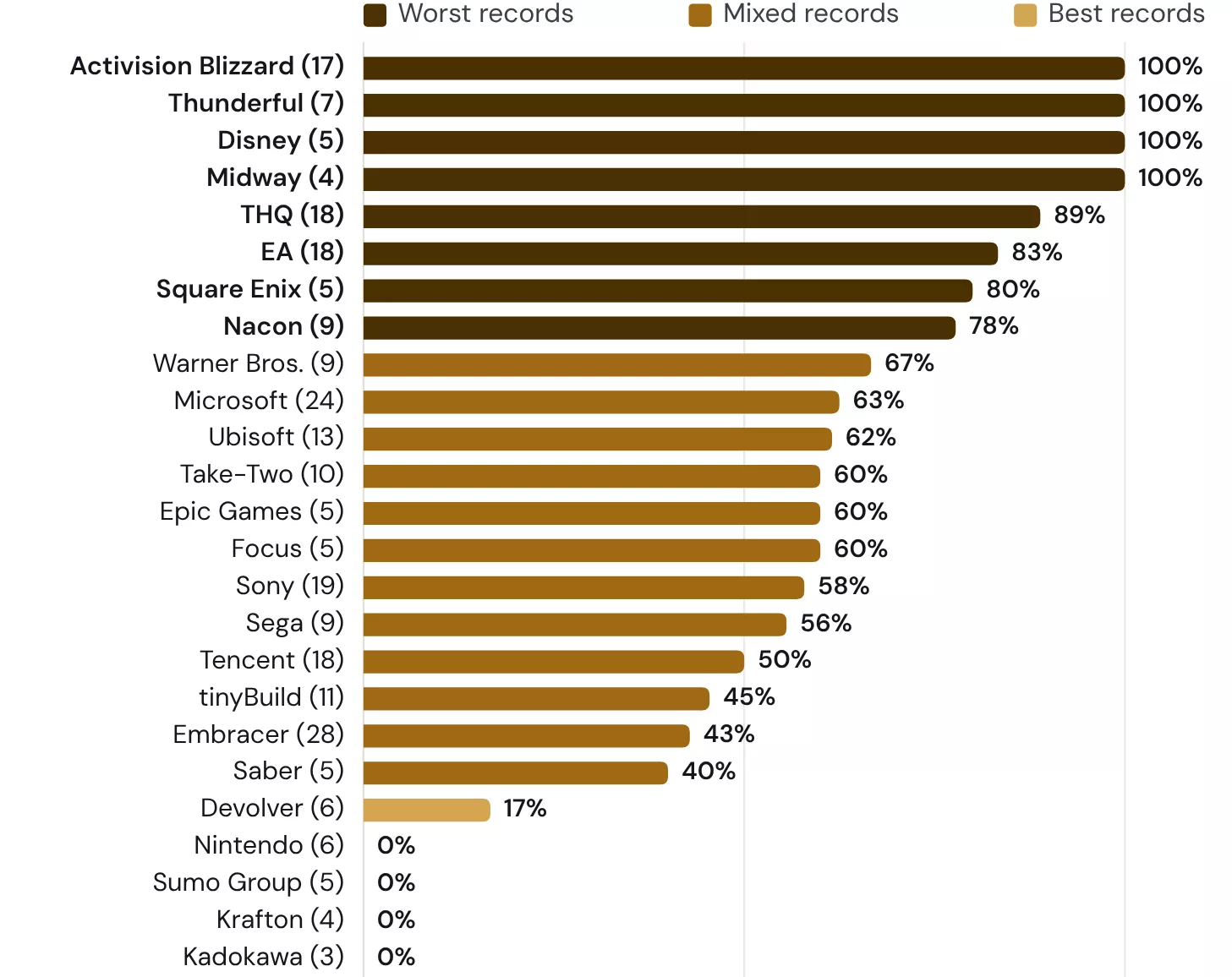
At the other end of the spectrum, Nintendo, Sumo Group, Krafton, and Kadokawa have each acquired only a handful of studios since 2000 and closed none of them.
These publishers tend to buy developers only after working with them, and leave the original studio heads in charge. Kadokawa, in particular, hit the jackpot with FromSoftware, which has since released Bloodborne, Sekiro, and Elden Ring.
Meanwhile, Microsoft, Ubisoft, Take-Two, Epic Games, Sony, and Sega occupy the middle of the road. However, Microsoft recently began one of the worst rounds of layoffs, affecting 3,200 employees and the sale or closure of several studios. Fortunately, Double Fine and Compulsion escaped without shutting their doors, but Ninja Theory wasn't so lucky.
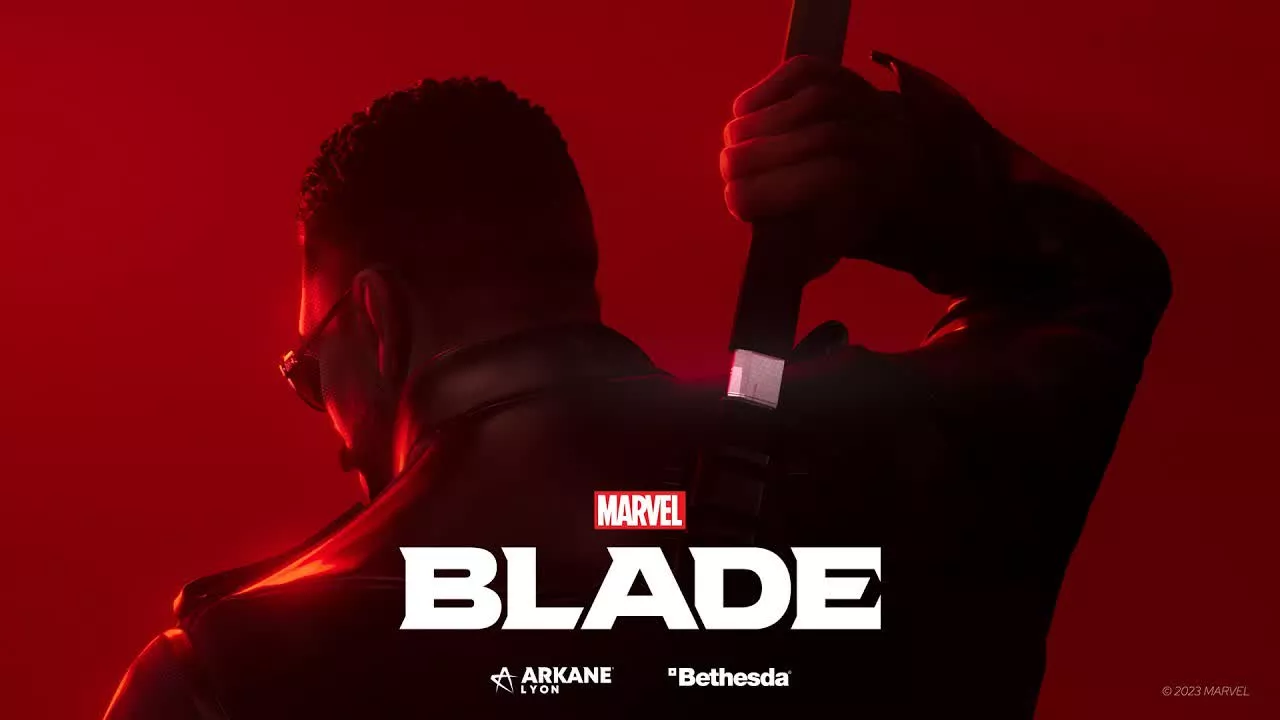
It remains unclear which camp Arkane Lyon will fall into. Sources recently told Bloomberg that Microsoft might sell it back to management, and that closure is still on the table if no deal comes together.
The French game development union representing Arkane, STJV, recently accused Microsoft of sabotaging Blade to justify a closure. The union claims development of Marvel's Blade is going fine, but a forced 19-month hiring freeze prolonged it. STJV claimed that Arkane is profitable, just not profitable enough for Microsoft.