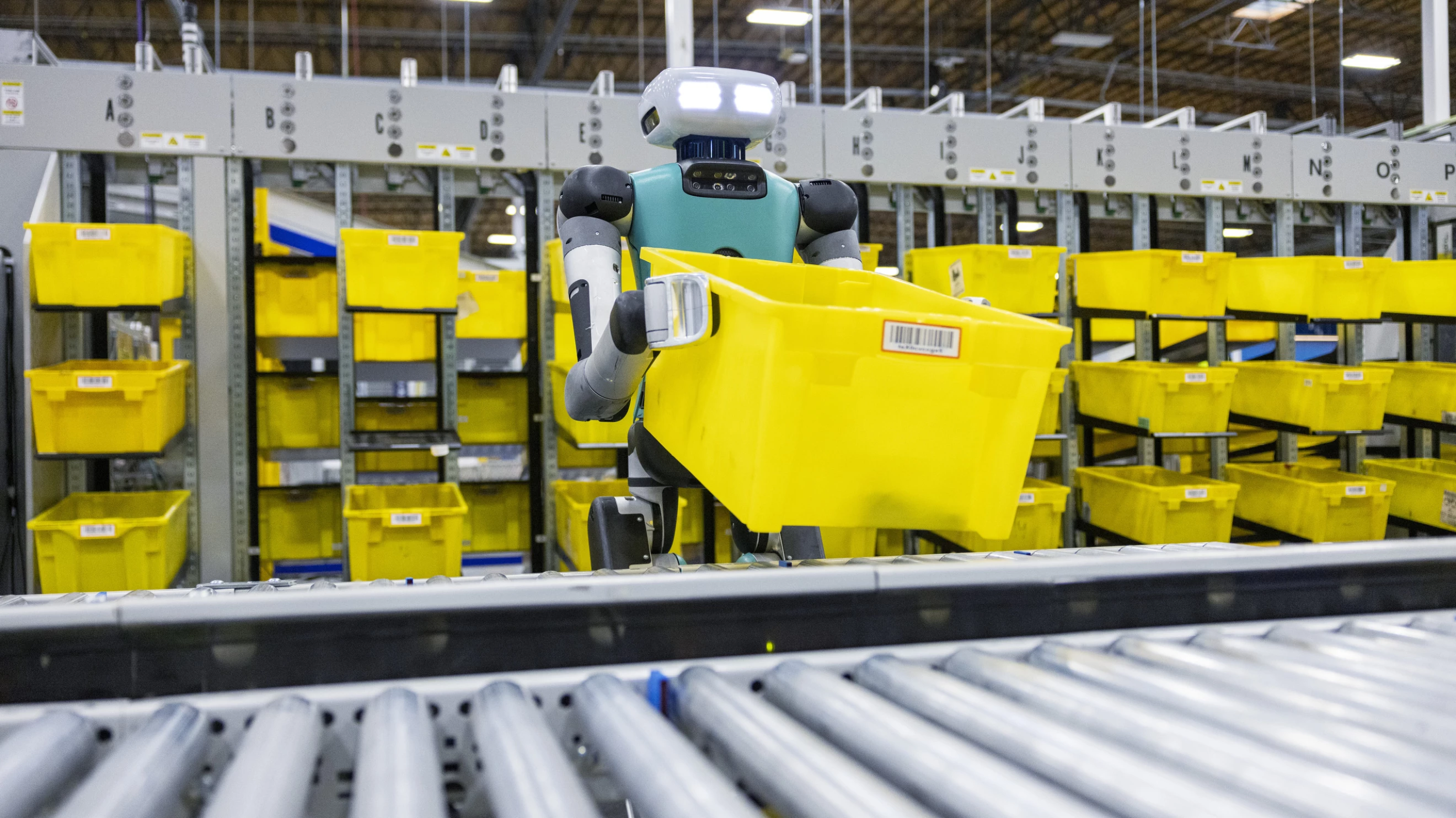
What just happened? Agility Robotics, the company behind the Digit humanoid robot used in Amazon warehouses and elsewhere, will become the first humanoid-focused company to go public in the US this week. The Oregon company closed its merger with Churchill Capital Corp XI on Wednesday, with shares expected to start trading on Nasdaq tomorrow (November 5) under AGLT.
Agility is taking the SPAC route, merging with a listed shell company rather than pursuing a traditional IPO. Churchill is led by former Citigroup executive Michael Klein, whose previous deals include electric vehicle maker Lucid and nuclear power company Oklo.
While it's a growing industry, humanoid robots are still a comparatively small business in the tech world. Business Insider reports that Agility generated just $1.8 million in revenue during 2025 while posting a $138.1 million net loss. More than half that revenue came from five robots bought by one of its investors. Operating cash consumption reached $99.8 million.
One of the company's success stories has been Digit. Amazon began testing the robot in 2023, initially using it to move empty totes, while GXO has also deployed the humanoid mahcine at a warehouse serving Spanx.
More work for the robot is coming. AGCO plans to pilot Digit at its Hesston, Kansas, farm equipment factory in 2027, where the machines will sort and stack parts and move totes.
Agility is also betting on the latest Digit 5 model, designed to work safely near people. It says committed multi-year orders exceed $300 million, although those orders depend on contractual milestones.
China offers a cautionary example of humanoid robot makers going public. Reuters reported in September that regulators were slowing some humanoid robot listings after Unitree's debut. Its shares surged more than fivefold before falling 55% from their peak. Authorities were also scrutinizing whether sales tied to government-backed robot training centers reflected sustainable demand.
There's also the question of what widespread humanoid robot adoption means for workers. Earlier this year, Hyundai's union warned that deploying the machines would bring a "huge employment shock," demanding an agreement before robots enter its workplaces. By August, workers were seeking greater transparency and job protections, even though Hyundai's initial Atlas rollout is planned for its nonunion Georgia factory in 2028.
Some reassuring news for human workers arrived recently when a 24-hour test of humanoid robots in a convenience store showed that two of them weren't up to the task.