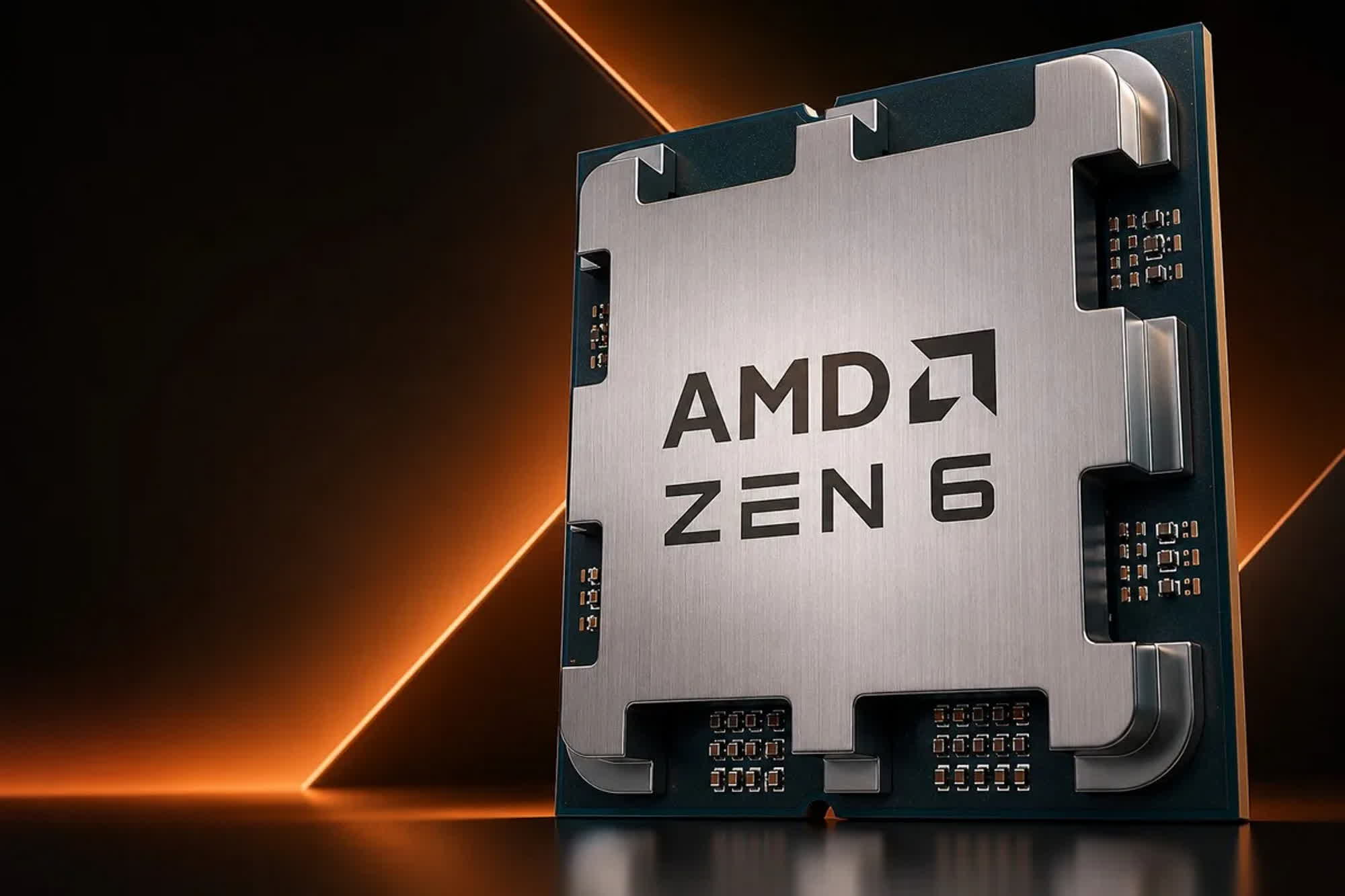
Forward-looking: A series of social media posts from a well-known tipster claim that the previously rumored Medusa Point refresh chips have now been codenamed "Siren Point," while the so-called Medusa Halo APUs have been renamed "Siren Halo." The tipster added that the Siren Halo chips will feature their own pool of GDDR7 VRAM alongside LPDDR memory.
In an X post, tipster Gotou_3rd claimed that Siren Halo is AMD's official codename for the lineup previously known as Medusa Halo. According to the tipster, the name was deliberately chosen because Team Red does not plan to release an entirely new Halo APU design in 2027. Instead, AMD will reportedly stick with a Zen 5-based Gorgon Halo refresh (Ryzen AI Max 400 series).
– Gotou_3rd (@Gotou_kai3) November 12, 2026
The leak appears to confirm an earlier report from tipster Kepler_L2, who claimed that AMD had renamed Medusa Halo but didn't disclose its new name. Kepler also provided no configuration details, although other leaks suggest that Siren Halo will combine Zen 6 and Zen 6c CPU cores with RDNA 5 integrated graphics.
When asked whether Siren Halo would use unified GDDR memory or separate memory pools, Gotou stated that the chips will support both types of memory simultaneously. The tipster couldn't say which LPDDR generation Siren Halo would use, but online speculation points to LPDDR6. That said, no reliable leaker has confirmed this detail, so take the rumor with a pinch of salt for now.
– Gotou_3rd (@Gotou_kai3) November 12, 2026
Other reports suggest that Siren Halo will be based on the custom Zen 6-based "Magnus" APU, which is expected to power Microsoft's next Xbox console, codenamed Project Helix. Asked about the rumor, Gotou said he couldn't confirm it at the moment but considered it "very likely" to be the case.
An earlier leak suggested that Magnus would be part of the Ryzen AI Max 500 series, previously known as Medusa Halo. The rumored chip is expected to feature a chiplet design with Zen 6 and Zen 6c CPU cores, 68 RDNA 5 compute units, and up to 48GB of GDDR7 memory across a 192-bit interface. It is also rumored to support LPDDR6 memory, which would offer faster data transfer rates than LPDDR5X.