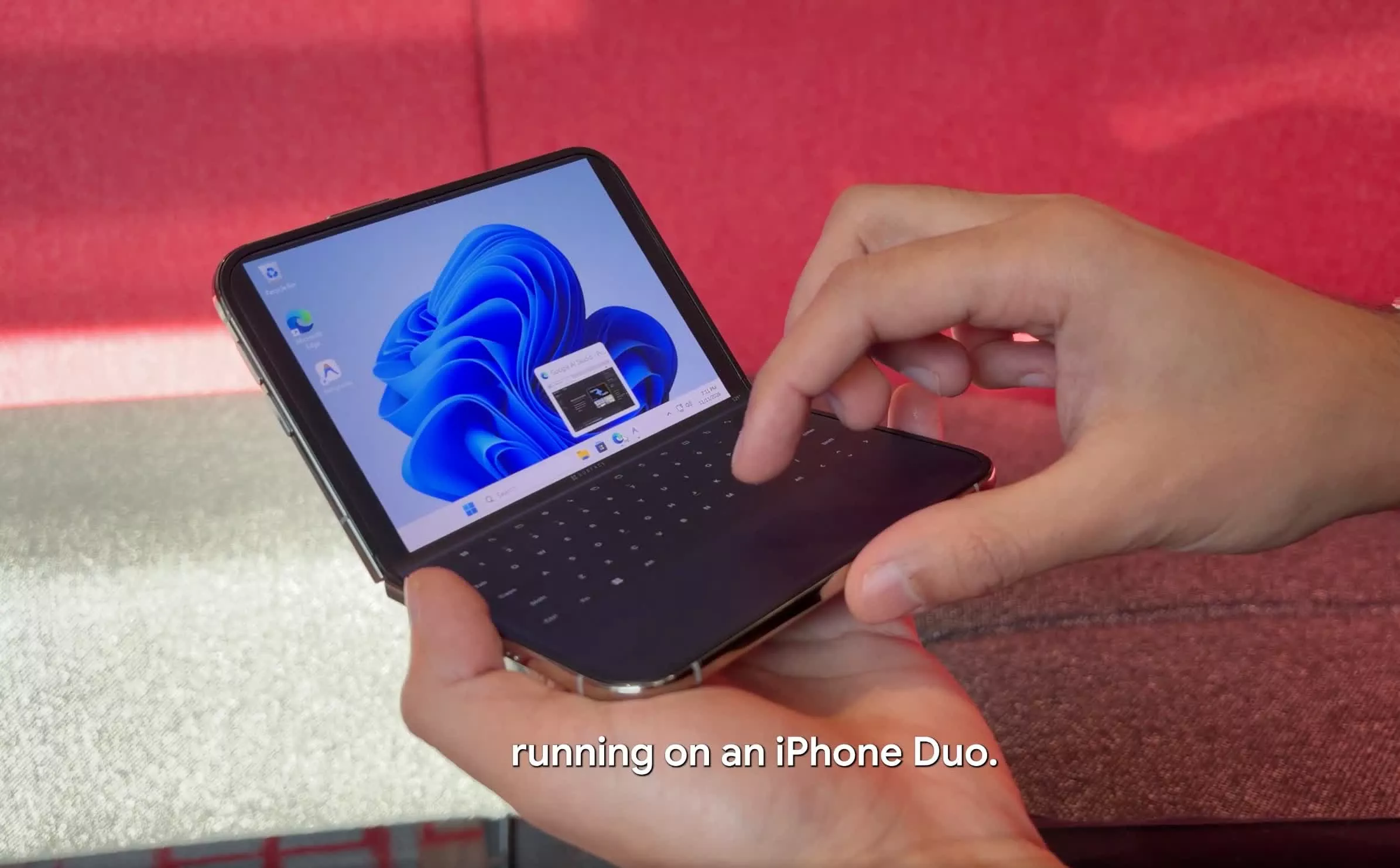
In context: Apple's first foldable has only been in stores for about three weeks, and it's already running Microsoft's desktop operating system. A Google product lead has gotten the full Arm version of Windows 11 to boot locally on the iPhone Duo, without jailbreaking the phone. Fold it halfway, and the bottom screen becomes a keyboard and trackpad. Unfold it, and Windows takes over the whole 7.6-inch display.
The project, called WindowsiOS, comes from Ammaar Reshi, who leads product and design at Google AI Studio. He posted a demo on X this week and shared the full source code on GitHub, too. The demo shows a retail copy of Windows 11 24H2 running Microsoft Edge and Google's Antigravity coding app, all with touch controls.
Windows has technically run on an iPhone before. Back in 2024, the developer behind Tiny11 booted a stripped-down build on an iPhone 15 Pro using the UTM SE emulator. But it took roughly 20 minutes just to reach the desktop, mostly because UTM SE has to interpret every instruction in software.
– Ammaar Reshi (@ammaar) November 11, 2026
The faster route of hardware virtualization is off the table, too, since Apple cut off hypervisor access on stock iOS starting with iOS 16.4. So instead, WindowsiOS translates Windows' Arm code into Arm code that the Duo's A20 Pro chip can run directly. Both sides already share the same instruction set – the same head start that recently let Switch games run natively on iPhones.
As for how it got built, the project's README credits Gemini 4 Carbon with all of the Windows-specific engineering. Google only opened Carbon up to developers and AI Ultra subscribers this week, so the demo doubles as a pretty handy showcase for it. Still, the core translator isn't new. It comes from Henge, an open-source project that already got macOS running on modern iPhones.
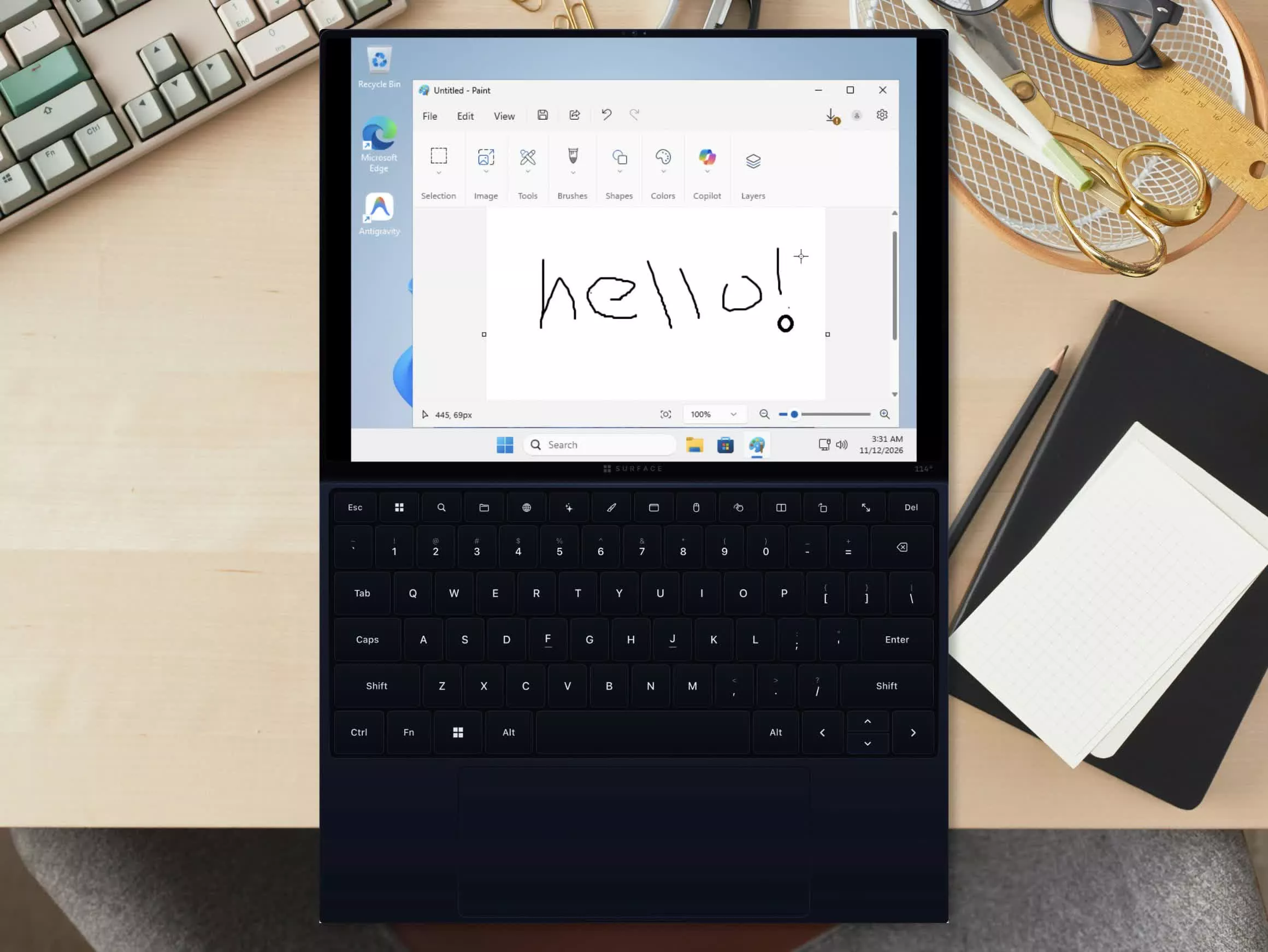
Don't expect an App Store listing, though. Setting it up takes an Apple Silicon Mac running Xcode, plus your own Windows 11 Arm image. Every launch also needs a debugger attached to the phone to unlock the executable memory the translator relies on. That's an unofficial workaround that JIT-hungry iPhone emulators also rely on, so Apple could shut it down in a future iOS update, much like it did with hypervisor access.
Windows also gets only 4.5GB of the Duo's 12GB of RAM. To make that work, Reshi stripped more than 35 background services out of Windows, Defender included. That brings idle memory use down to about 1.46GB. The README offers no benchmarks to back up its near-native speed claims, though. It has also only been tested on the Duo so far.
Weirdly, it isn't even the first Duo crossover in recent weeks. In late October, a developer got iOS 26 running on Microsoft's Surface Duo 2, as reported here. He now plans to bring the iPhone Duo's iOS 27 build over to that phone next.