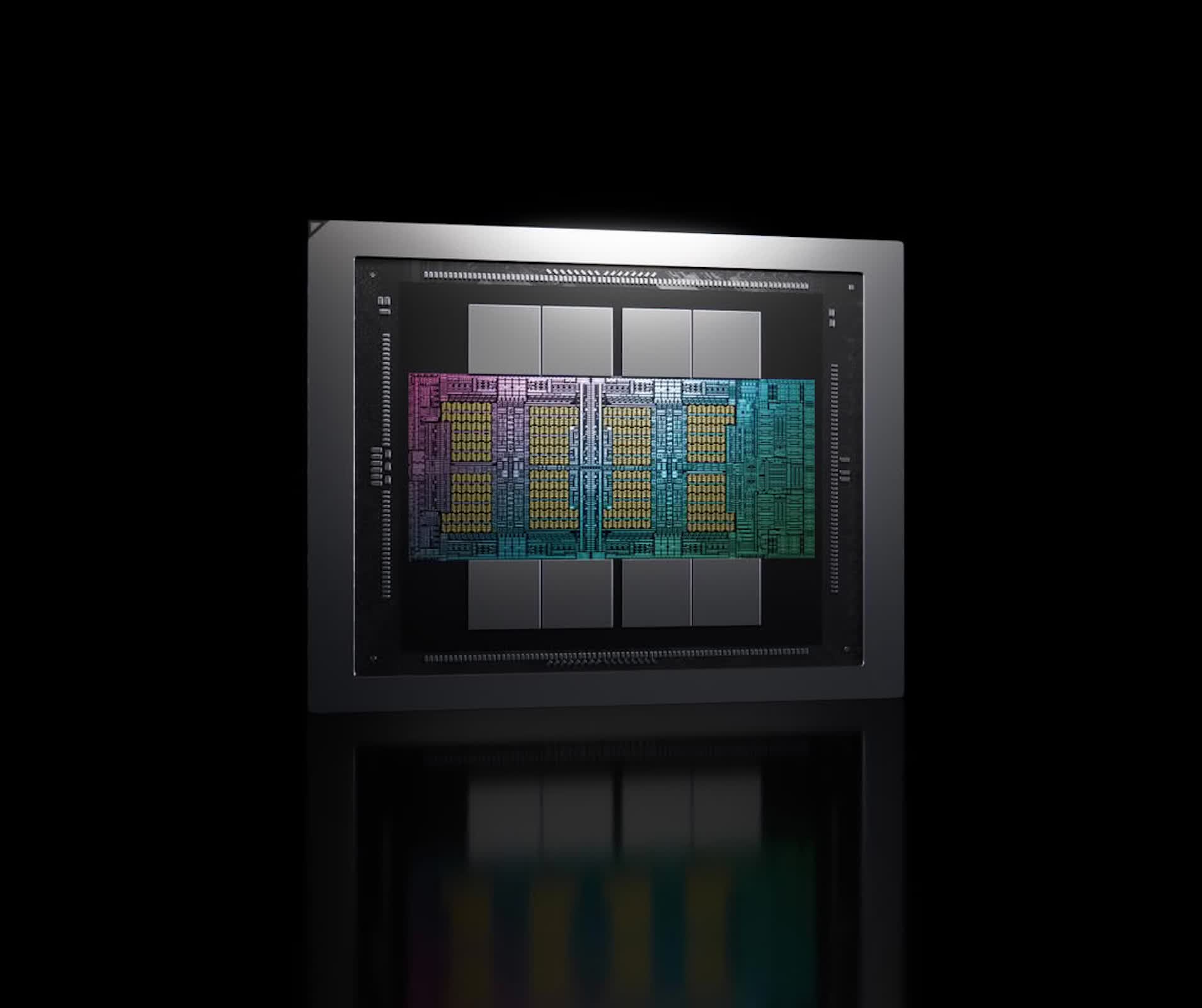
What we know so far: Nvidia is building a GPU with more than 50,000 CUDA cores for one main job: running the simulations that AI agents start when they help scientists and engineers test ideas. The Rubin HPC chip was announced this week at the Supercomputing 2026 conference as a new part of Nvidia's Vera Rubin platform, but it's not expected until 2028, and the company has yet to release several specs that HPC buyers care about most.
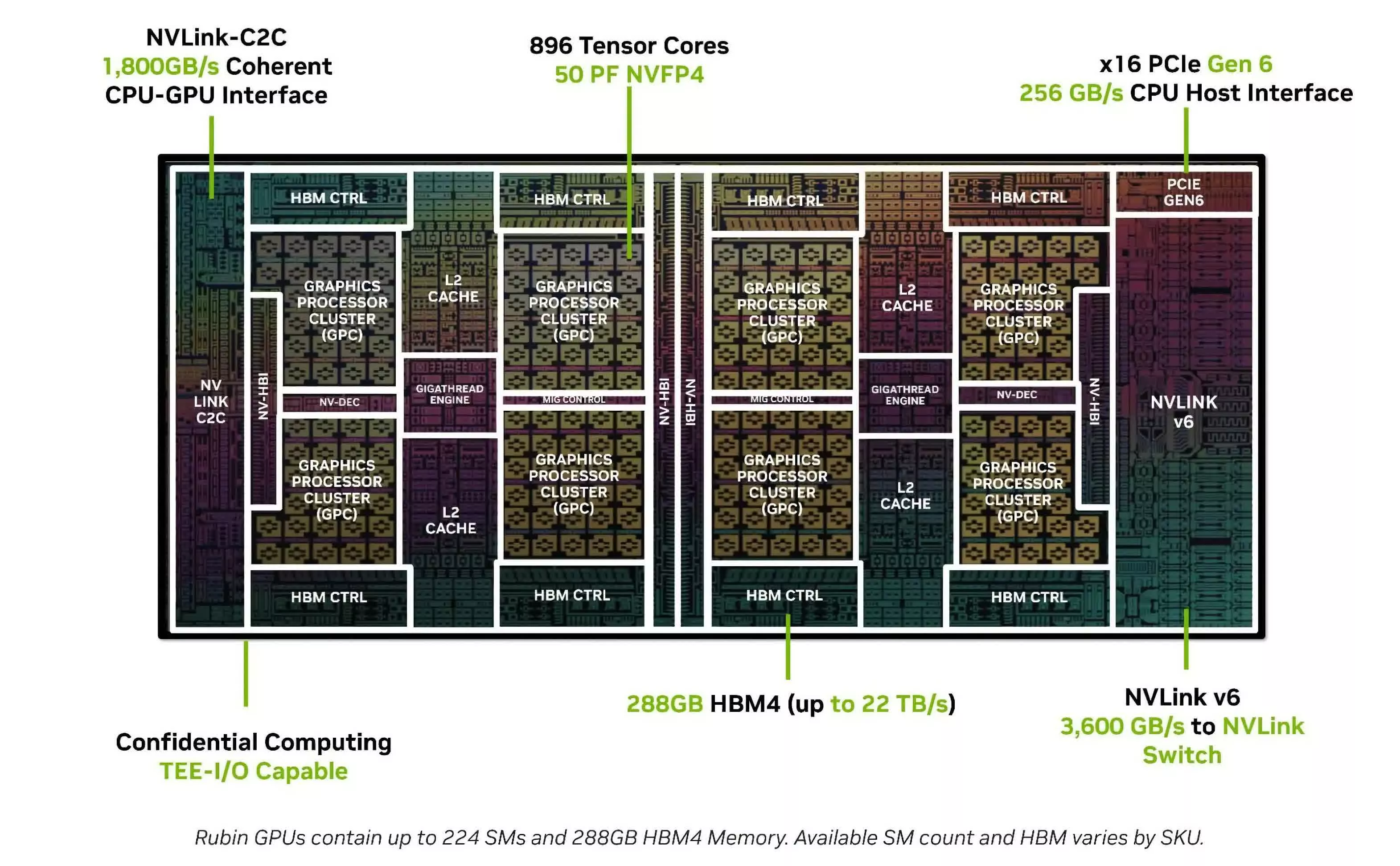
The core count offers the first clue to what Nvidia is building. The current Rubin GPU has 224 streaming multiprocessors and 28,672 CUDA cores, so getting past 50,000 would take at least 74% more cores.
That suggests Rubin HPC may spread its cores across several dies in one package, as the two-die Rubin does, or as the four-die Rubin Ultra that Nvidia originally planned, a design since reportedly scaled back. Nvidia has not confirmed the chip's physical layout and describes the core count only as being "on a single GPU." The image it released with the announcement does not appear to show a multi-die design.
Nvidia's pitch is less about raw compute and more about keeping that compute busy. The company says climate modeling, engineering simulation, genomic analysis and financial risk work tend to follow the same pattern: a program reaches into a huge dataset, pulls out a few scattered values, runs a calculation and then repeats that step an enormous number of times. Under that kind of load, a GPU's cores often sit idle while they wait for data.
Nvidia says Rubin HPC addresses this with what it calls a "balanced design," meaning data movement scales with compute instead of adding compute alone. Part of that design is a sparse data acceleration capability that Nvidia says keeps the cores fed.
According to the company, it speeds up the routines that show up again and again in simulation code, including sparse matrix operations, stencil computations, sorting and reductions. Those routines are common in both scientific and commercial analytics, which is why Nvidia is pitching the chip as useful across many industries rather than as a niche lab part.
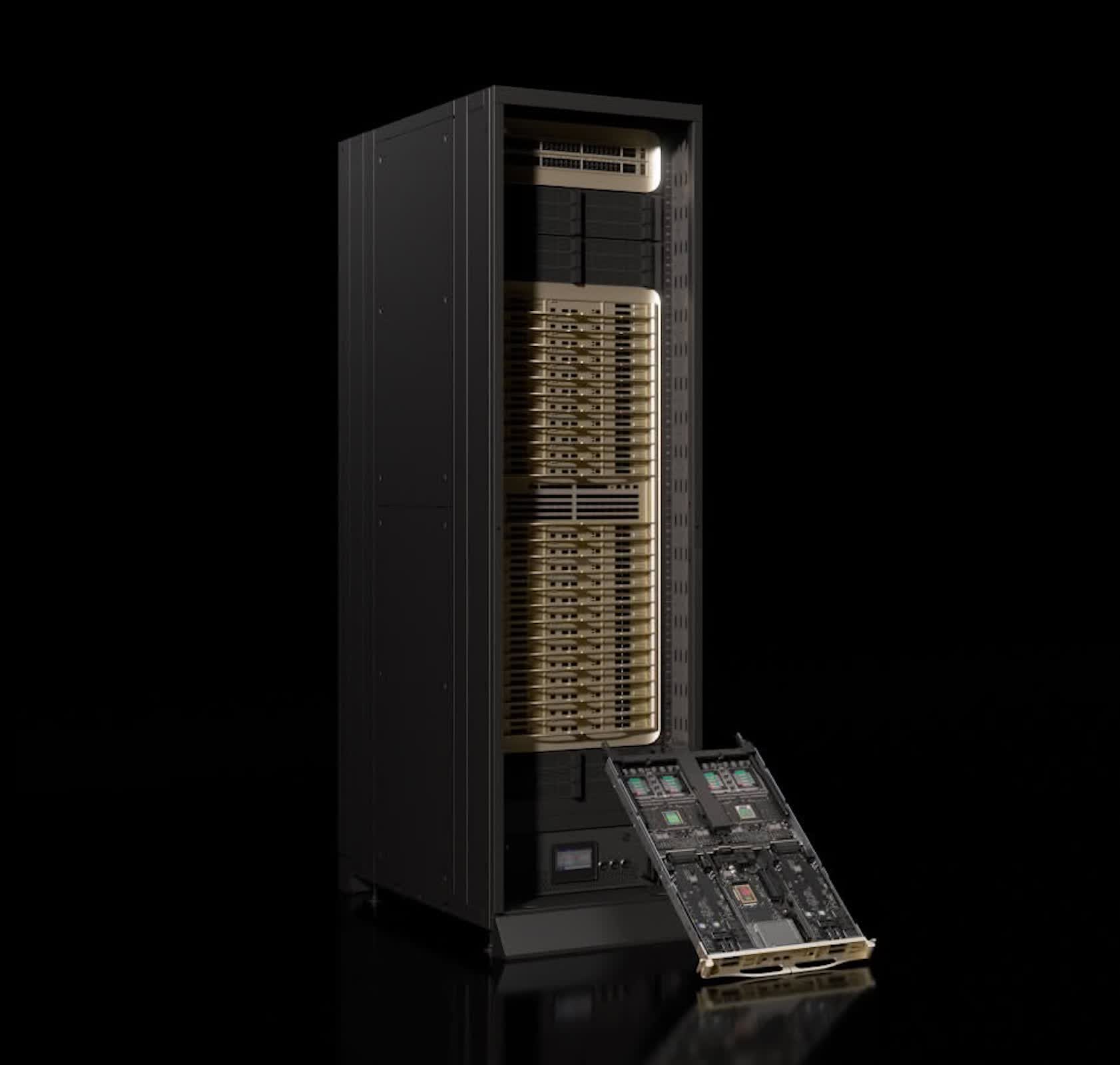
Between GPUs, Rubin HPC will use seventh-generation NVLink. Nvidia gave no figures for the interconnect's bandwidth or physical layer inside the rack. For reference, NVLink 6 delivers 3.6 TB/s per GPU in Vera Rubin NVL72, and earlier roadmaps paired NVLink 7 with much larger scale-up domains.
Other details are missing, too. Nvidia did not give the chip's HBM capacity or memory bandwidth, and it did not say whether Rubin HPC shifts silicon toward native FP64 math. That question matters because AMD is promoting far stronger double-precision performance in the GPU it is showing at the conference.
Nvidia instead framed the chip around agentic workflows. In its view, AI agents will let research teams screen far more candidate materials, molecules and designs than people could on their own. Each of those candidates still has to be tested in simulation before anyone commits to a physical experiment or prototype. More agents mean more simulations, and more simulations mean more demand for accelerated computing.
"For agents tackling science and engineering, faster simulation means faster discovery. Rubin HPC accelerates the simulations agents use to test ideas and guide their next steps, helping scientists and engineers explore more possibilities and bring breakthroughs closer," said Ian Buck, Nvidia's vice president of hyperscale and high-performance computing.
Software is a large part of the plan. Agents running on Rubin HPC can use Nvidia's CUDA-X libraries, a growing set of tuned implementations of complex algorithms, including many used in simulation and analytics.
If agents call optimized routines instead of writing their own, each round of hypothesis, simulation and refinement should finish faster. That would let researchers decide on next steps sooner and focus lab time on the most promising candidates.
Rubin HPC is still more than a year from release. Before then, Nvidia will need to say how much memory the chip has, how it handles double precision and whether it uses more than one die.