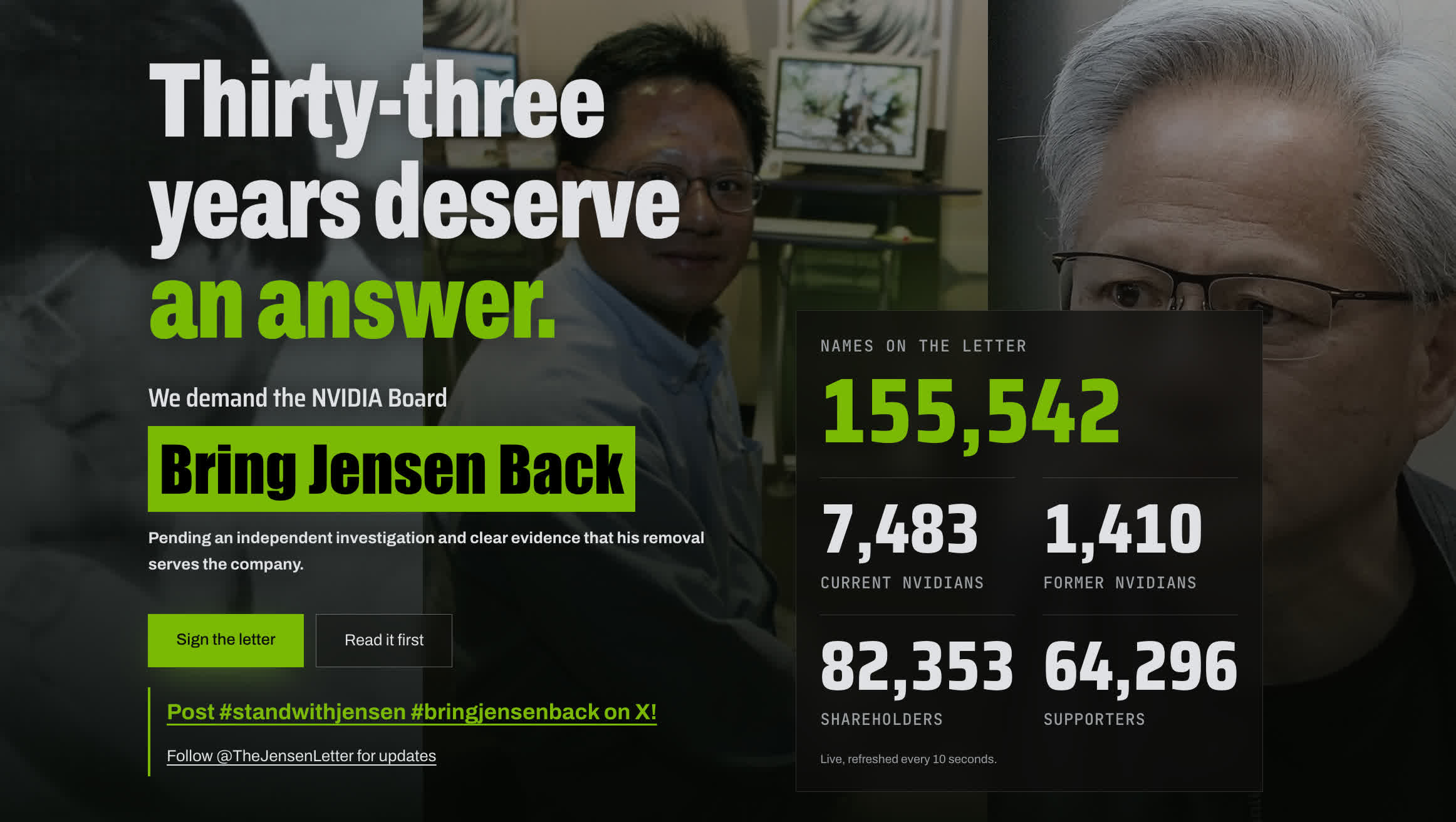
What just happened? Three days after Jensen Huang stepped down as Nvidia's CEO, a campaign to bring him back is gathering momentum. More than 150,000 people have signed an open letter urging Nvidia's board to reinstate its co-founder while an independent investigation runs its course. Among those backing the effort are Elon Musk, Epic Games CEO Tim Sweeney, and thousands of people who identify themselves as Nvidia employees and shareholders.
The campaign, Stand with Jensen, comes at the end of an extraordinary week for the world's largest chipmaker. Nvidia has lost the only CEO it has ever known, its shares have taken a beating, and its board is searching for a successor just as fresh questions emerge about how Huang built and financed the AI boom.
The letter's organizers argue that Huang was forced out without being given a fair opportunity to defend himself. They are asking the board to do three things: reinstate him as CEO while the investigation continues, ensure he receives a fair hearing, and publicly explain the reasoning behind his departure.
The petition has attracted support from across Silicon Valley. In addition to Musk and Sweeney, signatories include Replit CEO Amjad Masad and Y Combinator CEO Garry Tan.
By Sunday, thousands of signatories identified themselves as current Nvidia employees, with tens of thousands more claiming to be shareholders. The campaign notes that these are self-reported and have not been independently verified. It also says the effort is not endorsed by Nvidia or Huang himself.
What makes the petition particularly interesting is how quickly sentiment within Nvidia's board appeared to shift last week.
On November 8, after Huang acknowledged an extramarital affair with Alice Huang, a businesswoman suspected by US intelligence officials of working for China, the board publicly expressed confidence in its CEO. It launched an independent investigation into whether national security or company secrets had been compromised. The espionage allegations against Alice Huang, who is not related to Jensen, have yet to be conclusively established.
The fallout accelerated from there. Nvidia and Huang were hit with a shareholder lawsuit alleging that investors had been misled about the relationship. On Wednesday, reports of a second affair, this time involving Nvidia's VP of health care, Kimberly Powell, emerged alongside news that directors were preparing to remove Huang.
By Thursday morning, Huang was out, ending a 33-year run at the company he co-founded in 1993. Nvidia announced his resignation as CEO, president, and a member of the board, without specifying the reasons behind his departure.
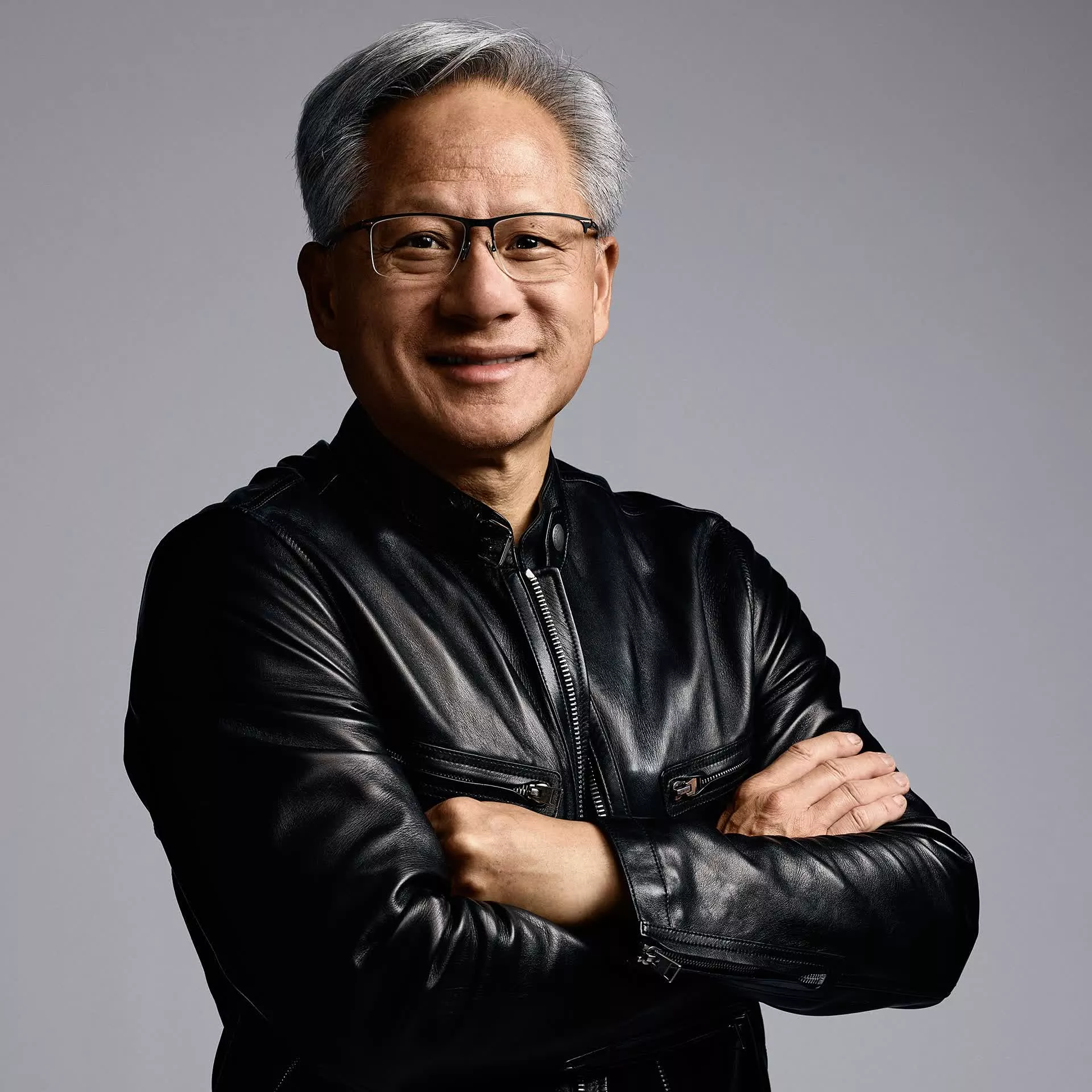
CFO Colette Kress has taken over as interim CEO, and longtime director Harvey Jones has become Nvidia's first-ever board chair. As we explored in our coverage of Nvidia's succession dilemma, finding a replacement for Huang is no small task. Few executives combine his technical background, relationships with the world's biggest tech companies, and influence over the burgeoning AI industry.
For now, the board has announced no change to its succession plans. The next major event for Nvidia comes as early as this Tuesday's quarterly earnings report. The financial results cover the most recent period when he was fully in charge, but it will be Kress who has to answer investors' questions about what comes next.