also @ TechSpot: Building a Thin Mini-ITX PC: Small and Silent Performance

Internet "Bill of Rights" proposed by anti-SOPA lawmakers

By

On June 11, 2012, 5:00 PM

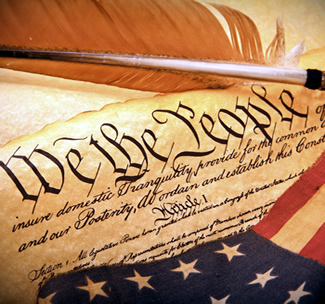
Congress critter and California republican Darrell Issa is working on the first draft of what may eventually become the "Digital Bill of Rights" -- legislation which could possibly shape online freedoms and the expectations afforded to citizens of the Internet. Although very early in the process, Congressman Issa and Senator Wyden (D-OR) recently discussed the bill at the Personal Democracy Forum in New York.

Senator Wyden, a former anti-SOPA legislator, talked of the nearly ubiquitous ability for instant Internet communication and how it manages to cut out the middleman. Gone could be the days of navigating phone systems and sending snail mail to your representative when its already too late, an idea Washington still struggles with. We saw a taste of this with SOPA where millions of people became active to fight for their beliefs both for and against the controversial bill.

Ultimately, SOPA failed pass, but we've also had to contend with ACTA, CISPA, PIPA and other bills which often seem to take root with good intentions, but morph into something that sacrifices the current state of openness, protection and freedom we currently enjoy as Internet users..

"What the community did was create a fear", said Issa, referring to online dissenters who moved against SOPA. "Fear of being exposed is very powerful. No member [of congress] wants to be thought of as not caring about their constituency." he explained, touching on the power of Internet communication on today's politics.

The Digital Bill of Rights

  1. Freedom - digital citizens have a right to a free, uncensored internet
  2. Openness - digital citizens have a right to an open, unobstructed internet
  3. Equality - all digital citizens are created equal on the internet
  4. Participation - digital citizens have a right to peaceably participate where and how they choose on the internet
  5. Creativity - digital citizens have a right to create, grow and collaborate on the internet, and be held accountable for what they create
  6. Sharing - digital citizens have a right to freely share their ideas, lawful discoveries and opinions on the internet
  7. Accessibility - digital citizens have a right to access the internet equally, regardless of who they are or where they are
  8. Association - digital citizens have a right to freely associate on the internet
  9. Privacy - digital citizens have a right to privacy on the internet
  10. Property - digital citizens have a right to benefit from what they create, and be secure in their intellectual property on the internet

Source: keepthewebopen.com

The early draft, in its current form, gives broad suggestions on various facets of the web including freedom, privacy, property and openness. Congressman Issa is hoping to get some input on what a Digital Bill of Rights should look like. The above illustrates what he has thus far. User are encouraged to participate by sharing their ideas on Issa's website: keepthewebopen.com.

, , , , , , , , , , , , , , , , , ,

User Comments: 32

Got something to say? Post a comment
  1. no. 9 is in contradiction of what and why people use the internet in the first place.

    --unless thats there way of phrasing "you have the right to use the internet without being wire tapped".

    in the end regulating the intern is rediculus in concept and a waste of efforts and resources to enforce. the internet is the new tv and I'll watch what ever the hell I want to watch, downloading and uploading are irrelevant to that purpose, since now everyone is essentially able to make a "channel" people must now not compete just against a select few, but against everyone." the sooner people accept that fact, then they can processed to create a means to adapt it in a productive manner.

  2. You have it wrong. The comma in the middle of the unnecessary clause has thrown you -- "...the People of the United States, in Order to form a more perfect Union..." -- and is the reason that it appears to be even more incorrect with the extra comma.

    Hmmmm...

    Sorry, I disagree. However, your assertion that there should be a comma after "We" has no basis in historical fact. The original document does not have a comma. Have a look at page one of the historical document found here - [link]

    However, feel free to suggest to the US Archives that the English, more specifically, the punctuation, in the original constitution is incorrect and that the historical document should be changed.

  3. Sorry, I disagree. However, your assertion that there should be a comma after "We" has no basis in historical fact. The original document does not have a comma. Have a look at page one of the historical document found here - [link]

    However, feel free to suggest to the US Archives that the English, more specifically, the punctuation, in the original constitution is incorrect and that the historical document should be changed.

    What does that even mean: "no basis in historical fact." It is irreverent whether it is in the original document as I was never disputing that, I AM saying that the absence of the comma makes that sentence grammatically incorrect.

    I just want to make sure that you are aware that the English language existed for centuries before the Yanks decided to have a tanty and make a mess of all of it.

    At the end of the day it is incorrect and all Americans should be embarrassed...

  4. What does that even mean: "no basis in historical fact." It is irreverent whether it is in the original document as I was never disputing that, I AM saying that the absence of the comma makes that sentence grammatically incorrect.

    I just want to make sure that you are aware that the English language existed for centuries before the Yanks decided to have a tanty and make a mess of all of it.

    At the end of the day it is incorrect and all Americans should be embarrassed...

    So your true reason comes out.

    Do yourself a favor before you embarrass yourself any more. Put the entire preamble of the constitution into a grammar checker and run a check on it. My apologies, but you will find grammar checkers do not flag it as incorrect, except, of course, for the British spelling of defence since it sounds like you are not a US citizen.

    So, just in case you still are unsure, here is the entire preamble -

    We the People of the United States, in Order to form a more perfect Union, establish Justice, insure domestic Tranquility, provide for the common defence, promote the general Welfare, and secure the Blessings of Liberty to ourselves and our Posterity, do ordain and establish this Constitution for the United States of America.

    There's nothing wrong with the punctuation, and, might I remind you, it was written by a BRIT!

  5. So your true reason comes out.

    Do yourself a favor before you embarrass yourself any more. Put the entire preamble of the constitution into a grammar checker and run a check on it. My apologies, but you will find grammar checkers do not flag it as incorrect, except, of course, for the British spelling of defence since it sounds like you are not a US citizen.

    So, just in case you still are unsure, here is the entire preamble -

    We the People of the United States, in Order to form a more perfect Union, establish Justice, insure domestic Tranquility, provide for the common defence, promote the general Welfare, and secure the Blessings of Liberty to ourselves and our Posterity, do ordain and establish this Constitution for the United States of America.

    There's nothing wrong with the punctuation, and, might I remind you, it was written by a BRIT!

    You have to be kidding me -_-. "the People of the United States, in Order to form a more perfect Union" is an appositive, parenthetical phrase and thus requires a comma on each end to signify as such (except where there would be a conflict of punctuation).

    Honestly?

  6. You have to be kidding me -_-. "the People of the United States, in Order to form a more perfect Union" is an appositive, parenthetical phrase and thus requires a comma on each end to signify as such (except where there would be a conflict of punctuation).

    Honestly?

    I'm not arguing this with you. I am sorry that you are unable to recognize a list of items that are all properly separated by commas. If you really want to learn what is disputed as potentially improper English, search the net for it, its there. However, this "appositive" argument is not. You have a good sense that there is something wrong, however, the consensus is that the "appositive" argument is not what is wrong. But feel free, if it makes you feel better, to continue to profess your English mastership if you'd like. I'm through discussing this with you.

    Perhaps if those Birts who have not yet gotten over the fact that the US is no longer a British colony got over the fact that the US is no longer a British colony (it has been 230+ years now, come on, and forget you not, the US saved the Brits A$$ in WWII) they would also figure out that there are some masters of the English language that live in the US. And besides, it was written by people who were British citizens (or subjects, your choice of words) at the time. A lot of things have come out of the US including the computer you are using to profess that you are a master of the English language. Had the US remained a British colony, the world might still be groveling at the feet of "kings". Is that what you would prefer to where the world is now?

  7. I'm not arguing this with you. I am sorry that you are unable to recognize a list of items that are all properly separated by commas. If you really want to learn what is disputed as potentially improper English, search the net for it, its there. However, this "appositive" argument is not. You have a good sense that there is something wrong, however, the consensus is that the "appositive" argument is not what is wrong. But feel free, if it makes you feel better, to continue to profess your English mastership if you'd like. I'm through discussing this with you.

    Perhaps if those Birts who have not yet gotten over the fact that the US is no longer a British colony got over the fact that the US is no longer a British colony (it has been 230+ years now, come on, and forget you not, the US saved the Brits A$$ in WWII) they would also figure out that there are some masters of the English language that live in the US. And besides, it was written by people who were British citizens (or subjects, your choice of words) at the time. A lot of things have come out of the US including the computer you are using to profess that you are a master of the English language. Had the US remained a British colony, the world might still be groveling at the feet of "kings". Is that what you would prefer to where the world is now?

    If you are talking about the Germans than you a wildly mistaken as it was Stalin who is responsible for their cut down in power, not the US (also, Godwin's law).

    You are wrong: unless you can prove "We the People of the United States" is in ANY way correct than you have no case. The list you speak of (how is that even relevant?) starts AFTER the section if the sentence in question.

    Also, your final paragraph is elitist, ignorant and downright offensive, and does nothing to illustrates your point (if anything, it paints a picture of your polarisation)...

Recently commented stories

Post a new comment

Social Login & Guest Posting TechSpot Members
Login here or sign up for free,
it takes about a minute.
Get complete access to the TechSpot community. Join thousands of technology enthusiasts that contribute and share knowledge in our forum. Get a private inbox, upload your own photo gallery and more.
TechSpot on:

Subscribe to TechSpot

Get free exclusive content, learn about new features and breaking tech news.