Why it matters: Starlink has doubled the price of its plans and hiked hardware costs by almost 40%. The good news is that the changes only applies to private and business jet operators, so if they do affect you, you'll probably be able to afford the extra costs.
Starlink updated its Business Aviation plans earlier this week, which it says better reflect how operators use connectivity across regional and global operations.
The Aviation Regional 25GB plan has jumped from $2,000 per month to $4,000 per month. It includes 25GB of data, covers one continental region, and offers speeds of up to 250Mbps. Going over the allowance costs another $250 per GB, a figure that makes home broadband data caps look generous.
At the top end, Aviation Global Unlimited has doubled from $10,000 per month to $20,000 per month. That plan includes unlimited data, worldwide coverage, and speeds of up to 1Gbps, though Starlink notes that its Aviation Performance Antenna is required to reach that figure.
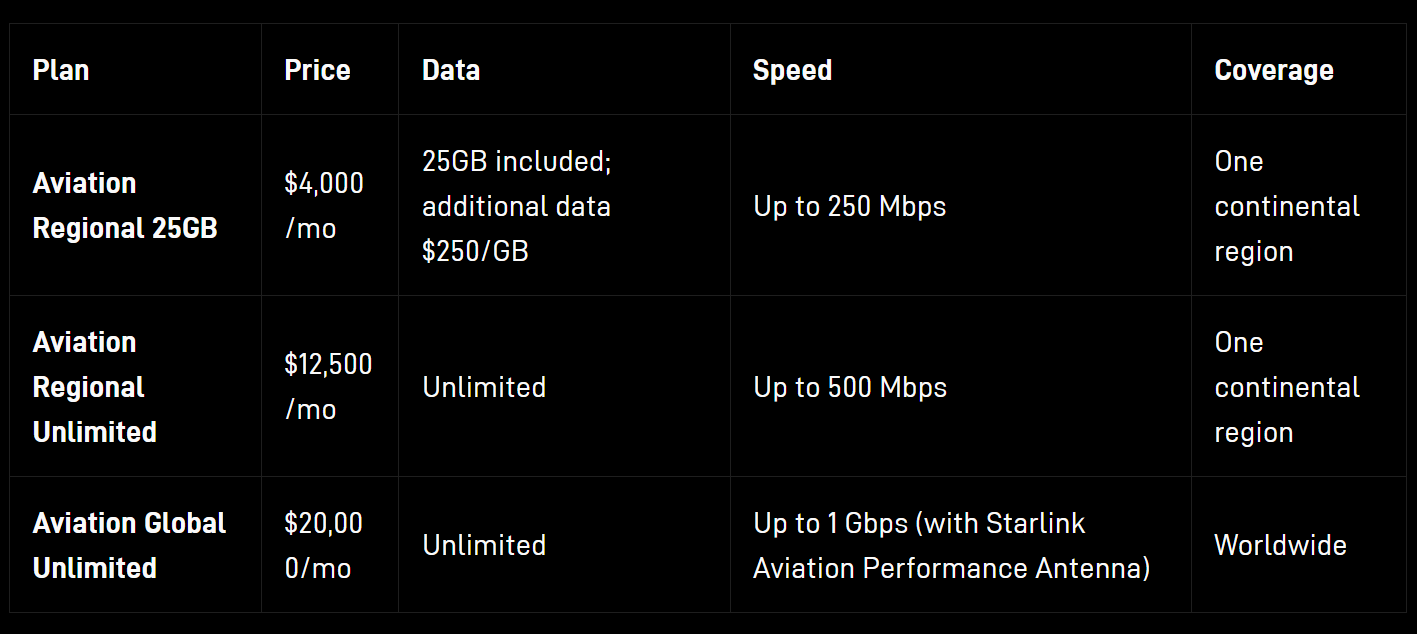
Sitting between the two is a new Aviation Regional Unlimited option at $12,500 per month, with unlimited data, one-region coverage, and speeds up to 500Mbps.
The higher prices are already in effect for new customers. Existing Business Aviation users will be moved to the updated plans on or after August 7, 2026, according to Starlink's support page. General Aviation plans, which target smaller aircraft and owner-pilots, are not affected by this change.
It's not just the monthly prices that are going up. Starlink has also raised the cost of its aviation equipment for business jets to $200,000, up from the previous $145,000 figure. That 38% increase does not necessarily include installation, certification, or other aircraft-specific costs, meaning the final bill could climb even higher.
While this is an example of SpaceX raising certain Starlink prices, it recently offered them to Memphis residents at half price. But given local anger over the Colossus datacenters in the area, this was unlikely to be an altruistic move.
Starlink recently passed 12 million active users across more than 160 countries and territories, and SpaceX has talked up its upcoming V3 satellites as a massive bandwidth upgrade.