
Rapidly rising DRAM prices have the potential to seriously hurt PC gaming. You've probably already seen the crazy price hikes for DDR5 memory, with many popular kits doubling in price over just a few weeks. But increasing DRAM costs could also drive GPU prices higher. How bad could things get, and should you consider buying a GPU now to avoid potential increases in the coming weeks? That's what we'll be exploring today.
So what on earth is going on with DRAM prices? In short: AI.
Recent deals between AI companies and data-center builders have set aggressive timelines to construct gigawatts of data-center capacity in just 2 to 3 years. AI data centers require massive amounts of DRAM to meet the memory needs of modern AI models, especially on GPUs.
To support these buildouts, DRAM supply and future manufacturing capacity have already been bought out. SK Hynix, for example, a major DRAM manufacturer, said recently that "DRAM, NAND, as well as HBM capacity for next year has been sold out."
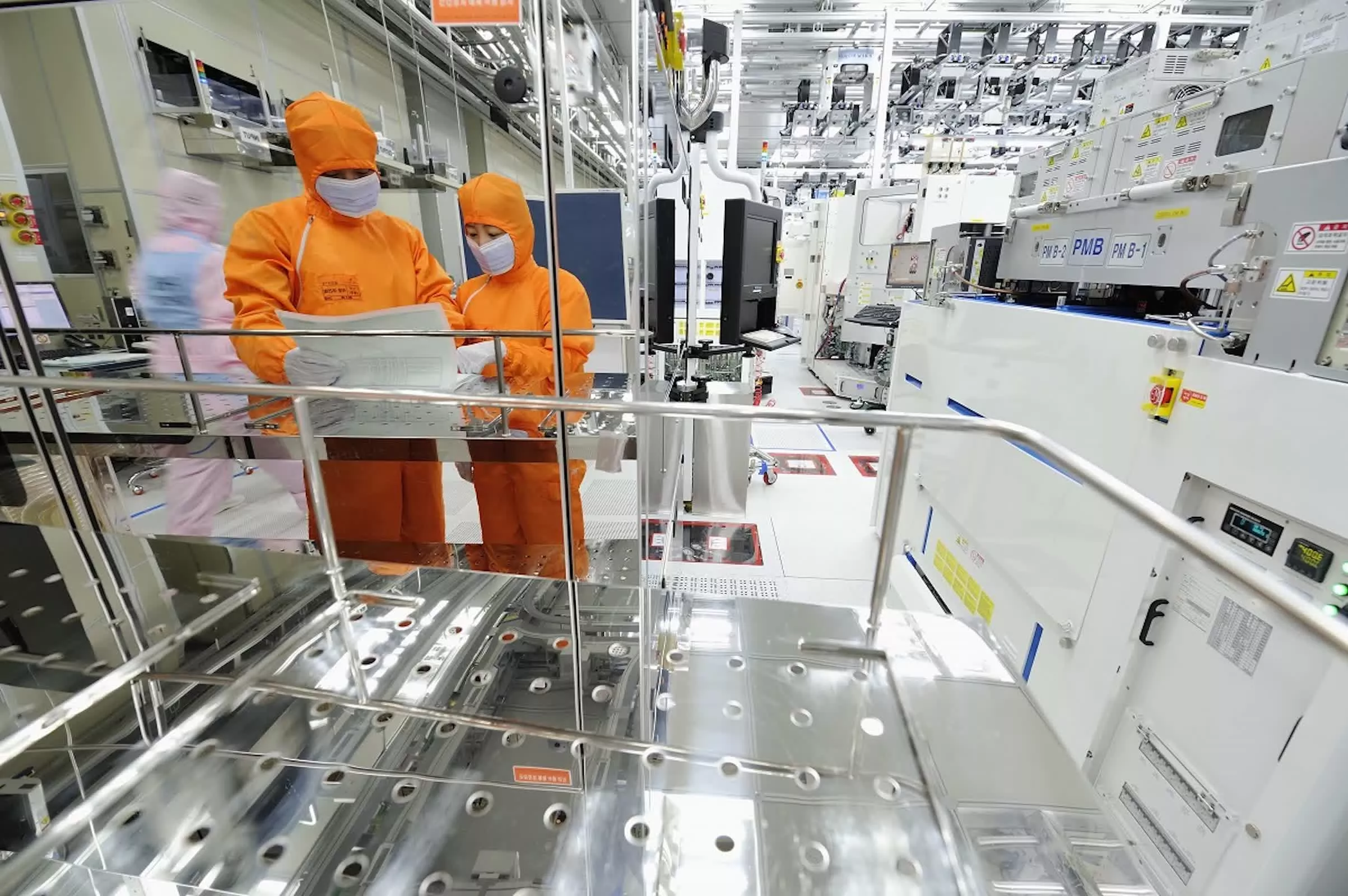
One of the obvious key players is OpenAI and its Stargate project, which aims to rapidly scale server capacity. The two largest DRAM manufacturers – Samsung and SK Hynix – signed deals last month to supply memory for this initiative. Part of the agreement focuses on increasing production, with a target of "900,000 DRAM wafer starts per month at an accelerated capacity rollout."
Some reports have claimed this would mean Stargate consuming 40% of global DRAM supply, though that's not entirely accurate. OpenAI's deal is a plan to scale up production and expand capacity, not instantly consume 900,000 wafers per month. Still, it's a massive infrastructure project that will command a significant share of memory supply in the coming years.
Now you might wonder how this affects the PC gaming market. Don't servers use different memory modules than traditional DDR5 sticks, and don't data-center GPUs typically use HBM instead of GDDR?
Yes, but the issue comes down to manufacturing capacity. DRAM fabs can shift their production priorities and are capable of producing multiple types of memory. Right now, they're reallocating capacity toward HBM instead of DDR or GDDR, reducing supply for consumer-grade memory – leading to price increases and fulfillment challenges.
Sound familiar? It's essentially a repeat of the cryptocurrency boom. With limited fab capacity and many products built on the same nodes, manufacturers prioritized the more profitable crypto market over the gaming market. The same dynamic is unfolding now with DRAM and AI.
DRAM Pricing Has Doubled Quickly
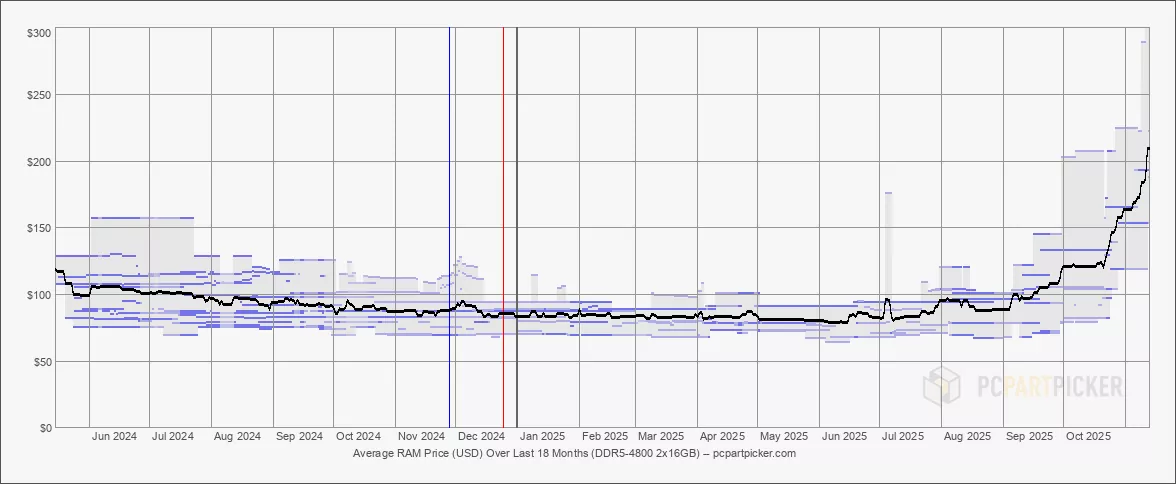
On the DDR5 desktop memory side, we're already seeing major price impacts. Since mid-September, prices for popular DDR5 kits have more than doubled, and we still haven't reached a plateau, so the extent of future increases is uncertain.
DDR5-4800 2x16GB - Average price in USD over last 18 months
DDR5-5200 2x16GB - Average price in USD over last 18 months

DDR5-5600 2x16GB - Average price in USD over last 18 months

Source: PC Part Picker
Prices for all DDR5 kits have climbed sharply, but especially for 32GB DDR5-6000 kits that we typically recommend. These averaged around $125 for most of the year and now exceed $250, according to PC Part Picker.
DDR5-6000 2x16GB - Average price in USD over last 18 months

Source: PC Part Picker
The same applies to 64GB kits, which have risen from as low as $200 at the start of 2025 to nearly $500 on average today. Even entry-level DDR5 has been hit: 32GB DDR5-4800 kits that previously sold for under $100 have surged to nearly $200, so opting for slower or cheaper memory no longer offers relief for budget builders.

With DDR5 DRAM module prices continuing to rise month over month, and supply expected to remain severely constrained at major manufacturers throughout 2026, DDR5 pricing is in trouble and likely to worsen.
This doesn't look like a situation where waiting a month or two will lead to falling prices or even a stable plateau – paying at least $200 to $250 for RAM is quickly becoming the new minimum.
GPU Pricing Might Be Affected
Unfortunately for gamers, the pain doesn't end there, because GDDR memory used in graphics cards is also being affected. We're not seeing major pricing impacts yet as GPU prices had just stabilized at MSRP in early November, but there's a strong chance GPUs will be hit in the coming months.

This is because GDDR memory shares manufacturing capacity with other types of DRAM, and when manufacturers prioritize AI products, consumer-focused memory supply takes the hit.
To illustrate how this could influence GPU pricing, we've done some research and modeling across various scenarios. First, we need a baseline for current memory costs in today's products. Based on what we've heard from graphics card makers, along with information from sources like DRAM Exchange, current-generation GDDR memory typically costs around $2.50 to $3 per GB.

Prices fluctuate monthly and yearly, but this gives us a general idea of GDDR6 costs. Pricing for GDDR7, which powers most Nvidia GeForce 50-series models, is less clear because it's effectively exclusive to Nvidia right now, but industry sources told us earlier this year that GDDR7 is only slightly more expensive than GDDR6, not dramatically so.
This means that at typical baseline pricing, adding 16GB of GDDR memory to a graphics card costs a company roughly $40 to $50. GDDR6 tends to fall in the low $40s, while GDDR7 is closer to $50. Cards with 12GB of VRAM, like the RTX 5070 or Arc B580, save a bit, with their GDDR memory costing around $30 to $40. GPUs equipped with 8GB of VRAM use less than $25 worth of memory.

This may sound relatively affordable considering most models use no more than $50 of VRAM, but that basic BOM cost isn't what consumers ultimately pay. When GPU makers like Nvidia and AMD sell their GPU die to AIB partners, they bundle the GPU and memory together. This ensures the memory is validated and lets companies like Nvidia benefit from massive bulk orders of the same GDDR7 modules for use across all AIB models.
Bundling memory with the GPU increases the total production cost of the package. As we know, these companies (especially Nvidia) apply substantial margins. When they sell the GPU-memory package to AIBs, the margin is applied to both the GPU die and the memory, which creates a significant portion of the card's final price. As a result, even a modest increase in memory BOM cost is passed on to consumers at a much higher rate, as companies seek to preserve their margins.

You can see this in plain view when comparing the 16GB and 8GB variants of the GeForce RTX 5060 Ti or Radeon RX 9060 XT. The typical BOM cost for 8GB of VRAM is roughly $20 to $25, yet the consumer pays about $50 more for the higher-memory model. That's because the GPU vendors apply at least a 50% margin. With a 50% margin, a $25 increase in VRAM cost turns into a $50 increase in the final price.
This is a simplified explanation, of course. Additional margins are added downstream, including the smaller margins taken by AIBs and the ones from distributors and retailers. Collectively, these margins create a ripple effect where a relatively small increase in BOM cost becomes a much larger increase in the final consumer price when passed through the supply chain.
Generally speaking, GPU pricing includes some buffer for normal component price fluctuations. Earlier this year, an AIB partner told us that the price of GPU + memory packages fluctuates throughout the year – largely due to changes in DRAM pricing – but most changes are manageable while still hitting the intended MSRP.
Occasionally, the change is too large, which leads to adjusted supply or pricing for certain models, but typically there is leeway.
What we're seeing in the DRAM market right now, however, is not a "typical price fluctuation" – it's a substantial increase. GDDR hasn't experienced the extreme jumps seen with DDR5, at least according to DRAM Exchange, but GDDR6 spot pricing is rising.


Source: DRAM Exchange
For much of 2025, the going rate was around $2.50 per GB, but current reporting shows prices at $3.30 – a 30% increase. That trend isn't slowing, which means the potential for more pain is on the way.
How Rising GDDR Costs Could Push GPU Prices Higher
A 30% increase in GDDR pricing isn't catastrophic on its own. By our estimates, that would take the BOM cost for 16GB of GDDR6 from around $40 to a little over $50, and while GDDR7 pricing is less clear, it's likely around $60 for that newer memory type.
After accounting for margins, a $10 to $15 increase in VRAM cost would likely result in a GPU that's $25 to $40 more expensive, assuming neither AMD nor Nvidia reduce their margins to keep prices steady.
Estimates at a 30% Increase...


These projections are based on our modeling, which uses a 50% margin for Radeon products and a 60% margin for GeForce, along with various other production and distribution margins.
GPUs with 12GB of VRAM would be affected slightly less, but a 30% increase in GDDR7 costs would still lead to an estimated price hike of at least $25 for something like the RTX 5070. For 8GB GPUs, you can roughly halve the impact compared to 16GB models.

If there was a 50% increase in GDDR pricing compared to normal levels, the situation becomes more concerning. The BOM cost for most current-generation GPUs with at least 12GB of VRAM would rise by about $20 to $25, but this would likely translate into a $50 (or higher) price increase for consumers. Preserving margins would push the RTX 5070 to around $600, the RTX 5060 Ti to nearly $500, and the RX 9060 XT to about $400. Even 8GB GPUs would creep above $300, despite their smaller VRAM footprint.
Modelled Estimates at a 50% Increase


The outlook becomes more dire if VRAM prices double in the same way DDR5 has, where module prices have already doubled. Under that scenario, GPU prices would likely increase by at least $100 in most cases, as the memory BOM cost would rise by $40 to $50 for typical VRAM configurations.
This would hit lower-tier models the hardest, including the RTX 5060 Ti and RX 9060 XT. AMD may be slightly better positioned due to its use of GDDR6 instead of GDDR7, but a $100 price increase would still make the 9060 XT roughly 30% more expensive.
Modelled Estimates at a 100% Increase


Competitively, it would sit near an RTX 5060 Ti at $550, which would experience a similar percentage increase – but such a jump would severely damage the mainstream market. Higher-tier cards like the RTX 5080 would see a smaller percentage impact; a $120 increase driven by VRAM costs would raise the price by only about 12%.
And it only escalates from there. If VRAM prices were to triple, we'd be looking at GPUs that cost $200 to $300 more – again assuming margins remain intact. At that point, the BOM cost itself rises so sharply that even if AMD and Nvidia passed on the memory cost increase without applying their usual margin, graphics cards would still become at least $100 more expensive. There's a limit to how much shielding vendors can provide when core component costs surge this dramatically.
Modelled Estimates at a 3x Increase


The main reason we haven't seen this level of impact in the GPU market yet is timing. First, GPU vendors sign contracts with memory manufacturers to supply DRAM over a set period, usually tied to GPU die orders from TSMC. These contracts can cover months of production, meaning many GPUs currently on shelves may have been manufactured using memory purchased under earlier, lower pricing. There's also a natural delay between component procurement, product assembly, and eventual retail sale.
Second, current indicators suggest GDDR pricing hasn't spiked as dramatically as other types of DRAM – at least not yet. Even if cards were being built using current spot pricing, the immediate impact on retail prices would be relatively modest.
However, the trend is concerning, and rumors have begun circulating that Nvidia is increasing prices to AIBs to compensate for rising memory costs. There are also claims that models like the RTX 5060 Ti 16GB could face supply constraints as a result.
We can't confirm those rumors, but as our modeling shows, a large increase in VRAM pricing would seriously undermine the value proposition of mainstream and mid-range 16GB GPUs. A doubling of VRAM cost would likely make the 5060 Ti 16GB about 30% more expensive.
Nvidia RTX 50 Super Launch Impact
There have also been recent rumors suggesting the RTX 50 Super series has been delayed or possibly cancelled. We don't have direct information about the status of these models, but we can analyze what such products might look like and how viable they would be in the current DRAM pricing environment.
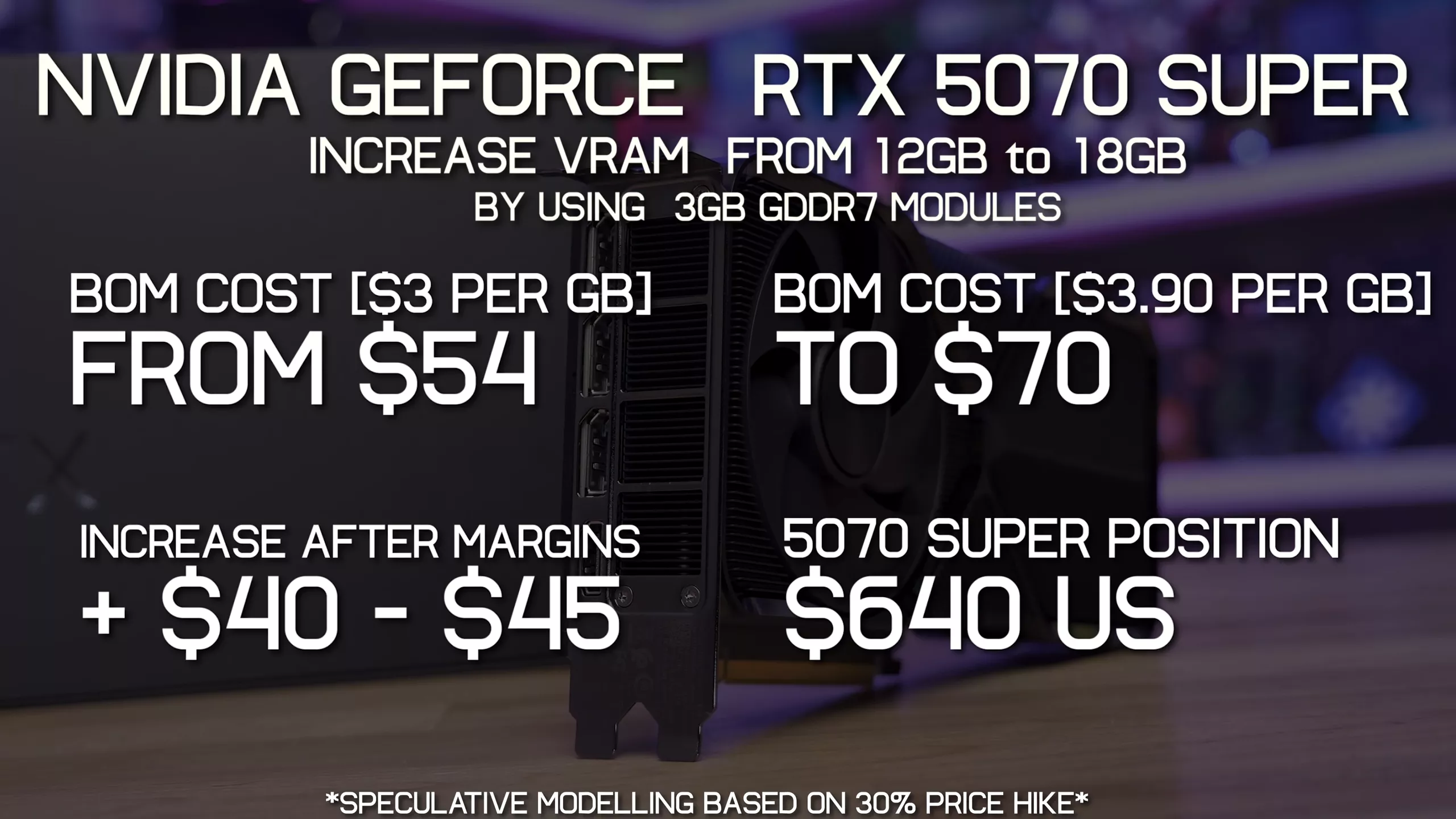
Take the rumored RTX 5070 Super, which earlier this year was said to increase VRAM capacity from 12GB to 18GB through the use of 3GB GDDR7 modules. In a world where GDDR7 costs about $3 per GB, going from 12GB to 18GB would raise the memory BOM cost from roughly $36 to about $54.
Speculative Modelling Based on $3 per GB

With Nvidia's margins applied, this likely would have translated into around a $50 higher GPU price, which would make sense. The 5070 Super could have launched at $600 compared to the 5070 at $550, or Nvidia could have priced it at $550 while discounting or discontinuing the RTX 5070.
But with even a 30% increase in GDDR7 pricing, the memory BOM cost for an 18GB RTX 5070 Super becomes nearly double that of a 12GB RTX 5070 under normal pricing. To maintain a 60% margin, Nvidia would likely need to set an MSRP nearly $100 higher, and real-world prices would probably be at least $70 more.
Speculative Modelling Based on 30% Price Hike
If memory pricing doubled, Nvidia would face the prospect of selling the RTX 5070 Super for roughly $100 more than the RTX 5070 in real-world terms – potentially making the product non-viable. In that scenario, the RTX 5070 could end up near $650, while the 5070 Super – with additional VRAM – would approach $750. That would be a disastrous position, especially if consumers compare it to the RTX 5070's original $550 MSRP.
Speculative Modelling Based on 30% Price Hike

You can see why Nvidia might hesitate to launch the GeForce 50 Super series with increased VRAM in a volatile DRAM market. If the primary benefit were a performance bump, we might still see these cards, but if the main selling point is more VRAM, it wouldn't surprise me if those plans were put on hold.
Should You Buy a GPU Right Now?
What does all this mean if you were considering to buy a new graphics card soon? Trying to predicting the future is always going to be tricky, so take this with the appropriate grain of salt, but we think it's unlikely that GPUs will drop much further below MSRP in the coming months.
There may be occasional short-term deals, but we expect newly manufactured models to carry higher production costs due to rising DRAM pricing. How long that takes to show up in retail is unclear, but the outlook isn't promising.

Based on that, if you want the best deal, we'd suggest buying sooner rather than later – especially if the GPU model you want is currently selling at a good price.
Right now, as we put this analysis together, the vast majority of GPUs are selling at MSRP, which puts buyers in the best position they've had all year.
Will AMD, Nvidia, or even Intel sacrifice margin to keep pricing steady, or at least soften the impact of rising DRAM costs? It's possible, but historically unlikely.

Publicly traded companies protect margins because shareholders and executives treat them as key performance indicators. Nvidia, being dominant, has little incentive to reduce margins in the gaming segment. AMD could try to gain market share by doing so, but they're AMD and they do AMD things.
We reached out to the major GPU vendors to ask how DRAM pricing may affect consumer GPUs, and as expected, none were willing to comment at this time.