Forward-looking: A computing device modeled after the human brain – and small enough to fit under a desk – was unveiled in Hengqin, marking a potential breakthrough in supercomputer design. The machine, called BI Explorer (BIE-1), is described by its developers as the world's first "brain-like intelligent computing body."
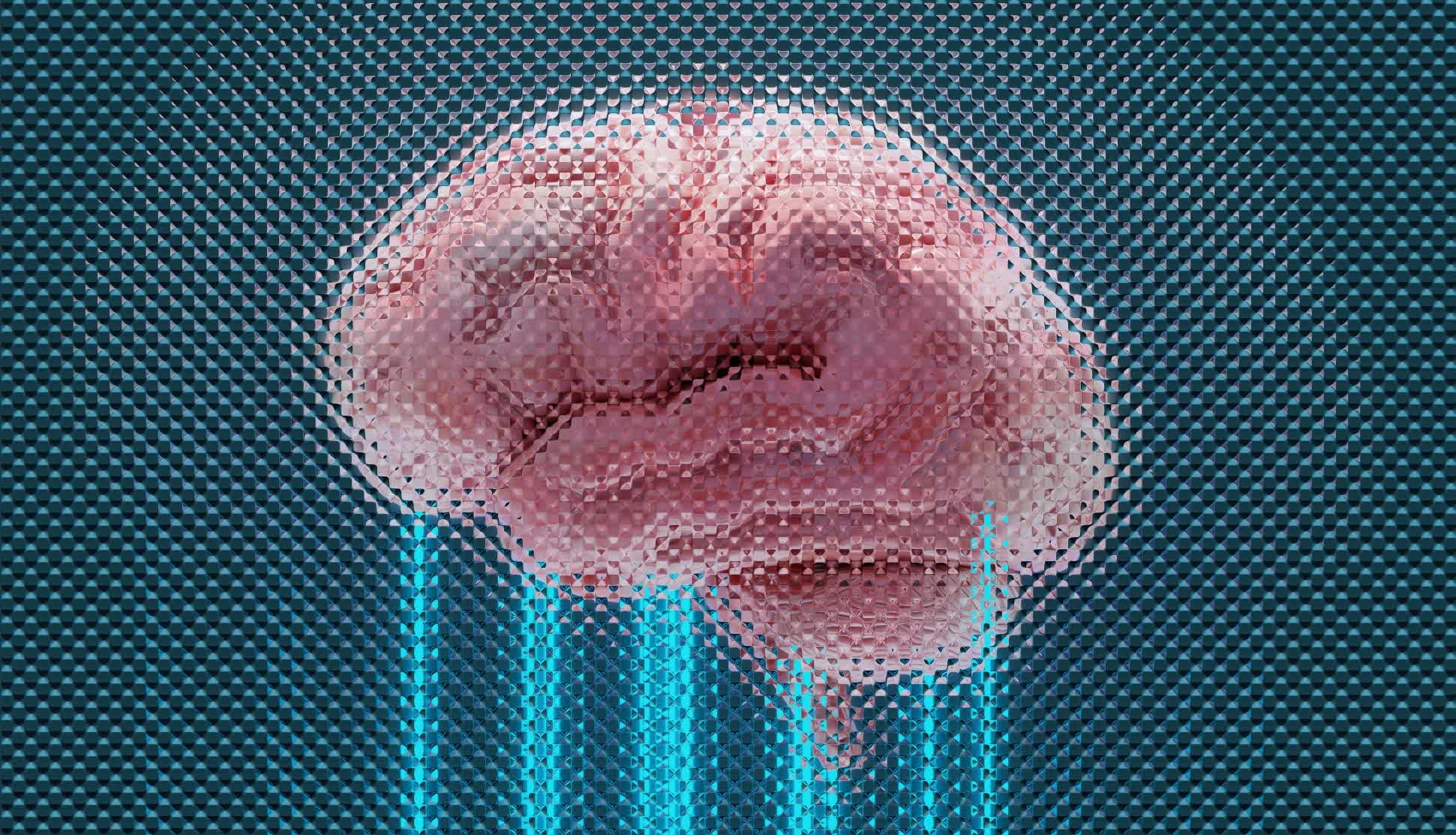
Developed by the Guangdong Institute of Intelligent Science and Technology in collaboration with two of its incubated firms, the system combines the scale of advanced data centers with the compactness of household hardware. Officials unveiled the device on October 24 at the Hengqin Guangdong – Macao Deep Cooperation Zone.
BIE-1's designers describe it as "supercomputing in a small refrigerator." Roughly the size of a single-door mini fridge, the unit houses 1,152 CPU cores, 4.8 terabytes of DDR5 memory, and 204 terabytes of storage.
Despite its processing density, it produces less than 45 decibels of noise – quieter than a normal conversation – and consumes roughly one-tenth the power of a conventional supercomputer. It remains stable at temperatures below 70°C, even under peak workloads.
Engineers say its energy efficiency and low noise levels allow it to operate in offices or laboratories without specialized cooling systems. Nie Lei, head of Neogene Intelligent Technology, compared the design to "compressing the capacity of a massive library into a single quiet bookshelf."
The breakthrough centers on a new computational architecture known as the Intuitive Neural Network (INN). This system was designed to emulate human reasoning by blending numeric, symbolic, and logic-based computation, rather than relying solely on traditional pattern recognition. Unlike conventional AI models, which often function as "black boxes," INN networks can display the reasoning steps behind their outputs.

Researchers say the system's three-valued logic framework enables it to process numerical, linguistic, and sensory inputs simultaneously. It can perform both model training and inference more efficiently by adapting to new information without discarding prior knowledge, a long-standing challenge in AI known as catastrophic forgetting.
Cai Jiang, who heads Suiren Medical Technology and the institute's Joint Laboratory of Multimodal Brain – Computer Interface Systems, said the approach allows the device to "learn with small amounts of data, integrate multiple data types, and reason in a way similar to human cognition."
Test results show that BIE-1 completed training on tens of billions of tokens in just 30 hours using a single-node CPU setup. Its training and inference throughput – 100,000 and 500,000 tokens per second, respectively – is comparable to large GPU-based clusters used in current artificial-intelligence research.
According to the development team, these performance levels cut hardware costs by about half and reduce energy consumption by up to 90 percent compared with traditional high-performance computing systems. The device also achieved higher accuracy on several benchmark datasets used to evaluate AI models. Developers view this as evidence that brain-inspired design can advance computational performance and sustainability simultaneously.
Zhang Xu, director of the Guangdong Institute and an academician of the Chinese Academy of Sciences, said the achievement could "redefine how computing power is produced and deployed." He believes the system's compact form factor will allow BIE-1 to extend beyond research labs and data centers into homes, offices, and small enterprises.
He pointed to potential applications ranging from personalized digital assistants to medical diagnostics, financial analytics, and other high-precision computational fields, noting that users can customize the system for their specific needs.
Beyond speed and accessibility, developers emphasize the system's efficiency and environmental goals. The Guangdong Institute positions BIE-1 as a model for low-carbon computational infrastructure, with potential benefits for both national data centers and enterprise networks. Project leaders describe it as a step toward "a greener, more agile, and more interpretable era" of intelligent computation – one where machines not only calculate outcomes but also explain how those outcomes are reached.
Image credit: Shanghai Securities News
A brain-like supercomputer that fits under your desk just launched in China


