Most Americans want digital shelf labels and surveillance pricing banned

midian182

Posts: 11,726   +177
Staff member
A hot potato: Do you think surveillance pricing and electronic shelf labels (ESLs) are a good idea? Probably not, and 67% of Americans feel the same way, believing that the technologies should be banned in grocery stores. The big fear, of course, is that they will increase the cost of goods.
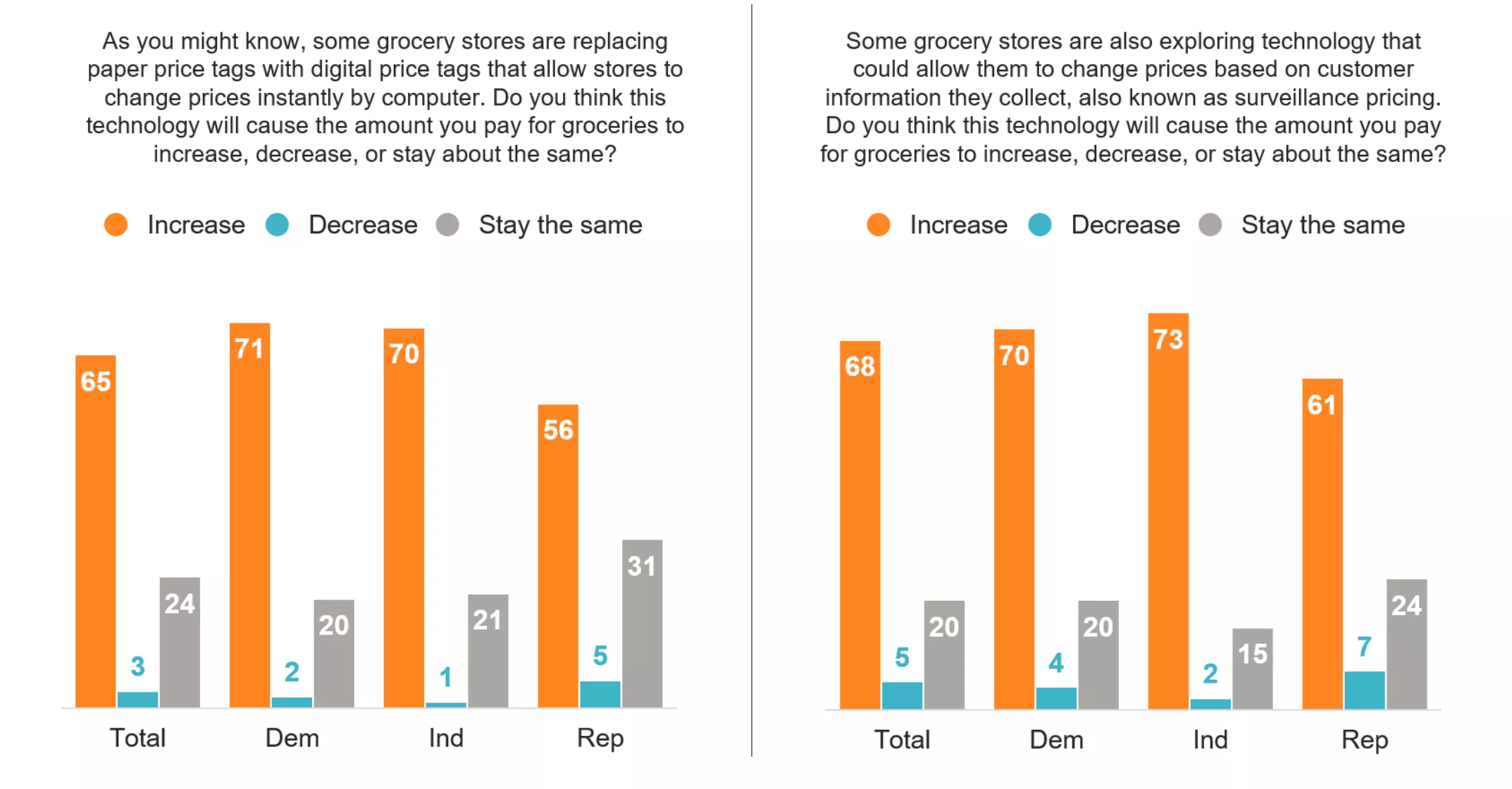
According to a new survey from GBAO Strategies distributed by the United Food and Commercial Workers International Union, 65% of American voters think ESLs will cause grocery prices to increase, while 68% think surveillance pricing will have the same result.

The survey also found that 20% of participants believe surveillance pricing will keep grocery prices the same. There's even a 5% group that optimistically think it will make them go down.
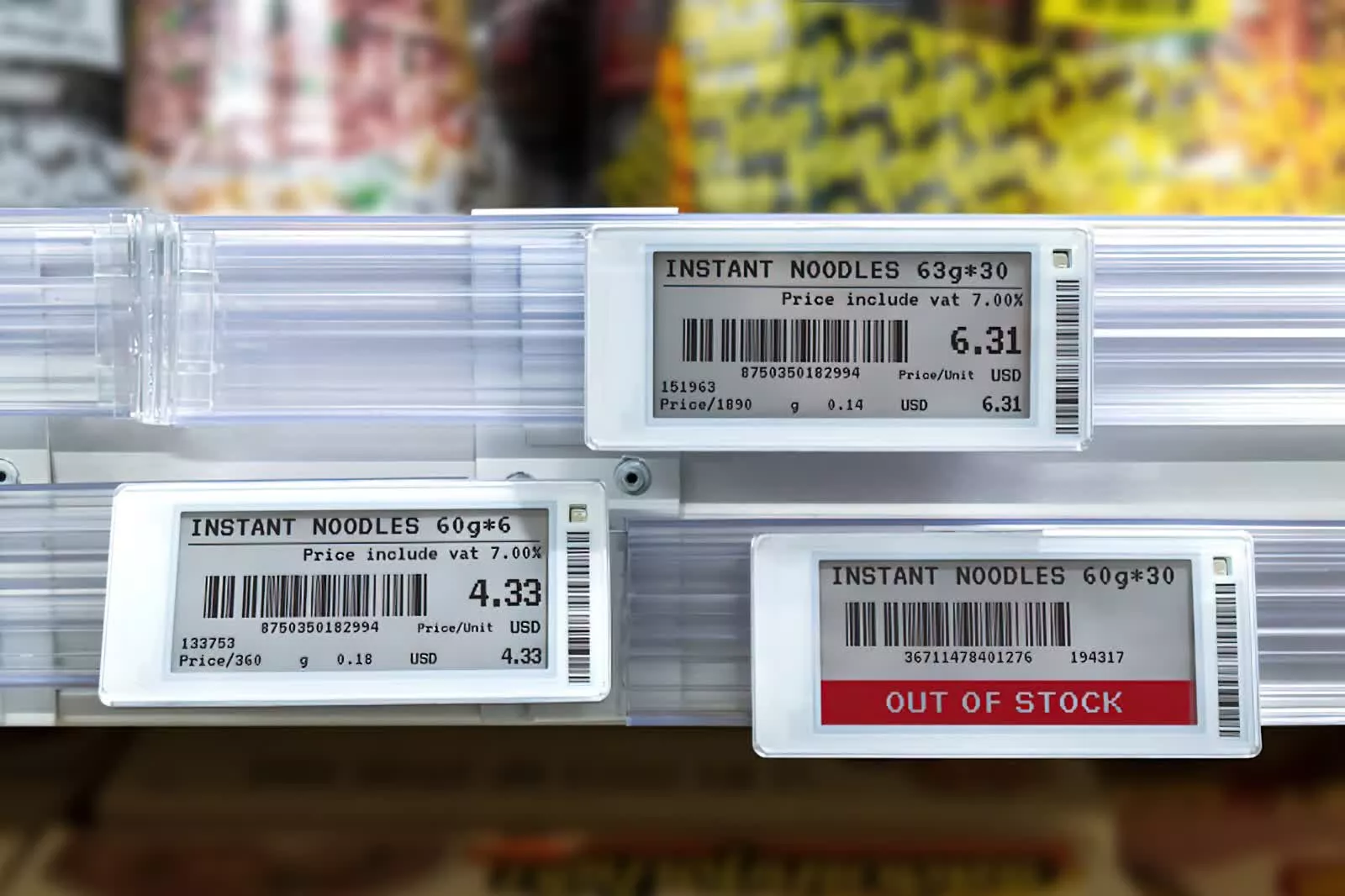
ESLs, or digital shelf labels, as they're often called, are finding their way into more retail stores despite public pushback. About 2,300 Walmart stores use them, with a rollout to all US stores planned by the end of 2026, though the company insists they will not be used to increase prices and a human must be part of the process when prices do change.

Walmart also found itself under the spotlight recently when it secured two US patents this year covering automated markdowns and machine learning-based demand forecasting, raising concerns over dynamic pricing.

Digital shelf labels are also being tested or rolling out in Kroger, Whole Foods Market, and elsewhere. Much like generative AI, just because most people dislike the technology doesn't mean companies aren't going to adopt it.
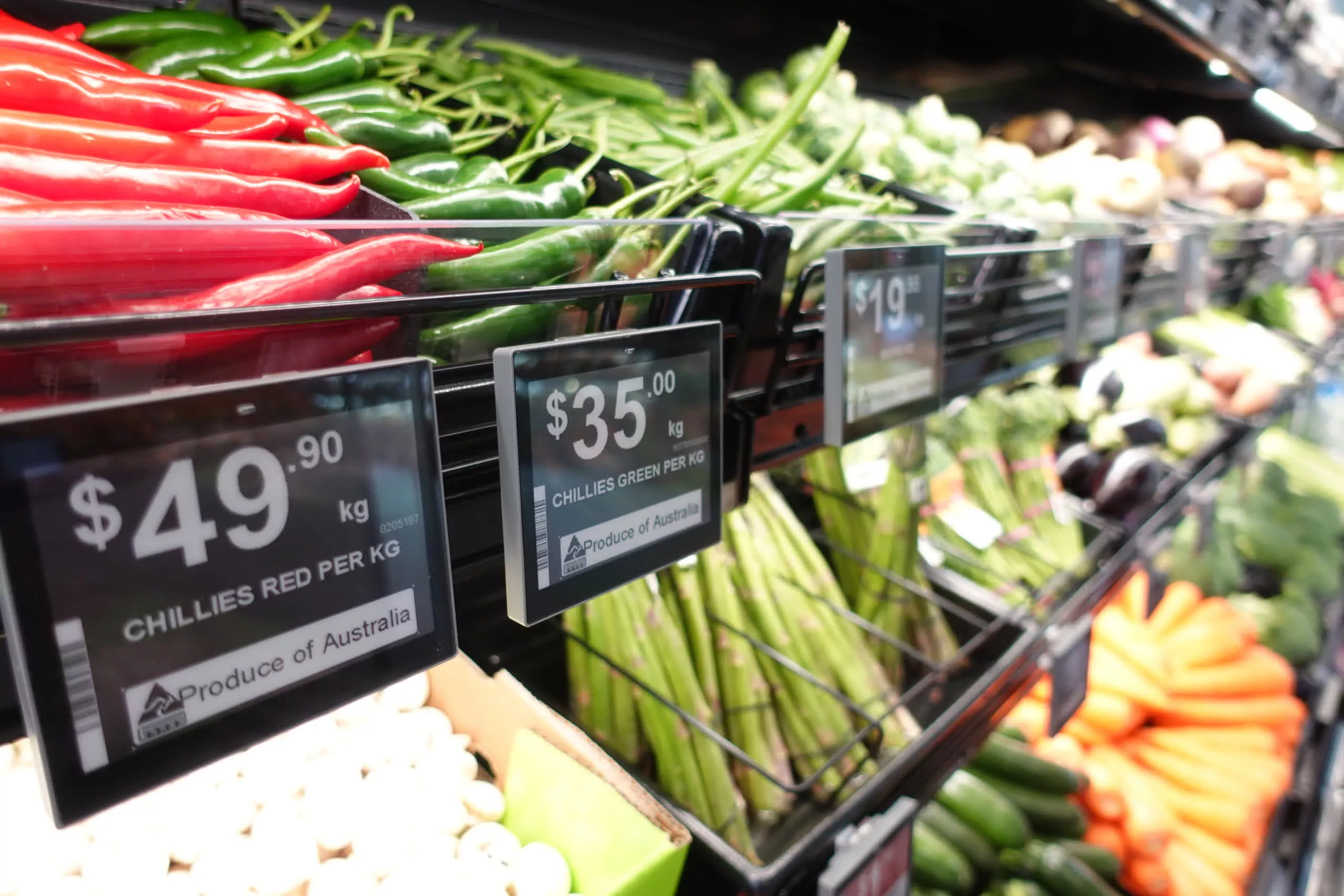
In another similarity to gen-AI, firms using ESLs might find their customer numbers are shrinking in response. 58% of participants said they would be less likely to shop at a store that used ESLs, while just 3% said they were more likely. 35% said it made no difference to them.

The poll also found that 73% of Americans have a negative view of the US economy, 66% are worried about grocery costs, and 72% do not trust stores to use the technology responsibly.

The union is now using the findings to push for bans before ESLs become a standard part of the grocery shopping experience. UFCW says bills targeting ESLs and surveillance pricing have been introduced in Congress and 12 states, with the New York State Senate passing one earlier this month.

The UFCW also points to the way ESL vendors sell the systems to retailers. Promotional material highlighted by the union frames digital labels as a way to change prices instantly, improve margins, and reduce labor costs. That's unlikely to reassure shoppers already convinced that stores would use the technology to squeeze more money from them. It also raises concerns for workers, who could see some of their roles automated away or be left dealing with angry customers when prices suddenly change.

Permalink to story:

 
Everything else causes grocery prices to increase, so I'd expect this to do the same. Are retailers suggesting digital price tags will make them less greedy? Was it the paper tags driving them to such predatory behaviors? What a stupid time to be literate.
 
Everything else causes grocery prices to increase, so I'd expect this to do the same
Learn economics. Long term, there's only one factor that causes grocery prices to increase, and that's government expansion of the money supply. Still, prices continue to decline. In 1800, the average household spent almost 60% of total income on food. By 1960 it was about 18%, and today it's 10%.
 
Last edited:
Learn economics. Long term, there's only one factor that causes grocery prices to increase, and that's government expansion of the money supply. Still, prices continue to decline. In 1800, the average household spent almost 60% of total income on food. By 1960 it was about 18%, and today it's 10%.

-Indeed, as Trump said "Affordability is just a Democrat hoax".

Regulations on digital price tags is simply creeping socialism, nothing more nothing less.
 
I am curious why "Techspot" has been so heavily promoting anti-tech propaganda as of late. It's rather like a shoe shiner demanding a ban on shoe polish.
I don't think it's anti-tech, but anti-AI and anti-corporate or pro-worker and pro-consumer. As far as I can tell, TechSpot has about 2-3 writers with this bias (I would say the third writer may have this bias, but is pretty neutral or may adopt the bias of the source of the news he's reporting on). At TechSpot, each writer is a freelance employee (though they work with the team to designate articles I'm sure). So you have to consider the author of each article separately.

Anyways, there's an easy counter to this change that can benefit you as a consumers now: digital price shopping. Use some grocery shopping app and compare the prices of items that you see in-store to see if it's worth getting somewhere else. Then the demand side of the economy adjusts faster to digital price changes and there's limited harm to consumers. In fact, I bet part of why grocery stores are implementing digital price labels is because some consumers are smart enough to buy only the lowest margin items.
 
After working in retail, I'm ok with the e-ink price tags. I have seen a ton of paper waste from rearranging, updating, etc.

For those concerned about the prices increasing because it can be updated on a computer, it hasn't stopped people from shopping on Amazon.
 
Every time digital price tags have been trialed, it resulted in higher prices and abusive pricing practices. Every time.
Why spread disinformation like this? Do you fail to realize that every single price on Amazon is a "digital price tag", one that can be changed in microseconds based on demand -- and yet they're consistently lower prices than local vendors?
 
Learn economics. Long term, there's only one factor that causes grocery prices to increase, and that's government expansion of the money supply. Still, prices continue to decline. In 1800, the average household spent almost 60% of total income on food. By 1960 it was about 18%, and today it's 10%.

Chief, did you sleep through an entire global pandemic and three "once in a lifetime" financial crises?
 
Yeah, digital tags will definitely make it easier to raise prices. It can be done quickly and cleanly as often as they want.
At least paper took enough effort to deter changing them toooo often.

As a compromise, I can see passing a law to force them to show the last time the price was updated so they are less likely to do so. Maybe even have extra details like what the price was before the change (in a way that they can't spam it to look better).
 
Chief, did you sleep through an entire global pandemic and three "once in a lifetime" financial crises?
None of which had exactly zero to do with "digital price tags" raising prices, Scooter. Did you forget your orginal postulate?
 
Last edited:
At least paper took enough effort to deter changing them toooo often.
When changing prices is costly and time-consuming, retailers have more incentive to set a slightly higher price, in order to avoid having to quickly raise it again.
 
When changing prices is costly and time-consuming, retailers have more incentive to set a slightly higher price, in order to avoid having to quickly raise it again.
But do you trust them not to do that regardless of ease? Unless they have competition pressure, there's no incentive for them not to continue doing that regardless...
 
But do you trust them not to do that regardless of ease? Unless they have competition pressure, there's no incentive for them not to continue doing that regardless...
Good god, is economics a lost art? Are we in a new Dark Age, where schools no longer teach basic concepts? If retailers "had no competition", they wouldn't need digital pricing: they'd raise prices from the start and leave them there.

Luckily, they DO have competition. We don't need to "trust" them, because in a free market, overly high pricing hurts profits, not helps.
 
Last edited:
Good god, is economics a lost art? Are we in a new Dark Age, where schools no longer teach basic concepts? If retailers "had no competition", they wouldn't need digital pricing: they'd raise prices from the start and leave them there.

Luckily, they DO have competition. We don't need to "trust" them, because in a free market, overly high pricing hurts profits, not helps.
Don't patronize me. I can clearly see that big grocery chains don't care to really compete against each other if they don't feel like they have to (and they don't in their hegemony). Let's not pretend that they practice cutthroat pricing, letalone care to give the best price regardless.

Where I live, from one grocery store to another, the price of the same milk is always a dollar or 2 difference. Same with chips. Same with other goods, and yet the more expensive store doesn't lower their prices to compete. What page in Economics 101 covers that? 🤦🏼‍♂️
 
This isn't a matter of economics, it's a matter of greed and end stage capitalism.
Some need to learn why dynamic pricing is a bad thing, there is no incentive to compete when price tags are digital, especially when shoppers are spied on and have a profile stored in a corporate database to judge how much to screw you over with constantly changing price tags.
 
Don't patronize me. I can clearly see that big grocery chains don't care to really compete against each other ...

Where I live, from one grocery store to another, the price of the same milk is always a dollar or 2 difference. Same with chips. Same with other goods, and yet the more expensive store doesn't lower their prices to compete.
Oops! Most major supermarkets LOSE money selling milk ... it's a "loss leader" to get people in the store. And if there was "no competition", you wouldn't have a different store selling the same goods for "a dollar or two less" -- all prices would be high. What you're describing is the very result of competition.

The two largest grocery chains in the US are Walmart and Kroger: they have net profit margins of 3.1% and 1.8%. If they chose to never make a penny in profits, it would only lower average prices by these tiny percentages.

What page in Economics 101 covers that? 🤦🏼‍♂️
It's literally the first course in high school level microeconomics.

Some need to learn why dynamic pricing is a bad thing
I feel like I'm watching a spin-off of Idiocracy here. Since commerce was first invented, pricing has always been dynamic. Always. It's literally the definition of the law of supply and demand. And -- as economics teaches us -- it's a very good thing indeed.
 
Last edited:
Oops! Most major supermarkets LOSE money selling milk ... it's a "loss leader" to get people in the store.
Ah, still with the patronizing even though there were more examples than just that one. Why would they not price their loss leader more competitively? Oooh that's right, I am not taking you seriously anymore. Have fun.
 
This isn't a matter of economics, it's a matter of greed and end stage capitalism.
Some need to learn why dynamic pricing is a bad thing, there is no incentive to compete when price tags are digital, especially when shoppers are spied on and have a profile stored in a corporate database to judge how much to screw you over with constantly changing price tags.
This, and with digital pricing, the price could change when a targeted consumer comes near an item that the database says they buy. And the price could change within a nano-second of said consumer coming near the item. That could be the epitome of greed and capitalism. All this requires no manual labor on the part of the seller. All the seller need do is keep a database of items that consumers buy.

Some people simply don't understand greed and seem to think that the seller should be legally able to charge anything they want for items they sell. Perhaps, then, Eggs should be priced per molecule rather than per dozen.
 
I feel like I'm watching a spin-off of Idiocracy here. Since commerce was first invented, pricing has always been dynamic. Always. It's literally the definition of the law of supply and demand. And -- as economics teaches us -- it's a very good thing indeed.
Oops. When you walk into a store with digital pricing and literally everything is priced beyond your ability to afford, come back and expound the virtues of economics to us again.
 
I feel like I'm watching a spin-off of Idiocracy here. Since commerce was first invented, pricing has always been dynamic. Always. It's literally the definition of the law of supply and demand. And -- as economics teaches us -- it's a very good thing indeed.
Pricing being dynamic doesn't affect the consumer instantly as it would with digital labels, since it takes time to physically takes time to change paper price tags.
This sort of dynamic pricing and artificial supply and demand based on if the store database thinks you're rich or poor is only a good thing for the store owner.
 
When you walk into a store with digital pricing and literally everything is priced beyond your ability to afford, come back and expound the virtues of economics to us again.
If you can't afford something, don't blame digital pricing. In what world do you believe it benefits a retailer to NOT sell you an item, because you can't afford it? Your point is doubly inane as digital pricing indisputably makes goods cheaper. Not more expensive. If you dispute this, compare the price of something -- anything -- on Amazon to your local retailer.

Some people simply don't understand greed and seem to think that the seller should be legally able to charge anything they want for items they sell. Perhaps, then, Eggs should be priced per molecule rather than per dozen.
Was that some joke? Sellers *can* charge whatever they want for their own property, just as you can price your home, auto, or used collection of Cyndi Lauper CDs however you wish. That's how freedom works. If you think this is a bad system, I suggest you check out the booming consumer paradises of Cuba, North Korea, or a former Soviet Republic.

Pricing being dynamic doesn't affect the consumer instantly as it would with digital labels
Oops! First, the price you're charged has literally nothing to do with that paper tag -- it's the store database, which can (and does) change instantly -- and, because paper tags are difficult to update, the two often don't match. Digital pricing in this respect is far better for the consumer.

You forget that even paper price tag changes affect you instantly: though the process takes time, it could have (and often does) start before you're in the store. Immediately after you view the price, a store clerk might already be there, changing the price.
 
Last edited:
What I'd like to see is some crack shot reporter do this: Go to a store that has these, say 10am during the week. Buy "staples" like milk, bread, meat, common items that most people purchase. Note the price on all of the items and the total.
THEN go back on say a Saturday afternoon, or right before a major holiday or weather event. Buy the EXACT same items and see if the total changed more than a few pennies.
THEN go back after the weather event, holiday etc again during the week around 10am when the stores
aren't as busy, buy the EXACT items again and see if the price went back down.
THAT would tell you if they are screwing with the prices.
Plus, the UFCW union is upset I guess that with automated price stickers, there will be less need for store workers to change the tags on the shelf, so there will be less need for employees (less union work?).
Also, taking Walmart into this, you should see their huge data center on the Mo/Ar border, 2 miles north
of Bella Vista, Ar. They call it "Area 71" (it's on Hwy 71).
It's used to control the lighting, temperature, "forecast" trends and what not. It's been there for YEARS.
They have others scattered across the country. If you drive past it, not only is it fenced in, they have tarp
covering the fences so you can't really even see the facility, it's HEAVILY guarded. LOL, you could probably get into/out of a prison easier than that place, so, it would not surprise me if it is intended to
jack up/down prices at the drop of a hat.
 
I used to work at one of Amazon Stores where they had these ESLs. The prices were live matching what was online. The problem is algorithm decides prices based on sales goals and how much customers are willing and able to pay for an item.
Most of us will tolerate $0.50 cents raise for eggs or milk but when its $1-2 dollars we flip out. They basically want to charge every cent right until that collapse point. When your like **** it im buying it from somewhere else.
Another thing was customer & employee tracking which made the job way more stressful.
Huge NO to these new pricing gadgets.
 
If you can't afford something, don't blame digital pricing. In what world do you believe it benefits a retailer to NOT sell you an item, because you can't afford it? Your point is doubly inane as digital pricing indisputably makes goods cheaper. Not more expensive. If you dispute this, compare the price of something -- anything -- on Amazon to your local retailer.
Oops! Your references to economics are strawmen. Never, in the history of commerce, has any retailer been able to change pricing as quickly as they now can with digital pricing.

Its not my problem that you don't get that or the effect that has on society in general.

Yet, you devolve instantly to personal attacks in an effort to make your point. IMO, that's your greatest weakness. Personal attacks and condescension show that you're having trouble making your point, and that approach will never show that your arguments are superior or valid.

And I don't GAS about what you say about Amazon. IMO, they are not worth my business. Amazon profits because people continue to use them and accept that they are in the business of delivering products they sell at the least possible cost even if they arrive busted and broken from their "Free Shipping" or sold because of deceptive product search results.

I find other retailers even if I have to pay more for what I buy; however, Amazon is not always the least expensive choice. Usually, in my experience, Amazon is the most problematic and not worth my time or my business. That I choose to not buy from Amazon is their loss, not mine.
 
Back