A data center used 29 million gallons of water without a bill, while residents complained about low water pressure

Skye Jacobs

Posts: 2,010   +58
Staff
Ripple effect: A lapse in Fayette County's water metering system drew scrutiny after a large data center campus used tens of millions of gallons of water that initially went unbilled. The issue came to light after residents in Annelise Park, an upscale subdivision in Fayetteville, Georgia, reported a drop in water pressure last year.
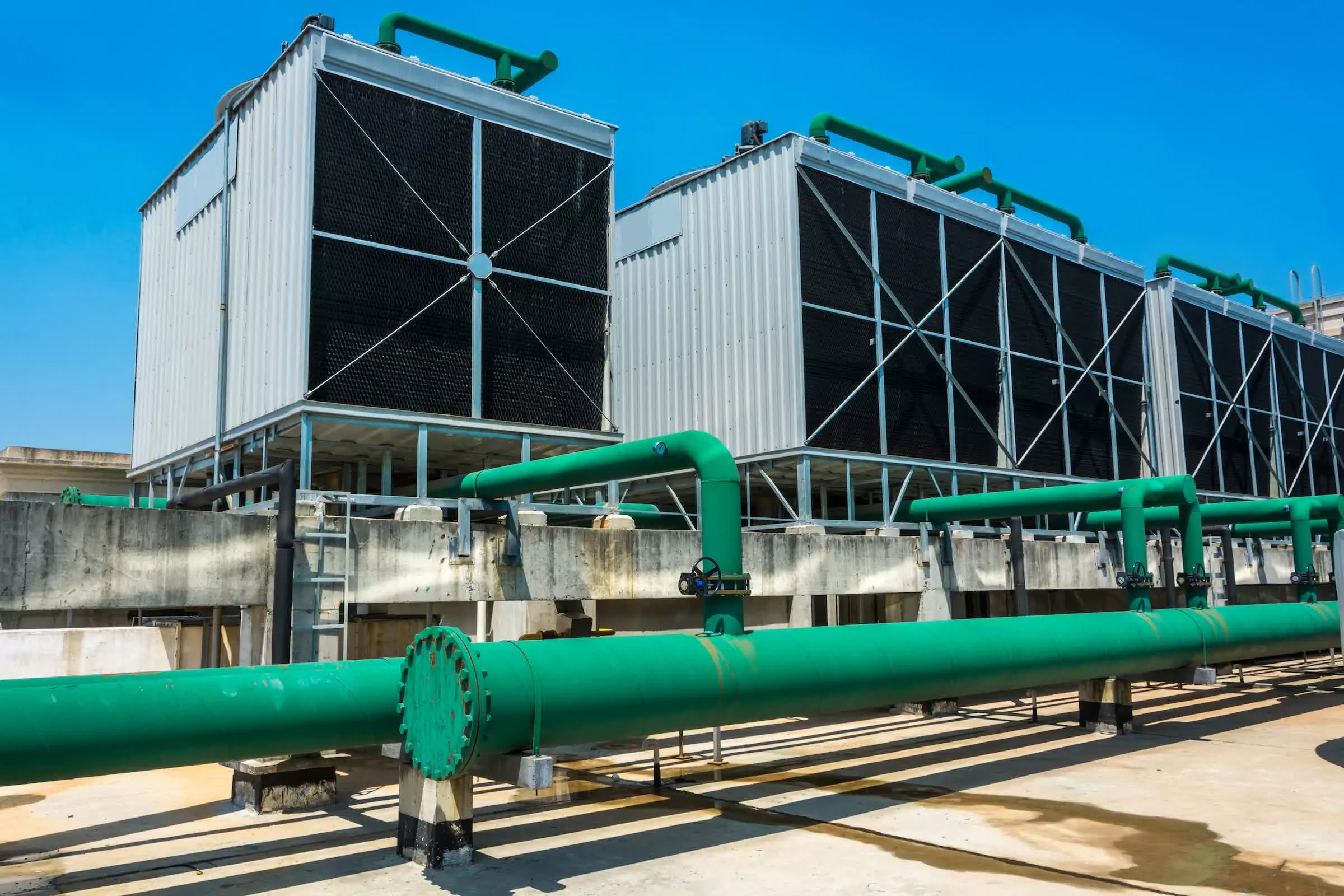
A county investigation traced the problem to a nearby data center development operated by Quality Technology Services (QTS), where two high-capacity water connections were not being properly monitored. One had been installed without the utility's knowledge, and another was not tied to a billing account.

In total, more than 29 million gallons of water went unaccounted for. The county later issued a retroactive bill for $147,474, according to a May 15, 2025, letter sent to QTS. Estimates of how long the usage went unbilled vary. Vanessa Tigert, director of the Fayette County water system, told Politico it likely spanned about 4 months, while a company spokesperson put the range at 9 to 15 months. The balance has since been paid.

The lapse occurred as the county transitioned to a cloud-based smart metering system as part of an effort to modernize its utility infrastructure. But the transition also revealed gaps in how the system handled large industrial users. Tigert described the problem as procedural rather than intentional.

"Fayette County is a suburb, it's mostly residential, and we don't have much commercial meters in our system anyway," she said. "And so we didn't realize our connection point wasn't working."

QTS said the unmetered usage coincided with the transition and that its meters are now fully integrated into the county's system. The company also emphasized that the high water consumption reflects construction-phase demands, not long-term operations.

The Fayetteville site is still under construction and, at 615 acres with plans for up to 16 buildings, ranks among the largest data center campuses in the country. During construction, water is used heavily for concrete work, dust control, and general site preparation – activities that can temporarily dwarf the facility's eventual operating footprint.

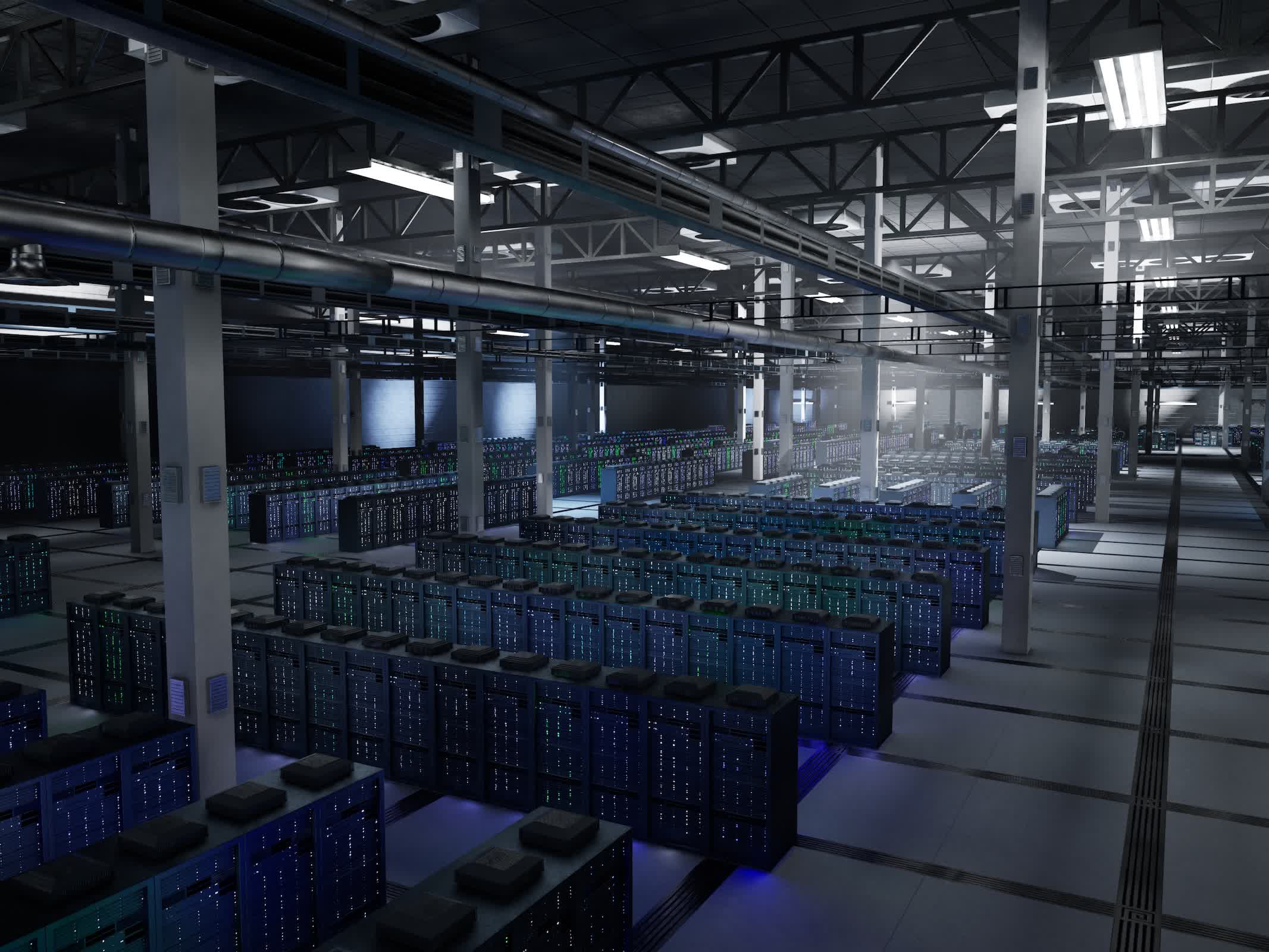
From a technical standpoint, QTS says the completed campus will rely on a closed-loop system that does not consume water for cooling. That's a notable distinction in an industry where thermal management is a major constraint. Traditional cooling approaches can require significant water use to dissipate heat from densely packed servers. QTS maintains that once operational, the site's water demand will be limited to domestic uses, "what four US households use per month," according to a spokesperson.
That long-term projection has done little to ease concerns locally, particularly as Georgia faces ongoing drought conditions. The state is currently experiencing moderate to severe dryness, and Gov. Brian Kemp recently declared a state of emergency in response to widespread wildfires.

The timing has sharpened public reaction. The billing issue only became widely known after a resident obtained the county's letter through a public records request and shared it online. Some residents see a disconnect between how water restrictions are communicated to households and how large users are managed.

"We get this notification from Fayette County water system saying you need to stop watering your lawns to help conserve water," said James Clifton, an attorney and property rights advocate. "So the first thing they do is lean on the individuals and the citizens to stop water consumption when we have QTS that's just absolutely draining us – most months it's the No. 1 consumer of water in the county."

Clifton is also running for a seat on the Fayette County Board of Commissioners, and the issue has fed into a broader backlash against data center development in the area. The Fayetteville City Council recently voted to ban new data centers across all zoning districts, despite the tax revenue these projects can generate. County officials have said the QTS campus alone could bring in tens of millions of dollars annually.

The utility's decision not to impose penalties beyond back-billing has added to the tension. Tigert framed the approach as practical. "They're our largest customer, and we have to be partners," she said. "It's called customer service."

Gregory Pierce, director of the UCLA Water Resources Group, said that kind of restraint is not typical. "I don't know exactly what's happening here, but they probably don't want to upset one of their new and largest customers," he said.

For now, the technical problem has been fixed. But the episode exposes a larger issue that extends beyond Fayette County: as data centers scale into suburban regions, the systems built to support residential demand are being pushed into new territory, and not always cleanly.

Permalink to story:

 
Ah, another day, another mindless anti-datacenter article. According to public records, the Fayette County water system supplies 17.3M gallons daily. Assuming this went on for 10 months (it might have been as much as 15), the total water consumption of the county over that period was 5.3 billion gallons, of which this 29M portion constituted a mere 0.5%.
 
Last edited:
Not penalizing any customer for not sending a bill is understandable.

The whole second water connection without their knowledge sounds very penalizing however. That’s something a construction company knows is wrong.
The last two homes I've had built, I had to pay a private contractor to install the water feeds. As long as you're working on the metered side of the line, there's no impropriety.

Apparently this "unauthorized" feed was in fact being properly metered; the unbilled portion came because the utility switched over to a cloud-based monitoring system and apparently failed to register the pre-existing feed.

Sounds like the proper bribes were paid. It's not like QTS is going to go somewhere else for water if they are not happy with the utility for being penalized after getting caught.
I doubt even you yourself believe this inanity; it's just a form of virtue-signaling an anti-corporate mentality. There's certainly no need to even suspect corruption: as the billing problem was clearly the utility's error, if they attempted to enact penalties, a tort suit would quickly reverse it.

And yes, it is quite easy for a datacenter to shift the bulk of its operations elsewhere, if utility costs rise. The costs of moving servers is trivial in comparison to what they spend on electricity and water.
 
Last edited:
What exactly is newsworthy here, and what the datacenter has to with it?

It's a typical case of negligence, someone (not the datacenter) failed to properly meter something.
With a closed loop cooling the datacenter will consume microscopic amounts of water.

The whole article is entirely pointless, and a rather inept attempt to spread AI hysteria.
 
The last two homes I've had built, I had to pay a private contractor to install the water feeds. As long as you're working on the metered side of the line, there's no impropriety.

Apparently this "unauthorized" feed was in fact being properly metered; the unbilled portion came because the utility switched over to a cloud-based monitoring system and apparently failed to register the pre-existing feed.

I doubt even you yourself believe this inanity; it's just a form of virtue-signaling an anti-corporate mentality. There's certainly no need to even suspect corruption: as the billing problem was clearly the utility's error, if they attempted to enact penalties, a tort suit would quickly reverse it.
I don't think you really understand the concept of usage. The utility did not monitor it because of a mistake, they did not monitor it because they felt it was not attached to anything and therefore, there was no need to monitor it.

The installation of a meter and a connection point generally does not mean anyone can plug in and go. The utility company MUST be notified if a connection is made to their system, it's not on them to "figure it out" or monitor every dead or turned off meter that they have. If I tell the water company I'm moving, THEY come out and turn the valve in the front yard a 1/4 turn. And they will come out and turn it back on for the next customer. If I or the next owner turn it on, we're liable for any usage or penalties for not only the water usage, but for touching their valve without their knowledge.

You just can't do as you please with water mains and electrical drops that belong to the utilities.
 
What a clickbait title. There was no AI data center using up water, and once there is one it’ll be using a closed loop system (so a final 1 time cost). This isn’t even a tech article.

Funny, TechSpot never reports on success stories with communities. You would think that every AI data center is bad because every headline is negative. It’s really lazy journalism. At this point, before I click on any AI headline from TechSpot, I assume the title is misleading or the story is cherrypicking news because there’s obviously an extreme anti-AI bias here. I might just have to start leaving lazy critical comments to go with these articles.
 
What exactly is newsworthy here, and what the datacenter has to with it?

It's a typical case of negligence, someone (not the datacenter) failed to properly meter something.
With a closed loop cooling the datacenter will consume microscopic amounts of water.

The whole article is entirely pointless, and a rather inept attempt to spread AI hysteria.
And the construction company also failed to report that "oh btw we've been using up 30 million gallons of water for free", yes.

You, as an individual, would be going to jail for this.

AI hysteria my arse, dude.
 
I don't think you really understand the concept of usage. The utility did not monitor it because of a mistake, they did not monitor it because they felt it was not attached to anything and therefore, there was no need to monitor it.
Oops! You misread the article. The lack of billing was due to the utility failing to properly register the known feed due to a change they made to their monitoring system.

The utility company MUST be notified if a connection is made to their system, it's not on them to "figure it out"
This "unauthorized" connection was being billed by the utility company every month. Quite obviously they knew about it. It was the AUTHORIZED connection that the utility failed to convert over to their new metering system.

And the construction company also failed to report that "oh btw we've been using up 30 million gallons of water for free", yes.

AI hysteria my arse, dude.
Was this a joke? The data center was getting a bill from the utility company every month, and paying that bill. Do you go out to YOUR meter every month and verify the utility has properly read the meter?

Yeah, I thought not. It's anti-AI hysteria, plain and simple.
 
What exactly is newsworthy here, and what the datacenter has to with it?

It's a typical case of negligence, someone (not the datacenter) failed to properly meter something.
With a closed loop cooling the datacenter will consume microscopic amounts of water.

The whole article is entirely pointless, and a rather inept attempt to spread AI hysteria.
These data centers do not use closed loop cooling systems. People keep bringing up this strawman to justify higher water bills, but 99.999999% of data centers use the far cheaper and easier to build evaporative cooling systems.
 
I'm on a well. It's not metered. So much less costly than city water
It might be less costly but it can cause other issues though obviously the problem is more with farmers taking free water for irrigation than domestic users. Aquifer levels in the US, particularly in the Southern states are at an all time low with some rivers like the Mississippi and Colorado running almost dry. Even lake Mead, the largest reservoir in the US, supply water to 20 million Americans is now starting to run dry.
 
These data centers do not use closed loop cooling systems. People keep bringing up this strawman to justify higher water bills, but 99.999999% of data centers use the far cheaper and easier to build evaporative cooling systems.
Why spread disinformation? Approximately 20% of existing data centers use closed-loop systems, and more than 75% of those under construction use these systems.
 
And the construction company also failed to report that "oh btw we've been using up 30 million gallons of water for free", yes.

You, as an individual, would be going to jail for this.

AI hysteria my arse, dude.
How the construction company could possibly be aware that some id1ots from another company failed to install measuring equipment or forgot to switch it on? It's not a responsibility of the construction company to supervise all the morons around.
 
These data centers do not use closed loop cooling systems. People keep bringing up this strawman to justify higher water bills, but 99.999999% of data centers use the far cheaper and easier to build evaporative cooling systems.
Oh, 99.999999% of data centers use evaporative cooling systems, really?
That's about 99.999999% nonsense, as far as new datacenters are concerned.

The water 'problem' is total nonsense, even if we're talking about old datacenters that really use evaporative cooling - the water used there is far less than what's used to maintain lawns.
However, this particular datacenter uses closed loop cooling.
 
It might be less costly but it can cause other issues though obviously the problem is more with farmers taking free water for irrigation than domestic users. Aquifer levels in the US, particularly in the Southern states are at an all time low with some rivers like the Mississippi and Colorado running almost dry. Even lake Mead, the largest reservoir in the US, supply water to 20 million Americans is now starting to run dry.
I live in a lowland very near Green Bay. The level is up this year. I will not run out and my plumber told me I have the best water he has seen in the area. It doesn't need softening. A few years back everyone along the bay was hauling in rip rap because the level of the bay was dangerously high. In the 60's Lake St Clair and the Clinton River was in a constant state of dredging. It is cyclical.
 
Instead of Advertising "Techspot" at the bottom of most of the pictures within articles, describe what the picture is all about, its purpose and the description of the picture...!
 
These data centers do not use closed loop cooling systems. People keep bringing up this strawman to justify higher water bills, but 99.999999% of data centers use the far cheaper and easier to build evaporative cooling systems.

Not true...! evaporative cooling system is only appropriate and efficient in hot dry climate with low wet bulb temperature...!
 
AI data center developers target rural territory to bypass city construction bans and regulations — rural locations allow sites to bypass city council approvals, rezoning votes, land-use reviews, and reduce public scrutiny
News
By Jowi Morales published 12 hours ago
Developers are looking for the path of least resistance to build their data center projects.
 
What a clickbait title. There was no AI data center using up water, and once there is one it’ll be using a closed loop system (so a final 1 time cost). This isn’t even a tech article.

Funny, TechSpot never reports on success stories with communities. You would think that every AI data center is bad because every headline is negative. It’s really lazy journalism. At this point, before I click on any AI headline from TechSpot, I assume the title is misleading or the story is cherrypicking news because there’s obviously an extreme anti-AI bias here. I might just have to start leaving lazy critical comments to go with these articles.

But data centers don't have ability to check for duplicate files and use of storage running more crappy cat memes and then AI which so far has proven to be lame AF, uses insanes amounts of power for meh.

Meanwhile reading about one state paying 1.9billion extra in tax to pay for another states data centers. Which surely that then means all data centers need to send their bills in, to have the public pay for all of them. Is that where this is going?
 
The detail that one of the connections was installed without the utility's knowledge is doing a lot of work in this story and nobody seems particularly interested in pulling that thread. We're spending a lot of time on the billing gap and the smart metering transition, but at some point a contractor ran a high-capacity water line into a county system and the county found out about it later. That's not a software problem.
 
These data centers do not use closed loop cooling systems. People keep bringing up this strawman to justify higher water bills, but 99.999999% of data centers use the far cheaper and easier to build evaporative cooling systems.
Your statistic is a flat out lie. You’re saying there are around 100,000,000 data centers and only 1 ever used closed loop cooling system? I dare you to try to even prove there are 100 million data centers lmao.

You’re going to need far fewer 9’s and you’ll need to substantiate your claim with an external source since you already lied.
 
Two things that I need to understand better... 1. Why do they need to use that much water? Can't they close the loop and recirculate the water? They can have a large enough reservoir of water so that it can cool mostly on its own. 2. What happens to the water after they are done with it. They aren't really doing anything to it to contaminate it are they?
 
Back