Looking ahead: A space startup based in Cardiff, the capital and largest city of Wales, has taken a significant step toward manufacturing materials outside Earth's gravity. Space Forge successfully powered up a microwave-sized factory in orbit, demonstrating that its furnace can reach temperatures approaching 1,000 °C. The milestone brings the long-hyped vision of space-based semiconductor production closer to reality.
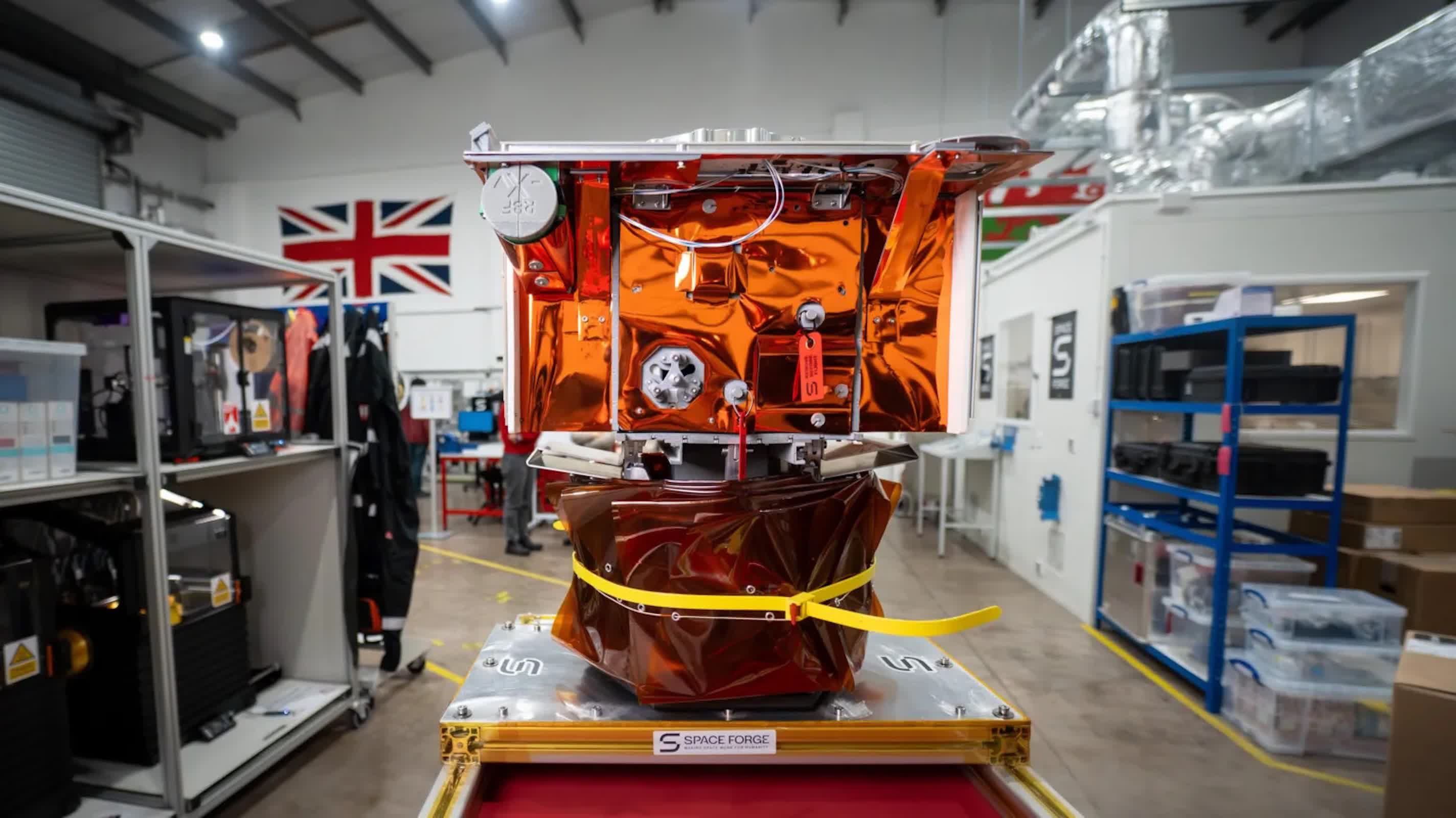
The company's prototype, launched aboard a SpaceX rocket in the summer, is designed to test how the space environment can enhance material performance. In microgravity, semiconductor atoms can form into a near-perfect crystalline structure, while the vacuum above Earth virtually eliminates contamination from airborne particles. The combination promises to yield materials with greater structural uniformity and electronic efficiency.
"The work that we're doing now is allowing us to create semiconductors up to 4,000 times purer in space than we can currently make here today," Space Forge CEO Josh Western told the BBC.
He noted that such high-purity materials have practical implications for modern infrastructure, from 5G base stations to electric-vehicle charging systems and next-generation aircraft.
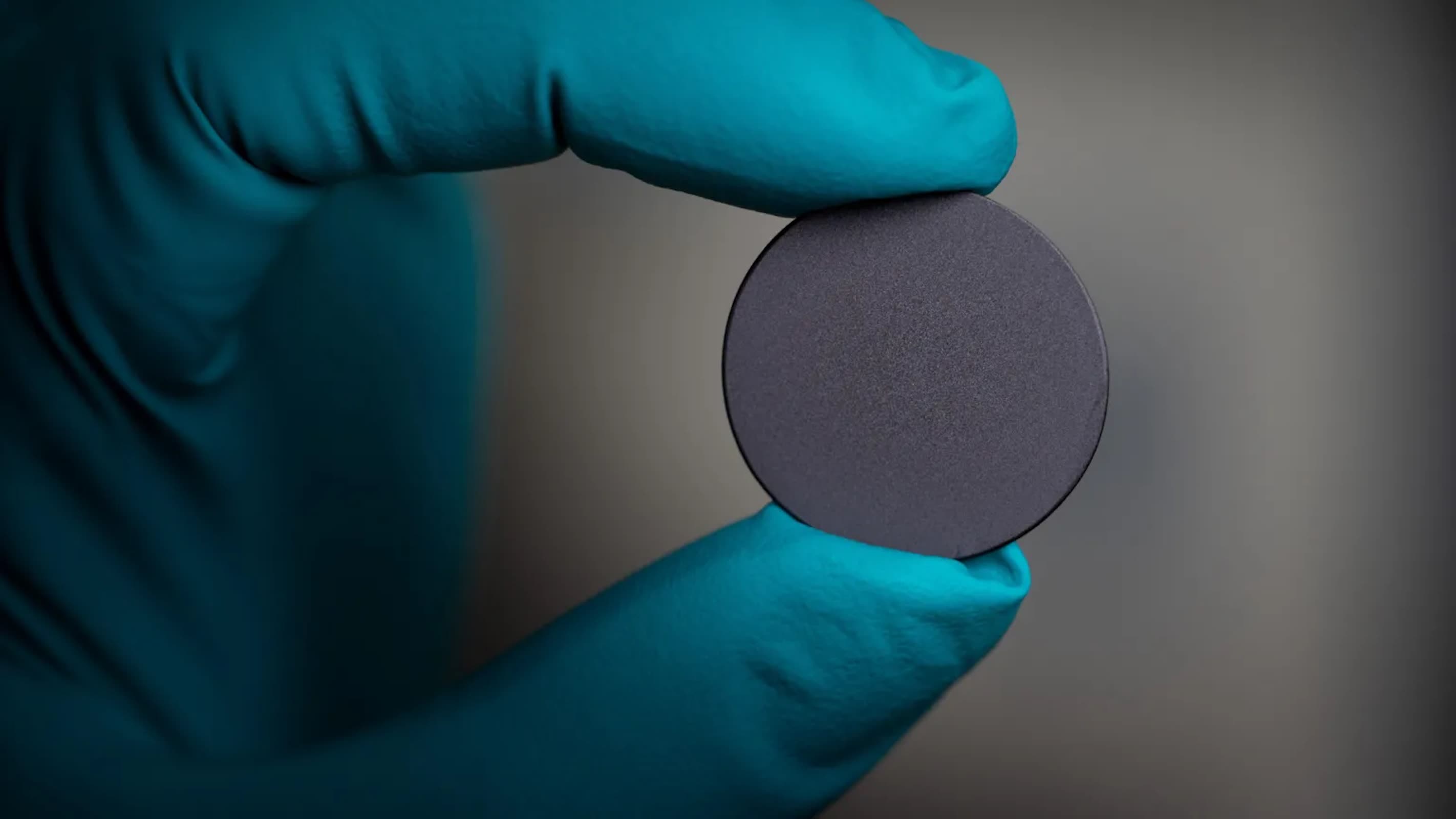
From its headquarters in Cardiff, the company has been continuously monitoring and verifying the satellite's performance since launch, treating the mission as a live, in-orbit technology demonstration.
Payload operations lead Veronica Viera shared imagery from the internal camera system, which showed bright plasma emission inside the furnace: a gas phase heated to roughly 1,000 °C and a critical condition for initiating high-temperature materials processing.
Viera described seeing the image as "one of the most exciting moments of my life," noting the significance of achieving stable plasma generation in microgravity for the company's roadmap. She added that the test represented proof of a "core ingredient" for Space Forge's long-term goal of in-space manufacturing, marking an early validation that the thermal and plasma environments required for semiconductor production can be established and controlled in orbit.

The heat shield is called Pridwen after the legendary shield of King Arthur.
Space Forge is already developing a larger orbital foundry designed to produce enough semiconductor material for up to 10,000 chips. Returning those materials safely to Earth represents the next major challenge. To that end, the team is preparing to test a heat shield called Pridwen, named after the legendary shield of King Arthur, which is designed to protect spacecraft from the extreme temperatures of atmospheric re-entry.
These efforts reflect a broader shift in space-based research. Organizations and private companies worldwide are exploring orbital manufacturing for pharmaceuticals, biological tissues, and other advanced materials.
Libby Jackson, head of space at the Science Museum, said the field is moving beyond theory and into early-stage practice. "In-space manufacturing is something that is happening now," she said.
Image credit: BBC
A microwave-sized factory is now running in space and can hit 1,000°C


