Samsung's strike was called off at the last minute, now workers have to vote on the deal

Daniel Sims

Posts: 2,468   +74
Staff
What just happened? Samsung might have just averted the biggest strike in its history and saved South Korea's economy from tens of billions of dollars of potential damage. As the tech sector and the country's government breathe a big sigh of relief, Samsung's union members must still vote on the deal, the details of which remain unclear.

The Samsung Group's trade union will vote on the company's latest proposal to avert an 18-day strike involving tens of thousands of memory manufacturing workers. The negotiating parties reached the preliminary deal just an hour and a half before strike action was set to begin. Voting will take place on May 22-27.

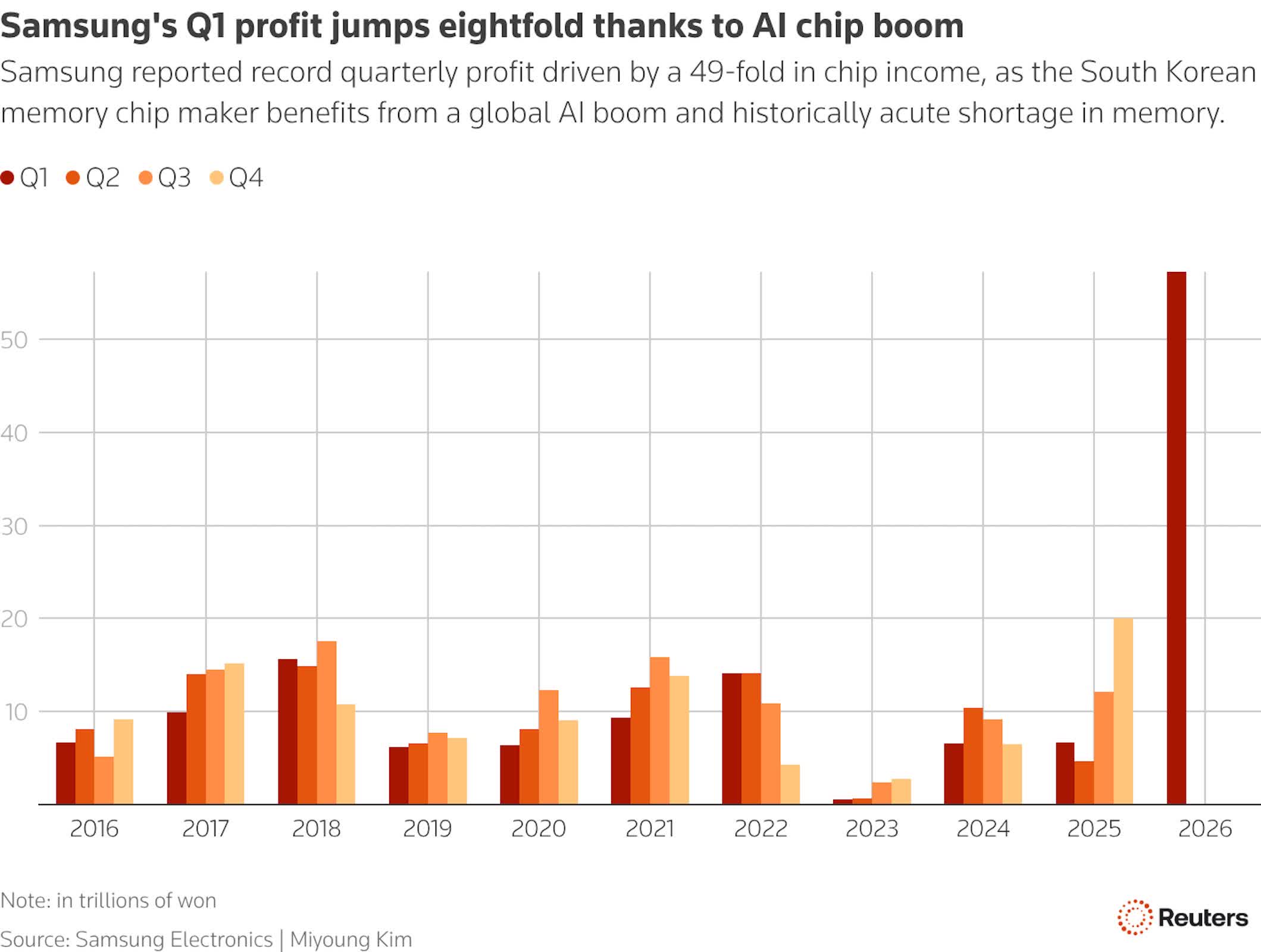
Workers who manufacture the company's DRAM and HBM chips initially demanded 15% of Samsung's recent profit windfall, removal of the performance bonus cap, and a 7% pay raise. One of the three leading manufacturers of the memory chips that data centers need amid the AI boom, Samsung saw its Q1 2026 chip profits jump nearly 50-fold year-over-year. Accepting the strikers' demands could lead to payouts of hundreds of thousands of dollars per employee.
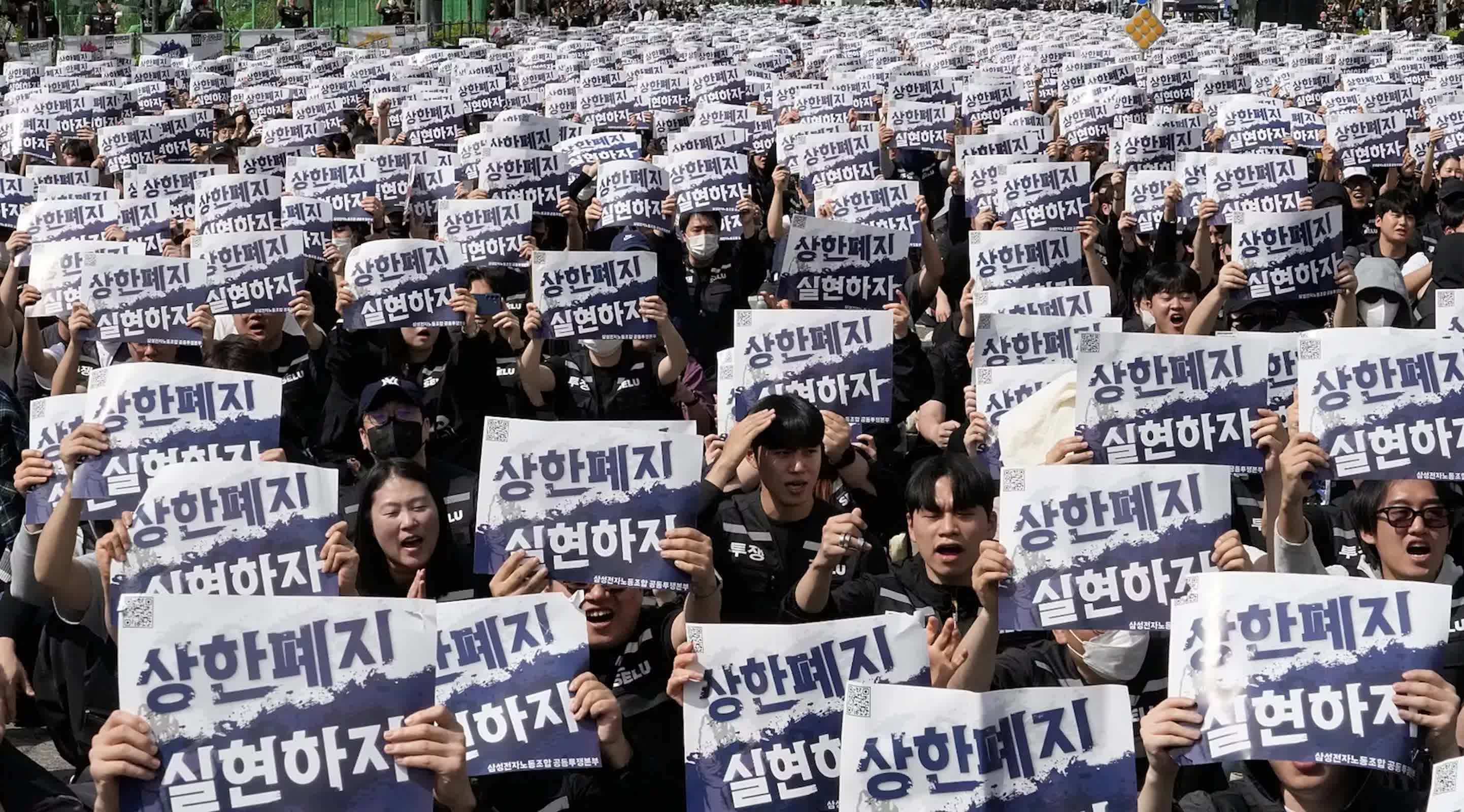
South Korean media reports that the union settled on a 10.5% profit share and the removal of the bonus cap. Negotiations previously wavered between 10% and 13%. The union rejected a one-time 13% payout, worth around $340,000 per employee, demanding it be made an annual payment.

One of Samsung's rivals in the memory business, SK Hynix, was a major factor behind the strike. The company recently agreed to share profits that could be worth around $900,000 per employee next year.

The union chose a sensitive time to threaten a strike. Tech giants and AI data centers are demanding every memory chip that Samsung, Micron, and SK Hynix can manufacture. Any production slowdown could cost Samsung and South Korea's economy billions.
Matters became so serious that the government stepped in to mediate talks. Prime Minister Kim Min-seok said that all options were on the table, including emergency arbitration to suspend industrial action for 30 days. The strike was initially planned to run from midnight local time on May 21 to June 7, but the union announced the deal at 10:34 PM on the night of the 20th.

AI demand has also choked the supply of memory for consumer products such as PCs, smartphones, game consoles, and graphics cards, causing many products to face delays, price hikes, and cancellations. A strike would have worsened the situation.

Permalink to story:

 
Those workers better decide on how to best milk Samsung for all they are worth since their employment days are counted...Samsung and other companies are working hard on A.I to replace people like them.

Hope they stand up for what they believe....while they have the upper head.
 
like the one from amazon ? that they retired ? yea right !
Was that post a joke?

"Despite Amazon retiring the 'Blue Jay' warehouse picking prototype, the company continues to operate over one million active warehouse robots and is pursuing large-scale automation and humanoid robotics investments...."

Unitree just demoed a figure-skating robot, able to perform better than all but an Olympic-class ice skater. Working on a fab assembly line is nothing compared to that.
 
Companies can't make things without people. Companies can't sell products without people. When this equation is threatened, it's important for the worker to show the business that they, the business wouldn't exist without the worker.
This is extremely inaccurate in urbanized areas. In those places, workers choosing a better job is better for solving that issue.

Usually these conflicts have nothing to do with the worker and everything to do with the union leaders. I've absolutely seen union leaders negotiate deals worse for the worker than what the company is offering. The reason for doing it is to maintain a union's power foothold in a company. In the US, it is entirely legal for unions to lie to the employees they purport to represent while companies are restricted from communicating to employees without the union present. Think about how insane that is, and look it up for yourself.

Anyways, in THIS specific situation, your first point is completely invalid. Samsung and other memory makers are expanding production as fast as they can without putting the company at risk. That means it is hiring employees. This is a money-grab situation, and the result will be the extension of memory shortages for customers due to decreased cash available for capital expenditures. For example, Samsung had around $87 billion in cash and cash equivalents at the end of 2025, and it spent $40 billion in capital expenditures. Now that 10% of profits will be given to employees, expect there to be 10% less production growth from Samsung in the future. In effect, the union is enabling price gouging by limiting the ability of Samsung to respond to consumer demand.
 
This is a good thing, for now. Watch Samsung replace their workers with robotics instead of being honorable and decent.
 
This is a good thing, for now. Watch Samsung replace their workers with robotics instead of being honorable and decent.
The honorable, decent thing for Samsung to do is to make high quality products as cheaply as efficiently as possible: something that's good not only the five million individuals that own Samsung stock, but the economy of South Korea and indeed the entire world. This is something anyone who paid attention in microeconomics learned on Day 1.
 
Last edited:
Back