A number of US cities are pulling the plug on Flock Safety's AI cameras

Skye Jacobs

Posts: 2,010   +58
Staff
A hot potato: A growing number of US cities are ending contracts with Flock Safety, the Atlanta-based company whose AI-powered camera systems have rapidly proliferated across the country. Originally promoted as a public safety tool, the company's technology is now at the center of a broader national debate over the use of artificial intelligence in law enforcement and immigration enforcement.
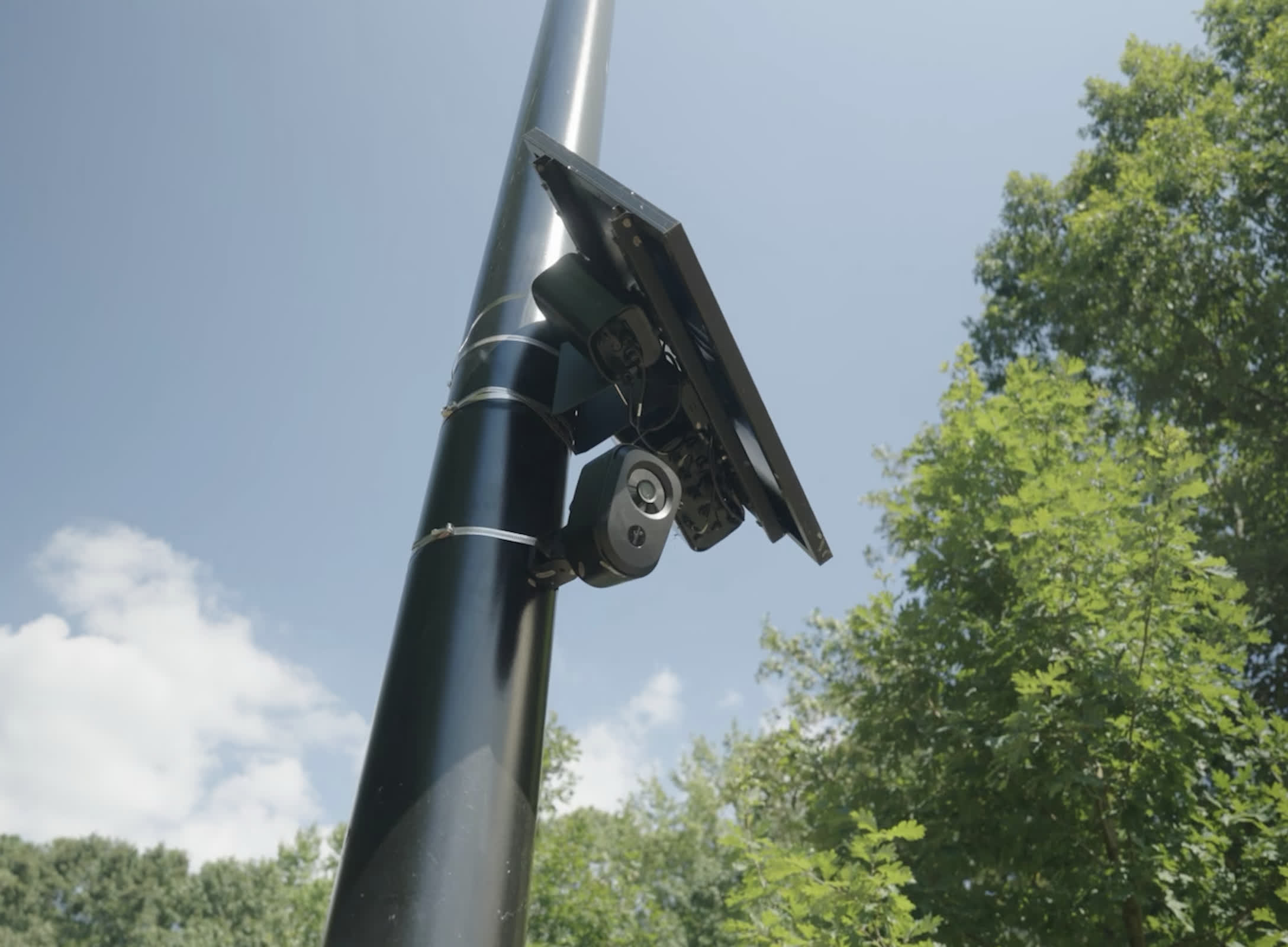
Flock, valued at roughly $7.5 billion and backed by venture capital giant Andreessen Horowitz, says its systems help police identify vehicles linked to criminal activity by analyzing license plates and other features, such as bumper stickers. But the same capability has alarmed privacy advocates and local governments, particularly after reports that federal immigration authorities have accessed data generated by its network.

Over the past six months alone, 38 cities have rejected or shut off Flock cameras, part of a larger wave now encompassing 53 municipalities across 20 states. The pushback has turned Flock's distinctive black camera poles – often spotted on roadsides with solar panels perched above – into visible symbols of a broader public debate over the boundaries of domestic surveillance.

Flock maintains that it does not work directly with Immigration and Customs Enforcement and that its customers decide who can access camera data. "It is a frustrating thing to have so much attention directed at us, specifically when the underlying issues have nothing to do with our technology or our company," Dan Haley, Flock's chief legal officer, told The Financial Times. The company says it barred federal agencies from its national and state lookup tools last August, after criticism that national law enforcement groups were accessing data without the full knowledge of local police.
Even so, local officials and privacy organizations remain skeptical. Dave Maass of the Electronic Frontier Foundation said lobbying local authorities to block Flock's expansion in their cities was an "opportunity to affect change on a local level as a form of resistance against Border Patrol, ICE, and the Department of Homeland Security."

Jay Stanley of the American Civil Liberties Union has argued that Flock's centralized system gives it far greater power than traditional license plate readers, because data from millions of scans is transmitted to company-operated servers, creating what he called a "much more powerful technology than it was before."

Law enforcement agencies counter that Flock's cameras have transformed investigations. Departments in dozens of states use the system to match vehicle data against police "hotlists" in real time. One Texas department searched more than 103,000 devices in Flock's network during a single homicide investigation last year, according to a public records request. Billy Grogan, former police chief in Dunwoody, Georgia, credited the system with helping solve hundreds of cases that might otherwise have gone cold.

The controversy comes amid strong investor interest in public safety technology. Venture funding for US law enforcement and public safety startups hit $1.79 billion last year, up sharply from $552 million in 2024, according to Crunchbase. Flock reported more than $300 million in annual recurring revenue, positioning it alongside major players such as Motorola Solutions and Axon Enterprise.

Flock is also expanding into gunshot detection and drone surveillance tools that can be integrated into what it calls a "real-time crime center," a platform designed to fuse sensor data instantly for police use. The company's low-cost model – an estimated $2,500 per camera per year, plus installation – has helped fuel its rapid growth and adoption across police departments and private communities alike.

Whether that growth can continue remains uncertain. Critics are calling for tighter regulation of how vehicle and location data are collected, stored, and shared, while supporters in law enforcement insist the benefits to public safety outweigh privacy concerns. Caught between these two positions, Flock is now the technology sector's latest test case in defining the limits of AI surveillance.

Permalink to story:

 
The usual suspects are angry that tools used to identify criminals....are identifying criminals. Story at 11.

The flock cameras around here have been great. There has been a remarkable downturn in violent crime because those criminals are now caught instead of being at large for years on end. People think twice when they are being watched. And our local sovereign citizens haven't made appearances since their cars keep getting towed for lack of plates.

Now if only we could get the red light and speed cameras back to the arsehole drivers could suffer the same fate.
 
These cameras don't care who you are. All it takes is one politician being caught doing something he's not on them and they will disappear real quick. Maybe some places are starting to realize this and back tracking before a governor or senator gets caught with their mistress. The problem with passing legislation that sounds good only when you have little to no understanding of the technology you are trying to legislate is that it ends up catching the people passing the laws doing stuff they're not supposed to.
 
This is one of those excellent examples of two people having polar opposite and (typically) strongly held opinions on a subject, yet can come together, despite those differences, on a common enemy or goal. We can be different but civil.

However you feel about ICE, we can find commonality in privacy through the elimination of Flock's ever growing presence. I applaud progress in enforcing the law, but AI allowing police to be sloppy, lazy and growing false arrests do the Men and Women in blue no favors in public trust.
 
These cameras don't care who you are. All it takes is one politician being caught doing something he's not on them and they will disappear real quick. Maybe some places are starting to realize this and back tracking before a governor or senator gets caught with their mistress. The problem with passing legislation that sounds good only when you have little to no understanding of the technology you are trying to legislate is that it ends up catching the people passing the laws doing stuff they're not supposed to.
This is funny, because it is true.
 
Safety cameras do a really, really good job in preventing crime, quickly resolving cases and catching criminals, including illegals. Removing them will have the same disastrous effect "defund the police" idiocy had.

The privacy concerns are valid, but that's not an unsolvable problem with the right set of policies. If every access to the data is logged along with a reason for requesting access, combined with a proper retention policy (delete data after X days if there's no reason to keep it) and strict rules (no profiling of legal citizens etc.), it's perfectly possible to have both safety and privacy.
 
Now we just need some BS political reason to restore privacy in our own homes by ruling age check surveillance mandates rightfully unconstitutional.
 
If Flock was selling these same cameras, but with local server hardware operated by the local or state governments, I don't think it would be nearly as much of a hot button issues as it is. I.e. Unifi, but at the "municipality" scale.

But they aren't doing that. They're selling it as a service, a service that runs all the data through their own hardware, when people have learned not to trust venture capitalists and tech bros (and rightly so, imo). At best, there will be an accidental data spill of some scale and severity in the future, and at worst, it will get misused by Flock themselves.

Keep accountability as local as possible.
 
The usual suspects are angry that tools used to identify criminals....are identifying criminals. Story at 11.

The flock cameras around here have been great. There has been a remarkable downturn in violent crime because those criminals are now caught instead of being at large for years on end. People think twice when they are being watched. And our local sovereign citizens haven't made appearances since their cars keep getting towed for lack of plates.

Now if only we could get the red light and speed cameras back to the arsehole drivers could suffer the same fate.
This system isn't help the people like you think it is, it being used to hurt more people than it is being used for real police work.
The amount of both is shocking: https://consumerrights.wiki/w/Commo..._Responses_when_discussing_Flock_Surveillance
 
This goes beyond illegals, and in fact is part of a surveillance network that is being built out in front of our eyes and we’re cheering it on because of the premise of “danger from illegals.”

We don’t need a national surveillance network and data centers to reduce the number of illegals. Invariably, all the citizens of this country will be surveilled also, and worse in the future. The time to wake up is long past.
 
The privacy concerns are valid, but that's not an unsolvable problem with the right set of policies. If every access to the data is logged along with a reason for requesting access, combined with a proper retention policy (delete data after X days if there's no reason to keep it) and strict rules (no profiling of legal citizens etc.), it's perfectly possible to have both safety and privacy.
Except it's not. These two systems are mutually incompatible. First, "no profiling of legal citizens", you have to have a profile of a legal citizen to know that they are one. We used to have this thing in America called "trust", where you were known by the community, so you don't need to keep an index on everyone, to know who belongs and who doesn't. Unfortunately, the social contract―the unwritten rules that govern decorum and behavior―are unravelling in real time, even among (and some times, especially) so-called "law-abiding citizens". That's strike one.

Second, "reason for requesting access", that's easy, "they could be up to no good." You don't know that they aren't and ontologically-speaking, you're more likely than not to be correct. Everyone is guilty of something, it's just a matter of what you can get them on. There's enough laws on the books that there really shouldn't be any innocent people alive, anywhere on Earth―just criminals with no records...yet. That's strike two.

Lastly and most importantly, strict rules for "proper retention". Because a surveillance apparatus, with an infinite memory and reach, would willfully make itself blind, on the basis of "not guilty so far?" I mean...c'mon, is this a joke? If you need a profile on every person alive to check their standing and the law of probability dictates that they simply haven't been charged with a crime, not that they aren't guilty of one, what are we even talking about here? Sometimes, the most obvious problems require the least explanation. I don't think it takes much effort, to understand why giving the state or some agency (doesn't even matter who) unilateral edict to throw you in the slammer for [insert basically any reason here] is not a sound foundation for a stable society.

This is elementary sh*t, son. You claim that that the surveillance state is "for our own good", yet I have just explained why it all falls apart, under the most cursory scrutiny. Nobody wants to live in an unsafe world, but neither does anyone want to live under the thumb of some draconian tyrant, making a prison out of everything for the sake of "safety". As Benjamin Franklin once wrote, "They who can give up essential liberty to obtain a little temporary safety, deserve neither liberty nor safety."

...and that's strike three. You're out!
 
Last edited:
Except it's not. These two systems are mutually incompatible. First, "no profiling of legal citizens", you have to have a profile of a legal citizen to know that they are one. We used to have this thing in America called "trust", where you were known by the community, so you don't need to keep an index on everyone, to know who belongs and who doesn't. Unfortunately, the social contract―the unwritten rules that govern decorum and behavior―are unravelling in real time, even among (and some times, especially) so-called "law-abiding citizens". That's strike one.

Second, "reason for requesting access", that's easy, "they could be up to no good." You don't know that they aren't and ontologically-speaking, you're more likely than not to be correct. Everyone is guilty of something, it's just a matter of what you can get them on. There's enough laws on the books that there really shouldn't be any innocent people alive, anywhere on Earth―just criminals with no records...yet. That's strike two.

Lastly and most importantly, strict rules for "proper retention". Because a surveillance apparatus, with an infinite memory and reach, would willfully make itself blind, on the basis of "not guilty so far?" I mean...c'mon, is this a joke? If you need a profile on every person alive to check their standing and the law of probability dictates that they simply haven't been charged with a crime, not that they aren't guilty of one, what are we even talking about here? Sometimes, the most obvious problems require the least explanation. I don't think it takes much effort, to understand why giving the state or some agency (doesn't even matter who) unilateral edict to throw you in the slammer for [insert basically any reason here] is not a sound foundation for a stable society.

This is elementary sh*t, son. You claim that that the surveillance state is "for our own good", yet I have just explained why it all falls apart, under the most cursory scrutiny. Nobody wants to live in an unsafe world, but neither does anyone want to live under the thumb of some draconian tyrant, making a prison out of everything for the sake of "safety". As Benjamin Franklin once wrote, "They who can give up essential liberty to obtain a little temporary safety, deserve neither liberty nor safety."

...and that's strike three. You're out!
You can overcomplicate it all you want. If my car's plate was logged 500 times during the last week, and I'm not suspected in any crime, all these 500 records should be automatically wiped out. If I'm a suspect the records may be kept longer (with a defined upper limit, then wiped out), but for a stated reason after a logged official request. Access to more than a week old archives, if kept at all, may require a court approval. It's up to us what common sense rules will be established.
Indeed, someone may decide to ignore the rules and go to prison if caught. It's a choice any criminal has.
 
Just a setback. Camera technology has advanced so much that they can probably be embedded anywhere, in traffic lights, on top of street lights, etc. All invisible. But I believe some States have laws regarding surveillance cameras and expectation of privacy so the cameras need to be visible. But who knows what's out there.
 
If my car's plate was logged 500 times during the last week, and I'm not suspected in any crime, all these 500 records should be automatically wiped out.
In theory, yes. But, in practice, probably not. Because like, why?

No, really, once you deploy the hardware and build out the infrastructure and the means to track, record and monitor people 24/7, what, you're just going to not do anything with all of that data you collected? You might say, "of course not, that's a violation of people's civil liberties", but I think, in the preceding 5 years or so, we've already seen just how little government cares about due process, civil liberties or really any values inherent to the Constitution or the Bill of Rights.

Illegal immigrants don't have rights because they're not supposed to be in the country, but citizens also don't have any rights because that would inconvenient to controlling the population. Covid saw to it, that what we describe as rights―freedom of assembly, right to due process and against the garison of soldiers or agents in one's abode―are now best described as privileges. The government grants people qualified abilities at its discretion, to maintain the illusion that we still have freedom. But, we don't. Our rights can be taken at a moment's notice, if we question the "wrong people". And before you "that's just a conspiracy theory", remember this: it used to be "common sense" that the idea of a cabal of pedos, trafficking children to the most rich and powerful people on the planet―many of whom are the leaders of nation states―was once considered a fringe conspiracy theory that only the most terminally-deranged nutcase would entertain. Now, the reverse is true.
Indeed, someone may decide to ignore the rules and go to prison if caught. It's a choice any criminal has.
That's a nice thought, but it's becoming increasingly false. You don't even have to commit a crime, to be a criminal. You just have to be "thought of" as having committed a crime. This was literally a major breaking story, 5 days ago.

A woman was arrested and jailed for 6 months on the whims of an error, a hallucinated case of mistaken identity, because some AI facial recognition software being used somewhere, recorded her "using a fake U.S. Army military ID to withdraw tens of thousands of dollars from bank accounts." It doesn't matter that it was just one innocent person. That's all it takes, for people to demand the entire system be reined in. Of course, the bureaucracy that handles the prison industrial complex was complicit, using the veil of "authenticity" granted by AI, to throw her in jail without cause. By that I mean, if a person made this bad call, then human error is at fault. Human error was at fault, but because everything started with a computer program and they're supposed to be "immune to mistakes", it was assumed to be a valid arrest and the entire incarceration chain proceeded on that basis alone. No one wants to be the link in the chain responsible for the gaff, because then everyone else can point and say "they in particular, and no one else, were responsible for this miscarriage of justice." So, even if someone could have prevented such a blunder, who is going to stick their neck out?

If this never happened, then I would agree with you. But, innocent people have been jailed before and it will happen again...and that was before AI could just confabulate a crime you never committed. Now, we might be headed for the Minority Report version of dystopia, with extra spice thrown in for good measure, if any particular fictional work is an indication of our path forward.
 
Last edited:
Just a setback. Camera technology has advanced so much that they can probably be embedded anywhere, in traffic lights, on top of street lights, etc. All invisible. But I believe some States have laws regarding surveillance cameras and expectation of privacy so the cameras need to be visible. But who knows what's out there.
Practically-speaking, yes. Cameras have been shrunk so much and have sufficiently advanced optics, that it is not outside of the realm of possibility that we could carpet every square inch of most major metropolitan areas with tiny, pinhole cameras and record every single, microscopic interaction forever.

However, at that point, it's not a matter of reality, it's a matter of implementation. Unless you intend to connect every single camera with microfilment-thin wires, they have all to be connected to some central database somehow. Because, what, you're going to setup a mesh network of cameras, without a way to collate all of that data into a one place? How? With what system? What prevents overlapping signals from interferring with each other? You could always use a P2P system, but even that has a limit. There's decentralization and then there's "ordered chaos". All of that information has to go somewhere, not to a variety of somewhere(s), because then it's all just random noise. 1000 cameras in one location is still one location.

What you'd need to have is overlapping perimeters of data collection, with local being the smallest and international being the largest, but their systems have to talk to each other without talking over each other. Otherwise, you end up with a discombulated mass of infomation with no throughline, not a unified whole.
 
Last edited:
Any technology that identifies ILLEGALS is OK in my book. Get them OUT of my country
How do you think it will be used if it is controlled by politicians that opened the door for millions of illegal immigrants in?
We do not even have to imagine or predict. Look at UK, they love surveillance a lot. But somehow, the best use of it is fighting right wing radicalism which the nation, I am sure, heavily suffers from.
 
Any technology that identifies ILLEGALS is OK in my book. Get them OUT of my country
You'd better hope that illegal aliens are the only subject of scrutiny...

If there ever comes to be a point, where there aren't any more (which I doubt, but I'll humor the idea), then the "powers that be" might decide that residency alone is not sufficient qualification to be a citizen. What else might goverment require? Oh, I dunno. How about party allegience? You think the government (any government really; I'm not singling out the US specifically, though Flock is a uniquely "American" problem, insofar as this article is concerned) wouldn't kick its political rivals out of their country, in order to create a more homogenous, "unified" nation, if that were an option?

Food for thought...
 
...AI allowing police to be sloppy, lazy and growing false arrests do the Men and Women in blue no favors in public trust.
Quite simply, this is the most absurd rationalization I've heard in a good while. You might as well criticize fingerprinting and DNA technology for allowing police to grow lazy. For every person wrongly arrested based on AI video monitoring, there are 100,000 others not wrongly arrested, thanks to that video either giving them an alibi, or by identifying the proper perpetrator. And without video evidence, police fall back on the most fallible, wildly inaccurate tool in their arsenal -- the "eyewitness identification" ... source of more false imprisonments than we'll ever know.
 
In theory, yes. But, in practice, probably not. Because like, why?

No, really, once you deploy the hardware and build out the infrastructure and the means to track, record and monitor people 24/7, what, you're just going to not do anything with all of that data you collected? You might say, "of course not, that's a violation of people's civil liberties", but I think, in the preceding 5 years or so, we've already seen just how little government cares about due process, civil liberties or really any values inherent to the Constitution or the Bill of Rights.

Illegal immigrants don't have rights because they're not supposed to be in the country, but citizens also don't have any rights because that would inconvenient to controlling the population. Covid saw to it, that what we describe as rights―freedom of assembly, right to due process and against the garison of soldiers or agents in one's abode―are now best described as privileges. The government grants people qualified abilities at its discretion, to maintain the illusion that we still have freedom. But, we don't. Our rights can be taken at a moment's notice, if we question the "wrong people". And before you "that's just a conspiracy theory", remember this: it used to be "common sense" that the idea of a cabal of pedos, trafficking children to the most rich and powerful people on the planet―many of whom are the leaders of nation states―was once considered a fringe conspiracy theory that only the most terminally-deranged nutcase would entertain. Now, the reverse is true.

That's a nice thought, but it's becoming increasingly false. You don't even have to commit a crime, to be a criminal. You just have to be "thought of" as having committed a crime. This was literally a major breaking story, 5 days ago.

A woman was arrested and jailed for 6 months on the whims of an error, a hallucinated case of mistaken identity, because some AI facial recognition software being used somewhere, recorded her "using a fake U.S. Army military ID to withdraw tens of thousands of dollars from bank accounts." It doesn't matter that it was just one innocent person. That's all it takes, for people to demand the entire system be reined in. Of course, the bureaucracy that handles the prison industrial complex was complicit, using the veil of "authenticity" granted by AI, to throw her in jail without cause. By that I mean, if a person made this bad call, then human error is at fault. Human error was at fault, but because everything started with a computer program and they're supposed to be "immune to mistakes", it was assumed to be a valid arrest and the entire incarceration chain proceeded on that basis alone. No one wants to be the link in the chain responsible for the gaff, because then everyone else can point and say "they in particular, and no one else, were responsible for this miscarriage of justice." So, even if someone could have prevented such a blunder, who is going to stick their neck out?

If this never happened, then I would agree with you. But, innocent people have been jailed before and it will happen again...and that was before AI could just confabulate a crime you never committed. Now, we might be headed for the Minority Report version of dystopia, with extra spice thrown in for good measure, if any particular fictional work is an indication of our path forward.
You're simply assuming that whatever the law is, it will be ignored.
But if that's the case, those ignoring the law may keep installing surveillance tech, this time in total secrecy - there will be zero oversight, data can be kept indefinitely and everyone tracked and profiled. This will be many orders of magnitude worse than the official lawful use. There will be no crime prevention or catching criminals and illegals, just the bad stuff with no oversight.
 
Back