Bottom line: The world of artificial intelligence is minting fortunes at an unprecedented speed. According to CB Insights, there are now 498 AI unicorns – private companies valued at $1 billion or more – collectively worth $2.7 trillion. Of these, a remarkable 100 were founded in 2023 or later. Additionally, more than 1,300 AI startups today hold valuations above $100 million.

It's a phenomenon that is rapidly shaping up to be the most significant wealth creation period in recent history. This year, major fundraising rounds for companies such as Anthropic, Safe Superintelligence, OpenAI, and Anysphere have led to staggering new paper fortunes and propelled valuations to record levels.
The impact stretches well beyond private markets. Soaring share prices of public giants like Nvidia, Meta, and Microsoft, alongside the infrastructure companies driving data center development, have magnified personal wealth for founders, employees, and investors.
"Going back over 100 years of data, we have never seen wealth created at this size and speed," Andrew McAfee, principal researcher at MIT, told CNBC. "It's unprecedented."
The explosive valuations have led to a swift rise in new billionaires. A Bloomberg estimate in March found four of the largest private AI companies had already created at least 15 billionaires worth a combined $38 billion. Since then, the count has grown, with more than a dozen new unicorns added to the ranks.
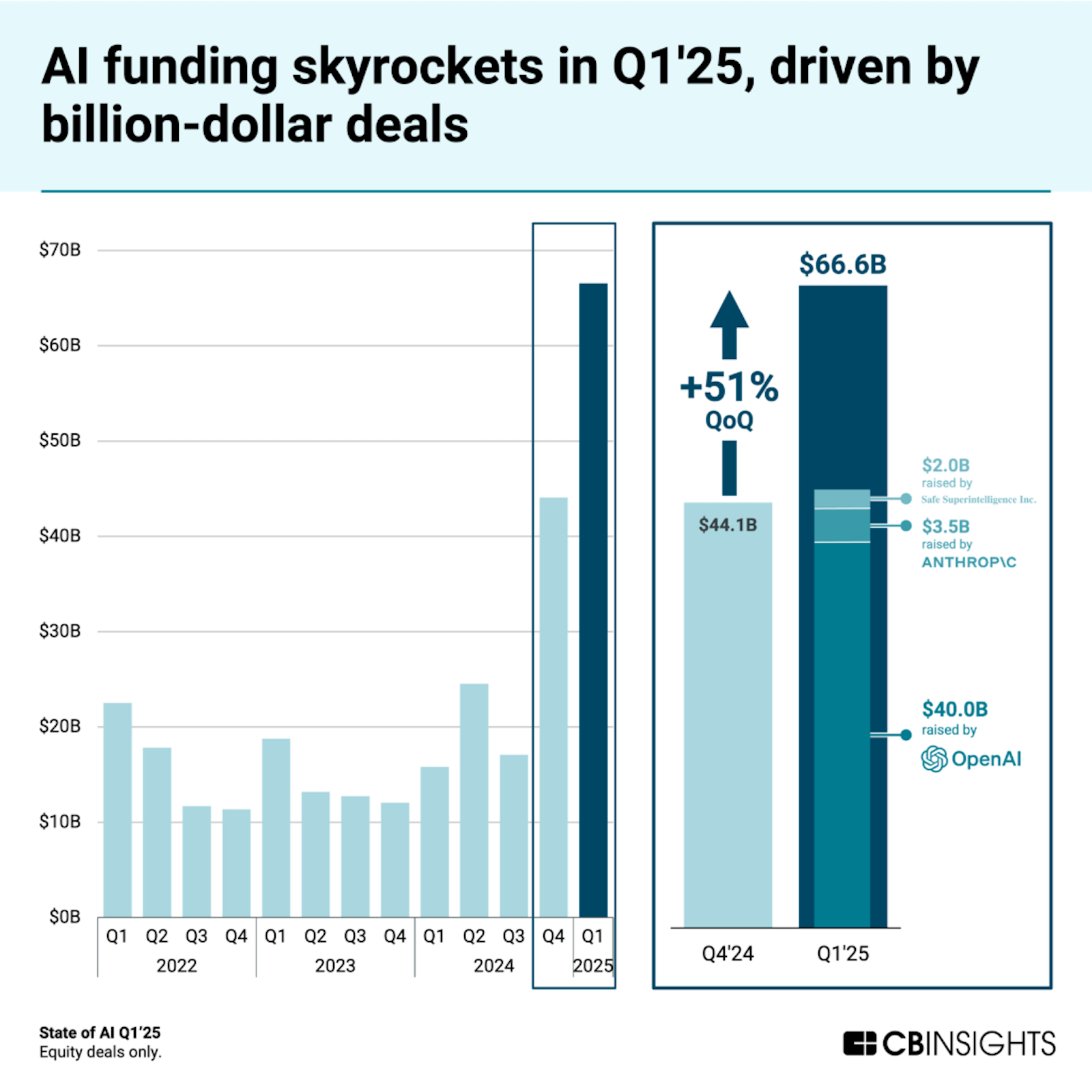
The surge is especially evident in the Bay Area, echoing the dot-com boom of the late 1990s. Venture funding for Silicon Valley AI companies exceeded $35 billion last year. San Francisco now boasts more billionaires than New York – 82 compared to 66 – while the Bay Area's millionaire population has doubled in a decade.
Yet, most of this wealth is tied up in private firms, limiting the ability of founders and equity holders to cash out. The era differs from the dot-com boom, when public offerings abounded; today, a steady stream of investment from venture capital, sovereign wealth funds, family offices, and specialized tech investors allows AI unicorns to stay private longer.
Secondary markets have emerged to help provide liquidity, offering ways for investors and founders to sell shares or borrow against their stakes, a trend gaining momentum within leading firms such as OpenAI, which is holding talks for a secondary share sale at a $500 billion proposed valuation.
Mergers and acquisitions also create liquidity and move capital. For example, a $14.3 billion investment from Meta in Scale AI led to the company's co-founder Alexandr Wang joining Meta's AI division and its other founder purchasing a $30 million mansion.
CB Insights reports 73 liquidity events – including mergers, acquisitions, IPOs, and major stake sales – since 2023. These deals mark both consolidation and a race for dominance among the most promising AI enterprises.
This dramatic acceleration in valuations and personal fortunes continues to reshape not just Silicon Valley but the entire technological landscape. "It's astonishing how geographically concentrated this AI wave is," McAfee, also co-director of MIT's Initiative on the Digital Economy, said. "The people who know how to found and fund and grow tech companies are there. I've heard people say for 25 years 'This is the end of Silicon Valley' or some other place is 'the new Silicon Valley.' But Silicon Valley is still Silicon Valley."
AI startup valuations surge as nearly 500 unicorns reach $2.7 trillion


 Hmmm?
Hmmm?  I have a bridge in Brooklyn to sell...


