Airbus, Thales and Leonardo to merge space units in biggest shake-up in decades

Skye Jacobs

Posts: 2,010   +58
Staff
What just happened? Three of Europe's biggest aerospace providers are moving under one umbrella. The alliance marks the most significant EU space industry restructuring in more than two decades. It is a commercial response to SpaceX's growing dominance in the industry.
Europe's space industry is undergoing a major realignment as Airbus, Thales, and Leonardo merge their space operations into a single company headquartered in Toulouse. The long-discussed deal aims to create what executives describe as a unified European rival capable of matching the speed and efficiency of Elon Musk's SpaceX.

The new company will employ about 25,000 people and generate roughly €6.5 billion in annual revenue. Ownership will be split among Airbus, holding 35 percent, and Leonardo and Thales, each with 32.5 percent. The merger consolidates satellite manufacturing, space systems engineering, and related services under one structure, following the model of MBDA, the European missile consortium formed in 2001.
"Europe has realised that its sovereignty and security depend on space," a Thales executive said Thursday.

Executives told the Financial Times that the move serves two goals: strengthening Europe's position in the commercial satellite market and safeguarding its autonomy in space technology. By consolidating operations, the companies expect to streamline production and innovation while cutting costs tied to overlapping research and procurement.

The companies project that efficiency measures could add "mid-triple-digit millions" of euros in operating income within five years. Savings will come from shared research and development budgets – estimated in the hundreds of millions of euros – along with greater bargaining power in sourcing components and eliminating redundant engineering work.

The companies do not plan job cuts, and each country will keep its current industrial footprint to preserve national sovereignty and political balance. Over time, they expect national sites to specialize further as new programs and technologies emerge.

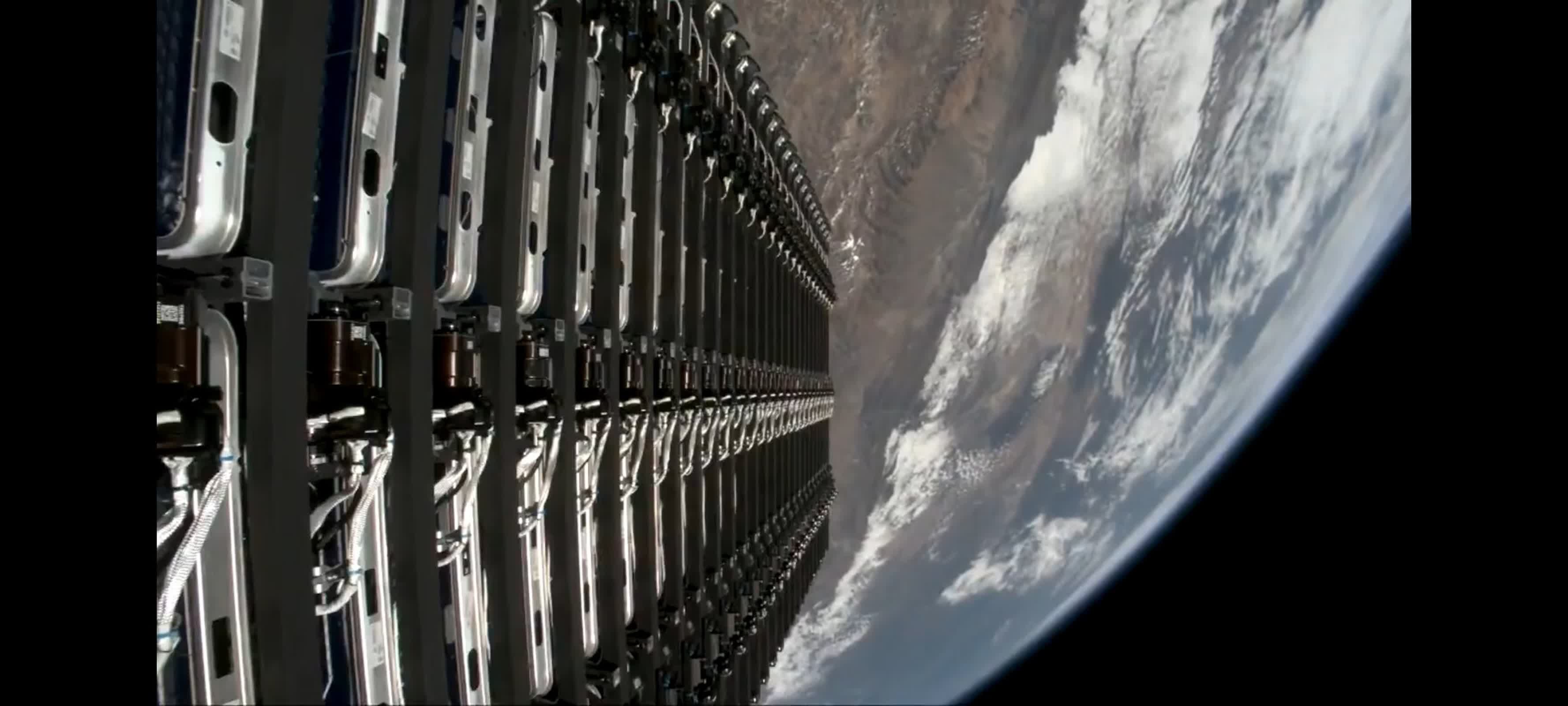
The venture comes at a turning point for Europe's satellite industry. Airbus and Thales Alenia Space, jointly owned by Thales and Leonardo, have long dominated the market for large geostationary satellites. That segment has weakened sharply as the industry pivots toward constellations of smaller, lower-cost satellites in low Earth orbit. SpaceX's Starlink network has set new benchmarks for production speed and cost, leaving Europe's traditional manufacturers struggling to keep pace.

In response, Europe's major space firms have spent the past several years restructuring, cutting jobs, and consolidating production lines. The new venture formalizes a process that began in 2019, when the three companies first explored closer alignment.

Executives now argue that creating a single, independent structure will enable faster decision-making and more integrated product development cycles.

"We wanted to create a very functional company – a standalone company," a Thales executive said, referring to earlier governance models that proved cumbersome when management rotated among corporate parents.

Although the merged company will operate independently, it still requires regulatory approval. The partners expect to complete the transaction and launch operations by 2027.

The move may nonetheless encounter pushback from within Europe's space ecosystem. Sabine von der Recke, a board member of German space and technology group OHB, warned that the merger could reduce competition and concentrate contracts geographically. Thales and OHB have partnered on various European Space Agency programs, and von der Recke believes Thales would now align exclusively with Airbus.

Arianespace, Europe's leading heavy-lift launch provider, remains outside the merger for now. Still, Airbus executives acknowledged that further integration of the continent's fragmented space sector could eventually extend to launch capabilities, noting that the idea is under consideration.

Permalink to story:

 
That looks like a step in the right direction, given that none of the 3 companies is anywhere close to being a real competitor to SpaceX.
However, that remains equally true for the 3 together - and will remain true even if Arianespace joins the club. The EU consortium may become a solid #2 .. but mostly for the lack of a visible candidate for #3. For now SpaceX is so far ahead of everyone else that it's in a league of its own.

Another thing to consider is how overburdened with horrible bureaucracy everything in the EU is. This new structure may in fact halt the development.

"Europe remakes its space industry to match SpaceX's rapid model" - I guess I'm not the only one skeptical about that. "Europe" and "rapid" ... these usually don't go together. Except when implementing new regulations, of course - there, Europe is unmatched.
 
That looks like a step in the right direction, given that none of the 3 companies is anywhere close to being a real competitor to SpaceX.
However, that remains equally true for the 3 together - and will remain true even if Arianespace joins the club. The EU consortium may become a solid #2 .. but mostly for the lack of a visible candidate for #3. For now SpaceX is so far ahead of everyone else that it's in a league of its own.

Another thing to consider is how overburdened with horrible bureaucracy everything in the EU is. This new structure may in fact halt the development.

"Europe remakes its space industry to match SpaceX's rapid model" - I guess I'm not the only one skeptical about that. "Europe" and "rapid" ... these usually don't go together. Except when implementing new regulations, of course - there, Europe is unmatched.

How did you get in my head, read my thoughts, and post them here before I even read this article? lol, well stated.

SpaceX is so far beyond every other space industry company, that its hard for some people to grasp. For years, the industry ridiculed SpaceX and said that booster reuse was impossible. Then SpaceX achieved propulsively landing a booster. Industry and critics then said, "There's no way that refurbishing that booster will be profitable!". And now SpaceX has achieved THIRTY launches with multiple individual boosters and the (internal) launch cost of a Falcon 9 is at less than $20M - a big chunk of that being the brand new expended 2nd stage of each launch.

SpaceX then flew the very first full flow staged combustion rocket engine, designed and built entirely internally. The US Rocketdyne and Russians built a technology demonstrator, but SpaceX built and flew the thing. On Raptor version 3, SpaceX posts its picture of the engine and ULA's ***** boss rebukes them for posting an incomplete engine and bragging about its simplicity. That the engine pictured was missing a bunch of parts and plumbing. He can't even conceptualize what SpaceX had done with Raptor V3. That they routed pretty much every bit of plumbing through the manifold castings. That the engine no longer even needed a heat shield for when the rocket is re-entering the atmosphere arse first. I loved Gweyne Shotwell's reply "Looks pretty complete to me"

Starship and Superheavy booster are now the new state of the art, and the rocket companies of the world have no idea what to do. Its sad honestly. Once big name, industry leading, giants shrug off the advancements and sit on their hands doing nothing. They'll one day not too far in the future be extinct. Some companies are trying and making valiant efforts, like Blue Origin. They designed a rocket more capable than F9, but vastly inferior to a (once fully functioning) Starship/Superheavy. Their New Glen rocket needs to launch more than once per year to be taken seriously. They plan to, but we need to see it happen.

Starship/Superheavy once functional, will once again turn the industry onto its ear. The amount of mass a ship/booster set can throw to LEO will be world leading. And once you can refuel ships that are placed in LEO - they can go anywhere in the solar system, with enormous payloads. In orbit refueling must be fully developed yes, but it will be. It only takes time and money. Theres no physics saying its impossible or even exceptionally hard. If a ship can be launched, landed, refueled, launch, land, repeat - the cost of methane fuel is miniscule. Methane can also be made in situ in many destinations (another complexity that will have to be developed admittedly). They already launched, landed (snatching it out of the air was amazing to see!), and relaunched the booster. They've proven the 2nd stage ship can reach orbit (they've sabotage'd each launch to ensure it re-enters the atmosphere in a controlled location for safety every launch) and deliver cargo. They'll be loading it up with the big daddy Starlink satellites within 2-3 launches of the new Ship V3 model and vastly improving their money making Starlink product.

The SS/SH system is obviously not mature, but it will become so. SpaceX has the drive, money, and people to get it done. And they get things done in lightning speed compared to the dinosaurs or the industry. Only other startups move at close to SpaceX speeds (and I root for them whole heartedly!).

People can hate Musk till they're blue in the face. I don't really like the guy either. But SpaceX regardless, has stomped the industry flat. There is no argument there.

(edit -cat walked across the keyboard at one point and inserted strategically placed gibberish lol)
 
Back