Intel CPUs with Nvidia RTX integrated graphics are targeting an early 2028 release

Daniel Sims

Posts: 2,455   +74
Staff
Something to look forward to: Competition in the APU market could intensify when Intel and Nvidia reveal the fruits of their announced collaboration against AMD. While no official timeline has been confirmed, reports suggest users could get a first look at Intel-Nvidia chips within the next 18 months.
Tech journalist Erdi Özüağ reports that Intel's current roadmap targets the first quarter of 2028 for its initial x86 processors with Nvidia RTX graphics, with a possible reveal at CES. The long-anticipated chips are expected to challenge AMD's high-end mobile APUs and bolster both companies' broader platform ambitions.

Intel's plans are likely still in flux this far out, but its current roadmap puts the chips in early 2028 barring delays. Intel and Nvidia officially confirmed they were developing these chips in September 2025, though specific details have been scarce since.

What is known is that the x86 SoCs will combine Intel CPU cores with Nvidia RTX GPU chiplets – likely using a high-bandwidth interconnect – across a range of devices. Reports suggest Serpent Lake will pair Intel's Titan Lake CPU cores with a GPU based on Nvidia's next-generation Rubin architecture.

The chip is rumored to be fabricated on TSMC's N3P process node and is expected to support LPDDR6 memory, providing the bandwidth necessary for both high-end gaming and AI workloads. Its primary target appears to be AMD's Strix Halo APUs in the high-end laptop segment.
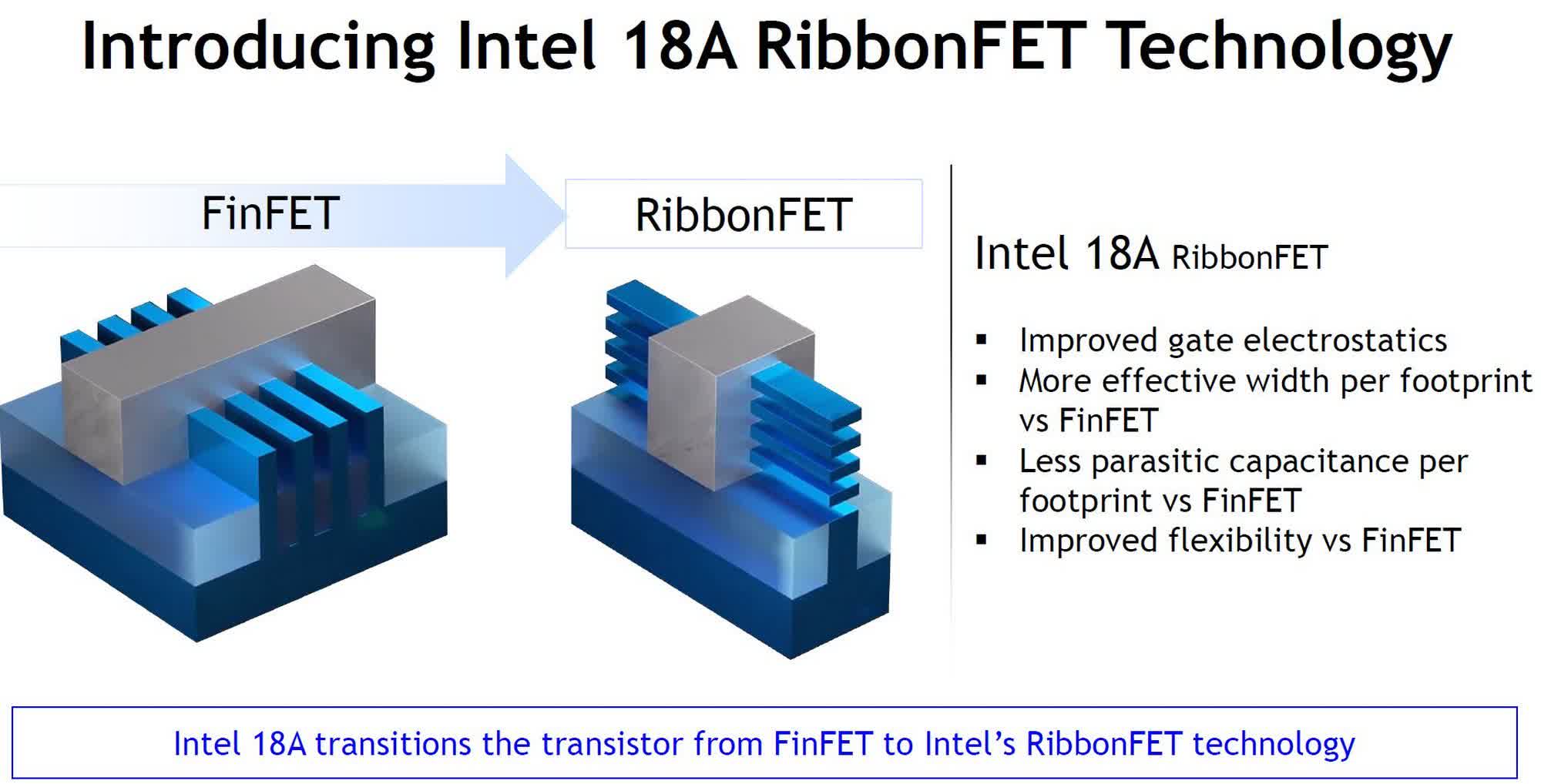
Intel and Nvidia's partnership could also shake up the mobile gaming market. AMD's Hawk Point, Strix Point, and Strix Halo chips have powered the category in devices like the Steam Deck, Asus ROG Xbox Ally, and Lenovo Legion Go. More recently, however, MSI's Claw 8 EX AI+ marked the debut of Intel's Arc G3 Extreme – a Panther Lake design built on the 18A process node – giving Intel a foothold in the handheld gaming space. The chip also supports Intel's XeSS upscaling technology.

Özüağ also reports that Apple's negotiations with Intel over the use of its 18A foundry node are progressing, with the Cupertino company looking to reduce its dependence on TSMC and respond to political pressure to expand domestic manufacturing.

Initial shipments are not expected before the second or third quarter of 2027, and all plans remain subject to Intel's ability to improve yield, performance, and cost competitiveness on its 18A process.

Permalink to story:

 
What is the point? Intel already has powerful integrated graphics which they should push to rival AMD?
Why would intel want that space given to Nvidia who is also interested in CPU market?
Or maybe, that new integrated graphics which is supposedly stronger than AMD's has issues
and to be delayed for years?
 
What is the point? Intel already has powerful integrated graphics which they should push to rival AMD?
Why would intel want that space given to Nvidia who is also interested in CPU market?
Or maybe, that new integrated graphics which is supposedly stronger than AMD's has issues
and to be delayed for years?

Many people would want this product because software-wise Nvidia GPU is still best supported with the least fraction. We would want to see Intel + Nvidia version of AMD Strix Halo, DGX Spark is not it because that is not x86_64. Hopefully the price is competitive to AMD. Also Nvidia recently purchased a massive amount of Intel stock, think 25 billions dollars worth of stock, so Intel & Nvidia no longer feels like competitors any more, but they have many reasons to align with one another.
 
Good. We need enough competition that the norm for integrated graphics is simply a mini GPU that fits in the available power budget. Maybe that’s half of a 5050’s cores at 35 watts, which would still destroy the small outdated iGPUs on most chips today.
 
This is bait and switch, and dirty lies by intel.

Will there be a consumer variant?? .. sure a crappy pos version of a failed AMD RYZEN AI HALO... That is all this will be and the bum/crap chips that make it into consumer gear will not be any kind of gaming quality.

The good units will be INTELs version of strix since INTEL BOTCHED YET ANOTHER GPU for the third time
 
Wait until McDonald's real-estate becomes the perfect places for data centers and we end up with the McDonald's-Nvidia-Fox-Nike Corp.
 
As long as Intel doesn't abandon QSV in their desktop & server product lines, or abandon their discreet GPU efforts all together, this collaboration can't hurt.
 
Many people would want this product because software-wise Nvidia GPU is still best supported with the least fraction. We would want to see Intel + Nvidia version of AMD Strix Halo, DGX Spark is not it because that is not x86_64. Hopefully the price is competitive to AMD. Also Nvidia recently purchased a massive amount of Intel stock, think 25 billions dollars worth of stock, so Intel & Nvidia no longer feels like competitors any more, but they have many reasons to align with one another.
Their drivers have gone down hill over the several months as Jensen has insisted that all his engineers spend an amount equal to their salary ever since he picked up a meth habit.
 
What is the point? Intel already has powerful integrated graphics which they should push to rival AMD?
Why would intel want that space given to Nvidia who is also interested in CPU market?
Or maybe, that new integrated graphics which is supposedly stronger than AMD's has issues
and to be delayed for years?
AI data center use is my guess...
 
As long as Intel doesn't abandon QSV in their desktop & server product lines, or abandon their discreet GPU efforts all together, this collaboration can't hurt.
Intel has previously used AMD GPUs with their own CPUs. Probably this will be just Intel CPU paired with Nvidia GPU chip. Much less collaboration between companies than console chips AMD+Sony/MS.
 
What is the point? Intel already has powerful integrated graphics which they should push to rival AMD?
Why would intel want that space given to Nvidia who is also interested in CPU market?
Or maybe, that new integrated graphics which is supposedly stronger than AMD's has issues
and to be delayed for years?

Powerful? Stop joking please. Intel iGPU is ultra low-end stuff, mostly good for 2D/Work or indie games, really slow.

Intel Arc is barely mid-end stuff. Intel can't even beat a 6+ year old 3060 ... Arc is mostly low-end and drivers/software is pretty terrible. XeSS is bad, on par with FSR 2-3 which is bad too (not as terrible as DLSS 1 and FSR 1 tho - Both blurry shite). Intel FG is crap too (crashes is common, tons of users report random crashing)

Many new games, even the big ones, don't support Arc and has tons of issues with it. Crimson Desert to name one of the recent ones. Developer did not even care for Arc support at launch but responded to the backlash and "worked on it" with Intels help.

Nvidia RTX will allow for far better 3D performance with top tier upscaling support.

Intel CPU + RTX GPU would make crazy good APUs actually. A x86 alternative to Nvidias own N1/N1X line, which is ARM + RTX.

This will force AMD to respond too, they will need to make Zen 5/6 + RDNA 4/5 APUs that is competing well against both N1(X) and these upcoming Intel + RTX APUs.

In some years, you will see crazy good APUs is my bet. So fast that many gamers don't even need a dGPU anymore. Eventually, CPU and GPU probably melt completely together and you won't be able to buy dGPUs anymore unless you want very high-end stuff. Most will probably just be using a APU for casual or even mid-end gaming in some years. Like consoles.

APU compeition is going to be wild in the coming years.
 
Last edited:
Powerful? Stop joking please. Intel iGPU is ultra low-end stuff, mostly good for 2D/Work or indie games, really slow.

Intel Arc is barely mid-end stuff. Intel can't even beat a 6+ year old 3060 ... Arc is mostly low-end and drivers/software is pretty terrible. XeSS is bad, on par with FSR 2-3 which is bad too (not as terrible as DLSS 1 and FSR 1 tho - Both blurry shite). Intel FG is crap too (crashes is common, tons of users report random crashing)

Many new games, even the big ones, don't support Arc and has tons of issues with it. Crimson Desert to name one of the recent ones. Developer did not even care for Arc support at launch but responded to the backlash and "worked on it" with Intels help.

Nvidia RTX will allow for far better 3D performance with top tier upscaling support.

Intel CPU + RTX GPU would make crazy good APUs actually. A x86 alternative to Nvidias own N1/N1X line, which is ARM + RTX.

This will force AMD to respond too, they will need to make Zen 5/6 + RDNA 4/5 APUs that is competing well against both N1(X) and these upcoming Intel + RTX APUs.

In some years, you will see crazy good APUs is my bet. So fast that many gamers don't even need a dGPU anymore. Eventually, CPU and GPU probably melt completely together and you won't be able to buy dGPUs anymore unless you want very high-end stuff. Most will probably just be using a APU for casual or even mid-end gaming in some years. Like consoles.

APU compeition is going to be wild in the coming years.
Intel's GPUs are transcoding monsters. My 1080ti can transcode about 1-2x 4K streams simultaneously, max. And sometimes not even that much. Meanwhile, the iGPU in my 10th gen i5 can do around ~10x simultaneous 4K transcodes. The difference in performance is not even funny.

For the longest time, they only dedicated the smallest amount of semiconductor material needed, and they worked to make the hardware as efficient as possible, because that is what their vendor partners wanted - a CPU that could handle the graphics tasks in small & efficient laptops - but it meant it could never play major games, so game devs ignored it, and Intel ignored game engine support. Now that Intel is finally trying to scale up their architecture, they are finding out that companies need to do a lot of the heavy lifting themselves to get their new chipsets adopted. I don't think Intel has ever really experienced this before - they first started making chips back when chips were first being made - so they got caught flat footed when they launched their discrete GPUs and people didn't leap at the "opportunity" to write Intel's software for them. They seemed to quickly adapt, but they are certainly still playing catch-up and are trying to convince devs that dGPUs aren't just as a passing fancy for Intel.

As for APUs: people having been saying they are going to "take over" for ~15 years now. They certainly have their place in items that range some game consoles to dedicated consumer electronics (e.g. cheap, cheap laptops and tablets; Smart home devices w/ screens; etc), but I don't think you'll ever see them take over high-end desktops. Or even low-end desktops or high-end laptops.
 
Intel's GPUs are transcoding monsters. My 1080ti can transcode about 1-2x 4K streams simultaneously, max. And sometimes not even that much. Meanwhile, the iGPU in my 10th gen i5 can do around ~10x simultaneous 4K transcodes. The difference in performance is not even funny.

For the longest time, they only dedicated the smallest amount of semiconductor material needed, and they worked to make the hardware as efficient as possible, because that is what their vendor partners wanted - a CPU that could handle the graphics tasks in small & efficient laptops - but it meant it could never play major games, so game devs ignored it, and Intel ignored game engine support. Now that Intel is finally trying to scale up their architecture, they are finding out that companies need to do a lot of the heavy lifting themselves to get their new chipsets adopted. I don't think Intel has ever really experienced this before - they first started making chips back when chips were first being made - so they got caught flat footed when they launched their discrete GPUs and people didn't leap at the "opportunity" to write Intel's software for them. They seemed to quickly adapt, but they are certainly still playing catch-up and are trying to convince devs that dGPUs aren't just as a passing fancy for Intel.

As for APUs: people having been saying they are going to "take over" for ~15 years now. They certainly have their place in items that range some game consoles to dedicated consumer electronics (e.g. cheap, cheap laptops and tablets; Smart home devices w/ screens; etc), but I don't think you'll ever see them take over high-end desktops. Or even low-end desktops or high-end laptops.

Monsters? Haha, no.

If your 1080 Ti is that slow, then you don't know what you are doing. A 1080 Ti can easily have 20-30 H.264/HEVC transcoding streams running. Several 4K/UHD streams no problem, at max quality. Besides, 1080 Ti is pretty much old crap too, 10 years old. GTX is dead. Died long ago. RTX is what people use these days.


When it comes to encoding, Intel QuickSync encoding leads to reduced visuals. NVENC is far more powerful.

Besides, you should be using direct play for good image quality. Transcoding leads to worse visuals, sometimes even crap visuals. That shite is only something you do, if you stream a H.265 video to a device that don't have native H.265 decoding or something (aka old garbage devices)

Rambling about 4K streams, and then mention transcoding, tells me you have no clue on how to actually get good video quality
 
Last edited:
Back