Amazon says its robots aren't taking human jobs, while unveiling more robots built to take jobs

midian182

Posts: 11,624   +176
Staff member
Facepalm: Amazon has responded to reports that the company aims to replace 600,000 US warehouse workers with robots by 2033. Predictably, it's trying to put a positive spin on the news, claiming that the "real headline isn't about robots" but about people. The message comes as part of an announcement revealing two new Amazon systems designed to perform human jobs.
The New York Times reported this week that Amazon's robotics team aims to automate 75% of all operations at the company, thereby eliminating 160,000 positions that would have otherwise been required by 2027. The company hopes its robots will fill more than 600,000 US positions it would have had to hire for by 2033.

Amazon's initial response was that the documents cited in the report were incomplete and didn't represent its overall hiring strategy. It also highlighted the 250,000 humans it planned to hire for the holiday season – though how long they'll be at the company is another matter.
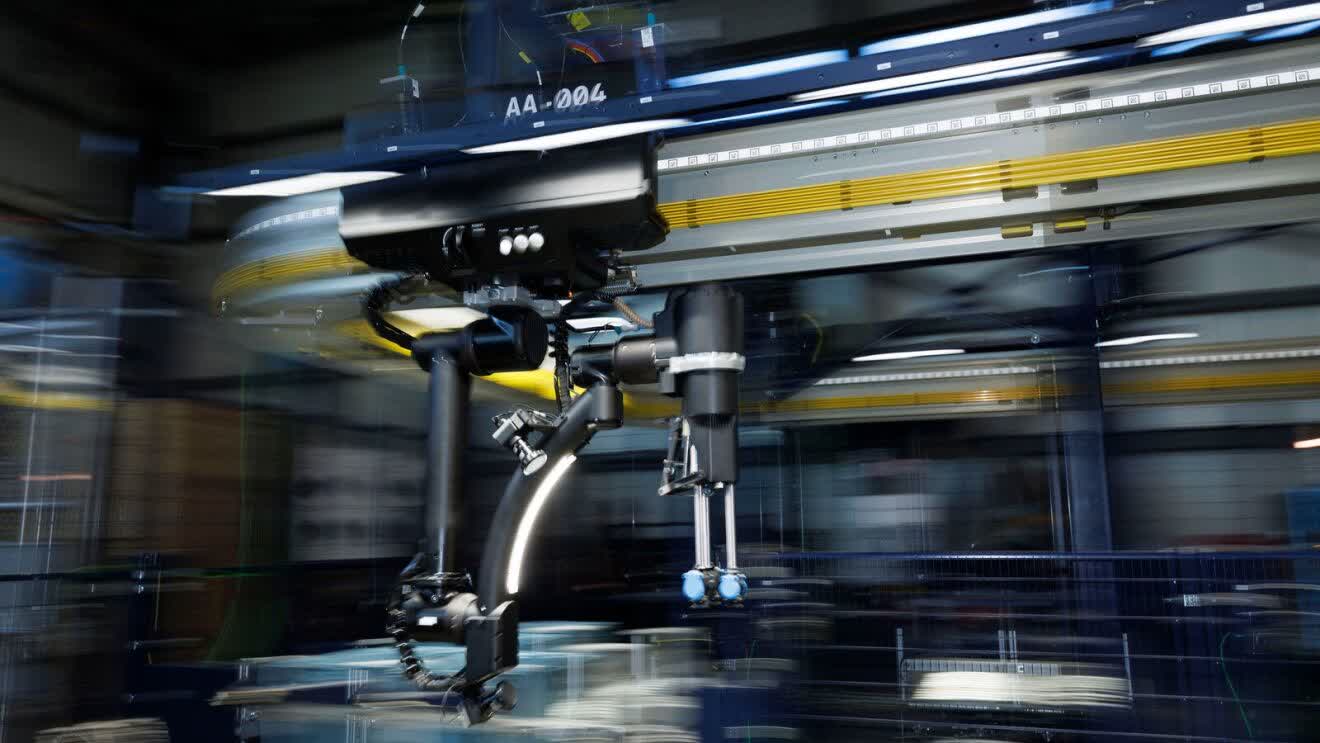
Now, Amazon has published a lengthy post about its latest projects, Blue Jay and Project Eluna, which frames the technologies as helping its human workers rather than replacing them.

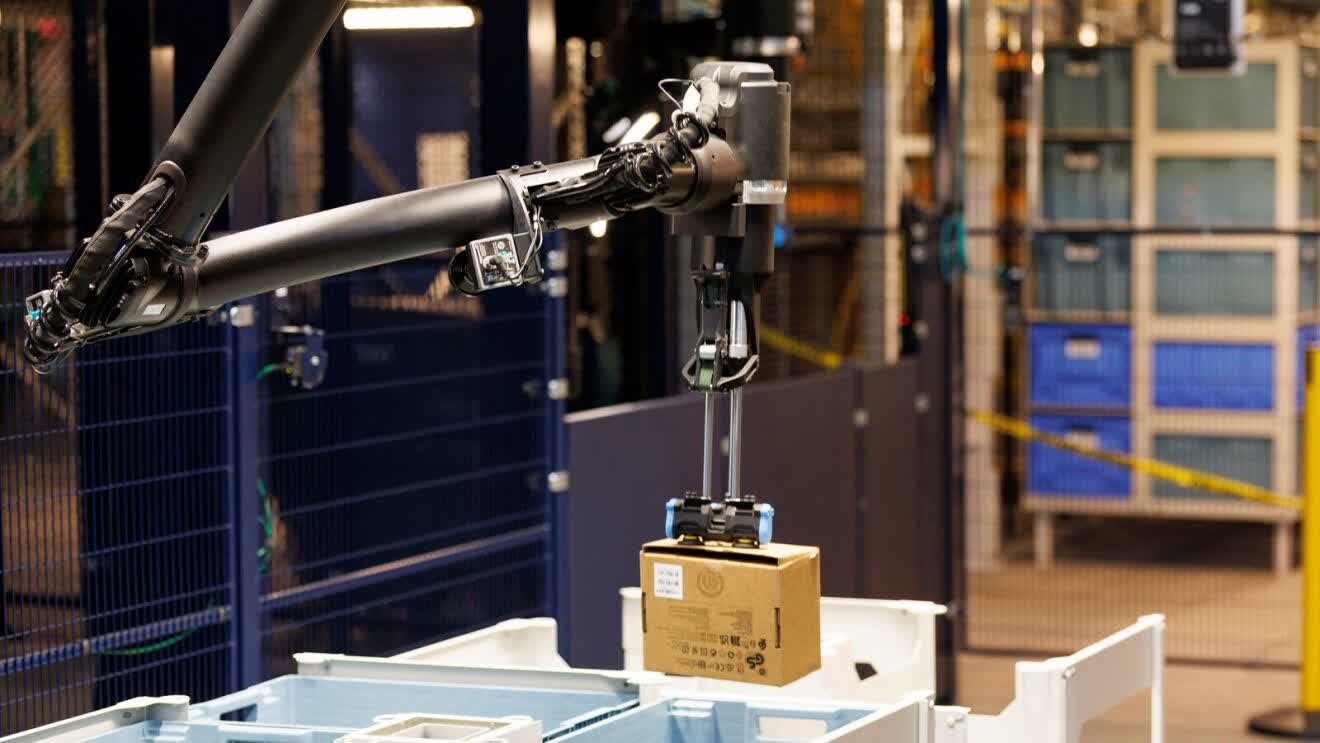
Robotic arm Blue Jay is described as "an extra set of hands" that helps employees with reaching and lifting. The robot has been tested at Amazon's South Carolina facilities, where it's already able to pick, stow, and consolidate approximately 75% of the item types the company stores at its sites. So, definitely no need for workers to worry, then.

The other new system, Project Eluna, is an agentic AI system, something that is already taking jobs in other industries. Amazon says it pulls in historical and real-time data across a building to anticipate bottlenecks and keep operations running smoothly, and that it is designed to act with a degree of autonomy. Again, no need to panic about that part.

Amazon emphasizes that the goal of these new technologies is to reduce highly repetitive tasks, improve ergonomics, and expand career pathways. The fact that automation is expected to save Amazon $12.6 billion from 2025 to 2027 alone is probably a factor, too.

The post also states that no other company has created more jobs in the US over the past decade than Amazon. But it's hard to imagine people remembering that fact when robots start replacing more workers.

Permalink to story:

 
Human society has ALWAYS operated this way. We will find new jobs for people in the future the same way we did after farming mechanized… the flaw will be the transition period where many people will be unemployed.

Those who don’t adapt, suffer… always has been, always will be.
 
"The fact that automation is expected to save Amazon $12.6 billion from 2025 to 2027 alone is probably a factor, too."

That is THE ONLY factor.

Everyone that will pay $0.30 more on every Amazon purchase to save the “put things in boxes” jobs raise their hands.

Great, of those raise your hands to add $4 to every online order to save the “work in a store” jobs.

Exactly. NOT the only factor.
 
Human society has ALWAYS operated this way. We will find new jobs for people in the future the same way we did after farming mechanized… the flaw will be the transition period where many people will be unemployed.

Those who don’t adapt, suffer… always has been, always will be.
We have some current problems they are normal unlike automation.
Take housing for example. A lot of people simply cannot afford to own a house. Rent is too expensive. Say what you want, but this is the main reason a lot of grown up live with their parents. They simple do not fancy pouring everything they earn into a shitty place they can afford on their salary.
It is very how automation works, we ineed have done it for a long time. But half the population steadily getting poorer is not.
This of course makes certain ideas about resharing wealth a lot more popular. Amazon's owner should think about that too, along with saving billions by replacing humans with robots.
Automation and job obsolition dissapearance normal, but some of the side effects they accumulate on their way are a big problem.
 
Everyone that will pay $0.30 more on every Amazon purchase to save the “put things in boxes” jobs raise their hands.

Great, of those raise your hands to add $4 to every online order to save the “work in a store” jobs.

Exactly. NOT the only factor.
Your logic flawed. More humans hired to handle more sales does not result in higher cost of good sold.
 
We have some current problems they are normal unlike automation.
Take housing for example. A lot of people simply cannot afford to own a house. Rent is too expensive. Say what you want, but this is the main reason a lot of grown up live with their parents. They simple do not fancy pouring everything they earn into a shitty place they can afford on their salary.
It is very how automation works, we ineed have done it for a long time. But half the population steadily getting poorer is not.
This of course makes certain ideas about resharing wealth a lot more popular. Amazon's owner should think about that too, along with saving billions by replacing humans with robots.
Automation and job obsolition dissapearance normal, but some of the side effects they accumulate on their way are a big problem.
This is a temporary thing… as economies progress, there are ebbs and flows… housing is expensive now - but won’t be forever… again, humanity has coped with this for centuries, they’ll adapt.
 
This is a temporary thing… as economies progress, there are ebbs and flows… housing is expensive now - but won’t be forever… again, humanity has coped with this for centuries, they’ll adapt.
Whatever is necessary will likely remain expensive.
 
Your logic flawed. More humans hired to handle more sales does not result in higher cost of good sold.
"the move would save Amazon 30 cents on every item delivered from its warehouses to customers. Automation is expected to save Amazon $12.6 billion from 2025 to 2027 alone." - https://www.techspot.com/news/109947-leaked-documents-reveal-amazon-aims-replace-600000-us.html

Humans cost $0.30 more than the robots per item. (I was remembering 30 cents per order)

So again: Will you pay 30 cents per item more so that people you don't know can continue to get paid to put things in boxes?

The sales numbers on Amazon which heavily favor even minor price reductions suggest that most people won't.

Nor should they. No one pays extra for homes built without power tools (to save those laboring with just hammers and hand saws).
 
Back