AMD repurposes RDNA 3 for next-gen Medusa APUs with FSR 4 and AI features

Skye Jacobs

Posts: 2,030   +59
Staff
The takeaway: AMD is betting on an aggressive refresh of its existing RDNA 3-class GPU IP for its upcoming Medusa APUs, tuning the architecture for new features instead of rolling out an entirely separate integrated graphics design. The company's next Ryzen APU family, codenamed Medusa Point, will integrate a GPU core labeled RDNA 4m – technology that traces its lineage back to RDNA 3 and is being updated with new capabilities.
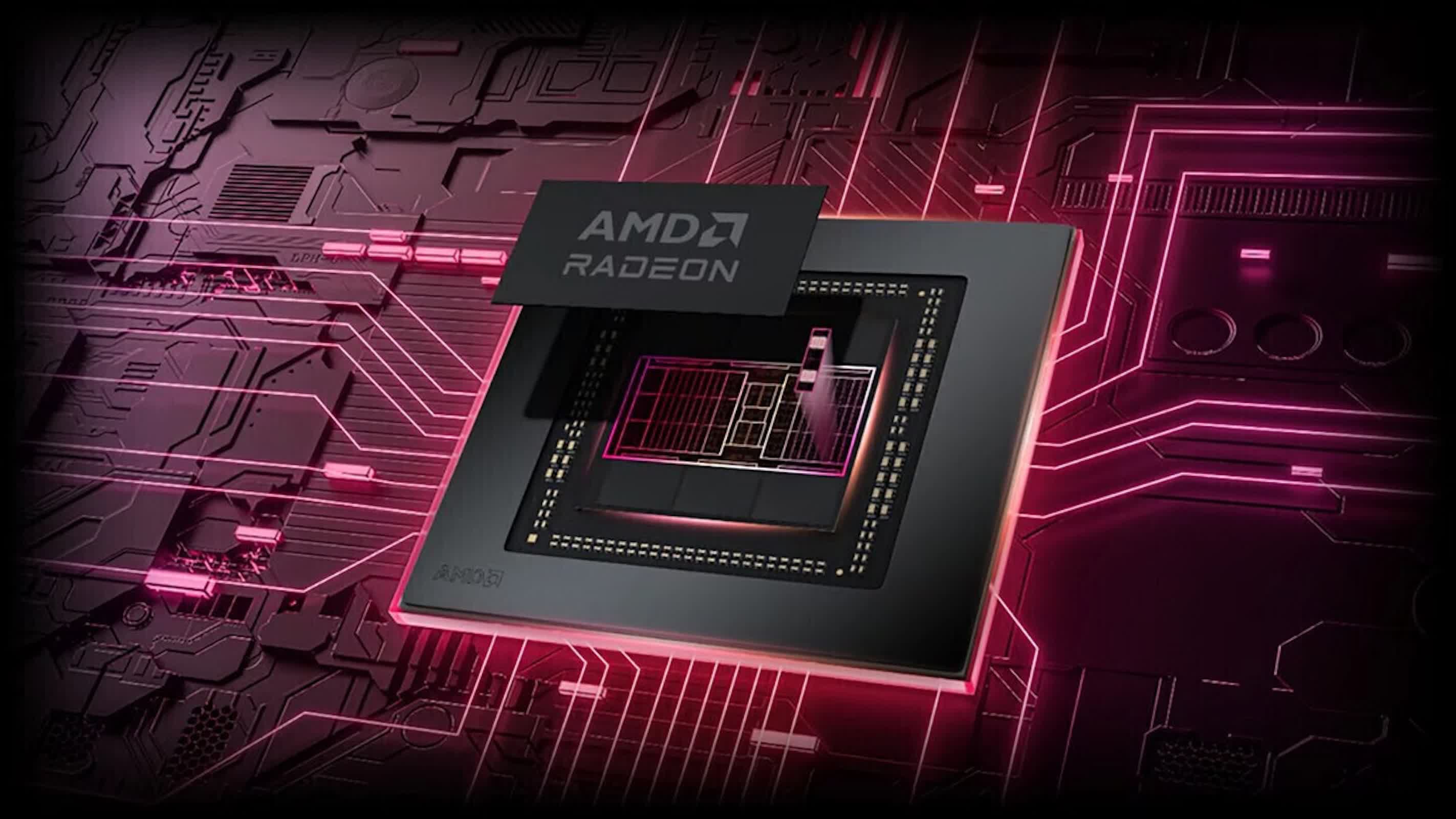
Internal software documentation from the LLVM compiler project recently added two identifiers, GFX1171 and GFX1172, marking GPUs that occupy an unusual place in AMD's architecture lineup. While the GFX12 branch represents AMD's next-generation RDNA 4 designs and GFX13 maps to RDNA 5, these new IDs remain under the GFX11 family derived from RDNA 3.

AMD appears to be developing these as enhanced extensions rather than complete replacements, modifying core IP to handle newer low-precision formats, including FP8/BF8, and to enable FSR 4, its next-generation upscaling technology.

This repackaging effort reflects both technological and market pragmatism. The RDNA 3-based integrated graphics used in current Ryzen AI 300 and 400 processors already target mainstream laptop and APU designs, where power and efficiency constraints are significant.

By adapting RDNA 3.5 into RDNA 4m, AMD is effectively ensuring that its mainstream and mobile chips can adopt newer rendering features, such as machine-learning-assisted upscaling and image reconstruction, without a wholesale shift to a completely new graphics architecture.

Leaks suggest this refreshed GPU technology could remain in the market until around 2029, aligning with reports of a long support cycle for RDNA 3.5-class integrated graphics.

The timing also lines up with leaks about AMD's broader APU roadmap. While Medusa Point is expected to bring RDNA 4m to desktop APUs, Medusa Halo is rumored to feature the next-generation RDNA 5 GPU microarchitecture for higher-end systems.

The divide gives AMD flexibility, allowing it to update its mainstream silicon with modern features while reserving cutting-edge designs for premium use cases. LLVM references to new instruction set extensions, including WMMA and SWMMAC, appear to confirm support for AI and matrix-computation workloads, providing the hardware foundation that FSR 4 and similar hybrid graphics techniques can leverage.

The company's emphasis on bringing FSR 4 support to upcoming APUs suggests AMD views that software layer as more than a simple image-enhancement option. Releasing an APU without support for its most advanced upscaler would make it harder for AMD to match rival offerings that lean on their own AI-driven scaling technologies.

By embedding FSR 4 hooks into the redesigned RDNA 4m, AMD helps maintain consistency between its discrete and integrated GPUs, benefiting developers building on unified graphics APIs.

Permalink to story:

 
This must allow RDNA 3.7 (“4m”) to stay on the prior node for cost savings while enabling driver compatibility simplification.

Because in an unconstrained fab world, AMD would just use RDNA 4 for IG rather than redesigning an architecture.
 
In short, low to mid end iGPUs will be RDNA 4m and high end iGPUs will be RDNA 5.

It's not a bad strategy if they actually made good modifications and optimisations to 3.5 and it all depends on how well they perform for a given price point.
 
I can see the logic between picking and choosing different feature sets for different market segments. Ray tracing hardware would be a major example. AMD spent a lot of transistors boosting RDNA 4's ray tracing performance over RDNA 3, and with that the 32 CU Rx 9060XT can manage ~40-80 fps @ 1080p in a bunch of ray tracing titles (am looking at Techpowerups raytracing charts). Of course that means an 8 CU iGPU with lower clocks will be lucky to hit 10-20 fps in those titles, so might as well skip all that ray tracing stuff if you aren't going to be able to play ray tracing games in the first place.
 
I can see the logic between picking and choosing different feature sets for different market segments. Ray tracing hardware would be a major example. AMD spent a lot of transistors boosting RDNA 4's ray tracing performance over RDNA 3, and with that the 32 CU Rx 9060XT can manage ~40-80 fps @ 1080p in a bunch of ray tracing titles (am looking at Techpowerups raytracing charts). Of course that means an 8 CU iGPU with lower clocks will be lucky to hit 10-20 fps in those titles, so might as well skip all that ray tracing stuff if you aren't going to be able to play ray tracing games in the first place.
but then your GPUs are not DX12 ultimate compliant. And you have to deal with this:
This looks ok until you figured that Intel is catching up quick in the iGPU space, and Nvidia will enter the iGPU segment at some point soon.
The N1/X are going to be very interesting when they finally come out.
 
This looks ok until you figured that Intel is catching up quick in the iGPU space, and Nvidia will enter the iGPU segment at some point soon.
I think AMD is counting on Medusa Halo to counter Nvidia's iGPU stuff, and Halo Mini for the higher end Intel iGPUs. Those are rumored to be using fully featured RDNA 5 iGPUs, with 48 & 24 CUs respectively. The Medusa Point chips will either being going into machines where gaming is not a big draw (business & school laptops) or gaming laptops that have discrete GPUs. And for those business/school machines, most the Intel competition will be using 4 Xe unit IGPUs, not the 10 or 12 Xe units found in the high end models, so 8 CU of RDNA "4m" or whatever they call it will still likely end up being faster if someone does game on one.
 
... but then your GPUs are not DX12 ultimate compliant. And you have to deal with this:
Exactly as some Intels iGPU are not.

The N1/X are going to be very interesting when they finally come out.
GPU parts may look interesting. But, do not forget, its not for gaming. It has ARM based CPU. Which means for some games you will need kernel grade Cheap-Anti

And for those business/school machines, most the Intel competition will be using 4 Xe unit IGPUs, not the 10 or 12 Xe units found in the high end models, so 8 CU of RDNA "4m" or whatever they call it will still likely end up being faster if someone does game on one.
Nobody of common sense would expect high fps with (heavy) RT from those iGPUs while filling cells in Excel. As (at least) I do not expect that from rtx xx50 card.
 
More BS rebranding. An aggressive refresh would actually use RDNA4 not RDNA 3.6. Only Halo gets RDNA5 and RDNA4 is never coming to mobile but hey change the name of RDNA3.5 to RDNA4m.
 
Back