AMD RDNA 5 and Nvidia Rubin GPUs could both slip to late 2027 or 2028, board partners suggest

Skye Jacobs

Posts: 2,030   +59
Staff
Rumor mill: The timeline for the next generation of gaming GPUs is starting to look less predictable – and possibly longer – than PC enthusiasts have grown used to over the past several cycles. Conversations at Computex 2026 suggest AMD's upcoming RDNA 5 architecture is still some distance away from the market.
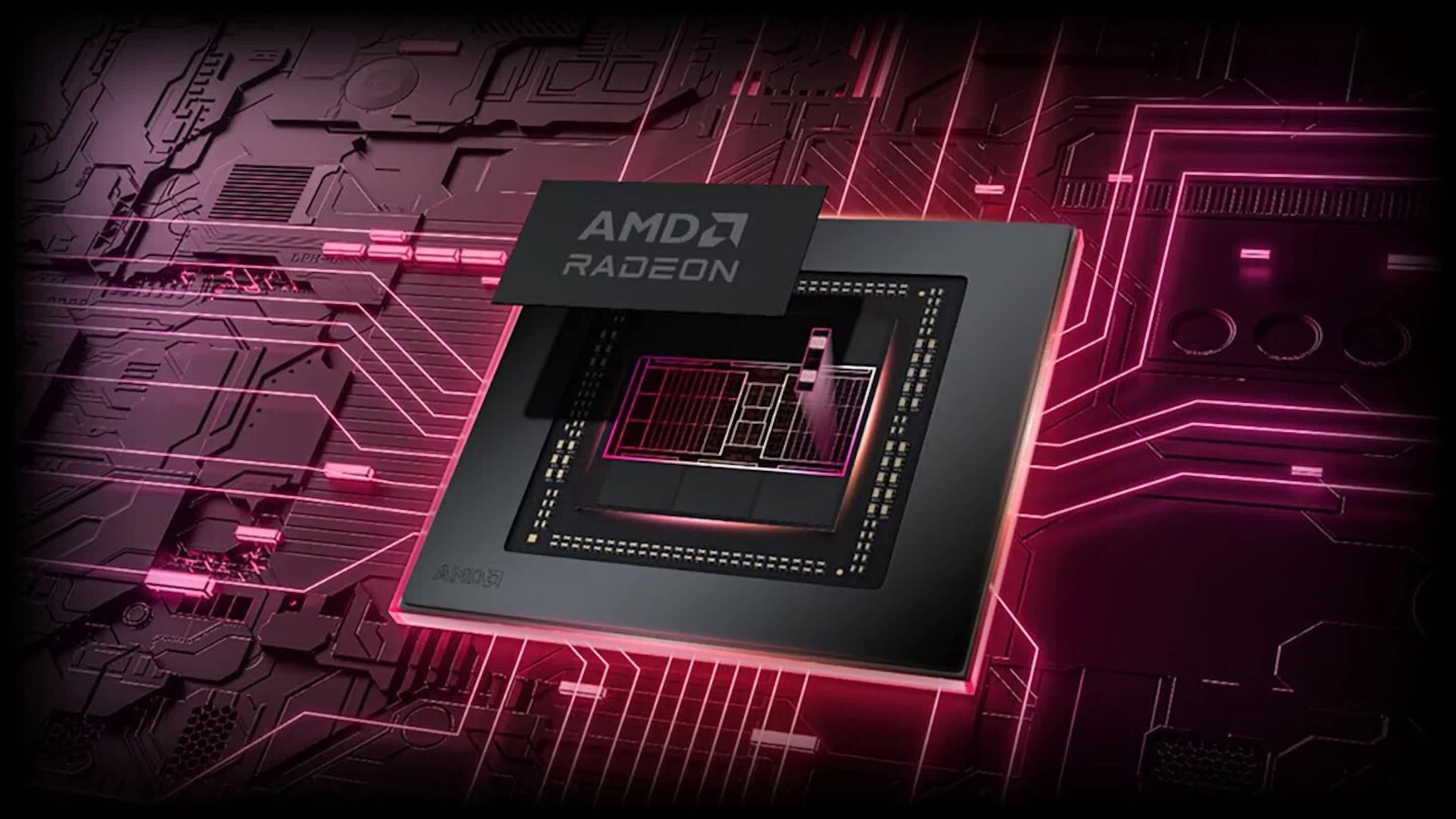
Board partners speaking with Dutch outlet Tweakers pointed to a broad window, with some expecting new cards to surface by mid-2027, while others said availability could slip into late 2027 or even early 2028. As is often the case, an announcement and an actual retail launch may not line up, leaving room for a reveal late in the year, followed by a slower rollout.

The extended timeline may reflect more than just scheduling uncertainty. RDNA 5 is shaping up to be a more ambitious architectural step, with early indications pointing to features such as improved dual-issue execution to make shader workloads more efficient. Those changes affect both hardware design and software, giving AMD more reason to favor polish over speed.

AMD's last two GPU launches underline how much these schedules can shift. RDNA 4, for example, debuted at CES 2025, but the first cards didn't ship until March. RDNA 3 moved faster, with only about a month separating its announcement and release in late 2022.

Nvidia appears to be on a similar path. Current expectations place its next-generation consumer GPUs – likely based on the Rubin architecture – sometime in the second half of 2027. As with AMD, there is also chatter about potential slippage into 2028. If both companies land in that same window, it would mark a rare moment of alignment in a market that typically sees staggered launches.

Surging demand for AI hardware has pulled attention and resources toward data center GPUs, leaving less focus on traditional gaming products. Gaming hardware remains important, but it is no longer the clear priority for either company, a shift reflected in the longer development timelines for consumer GPUs.

Intel's position adds another layer of uncertainty. The company continues to release graphics products, including its Arc G3 lineup for handheld devices built on Panther Lake. But its commitment to high-end discrete gaming GPUs is less clear, with questions lingering about future architectures. For now, the competitive landscape at the top end remains largely a two-company race.

Console development, meanwhile, is moving on a more familiar schedule. Both Microsoft and Sony are expected to introduce next-generation systems as early as next year, roughly seven years after the current consoles launched. These platforms will once again rely on custom AMD silicon, with AMD and Sony already teasing GPU upgrades to boost AI-related rendering performance, offering a glimpse of where GPU technology is heading.

Permalink to story:

 
Not a huge surprise that RDNA 5 cards would launch around then, that is also about when the next Xbox & PlayStation are expected to launch. Both of the consoles are also using RDNA5 derived graphics; for that matter rumor/leaks point to the GPU chiplet in the Xbox being the same exact chip as one of the higher end discrete cards AMD has planned.
 
While normally I would state Nvidia's release schedule would have theirs out by February 2027, Jensen hasdecided to abandon PC Gamers, so it wouldnt surprise me if the 24 month maximum schedule was out the window
 
While normally I would state Nvidia's release schedule would have theirs out by February 2027, Jensen hasdecided to abandon PC Gamers, so it wouldnt surprise me if the 24 month maximum schedule was out the window
No they haven’t. Stop spreading misinformation.

Nvidia has not abandoned consumers nor have they stopped selling cards.
Homemade PCs are dead, it is becoming a rich hobbyist niche market.
2006 called and wants its doomerism back, 2020 is still demanding it.
 
The rumor is AMD will have RDNA5 out first, while the 50 Super series is cancelled. Nvidia cares so little for the consumer market, they've gotten rid of gaming earnings altogether, gamers are no more than a rounding error, while the jacket man has played a major hand in causing the AI rampocalypse.
 
Last edited:
2006 called and wants its doomerism back, 2020 is still demanding it.
Welcome to 2026, have you not seen the prices of GPUs, RAM, or SSD's? It's causing the rest of the DIY industry to collapse, sales overall are down 40-50% and not sustainable unless the AI bubble pops. See Computex for example, all of these companies are focused on AI, consumers no longer matter.
And the ram cartel saying supply won't improve until 2029 or 2030, and the US govt looking to prop up AI companies going broke with taxpayer funding. If the DIY market doesn't die off, there could be companies going bankrupt and consolidation, causing prices to rise even higher.
 
Last edited:
Welcome to 2026, have you not seen the prices of GPUs, RAM, or SSD's? It's causing the rest of the DIY industry to collapse, sales overall are down 40-50% and not sustainable unless the AI bubble pops. See Computex for example, all of these companies are focused on AI, consumers no longer matter.
And the ram cartel saying supply won't improve until 2029 or 2030, and the US govt looking to prop up AI companies going broke with taxpayer funding. If the DIY market doesn't die off, there could be companies going bankrupt and consolidation, causing prices to rise even higher.
You also claimed that GPUs would never come down from 2020 pricing, yet you cant explain why the 9070xt isnt $1200, if prices "never come down".
 
Homemade PCs are dead, it is becoming a rich hobbyist niche market.
It goes up and down. When PC gaming started out everything cost crazy, as in my first sound card ie. the thing you needed so your PC could do more than just "Beep" cost the equivalent of $1,200 in today's money. And you can guess what the rest cost and how "big" PC gaming was back then.
Then for a long while Moore's law pretty much foretold the new hardware coming, which of course meant PC gaming grew only there was ups and downs. Right now we all know it has gotten more and more pricey, but on the other hand there is a massive back catalog of amazing games which can be played on even very modest current hardware.
 
You also claimed that GPUs would never come down from 2020 pricing, yet you cant explain why the 9070xt isnt $1200, if prices "never come down".
Except they didn't, if prices were normal a 9070XT would be $499, not $649.
Thanks to Nvidia, crypto and the AI bubble has caused pricing to shift upwards, while innovation and launch cycles have slowed down. Gamers have pretty much normalized a "mid range" being above $500, and they'll probably normalize it becoming over $800 as the cost of VRAM is going to be much higher for any next gen GPU.
It's Jensen's law, the idea that chip cost can go down over time is done for, especially now that everything is about AI. And he probably wasn't joking about gaming PC's being $10,000.
 
Last edited:
While normally I would state Nvidia's release schedule would have theirs out by February 2027, Jensen hasdecided to abandon PC Gamers, so it wouldnt surprise me if the 24 month maximum schedule was out the window

It's a business; with shareholders; and they demand continuing profits to happen. So the most logical step is to focus on the market that matters the upmost right now; selling AI.

Ai is the revolution of our time; just as the industrial revolution happened from 1760 to 1840, which made huge leaps for human mankind. Otherwise you would not be sitting (comfertable) where you are today.

Yes Ai will **** up lots of **** for a lot of people all over the world. Get used to it. Or find a profession that is actually in the need of experts and AI cannot replace at this very moment.
 
Good news. Developers need to start optimizing their games, and my current GPU will be more than enough for a long time.
 
The rumor is AMD will have RDNA5 out first, while the 50 Super series is cancelled. Nvidia cares so little for the consumer market, they've gotten rid of gaming earnings altogether, gamers are no more than a rounding error, while the jacket man has played a major hand in causing the AI rampocalypse.
That is old rumours.

50 SUPER by CES 27 aka Q1 2027, with RDNA 5 coming in 2nd Half 2027.

Nvidia won't really need RTX 60 before 2028 but you can be 100% sure that Nvidia has the option to push these to a Q3-Q4 2027 release if needed, if RDNA 5 is better than expected and I would love to see that tbh.

Nvidia faced little threat from Radeon 9000 series / RDNA 4. AMD could not even beat 5070 Ti which is an upper mid-end solution at best.
 
Last edited:
To think that at some point nvidia had a 6 month release cycle...
Pointless these days. RTX cards ages like fine wine due to DLSS and the massive game support.

I have a friend with a 8+ year old 2080 Ti, he runs all new games on medium-high preset still, with DLSS 4 Quality at 1440p with great framerates. He has no reason to upgrade. He is more than happy about the performance. With no DLSS 4 support, he would have upgraded by now, with certainty.

Pretty much all newer games today support DLSS 4, or they can be modded to work with it. DLSS is longevity on steroids. Looks good, plays good, for years and years.

RTX 2000 and 3000 has 100% DLSS 4 support, image quality is great.

Nvidia tries to push RT and Path Tracing but most RTX users don't enable it and use the performance enhancing features to just boost the rasterization performance = Insane longevity.

RTX cards easily last 5-10 years for most people.

I know like 10 people still on RTX 3000 series as well. With no reason to upgrade. They wait for 50 SUPER or RTX 60 series - or AMD RDNA5 if any good. True next gen stuff.

RTX 5000 and RDNA 4 was never true next gen stuff. So close to last gen that its laughable in most cases. Tons of people had and still don't have a reason to upgrade. They just wait for something actually worth buying.

People ramble about VRAM for longevity but the most important factor for longevity is good upscaling with actual game support. While VRAM is good to have, you can always work around having too little and you won't be able to keep running games on max settings anyway, meaning reduced VRAM usage. Hence why VRAM is not that important for longevity after all.

Good upscaling (with actual broad game support) + "enough" VRAM for medium/high preset and maybe FG/MFG support and you will be golden for many many years. Just never enable RT or Path Tracing and you will be ripping thru games, year in, year out.

My RTX 4090 turns 5 next year. Probably has 3-5 years in it still but I will upgrade to RTX 60 or RDNA 5 in 2028 and sell the 4090 while it still has good value.

Buyers will be standing in line when I put it up for sale, thanks to RTX features like DLSS.

Which is why Nvidia hardware retains the value far better than AMD. Strong demand. Huge feature-support.
 
Last edited:
Honestly, who gives a flying f#$k
People with money.

Poor people does nothing but complain and "wait" - they are not the focus from hardware makers anyway.

Why visit a hardware forum, if you can't afford hardware anyway? Seems like a waste of time.
 
Last edited:
Sky isn't falling. You'll own everything your desired be happy. Let the cronies choke on their dystopian ambitions. 🙄

Look at this deal for $1799 for mostly high end parts with zero % Credit card at 21 months will cost $86 per month to own the hardware.1000065194.jpg
 
Pointless these days. RTX cards ages like fine wine due to DLSS and the massive game support.

I have a friend with a 8+ year old 2080 Ti, he runs all new games on medium-high preset still, with DLSS 4 Quality at 1440p with great framerates. He has no reason to upgrade. He is more than happy about the performance. With no DLSS 4 support, he would have upgraded by now, with certainty.

Pretty much all newer games today support DLSS 4, or they can be modded to work with it. DLSS is longevity on steroids. Looks good, plays good, for years and years.

RTX 2000 and 3000 has 100% DLSS 4 support, image quality is great.

Nvidia tries to push RT and Path Tracing but most RTX users don't enable it and use the performance enhancing features to just boost the rasterization performance = Insane longevity.

RTX cards easily last 5-10 years for most people.

I know like 10 people still on RTX 3000 series as well. With no reason to upgrade. They wait for 50 SUPER or RTX 60 series - or AMD RDNA5 if any good. True next gen stuff.

RTX 5000 and RDNA 4 was never true next gen stuff. So close to last gen that its laughable in most cases. Tons of people had and still don't have a reason to upgrade. They just wait for something actually worth buying.

People ramble about VRAM for longevity but the most important factor for longevity is good upscaling with actual game support. While VRAM is good to have, you can always work around having too little and you won't be able to keep running games on max settings anyway, meaning reduced VRAM usage. Hence why VRAM is not that important for longevity after all.

Good upscaling (with actual broad game support) + "enough" VRAM for medium/high preset and maybe FG/MFG support and you will be golden for many many years. Just never enable RT or Path Tracing and you will be ripping thru games, year in, year out.

My RTX 4090 turns 5 next year. Probably has 3-5 years in it still but I will upgrade to RTX 60 or RDNA 5 in 2028 and sell the 4090 while it still has good value.

Buyers will be standing in line when I put it up for sale, thanks to RTX features like DLSS.

Which is why Nvidia hardware retains the value far better than AMD. Strong demand. Huge feature-support.

I upgraded from a 3080 to a 9070XT and can say that a big reason I did it was because the 3080 was loud as **** and with only 10GB vram, it couldnt do what I wanted it to do at 1440p and not be as loud as a current day ps4. FSR is fine for me. I do like adrenaline more than Nvidia App though.
 
That is old rumours.

50 SUPER by CES 27 aka Q1 2027, with RDNA 5 coming in 2nd Half 2027.

Nvidia won't really need RTX 60 before 2028 but you can be 100% sure that Nvidia has the option to push these to a Q3-Q4 2027 release if needed, if RDNA 5 is better than expected and I would love to see that tbh.

Nvidia faced little threat from Radeon 9000 series / RDNA 4. AMD could not even beat 5070 Ti which is an upper mid-end solution at best.

Those are just new rumours that still doesn't mean it's true or going to be true.

People with money.

Poor people does nothing but complain and "wait" - they are not the focus from hardware makers anyway.

Why visit a hardware forum, if you can't afford hardware anyway? Seems like a waste of time.
Stop being such an elitist. There is a difference between being able to afford hardware and not being happy about the prices for everything going up.
 
FYI 9070 xt selling for $649.99 at Amazon. sky isn't falling continues!
 

Attachments

  • Screenshot_20260609_094214_Amazon Shopping.jpg
    Screenshot_20260609_094214_Amazon Shopping.jpg
    496.9 KB · Views: 3
Back