AMD says Threadripper 2990WX is 53% faster than the Core i9-7980XE

midian182

Posts: 11,734   +177
Staff member
Highly anticipated: AMD looks set to launch Threadripper 2 in the coming weeks. If you’re exited to see what the company’s second-generation workstation processors are capable of, check out these Cinebench scores, which show the top-end CPU beating Intel’s Core i9-7980XE by 53 percent.
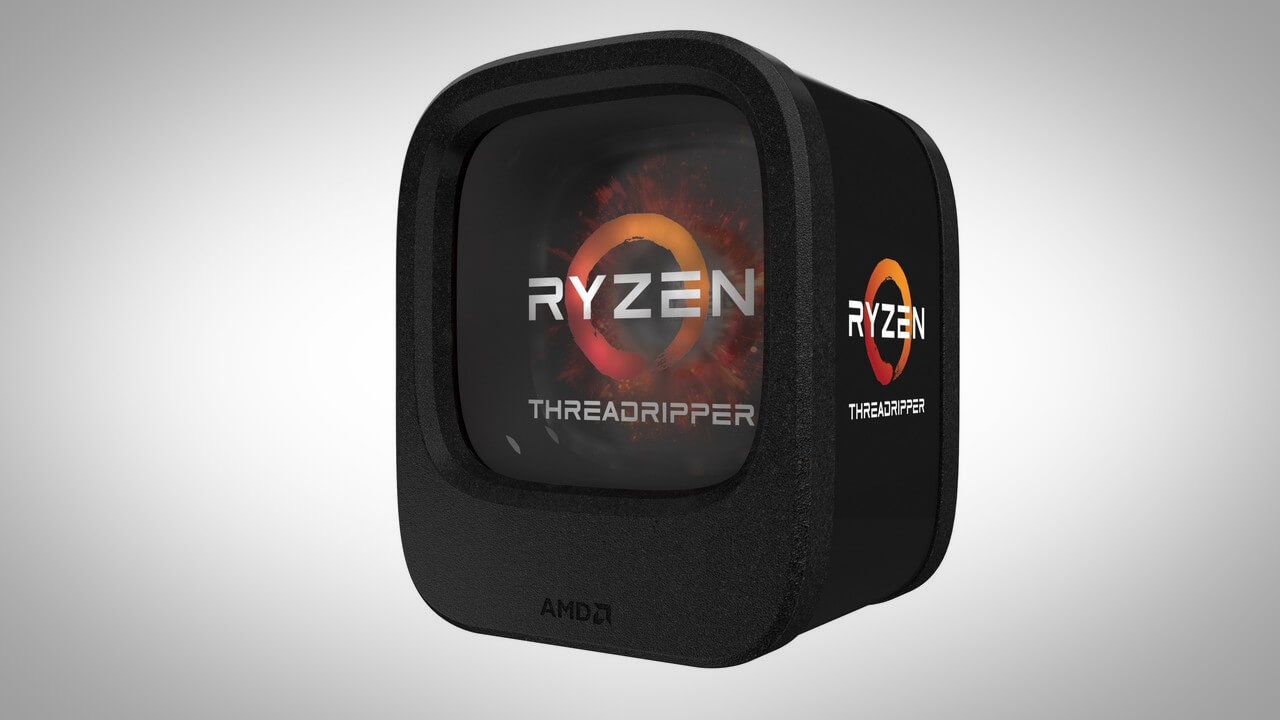
Preliminary performance figures for the 32-core/64-thread Ryzen Threadripper 2990WX processor, which will cost $1800, were 'accidentally' listed on AMD France’s website ahead of time. The company compares it to Intel’s Core i9 7980XE—a rival HEDT chip that is around $200 more expensive than AMD’s offering.

While the 7980XE with its 18 cores and 36 threads managed a score of 3,335.2 points, the Threadripper 2990WX boasted a massive 5099.3 points, which is 53 percent faster. The tests were completed in late June and both used a GeForce GTX 1080 graphics card, 4 x 8 GB DDR4-3200, Windows 10 x64 Pro (RS3), and a Samsung 850 Pro SSD.

Intel’s chip may still have the edge over Threadripper 2 when it comes to gaming performance, but that’s unlikely to be a concern among the professionals who buy these very expensive processors for their multi-threaded performance.

Model Cores/
Threads
Boost/ Base (GHZ) L3 (MB) TDP (Watts) PCIe 3.0 Lanes Price (USD) Availability
AMD Ryzen Threadripper 2990WX 32/64 4.2/3.0 64 250W 64 $1,799 Aug. 13, 2018
AMD Ryzen Threadripper 2970WX 24/48 4.2/3.0 64 250W 64 $1,299 October 2018
AMD Ryzen Threadripper 2950X 16/32 4.4/3.5 32 180W 64 $899 Aug. 31, 2018
AMD Ryzen Threadripper 2920X 12/24 4.3/3.5 32 180W 64 $649 October 2018

Last week we saw a leak of Threadripper 2 pricing, models, and specs which have since been confirmed. The flagship chip has a base clock of 3.0GHz, a Turbo clock of 4.2GHz and a TDP of 250W. We also know that current TR4 boards will be compatible with the new Threadripper 2 processors.

Here’s the now-deleted post from AMD France’s website:

Tests performed by AMD Performance laboratories on 26/06/2018 on the following system. The configurations may vary by PC manufacturer, and give different results. The results may vary depending on the driver versions used. Test setup: TR4 motherboard with AMD “Whitehaven” socket X399 + AMD Ryzen ™ Threadripper ™ 2990WX + Gigabyte X299 AORUS Gaming 9 + Intel Core i9-7980XE.

Both systems feature a GeForce GTX 1080 graphics card (driver 24.21.13.9793), 4 x 8 GB DDR4-3200, Windows 10 x64 Pro (RS3), Samsung 850 Pro SSD. “Power” is defined as computing power as represented by the Cinebench R15 processor benchmark.

The Intel Core i9-7980XE earned 3,335.2 points on average in the benchmark, while the AMD Ryzen ™ Threadripper ™ 2990WX achieved 5,099.3 on average, or 5,099.3 / 3,335.2 = 153%) 53% faster than the Intel Core i9-7980XE. RP2-1.

Permalink to story.

 
I wonder how long it will be before Intel offer something besides only large monolithic processors for HEDT. AMD have shown how effectively they can daisy chain 8 core processors and configure the end product as they please. The modularity means they will have rapid response in the market. The yields on their smaller 8 cores must also be far higher. It's much cheaper to do if you have an effective solution connecting all the dies.

I am sure Intel can still sell their large processors at a much lower cost and maintain healthy profits, because the margins are still pretty huge on chips that go for $1000+. However the days where they could just slap a price on their high end chips and charge whatever they please are over, at least for now.
 
All I can see is, separationof CPU markets with AMD for workstations and Intel for mainstream and gaming. I guess this will further boosts Intel sales, since mainstream and gaming are what driving PC sales.
 
All I can see is, separationof CPU markets with AMD for workstations and Intel for mainstream and gaming. I guess this will further boosts Intel sales, since mainstream and gaming are what driving PC sales.

AMD is still a good option for gaming/mainstream. They may lag behind intel but the gap isn't as wide as one may think. Definitely not the gap that the FX series suffered from.
 
All I can see is, separationof CPU markets with AMD for workstations and Intel for mainstream and gaming. I guess this will further boosts Intel sales, since mainstream and gaming are what driving PC sales.

Ryzen may loose for Intel in pure performance in gaming, and still loose not for much, but in other countries (outside US), the price gap is bigger because of taxes, so Ryzen is a better buying option elsewhere.

I live in Brasil, if I were to build a new gaming rig, I would totally go for a Ryzen 2600 with a new motherboard, it would be 100 dollars less expensive than an Intel equivalent platform.
 
I'd say the real big deal will be how DEVs use Ryzen and Threadripper which havent been utilized very well. If a game/dev doesn't work well with a certain processor, people will cry and Intel will be the big winner, again.
Not saying this will happen but it's on the devs really. If they don't support the processor better then AMD don't stand a chance. We'll see how it goes.

So far Intel owns the gaming market, that wont be changing. While AMD has closed the gap, unless they can overtake them, the world will still see Intel as King. That's reality. More people in this world care about popularity and who is #1 than money. Otherwise Intel wouldn't be as dominating as they are. AMD can do whatever they want, if they cant overtake them, Intel still wins. People will still buy Intel processors no matter what. Fans will be fans and then there are people who just buy what they know or what is popular.

While I know gaming isn't all that computers are used for but it's still a big market. AMD has great productivity but they always had that and still hasn't got them any closer to overtaking Intel.
 
This isn’t a gaming processor - nor is the 7980! These would both lose to the 8700...
What these should be used for are workstations... and it looks like AMD kicks butt here... problem for AMD with workstations is that people tend to keep them awhile and have long term contracts with suppliers... so while they are clearly the better option, many companies may just be sticking with Intel..
But with this being the second generation in a row where AMD reigns supreme, they may soon take over from Intel unless Intel gets their act together. Good news for the consumer, bad news for Intel :)
 
I'd say the real big deal will be how DEVs use Ryzen and Threadripper which havent been utilized very well. If a game/dev doesn't work well with a certain processor, people will cry and Intel will be the big winner, again.
Not saying this will happen but it's on the devs really. If they don't support the processor better then AMD don't stand a chance. We'll see how it goes.

So far Intel owns the gaming market, that wont be changing. While AMD has closed the gap, unless they can overtake them, the world will still see Intel as King. That's reality. More people in this world care about popularity and who is #1 than money. Otherwise Intel wouldn't be as dominating as they are. AMD can do whatever they want, if they cant overtake them, Intel still wins. People will still buy Intel processors no matter what. Fans will be fans and then there are people who just buy what they know or what is popular.

While I know gaming isn't all that computers are used for but it's still a big market. AMD has great productivity but they always had that and still hasn't got them any closer to overtaking Intel.

Ryzen didn't just give them the win in productivity. They are also cheaper, can provide more dense solutions that Intel simply can't, and they have an efficiency lead. That's just what the consumer / enterprise is getting. Their MCM tech also gets them very good yields and cheaper chips. I also wouldn't be surprised if AMD is able to extract a ton of power savings in the future by having the dies on chiplets. In effect, you can have the processor shut off the worst cores of the processor that require the most voltage while you run everything on your best cores that require the least voltage. AMD already bins and select two favored cores on Ryzen 2000 series processors. What I suggest is an extension of that.

In addition, if you've been following recent research on MCM chiplets, the latency of an MCM design is actually better than a monolithic chip once you start using an active interposer between the chiplets. So Intel has to go MCM or they will also loose the only advantage their current ring-bus architecture affords them.
 
This isn’t a gaming processor - nor is the 7980! These would both lose to the 8700...
What these should be used for are workstations... and it looks like AMD kicks butt here... problem for AMD with workstations is that people tend to keep them awhile and have long term contracts with suppliers... so while they are clearly the better option, many companies may just be sticking with Intel..
But with this being the second generation in a row where AMD reigns supreme, they may soon take over from Intel unless Intel gets their act together. Good news for the consumer, bad news for Intel :)

Agreed, many workstation users are clearly better off on TR than Xeon. But corporate confidence is for AMD is awful and they can’t supply chips with integrated GPUs nor are they very power efficient compared to Intel by comparison and corporations care an awful lot about power consumption when they are ordering thousands of systems. I’ve recently received a Xeon paired with a quadro for my new workstation in the office and I’ve been asking our IT desktop support why they don’t currently support AMD and these were the reasons he gave me.

I think AMD are almost there. I’d certainly rather be using it personally than Xeon. Especially as our building is covered in solar panels anyway!
 
Back