A year ago the Ryzen 9800X3D beat Intel's Ultra 285K by 24%. With 200S Boost overclocking on the table, we are retesting to see if one click tuning can close the gap.
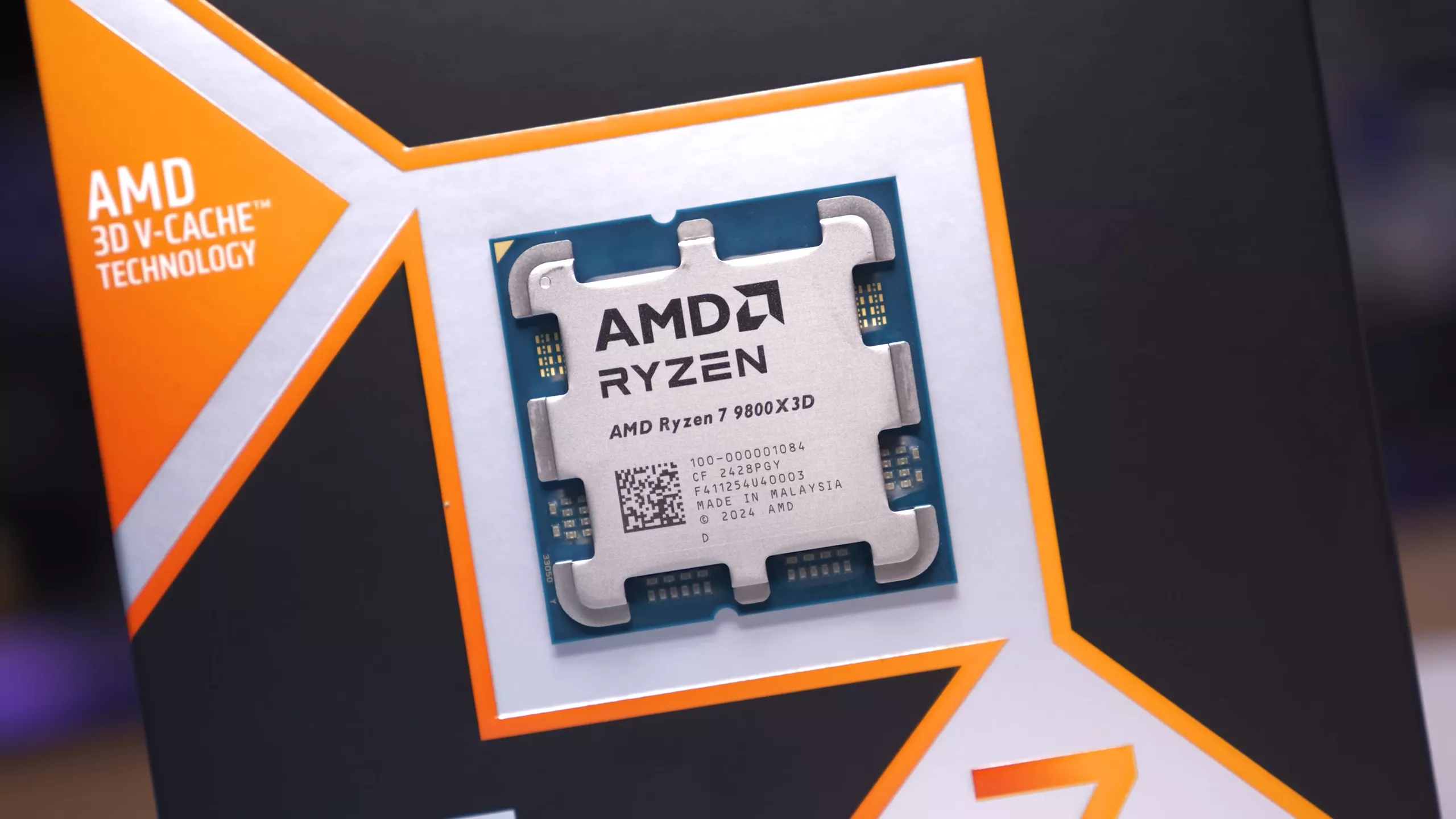
A year ago the Ryzen 9800X3D beat Intel's Ultra 285K by 24%. With 200S Boost overclocking on the table, we are retesting to see if one click tuning can close the gap.
Intel needs to simply admit defeat and crate a X3d 285k. You cant beat the cache.
God I hope we see the 12 core CCD X3d with zen 6.

Best I can do is turbocharge the 9800x3d.Stop making the 9800X3D even faster... Intel needs hope.
Sorry.. thats still to fast ?Best I can do is turbocharge the 9800x3d.
Raptor Lake gaming performance isn't very sensitive to cache size.Intel needs to simply admit defeat and crate a X3d 285k. You cant beat the cache.
"We can thus conclude from this data that adding 3D V-Cache to these Intel 14th-gen Core CPUs would likely be detrimental, only serving to reduce gaming performance (at least in today's games) which is surprising."Raptor Lake gaming performance isn't very sensitive to cache size.
Not sure if Arrow Lake would show different results.

The Intel 5775c had 128MB of L4 cache and clearly showed more cache is better compared to the higher clocked 4790K. That was back in 2015."We can thus conclude from this data that adding 3D V-Cache to these Intel 14th-gen Core CPUs would likely be detrimental, only serving to reduce gaming performance (at least in today's games) which is surprising."
They somehow came to that conclusion when in no situation did a smaller cache beat out a higher cache in performance. 200IQ claims right there.....Meanwhile the x3d AMD CPU with 8 cores is curbing the 14+ core intel chips in highly threaded titles, with WAY higher 1% lows. Even with 9200 MHz CUDIMMs and a 1GHz overclock on the ringbus, the 24 core 285k still cant consistently catch the 8 core 9800x3d.
But meh. If Intel wants to continue like its 2012, I'll just have to keep buying AMD CPUs instead. What a shame.
I believe we will, with the new chips having 16 cores instead of 8 per CCD. ( per rumors )

Intel is faster at shader compilation.Stop making the 9800X3D even faster... Intel needs hope.

"We can thus conclude from this data that adding 3D V-Cache to these Intel 14th-gen Core CPUs would likely be detrimental, only serving to reduce gaming performance (at least in today's games) which is surprising."
They somehow came to that conclusion when in no situation did a smaller cache beat out a higher cache in performance. 200IQ claims right there.....Meanwhile the x3d AMD CPU with 8 cores is curbing the 14+ core intel chips in highly threaded titles, with WAY higher 1% lows. Even with 9200 MHz CUDIMMs and a 1GHz overclock on the ringbus, the 24 core 285k still cant consistently catch the 8 core 9800x3d.
But meh. If Intel wants to continue like its 2012, I'll just have to keep buying AMD CPUs instead. What a shame.
Good test, clearly labeled information. The only thing that might give even more understanding is a GPU utilization metric. Which I would personally love to see added to these CPU tests.
The Intel 5775c had 128MB of L4 cache and clearly showed more cache is better compared to the higher clocked 4790K. That was back in 2015.
No 12 core ccd's for Zen 6, 16 core ccd's are rumoured for Zen 7 in 2028.I believe we will, with the new chips having 16 cores instead of 8 per CCD. ( per rumors )
Did you read your own conclusion? ....let me explainDid you read the article? Do you understand the results? ... let me quickly explain. When going from 24 MB's to 36 MB's of L3 cache we often saw little to no performance increase. So it's unlikely that adding significantly more L3 to that architecture would help boost gaming performance.
We dont have confirmation on zen 6's CCD core count yet.No 12 core ccd's for Zen 6, 16 core ccd's are rumoured for Zen 7 in 2028.
A good Zen 6 line-up would be
10950X/X3D2 = 12+12
10900X/X3D2 = 12+6
10800X3D = 12+0
10700X = 10+0
10600X = 8+0
10500X = 6+0
CPU tests are run at 1080p to remove the GPU as a limiting factor. This has been discussed to death and back repeatedly.If your running flagship hardware, you wouldnt be playing games at 1080p, unless you chasing that fps number with no improvement to your experience.
That said, lets be real, 5% at 4k, a lot of times is less than 5 fps. Its the only reason I do not like how the reviews have shifted to percentage results instead of fps results.
"its 3 fps faster, I mean 15%.:" bigger number better. I love the TechSpot reviews simply because they use the FPS numbers.
Intel has work todo, to win back the heart of games, but there product isnt bad. Just over priced compared to the competition. Dollar for Dollar, you get more from AMD. Can they fix it, yes, just like AMD did.
Why you gotta crush my dreams..No 12 core ccd's for Zen 6, 16 core ccd's are rumoured for Zen 7 in 2028.
A good Zen 6 line-up would be
10950X/X3D2 = 12+12
10900X/X3D2 = 12+6
10800X3D = 12+0
10700X = 10+0
10600X = 8+0
10500X = 6+0
CPU tests are run at 1080p to remove the GPU as a limiting factor. This has been discussed to death and back repeatedly.

I have the 9800x3d and I play CS2 at 1080p low even though my screen is 1440p.I wasnt arguing that... just saying people who play with the top of line hardware, playing at 1080p.. just dont make sense to me.

It's for CPU testing. Really nothing to argue. It's about trying to isolate to the CPU.I wasnt arguing that... just saying people who play with the top of line hardware, playing at 1080p.. just dont make sense to me.
You are in total denial. Both Steves (GN and HU) have concluded that Intel need a new chip design as adding more cache isn't going to help their gaming performance.Did you read your own conclusion? ....let me explain
If you claim "that adding 3D V-Cache to these Intel 14th-gen Core CPUs would likely be detrimental, only serving to reduce gaming performance " after showing a series of graphs that reveal the CPUs with the largest L3 cache consistently sitting at the TOP of the performance metrics, with not a single instance of performance decreasing with cache increases, people are going to wonder how the hell you came to that conclusion.
You also clocked the CPU cores down to 5 GHz, and shut off all the E cores, and this frequently resulted in you being clock speed limited, regardless of cache, in some tests. In other tests, performance did scale up with larger cache. Particularly this was seen in the 1% lows....the same area AMD's x3d cache makes a big difference.
Cache makes a huge difference in software when it places greater pressure on the registers. You need the cache to feed them. This is why many, but not all, games benefit from AMD's X3d cache. By limiting your core count, HEAVILY downclocking the ring bus (3 GHz vs the stock 4.6) and limiting the main CPU speed, you've also made it much harder to increase pressure to the point that a larger L3 cache would make a difference. And when we're talking 3-12MB, yeah you're not going to see the X3d like jumps. Even AMD's 16MB mobile dies scraped onto desktop packages dont see the same performance gap to 32MB that normal CPUs see to the x3d jump, despite the 16mb parts being demonstrably starved of cache.
But hey, even though Intel saw significant gains from their L4 cache adventure with the 5775c, and AMD has consistently shown huge gains with the X3d cpus, sure, lets say that said large cache would be "detrimental" to performance, after demonstrating that larger caches never perform worse than smaller ones on a castrated underclocked CPU.
LMFAO.
We dont have confirmation on zen 6's CCD core count yet.
CPU tests are run at 1080p to remove the GPU as a limiting factor. This has been discussed to death and back repeatedly.