AMD's upcoming AM6 socket set to support Zen 7 CPUs, PCIe 6.0, and DDR6 memory

DragonSlayer101

Posts: 980   +14
Staff
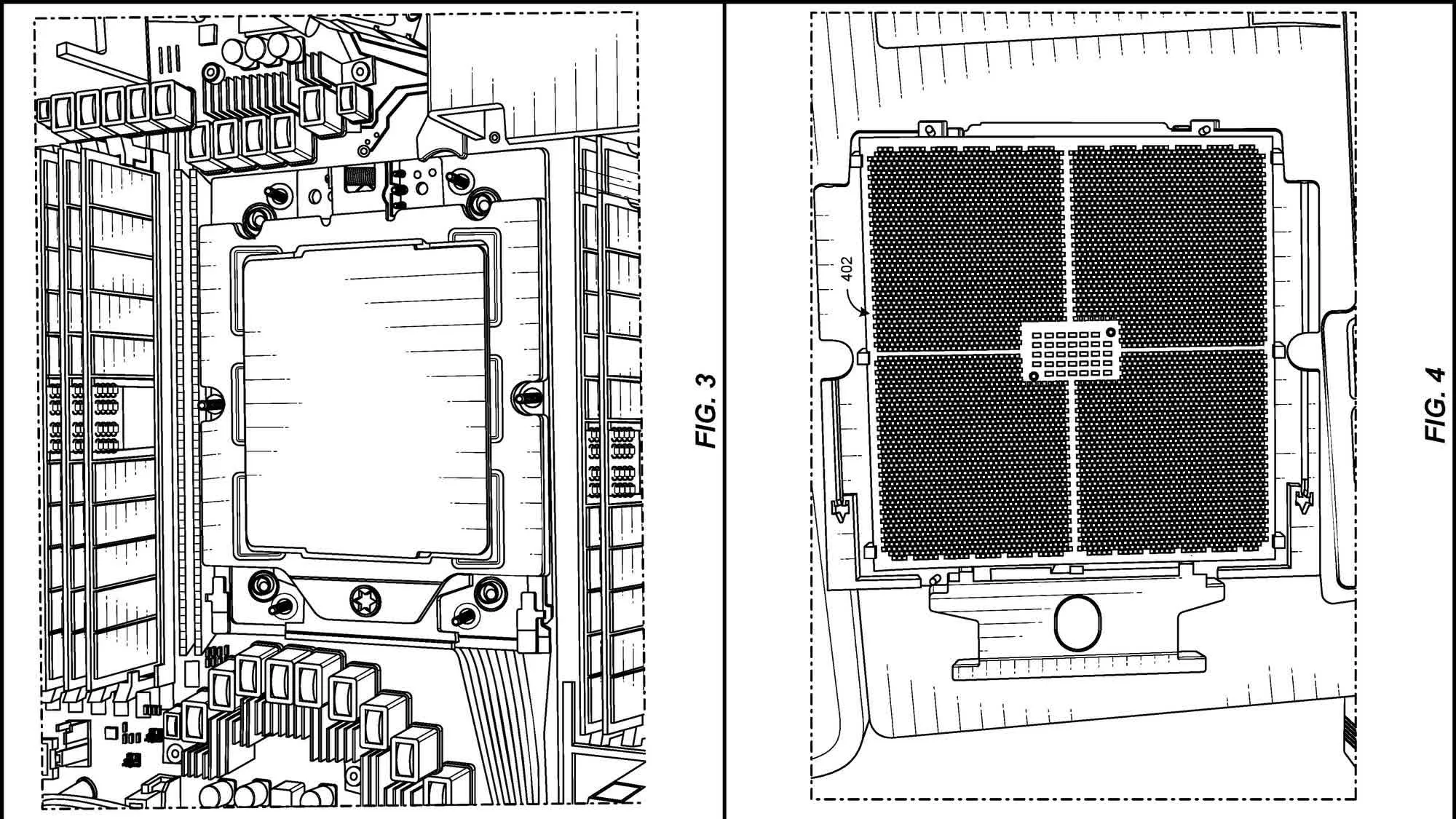
Rumor mill: AMD's next-gen AM6 CPU socket will reportedly have 2,100 pins, a 22-percent increase over the 1,718 pins in AM5. However, despite the increased pin count, the two sockets are said to be similar in size and layout, suggesting AM6 will retain the LGA design of its predecessor.
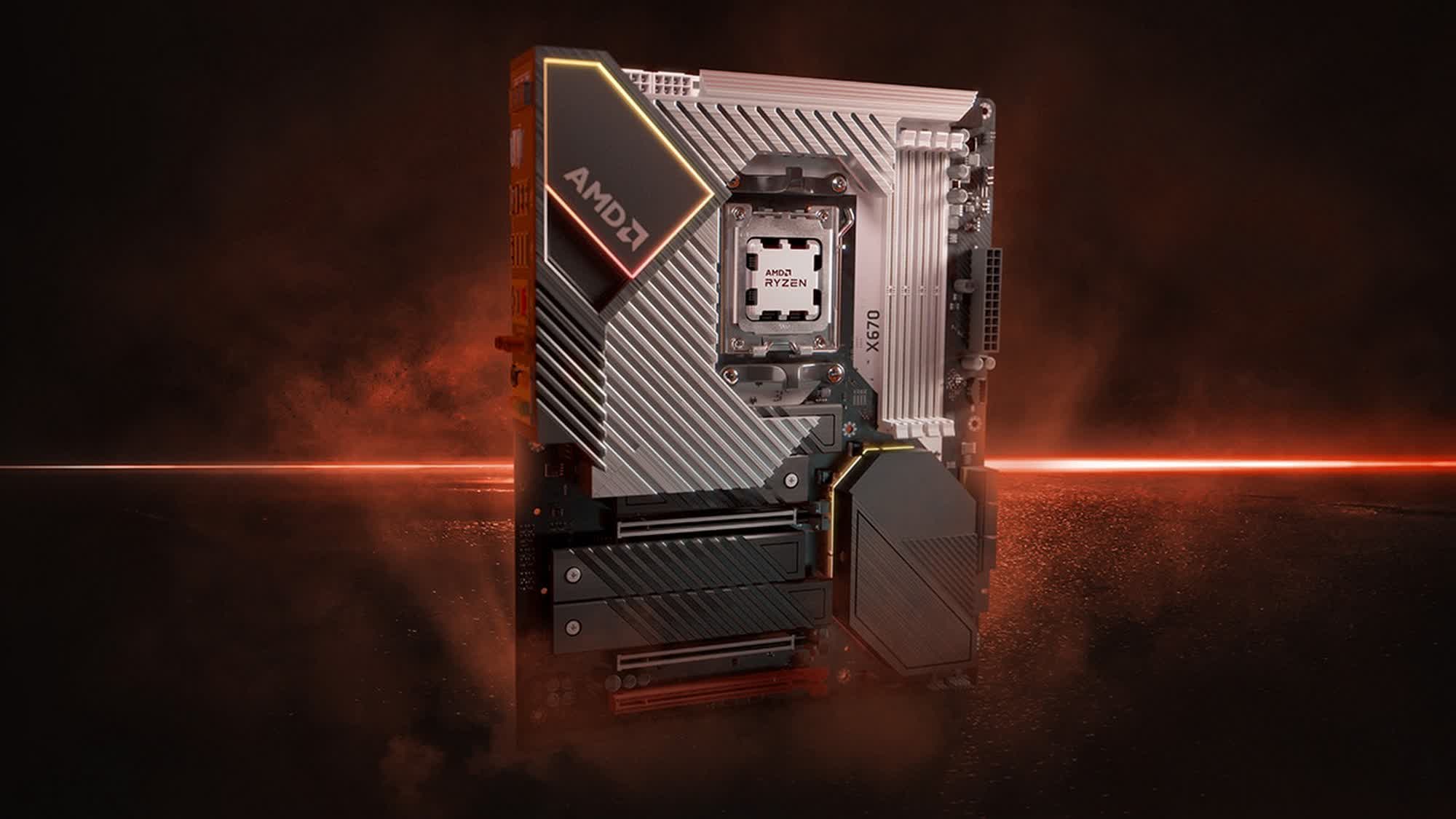
A recently published AMD patent suggests the upcoming AM6 socket will retain enough physical similarity to AM5 to support existing aftermarket attachments like third-party heatsinks, fans, and water blocks – helping reduce upgrade costs for users. This support could also extend to AM4 coolers, which already work with AM5 sockets. However, despite this backward compatibility, cooler manufacturers may still need to design new models for Zen 7 CPUs depending on their chiplet layout.

Bits and Chips points out that packing significantly more pins into the same socket area means AM6 contacts will be much denser than AM5's. This higher pin density suggests AM6 CPUs may support a higher 200W TDP compared to AM5's 170W limit. The extra pins also allow for more data lanes, enabling higher bandwidth input/output essential for next-gen features. The patent filing adds that AM6 will be AMD's first consumer CPU platform to support DDR6 memory and Zen 7 core architecture – advances that could deliver substantial performance improvements.
AMD has yet to reveal any details about AM6, indicating the socket is still under development and unlikely to be announced soon. The first wave of AM5-based CPUs only launched in late 2022, and given AMD's promise to support the same socket for multiple generations, AM6 could still be a few years away. Online rumors suggest the new platform might debut in 2028, featuring PCIe 6.0 support while maintaining backward compatibility with PCIe Gen5 devices.

People using AM5 CPUs – such as the Ryzen 7000, 8000, and 9000 series – need not worry about planned obsolescence just yet. AMD has committed to launching new products based on the existing platform well into 2026 and beyond, ensuring continued support and upgrades for current users. This approach reflects AMD's strategy to maximize platform longevity and provide a smoother transition when AM6 eventually arrives, giving consumers confidence in their investment.

Permalink to story:

 
Yeah, I think I'm just gonna hold onto my 5800X3D until AM6 and try to pick up a 9070XT on sale this holiday season. I'll treat myself to a platform upgrade and whatever AMDs latest and greatest GPU is whenever AM6 comes out.
 
Seems too soon for DDR6. We won’t be anywhere near to maxing out DDR5’s potential in just 3 more years.
DDR5 has been out for 5 years. By the time ddr6 launches in 3 years, DDR5 will have been out two years longer than ddr4 was when 5 released.

Current DDR5 implementations have hit a wall on scalability, and higher classes cks are not likely feasible with current tech.
 
DDR5 has been out for 5 years. By the time ddr6 launches in 3 years, DDR5 will have been out two years longer than ddr4 was when 5 released.

Current DDR5 implementations have hit a wall on scalability, and higher classes cks are not likely feasible with current tech.
People also aren't talking about the Thermal Throttling problem that DDR5 has and that DDR6 Aims to fix it. DDR2 had the same problem, DDR3 fixed it and DDR4 only had it on the high end, but sustained usage on DDR5 and it can start to throttle after just a few minutes. It's why LPDDR5 is so appealing, it's not just that soldered on memory is acceptable in the mobile space. Further, the speed gains we'll get will make APUs more practical for gaming and *HOPEFULLY* legitimate competition for dedicated GPUs.
 
Not too thrilled about cooler compatibility after the z-height mistake of AM5. Here’s to hoping AMD doesn’t make the IHS dummy thicc again.
That was my first thought as well. Then again I've got a 9800X3D that barely exceeds 60 Celcius during fairly heavy loads so they seem to have negated it pretty well in the end?
 
Nice reason for upgrade. I think that regardless of Intel's face, I am dropping 13700k and switching to AMD's new platform and CPU. That of course if it is not delayed for years.
 
People also aren't talking about the Thermal Throttling problem that DDR5 has and that DDR6 Aims to fix it.

I've been using DDR5 from 2021, ranging from Intel gen 12 & 14, AMD 7000, 8000 & 9000 series and so far, there was no thermal throttling you were writing about.

I'm just wondering, can you share some links into this problem?

If you mean thermal throttling by applying >1.5v of vdd & vddq, it also affected DDR3 & DDR4 whenever high voltage applied to the dram.

FYI, for daily usage on those PC(s), I've always used <1.5v of vdd & vddq, also without any direct fan / airflow to the dram, and haven't found any of thermal throttling.
 
DDR5 has been out for 5 years. By the time ddr6 launches in 3 years, DDR5 will have been out two years longer than ddr4 was when 5 released.

Current DDR5 implementations have hit a wall on scalability, and higher classes cks are not likely feasible with current tech.
Hmm. I remember DDR4 being around forever. Perhaps that is because it was from the before times. Everything before covid seems like a lifetime ago.
 
People also aren't talking about the Thermal Throttling problem that DDR5 has and that DDR6 Aims to fix it. DDR2 had the same problem, DDR3 fixed it and DDR4 only had it on the high end, but sustained usage on DDR5 and it can start to throttle after just a few minutes. It's why LPDDR5 is so appealing, it's not just that soldered on memory is acceptable in the mobile space. Further, the speed gains we'll get will make APUs more practical for gaming and *HOPEFULLY* legitimate competition for dedicated GPUs.
I haven't heard about this. Is it all DDR5 or just the faster sticks? And how bad is the throttling?
 
Props to AMD for platform longevity. Intel changes sockets more often than I change my thermal paste, and that’s saying something. Glad to hear my decade-old Noctua cooler might still live to see Zen 7, too.
 
Level 1 tech did a good job explaining it
Oh good, looks like this won't impact my current build as my DDR5 6000 has heat sinks and is going in a very breezy Meshify 3. (Great case btw, I just swapped my living room PC from a Define R5 to it yesterday and it is very cleverly designed.)

Still, good to know about this limitation of DDR5 going forward. Hopefully, DDR6 isn't as overpriced at launch and I can dive right in.
 
Oh good, looks like this won't impact my current build as my DDR5 6000 has heat sinks and is going in a very breezy Meshify 3. (Great case btw, I just swapped my living room PC from a Define R5 to it yesterday and it is very cleverly designed.)

Still, good to know about this limitation of DDR5 going forward. Hopefully, DDR6 isn't as overpriced at launch and I can dive right in.
Good airflow and heat spreaders can mitigate the issue but that doesn't mean it is 100% gone. The thermal mass of the heat spreaders just kind of delay the issue and I've heard of it becoming and issue during long gaming sessions, especially with RAM that has cheap heat spreaders. Some heat spreaders don't even have thermal pads or paste connecting them to the modules. It is an issue to be aware of. If people notice an fps drop after extended gaming sessions and everything looks normal, it is likely the DDR5 thermal throttling. A funny thing that happens is that people will restart there computer and the issue will go away for awhile until it heats up again. People tend to blame this on windows being unstable and as much as I wish that were true as a Linux evangelical, that's just not the case.
 
Good airflow and heat spreaders can mitigate the issue but that doesn't mean it is 100% gone. The thermal mass of the heat spreaders just kind of delay the issue and I've heard of it becoming and issue during long gaming sessions, especially with RAM that has cheap heat spreaders. Some heat spreaders don't even have thermal pads or paste connecting them to the modules. It is an issue to be aware of. If people notice an fps drop after extended gaming sessions and everything looks normal, it is likely the DDR5 thermal throttling. A funny thing that happens is that people will restart there computer and the issue will go away for awhile until it heats up again. People tend to blame this on windows being unstable and as much as I wish that were true as a Linux evangelical, that's just not the case.
Yes, but going by that video the heat is a function of speed. So my 6000 speed (as fast as I could get 96GB for a sane price) won't have nearly the issue of those getting blistering fast RAM.

It also just occurred to me that AMD may somewhat sidestep this issue with their much slower "sweet spot" for DDR5 speed. If memory serves it's 6000-6400 range, whereas Intel (and Threadripper) is 8000-ish.
 
Back