AMD Zen 6 desktop CPUs may ditch integrated graphics for a built-in NPU

Alfonso Maruccia

Posts: 2,570   +956
Staff
Weird if True: Integrated graphics have been a fixture on AMD's desktop Ryzen lineup since the Ryzen 7000 series launched in 2022, less useful for gaming and more as a fallback when a discrete GPU fails or during hardware troubleshooting. But according to a new rumor, that may be coming to an end with Zen 6, because AI is apparently claiming whatever silicon it can find.
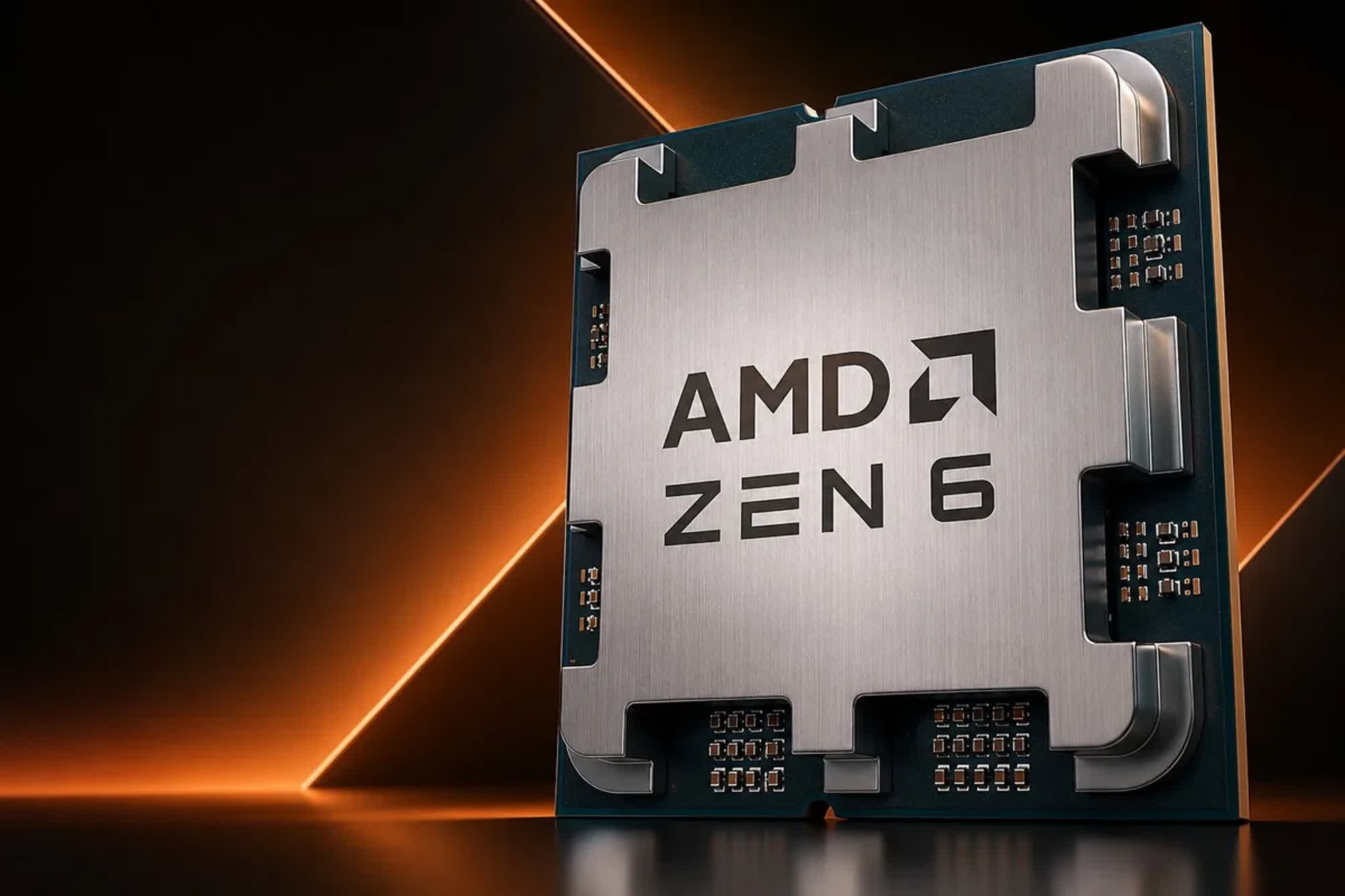
AMD is expected to launch its Zen 6 "Morpheus" processors later this year or in early 2027 at the latest. The new CPU line is shaping up to bring meaningful changes on both the architectural and platform fronts. Now, a fresh leak suggests the Ryzen 10000 desktop series will also abandon the integrated GPU entirely – replacing it with a dedicated NPU aimed at local AI workloads.

The claim comes from notorious leaker Gotou_kai3, who states that the Zen 6-based "Olympic Ridge" desktop platform will gain an integrated NPU and CUDIMM support, while dropping integrated graphics. The same source adds that Olympic Ridge will still lack native USB4 controller support, meaning motherboard makers will continue relying on external chips for USB4 connectivity, as they do today on AM5 boards.
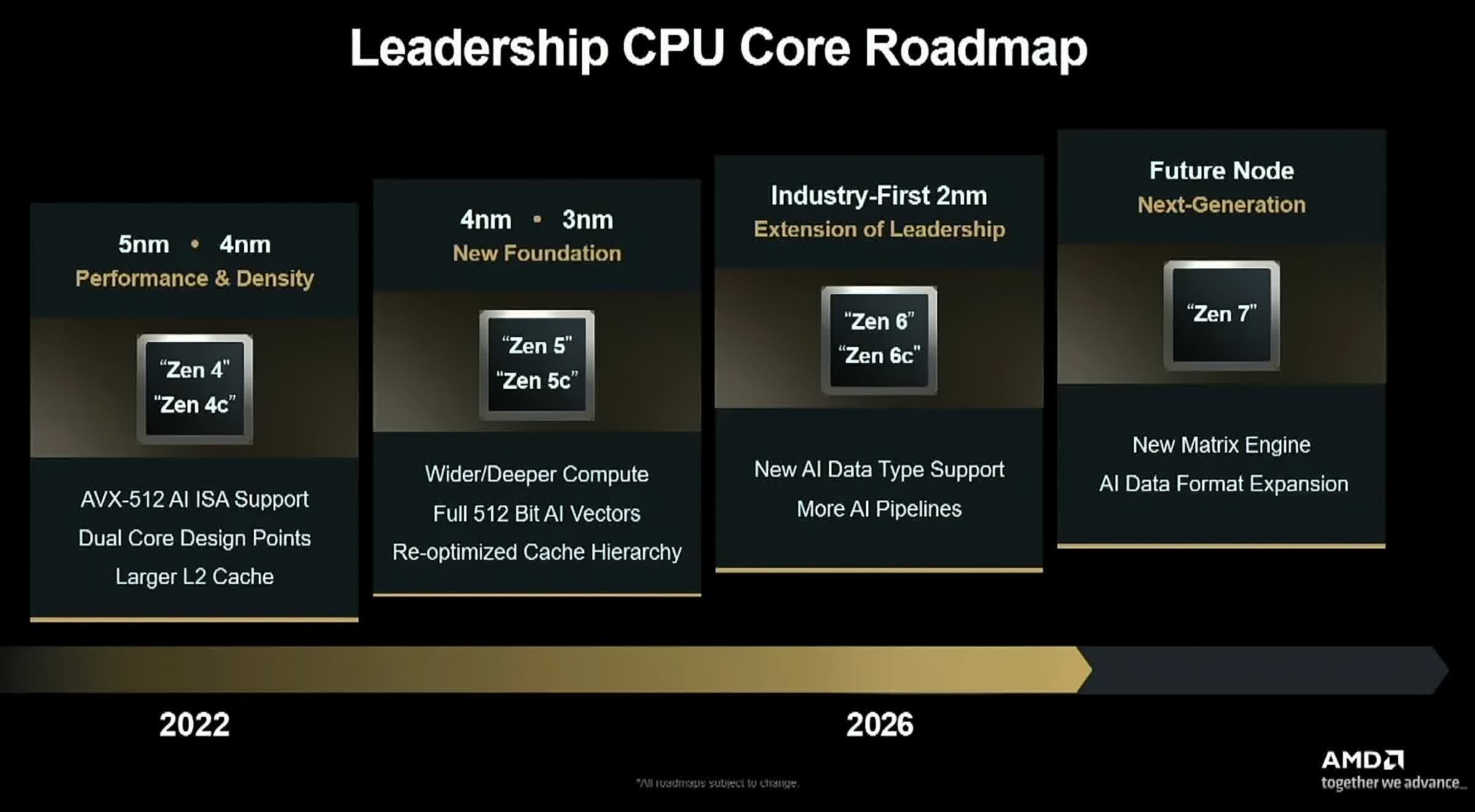
AMD has included integrated graphics in its mainstream desktop CPUs since the Zen 4-based Ryzen 7000 series, continuing through the Zen 5-based Ryzen 9000 family. With Olympic Ridge, the company appears to be reallocating that silicon for different purposes as the role of integrated graphics in enthusiast desktop builds continues to diminish.

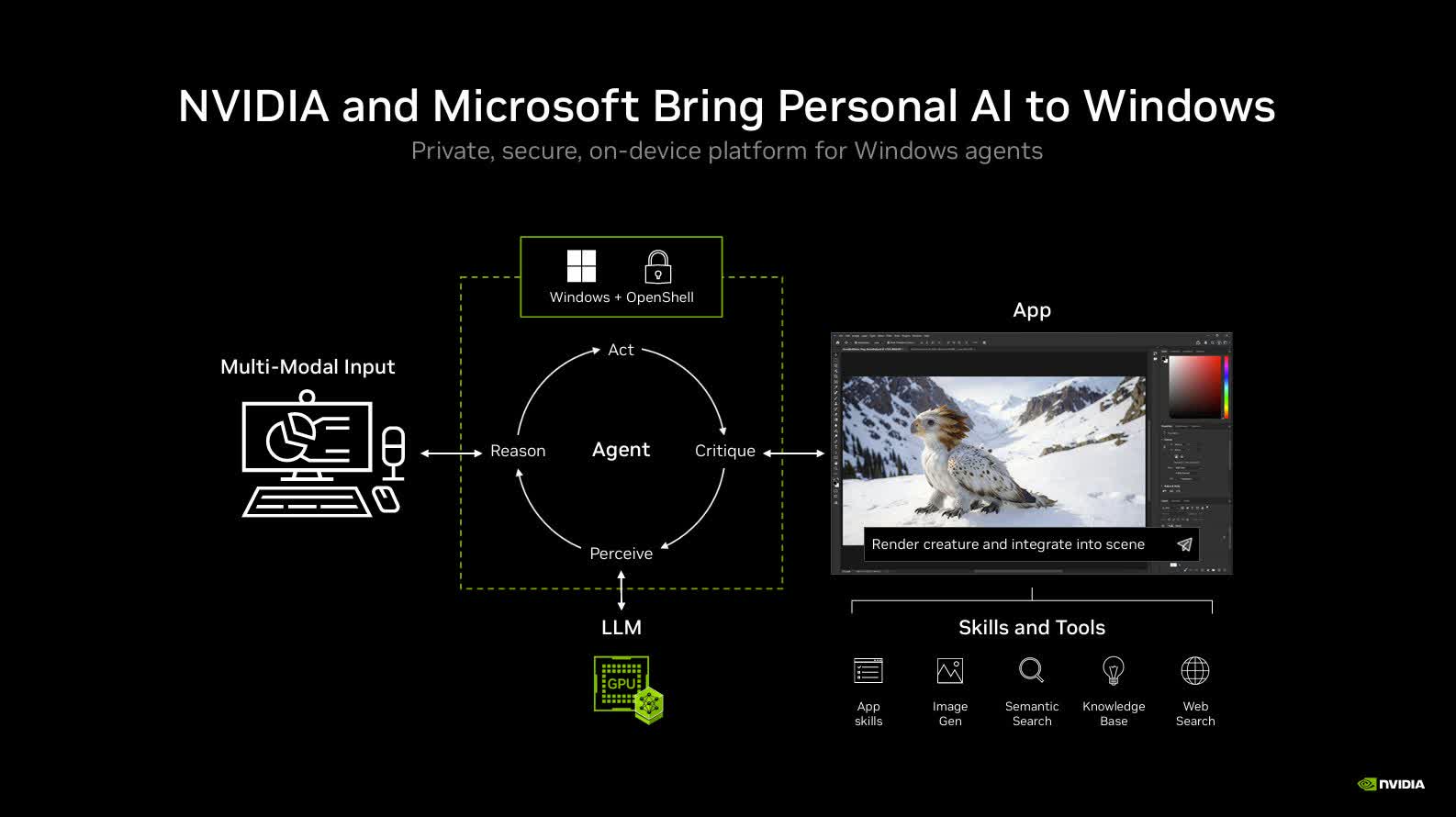
NPUs, short for Neural Processing Units, have become a baseline requirement for Microsoft's Copilot+ PC certification, where they handle AI inference tasks – from background model processing to LLM interactions – more efficiently than a general-purpose CPU or GPU.

That rationale makes sense for laptops and all-in-ones, where power budgets are constrained and efficiency matters. On the desktop, it's a harder sell. Microsoft has since extended Windows AI model support to discrete Nvidia GPUs, which further undercuts the case for a dedicated desktop NPU.

Integrated GPUs have their uses on budget PCs and in other specific scenarios. Onboard graphics allow a system to POST and display output even when a discrete GPU is malfunctioning – a scenario that matters to builders, repair technicians, and anyone who has swapped a graphics card mid-troubleshooting.

Removing that safety net from a platform aimed squarely at power users and gamers is a questionable tradeoff, particularly when the NPU replacing it serves a narrower use case. Then again, Nvidia's RTX Spark CPUs are expected to hit shelves later this year, and there is mounting expectation around local AI workloads becoming a standard part of the Windows OS experience. AMD's move may well be a preemptive response to that emerging competitive pressure.
Beyond the iGPU controversy, Zen 6 "Morpheus" is targeting clock speeds of up to 7GHz on TSMC's 2nm process, and each new CCD is expected to pack up to 12 cores and 48MB of L3 cache, with desktop configurations scaling from 6 cores up to 24 with SMT support.

That would mark a new core-count ceiling for mainstream AMD desktop CPUs. Whether pairing those specs with an NPU and no iGPU reflects a coherent product vision – or a forced hand from the AI PC trend – will likely depend on how useful desktop NPUs actually become by the time Ryzen 10000 ships.

Permalink to story:

 
I get that the iGPU makes things a bit easier for diagnosis, but I can't believe the doom and gloom article because it won't be there. I had no problems building and fixing systems without iGPU (think everything before the 7000) and to be honest, had issues with one board I built that didn't override the settings and output to the MB instead of the GPU (where I had the monitor plugged in) until I set the bios.

I really didn't use iGPUs when they were present, and won't miss them when they're gone (again)

As for the NPU it has the same problem as iGPU, not good for a whole lot except to say it's there.
 
I actually dislike integrated GPU in a desktop system where I'm using a discrete GPU. As a Linux user, I prefer a single discrete GPU, and I actually search and buy a desktop CPU that doesn't have integrated graphics.

But for laptops, I prefer integrated graphics.
 
A iGPU is useful for an office system where dedicated GPU power isn't needed, or as a backup in case a dGPU fails.
An NPU would be wasted die space though I guess shareholders want to have AI branding on Ryzen desktop CPU's, and perhaps Microslop is pushing for everyone to have an NPU.
 
The iGPU is occasionally useful. An NPU is not useful.

Native USB4 would be more useful than both for a desktop system.
Native TB would be even better.

Given how pathetic the Zen 5 iGPU is with only 2CUs getting rid of it is not bad news. They either make an effort and put a decent 4-8CU option or drop it altogether.

An NPU though would only be useful if well over 100TOPS, but even them NPU's a re better for mobile not desktop. NPU is a lot more efficient than dGPU where battery life is important, but a dGPU is massively more powerful and for real stuff like Generative AI you would never use a 100TOP NPU when you have a 1000-3000TOP dGPU
 
Native TB would be even better.

Given how pathetic the Zen 5 iGPU is with only 2CUs getting rid of it is not bad news. They either make an effort and put a decent 4-8CU option or drop it altogether.

An NPU though would only be useful if well over 100TOPS, but even them NPU's a re better for mobile not desktop. NPU is a lot more efficient than dGPU where battery life is important, but a dGPU is massively more powerful and for real stuff like Generative AI you would never use a 100TOP NPU when you have a 1000-3000TOP dGPU
Hey, I got almost 5 fps on the iGPU in my Ryzen 5 9600 on Furmark. It's actually quite good for general use as a workstation with zero gaming at 1440p.
 
NOOO no no no no!
I hope it's just an additional branch that does this but they keep iGPUs in the main branch, even if weak, to at least get video for a basic desktop use. It should be goddamn unquestionable by now!
I know I'd NEVER buy a CPU without an iGPU.
 
Native TB would be even better.

Given how pathetic the Zen 5 iGPU is with only 2CUs getting rid of it is not bad news. They either make an effort and put a decent 4-8CU option or drop it altogether.

An NPU though would only be useful if well over 100TOPS, but even them NPU's a re better for mobile not desktop. NPU is a lot more efficient than dGPU where battery life is important, but a dGPU is massively more powerful and for real stuff like Generative AI you would never use a 100TOP NPU when you have a 1000-3000TOP dGPU
Two CUs are just fine for desktop iGPUs, where the main use case is office machines that don't do any 3d stuff, and a temporary backup if your discrete card has issues. 4-8CUs would be overkill for those tasks, while still much worse than any discrete card. Basically sitting in the awkward middle.

Now what annoys me is that basically any local AI task you can run on an NPU will also be able to run just fine on a iGPU or discrete card, just some less efficiently; for a desktop that does not matter. It would be nice if AMD could convince MS to just run their local AI crud on the iGPU, with AMD maybe just bolstering it to hit the minimum tops MS wants.

 
Two CUs are just fine for desktop iGPUs, where the main use case is office machines that don't do any 3d stuff, and a temporary backup if your discrete card has issues. 4-8CUs would be overkill for those tasks, while still much worse than any discrete card. Basically sitting in the awkward middle.

Now what annoys me is that basically any local AI task you can run on an NPU will also be able to run just fine on a iGPU or discrete card, just some less efficiently; for a desktop that does not matter. It would be nice if AMD could convince MS to just run their local AI crud on the iGPU, with AMD maybe just bolstering it to hit the minimum tops MS wants.

Why do you even need a Zen 5 then for such trivial tasks. Newer NPU's have a lot more TOPS than most iGPU's certainly AMD's lame effort. Intel made a bit of an effort with Arrow Lake.
 
I don't mind this on cpu's that you'd never use the Internal GPU anyways. An NPU may have "limited" use if you're pairing with a GPU that has x100 AI processing power, but if we can get it take care of some "multitasking" tasks like streaming / background tasks, it would be beneficial instead of just having an onboard "dead gpu"
 
Good call, AMD.

Im sure people who have to RMA their expensive faulty GPUs won't mind at all that they will have no functioning PC for the 3-6wks it usually takes to sort such issues out.

Owned like 100 GPUs, never tried RMA. I never keep GPUs for more than a few years tho. You think a faulty GPU is normal?

For the first time ever, I am on a 4 year old GPU, RTX 4090. Works flawless still, with no reason to upgrade before RTX 6000 or RDNA 5.
 
Last edited:
I'll admit I haven't a clue what an NPU would offer me. I see adverts for AI agents and the like but have no clue what they're actually offering. It all seems pretty much like snake oil. The benefits of an integrated GPU, on the other hand, seem obvious.
 
After using only Intel processors for 30 years I bought Ryzen 7900, my first AMD processor. I had until then bought Xeons and cheap, passively cooled dGPUs, which were good enough since I only run VMs and don’t play games. I switched to AMD because I was tired of having to buy a new MB every third year and Ryzen 7900, with its many cores and good enough integrated graphics to stream 4K movies, was just right.

If AMD relapses I’ll switch back to Intel, especially now that they’ve hinted longer socket cycles.
 
It would be nice if AMD offered consumers a choice - CPU + NPU or CPU + GPU on the same chip. Let people choose which they need/prefer for their use case.
If they've make two variants of the same product and let people choose, they coudnt manipulate to the max and make the highest profits.
That's how bid companies and corporation operate in this savage capitalism.
 
The Ryzen G iGPUs can be pretty good for casual gaming and can even run AAA titles at 900p or 720p + medium or low settings.

This is an *****ic move, and I hope AMD at least keeps Ryzen G processors in their lineup with iGPUs.
 
The iGPU is occasionally useful. An NPU is not useful.
@passwordistaco's ancestors:

1877: "telephones in homes are not useful."
1884: "electricity in our cities is not useful"
1908: "horseless carriages are not useful"
1975: "personal computers are not useful".
1995: "The Internet is a fad that will soon pass."
 
Oh look it's AMD shooting themselves in the foot again.

Are there ANY uses that say 3% of users would/could use an NPU for?
Microsoft struggled to come up with uses for CoPilot plus PCs and now that they're in bed with NVIDIA for their CPU launch, would they put in any effort to make things compatible with AMDs NPU?
Will the same amount of die space even result in an NPU worthwhile at all or would it be so pitifully underpowered it simply has no use.

The iGPU is useful for people who don't leave the browser / office PCs or heck even for secondary 'monitoring' screens (which are becoming sort of mainstream) so the main GPU doesn't have to deal with it.

If I were to guess an iGPU would see substantial use and is appreciated by everyone who has to do graphics related troubleshooting whilst the NPU will go entirely unused by the vast majority of customers and the same space was better used for basically anything else.
 
Back