The takeaway: A Canadian software engineer who built a camera to identify police cars says two officers came to his home to ask why he was tracking them. They were concerned that repeated observations could expose their routines – the same information that makes searchable vehicle records useful to police and troubling to people being watched.
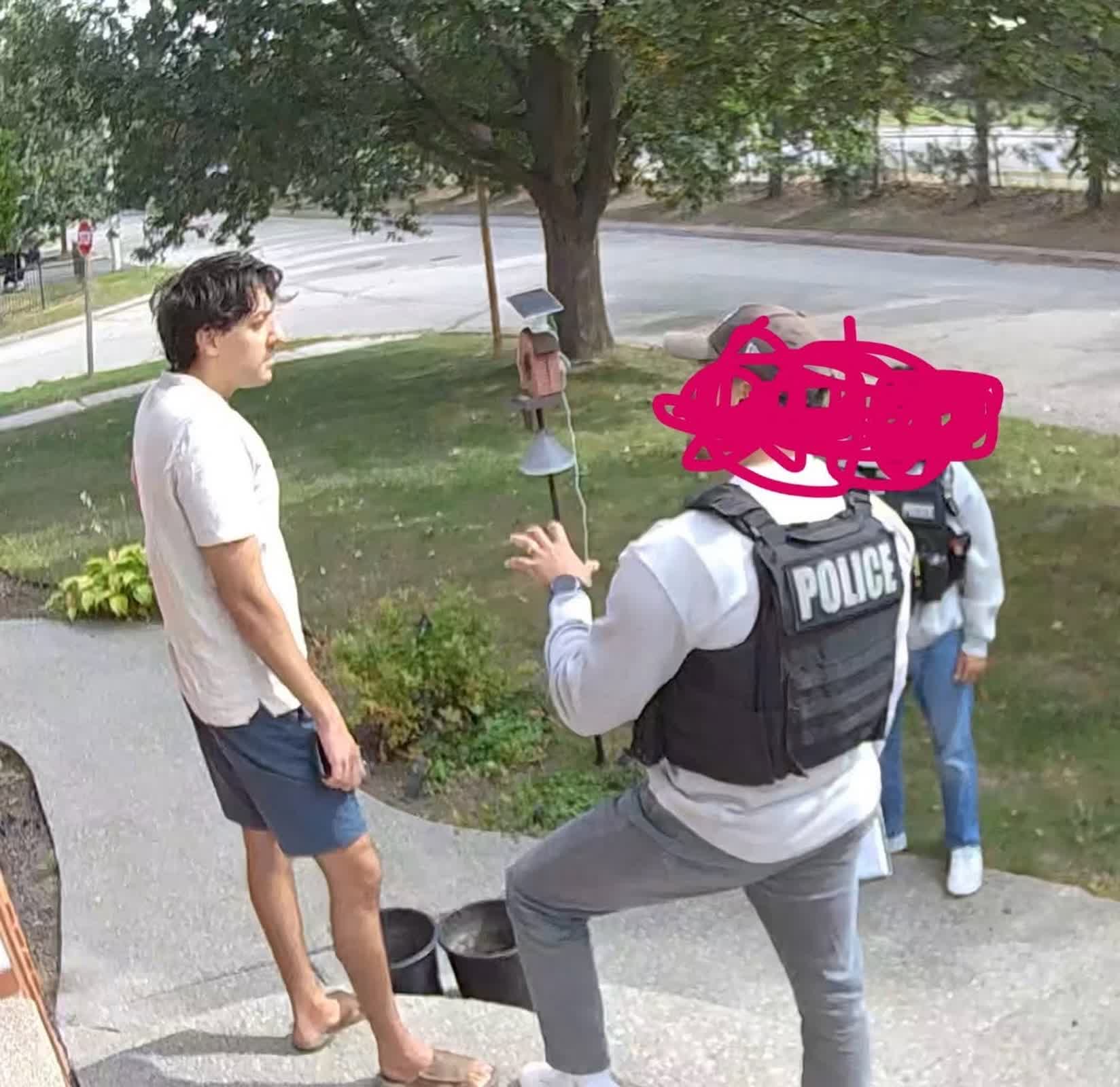
Anthony Sistilli described Peel Regional Police's visit last month in a YouTube video that he recently posted. His project uses automatic license plate recognition, or ALPR – the technology police use to record passing vehicles and search for them later. But Sistilli designed his camera to pick out police vehicles rather than collect plates from all traffic.
Sistilli built the prototype with a $180 camera and used AI coding tools to develop its software. The first version struggled to process 4K footage while identifying vehicles and reading their license plates. He lowered the resolution and split the work into two stages: first detect a police car, then try to read its plate.
That change reduced the amount of footage the plate-recognition software had to examine. It also made vehicle classification a prerequisite for capturing license plate data. The system would attempt a read only after deciding that a vehicle was a police car.
The results were modest. An hour-long test produced two images of police vehicles, but their plates were difficult to read. The demonstration showed a working concept, not a dependable tracking system. However, it did attract the attention of local police after Sistilli posted videos of the project.
Sistilli said the officers were polite but worried that someone could use the information to target them. He told them those were the same concerns civilians had about license-plate surveillance. According to his account, the officers said stronger disclosure requirements could reveal details of active investigations.
The prototype's limitations show how much work it takes to identify a vehicle from roadside footage. Commercial systems go a step further by storing those observations and making them searchable across a network.
Flock Safety's system combines cameras with server-side processing and a shared database. But the system is more than a collection of individual plate readers. Police can search observations gathered elsewhere in the network, extending their reach beyond the cameras in their own jurisdictions.
An engineer built a Flock-like camera to detect police cars, says officers visited him afterward


