Apple now assembles a quarter of iPhones in India, signaling major supply chain shift

Skye Jacobs

Posts: 2,030   +59
Staff
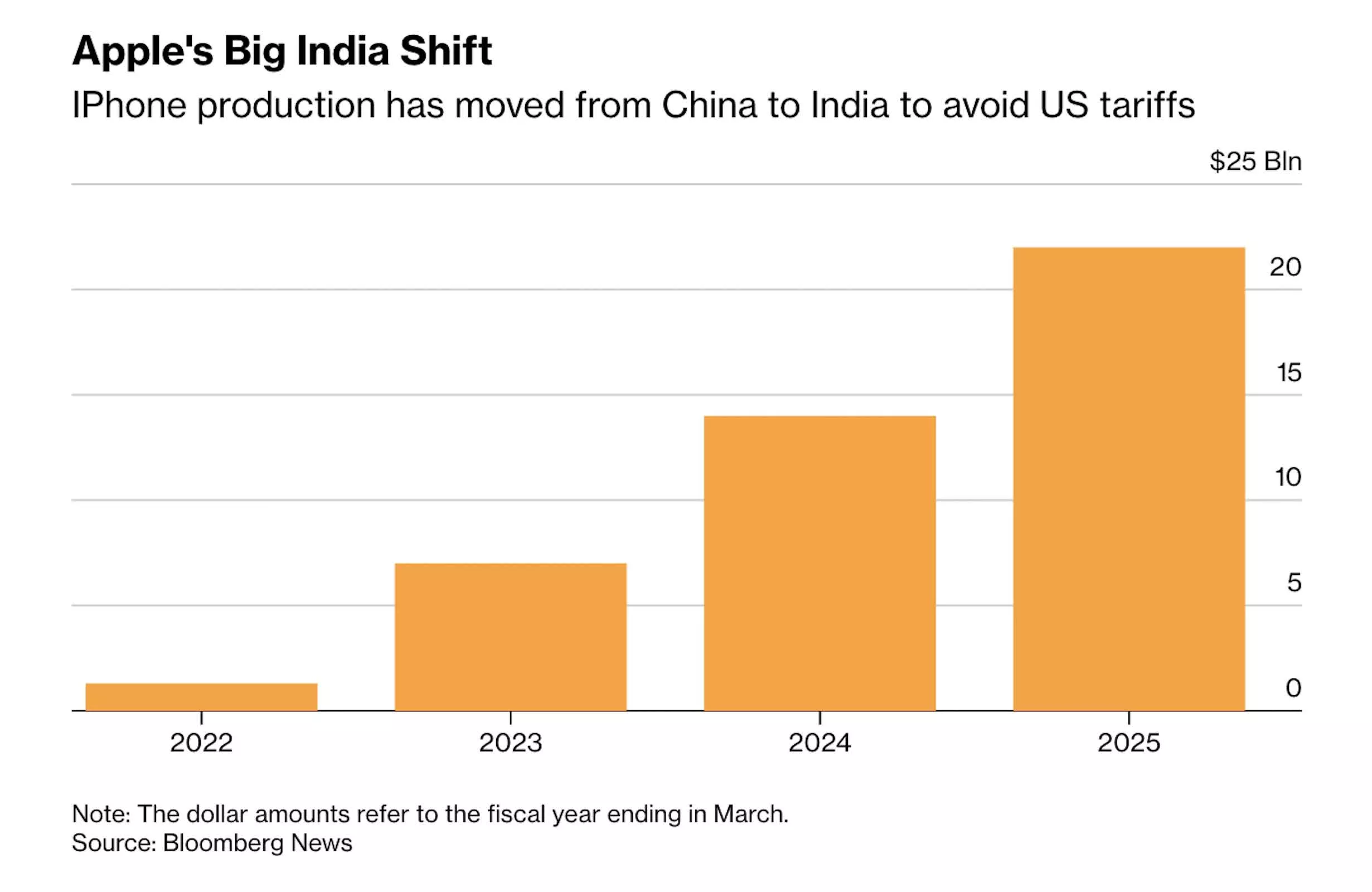
In context: Apple's shift to India is no longer an experiment in supply-chain diversification – it has become a fundamental part of how the company builds iPhones. In 2025, Apple assembled roughly 55 million iPhones in India, accounting for about a quarter of its global output, according to people familiar with the data. The production surge marks a 53% increase from the prior year and underscores Apple's effort to rebalance one of the tech industry's most sophisticated electronics manufacturing systems.

Much of this expansion is driven by necessity. US tariffs on Chinese electronics, reinstated amid ongoing trade frictions, have pushed Apple and its suppliers to re-engineer production strategies. India, with its large labor pool and government-backed industrial incentives, has emerged as the most viable alternative.

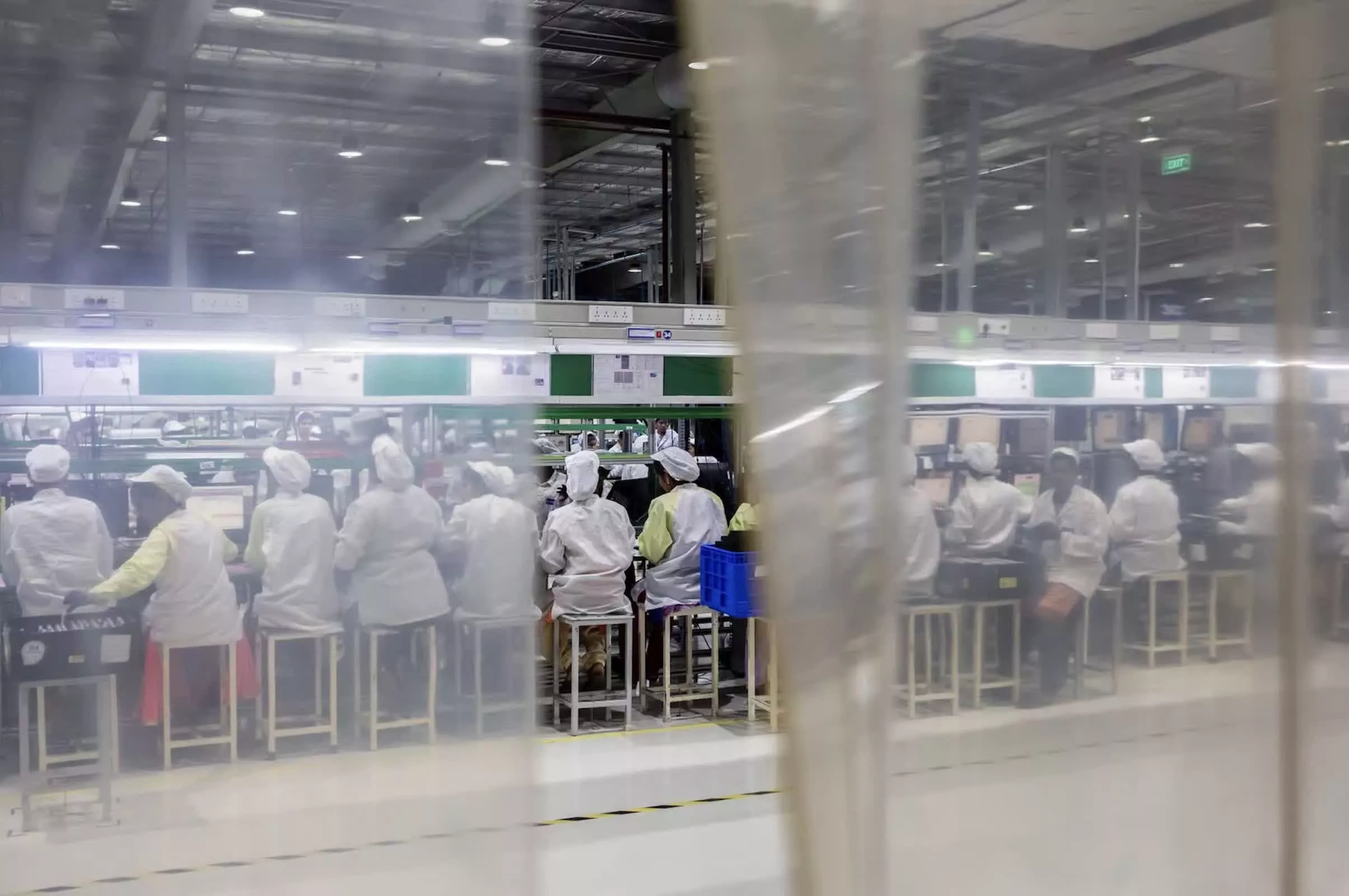
Apple's global production footprint, traditionally centered on China's massive and highly integrated supply chain, is becoming increasingly distributed. India's contribution – once marginal – has grown rapidly through facilities operated by Foxconn Technology Group, Tata Electronics, and Pegatron Corp. All now assemble Apple's latest iPhone 17 models, including the high-end Pro and Pro Max devices, while also building earlier versions for both domestic sales and export.
The scale-up has not been without friction. Indian manufacturing still faces structural challenges: weaker logistics infrastructure, higher component costs, and a less mature supplier ecosystem compared with China's deeply entrenched networks.

Meanwhile, India continues to rely on imports for many high-value components, limiting the share of the supply chain based in the country. Even so, the rise in onshore assembly represents a technical milestone for a country once peripheral to advanced electronics production.

Prime Minister Narendra Modi's production-linked incentive program has been central to this shift. The program rewards manufacturers for expanding local output and export volumes, helping offset India's cost disadvantages. The subsidies, however, are scheduled to expire on March 31, and companies such as Apple and Samsung have begun discussions with New Delhi on an updated framework to sustain growth momentum.
The timing has become critical. The US Supreme Court recently struck down some tariff provisions targeting Chinese imports, potentially easing cost pressures on China-based production. Unless India maintains a competitive incentive structure, it risks losing some of the gains that initially attracted global smartphone makers.

Behind Apple's latest assembly numbers lies a deeper technological integration effort. The company has begun building domestic partnerships for components ranging from lithium-ion battery cells to metal enclosures used in iPhones and Apple Watches. Suppliers are also preparing to scale up production of AirPods and related accessories.

The rising output in India reflects Apple's long-term strategy to build a second major iPhone manufacturing base alongside China, according to people familiar with the company's plans.

At the same time, Apple is steadily turning India into a key consumer market. The company's annual sales in the country surpassed $9 billion last year, following a retail expansion that now includes six flagship stores. Apple is also preparing to introduce Apple Pay later this year.

The twin goals – supply chain security and market expansion – underscore how India has evolved from a geopolitical hedge into a strategic cornerstone of Apple's operations. While challenges remain, the trajectory suggests that Apple's next major wave of manufacturing efficiency and consumer engagement could emerge not from Shenzhen, but from Chennai.

Permalink to story:

 
So much for bringing manufacturing back to the US.

Note: I already know the arguments against doing so.
 
You trade one villain for another.

Does America really think we aren't going to end up building up nuclear-armed India the same way we built up nuclear-armed China?

We will do absolutely anything to avoid paying Americans a living wage lol.
 
So much for bringing manufacturing back to the US.

Note: I already know the arguments against doing so.
That headline actually shows the opposite of what you’re implying. Apple shifting some production from China to India is about diversifying supply chains, not magically moving complex electronics manufacturing to the US overnight.

The US simply doesn’t have the scale of electronics manufacturing labor, supplier clusters, or cost structure that China and India built over decades. Moving manufacturing to China wasn’t something that happened quickly, it took 30+ years of investment, infrastructure building, and supplier ecosystems to reach the scale Apple uses today.

Even if Apple wanted to bring large scale iPhone assembly back to the US, rebuilding that entire ecosystem would likely take decades as well, not a year or even a few years, as you are expecting.
 
Last edited:
We are bringing more back all the time

If by "more" you mean "100 thousand fewer then last year", then you'd be accurate.

The problem is the same as it always has been: Producing here means higher prices. Higher prices means fewer sales. Fewer sales means less employment to make fewer devices. Fewer sales also means lower profit. And so on.

If you want significant manufacturing here, it's going to have to be subsidized by the government. It's pretty much that simple: It doesn't make economic sense, especially for items that are also sold outside the US. [And before you say "subsidies/socialism is bad, may I direct you to our 5-year oversupply of Corn to keep prices affordable]
 
If by "more" you mean "100 thousand fewer then last year", then you'd be accurate.

The problem is the same as it always has been: Producing here means higher prices. Higher prices means fewer sales. Fewer sales means less employment to make fewer devices. Fewer sales also means lower profit. And so on.

If you want significant manufacturing here, it's going to have to be subsidized by the government. It's pretty much that simple: It doesn't make economic sense, especially for items that are also sold outside the US. [And before you say "subsidies/socialism is bad, may I direct you to our 5-year oversupply of Corn to keep prices affordable]
There are plants being built and refurbed all over the country. The government is subsidizing them by tariffs which I will pay more willingly than to be taxed and have that money spent on healthcare, housing, food stamps, etc. for illegals and bums. Your economic education is bad. The created jobs are going to Americans at a living wage which I am sure you support
 
There are plants being built and refurbed all over the country. The government is subsidizing them by tariffs which I will pay more willingly than to be taxed and have that money spent on healthcare, housing, food stamps, etc. for illegals and bums. Your economic education is bad. The created jobs are going to Americans at a living wage which I am sure you support
Your the one who's economic education is poor.

Take your healthcare argument: You do know subsidizing it for anyone in the country (legal or otherwise) *lowers* costs. Because when people don't pay, premiums rise. And that's not even factoring in people not getting care results in more spread of diseases, which also increases costs. Studies have backed this up, repetadly.

Secondly: Tariffs are taxes; there's literally no difference between the two. And I note those tariffs are ultimately counter-productive, since they disincentive US manufacturers from actually improving their products (see the effects the tariffs that protected the US auto industry did once Japanese manufacturers were allowed to compete). If you want more manufacturing jobs, what we should do is subsidizing costs to make our exports more attractive (you know, what literally EVERYONE ELSE DOES).

Third, as I noted (and I note you ignored entirely): We're already seeing high costs leading to fewer sales, leading to job losses throughout the industry. Which is the hard truth people like you won't admit: The majority of people don't make enough money to pay any additional costs, and if the price of goods go up, they simply can't afford to purchase them.
 
Your the one who's economic education is poor.

Take your healthcare argument: You do know subsidizing it for anyone in the country (legal or otherwise) *lowers* costs. Because when people don't pay, premiums rise. And that's not even factoring in people not getting care results in more spread of diseases, which also increases costs. Studies have backed this up, repetadly.

Secondly: Tariffs are taxes; there's literally no difference between the two. And I note those tariffs are ultimately counter-productive, since they disincentive US manufacturers from actually improving their products (see the effects the tariffs that protected the US auto industry did once Japanese manufacturers were allowed to compete). If you want more manufacturing jobs, what we should do is subsidizing costs to make our exports more attractive (you know, what literally EVERYONE ELSE DOES).

Third, as I noted (and I note you ignored entirely): We're already seeing high costs leading to fewer sales, leading to job losses throughout the industry. Which is the hard truth people like you won't admit: The majority of people don't make enough money to pay any additional costs, and if the price of goods go up, they simply can't afford to purchase them.
Sure, Sure
 
Sure, Sure
They havent really invested any of the tariff tax revenue into American businesses or infrastructure.

Simply making goods from other countries more expensive via tariff taxes is woefully inadequate.

The US govt needs to treat manufacturing and tech like how they treat farm subsidies - throw billions at the mfrs/producers every year through good and bad years to keep them afloat.

It isnt exactly free market capitalism, but it is what it is.
 
They havent really invested any of the tariff tax revenue into American businesses or infrastructure.

Simply making goods from other countries more expensive via tariff taxes is woefully inadequate.

The US govt needs to treat manufacturing and tech like how they treat farm subsidies - throw billions at the mfrs/producers every year through good and bad years to keep them afloat.

It isnt exactly free market capitalism, but it is what it is.
Blah Blah. Learn. I'm sure you were among the many that said tariff bad
 
There are plants being built and refurbed all over the country. The government is subsidizing them by tariffs which I will pay more willingly than to be taxed and have that money spent on healthcare, housing, food stamps, etc. for illegals and bums. Your economic education is bad. The created jobs are going to Americans at a living wage which I am sure you support
How has Trump managed to convince you people that tariffs aren't just another tax? It boggles the mind. Then again, I'm not sure Trump even understands what a tariff is.
 
They havent really invested any of the tariff tax revenue into American businesses or infrastructure.

Simply making goods from other countries more expensive via tariff taxes is woefully inadequate.

The US govt needs to treat manufacturing and tech like how they treat farm subsidies - throw billions at the mfrs/producers every year through good and bad years to keep them afloat.

It isnt exactly free market capitalism, but it is what it is.
How has Trump managed to convince you people that tariffs aren't just another tax? It boggles the mind. Then again, I'm not sure Trump even understands what a tariff is.
Tariffs aren’t meant to magically rebuild US manufacturing by themselves. They’re meant to stop foreign governments from undercutting domestic industries with subsidies and dumping.

You’re right that the US could do more with industrial policy, things like the CHIPS Act, tax credits, and infrastructure investment are steps in that direction.

But saying tariffs are “woefully inadequate” misses the point. They’re just one tool to protect strategic industries while other investments ramp up.
 
Back