Apple's 3nm TSMC wafer costs soar to $18,000, more than tripling since the 28nm A7 chip

zohaibahd

Posts: 978   +19
Staff
Why it matters: The cost of progress is getting steeper with each new manufacturing process TSMC develops for Apple's A-series chips, which power the iPhone and iPad. A recent analysis sheds light on the increasing wafer prices and the diminishing transistor density gains Apple faces.
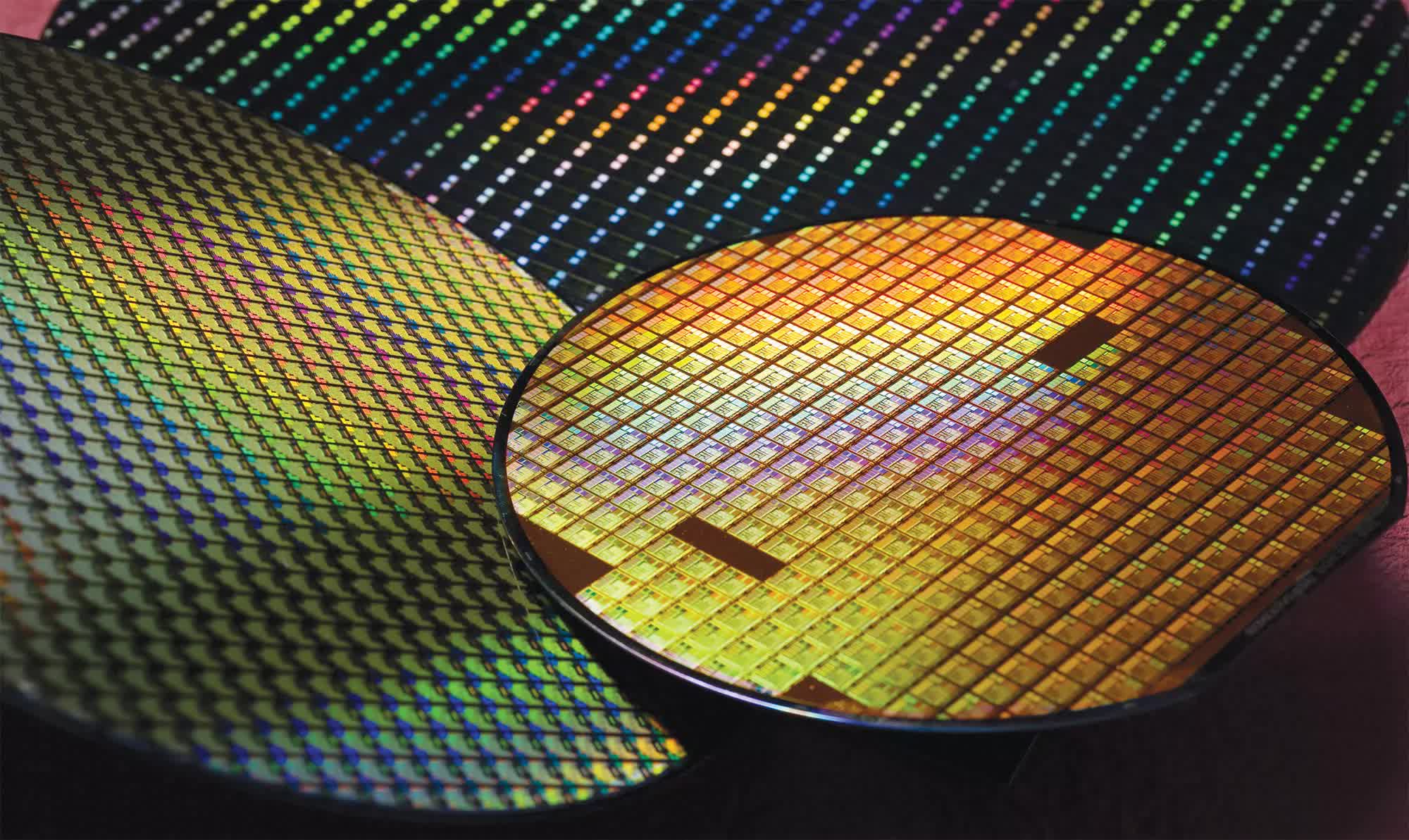
Let's rewind to 2013 and the A7, Apple's first 64-bit chip built on TSMC's 28nm process. At the time, those 28nm wafers cost Apple $5,000 each, according to Creative Strategies CEO Ben Bajarin's supply chain sources. Those wafers packed a billion transistors into the A7's dual-core CPU and quad-cluster GPU.

Fast forward to today, and the wafers for Apple's latest A18 Pro chips now cost $18,000 apiece – over 3.5 times the price of the A7's wafers. This translates to an eye-watering increase in cost per square millimeter, rising from $0.07 on 28nm to $0.25 on 3nm.

To be fair, the A18 Pro is fabricated on TSMC's cutting-edge 3nm process and crams an astonishing 20 billion transistors into its significantly more powerful CPU, GPU, and neural cores.

Despite these impressive advancements, the rising costs are becoming harder to justify as performance gains diminish. Transistor density improvements have slowed in recent years as well.

Bajarin notes that the biggest density gains came during the transitions to 20nm and 16nm, and the "glory days" of 10nm and 7nm with the A11 and A12. Those two chips saw transistor density hikes of 86% and 69% respectively compared to previous generations.

However, in the past few years, these gains have slowed to a crawl. Between the A16 and A18 Pro, transistor density increases have dropped to single-digit percentages, largely due to diminishing returns in SRAM scaling. Despite this, Apple has to pay the piper much steeper prices for each new process node.

Also read: Aiming for Atoms – The Art of Making Chips Smaller

As for what's Apple's play here, it's all about maximizing the key performance-per-watt metric. As Bajarin explained to Tom's Hardware, IPC throughput gains are getting harder each generation, so the company has had to switch gears to focus more on power efficiency and keeping operating costs in check. Bajarin added that Apple has successfully maintained relatively stable die sizes while dramatically increasing transistor density.

It should also be noted that as a top customer, Apple has a few advantages over other TSMC clients. Rumor has it that Apple is the only client paying TSMC per "good die" rather than per full wafer, giving it a competitive edge over its rivals.

Permalink to story:

 
"Fast forward to today, and the wafers for Apple's latest A18 Pro chips now cost $18,000 apiece – over 3.5 times the price of the A7's wafers. This translates to an eye-watering increase in cost per square millimeter, rising from $0.07 on 28nm to $0.25 on 3nm."

Uh, yeah, "eye-watering" increase. Watch me as I roll my eyes at your nonsensical hyperbole.

Newsflash: it costs TSMC far more to etch those wafers today than they did 12 years ago. So of course price is going to go up. Going from 28nm to 3nm in just 12 years is nothing short of incredible progress, and yes it's going to cost more. But a 3.5x increase is not exactly earth shattering when you consider that moving from 28nm to 3nm is more than a 9x transistor density increase. Maybe try writing an article without all the garbage click-bait headlines and hyperbole next time.
 
"Fast forward to today, and the wafers for Apple's latest A18 Pro chips now cost $18,000 apiece – over 3.5 times the price of the A7's wafers. This translates to an eye-watering increase in cost per square millimeter, rising from $0.07 on 28nm to $0.25 on 3nm."

Uh, yeah, "eye-watering" increase. Watch me as I roll my eyes at your nonsensical hyperbole.

Newsflash: it costs TSMC far more to etch those wafers today than they did 12 years ago. So of course price is going to go up. Going from 28nm to 3nm in just 12 years is nothing short of incredible progress, and yes it's going to cost more. But a 3.5x increase is not exactly earth shattering when you consider that moving from 28nm to 3nm is more than a 9x transistor density increase. Maybe try writing an article without all the garbage click-bait headlines and hyperbole next time.
Umm, chill? The article isn't implying TSMC is ripping people off, just the reality that the typical die is getting more expensive. More concerning for the industry is that $/mm2 is now increasing faster than Tr/mm2 which historically hasn't been the case. For example, the M1 on TSMC 5nm has 132.7MTr/mm2, but the M4 on TSMC 3nm (N3E) has 168.7MTr/mm2 density. 27% increase in actual density, but wafer costs have increased from ~13000USD to ~18000USD (38%). That trend is expected to continue going into 2nm and beyond.
 
But a 3.5x increase is not exactly earth shattering when you consider that moving from 28nm to 3nm is more than a 9x transistor density increase.
I salute the progress in capability, but the article has a point that a 3.5x increase in the price of electronics will not go unnoticed in the typical household budget. Even if people believe in the value proposition, this level of cost increase can not continue without consequence. I expect we'll see a slowdown in upgrade frequency and more interest in mid to lower end models. Particularly since both capability and battery life seem to be at or well past the "good enough" point for most uses/most people.
 
Horses for courses.
Not going to be used in most of the devices out there , many still happy with 14 or 28nm

Plus need to see in context , as % of overall cost , plus older lines must be nearing 100% yields

I hate Apple, but they do us a mighty favour subsidising the cost/development of the new nodes

I think AMD wants to be able to mix and match nodes , probably Nvidia does too. No need to have everything premium if over reduces power and no more output. We do same on our PCs with drives for various purposes . Memory +M2+ SSD + Speeding rust
 
I will be saving this article for Jan 20th because MSM will be blaming Orange man for this.

Also, why aren't you guys reporting about some of the biggest news with Zuckerbergs full confession?
Once again, conspiracy theorist were right.

 
Sooooo, to summarize:

If ya wanna play, ya gotzta PAY, hahahahaha :)

If Apple wants top tier chips & "premier customer" status, then they can pay out their arses for the privilege... but the time is quickly coming that the ever-increasing device prices will no longer be sustainable, except for the uber-wealthy, which at last count, was about .0937% of the population :(
 
Back