Arm brings AI-powered graphics upscaling to mobile devices

Alfonso Maruccia

Posts: 2,570   +956
Staff
What just happened? Gamers on modern PCs and consoles have enjoyed the benefits of machine learning in 3D graphics for years. Now, Arm Holdings is bringing similar technology to mobile, introducing AI-powered algorithms that upscale real-time graphics on the fly.
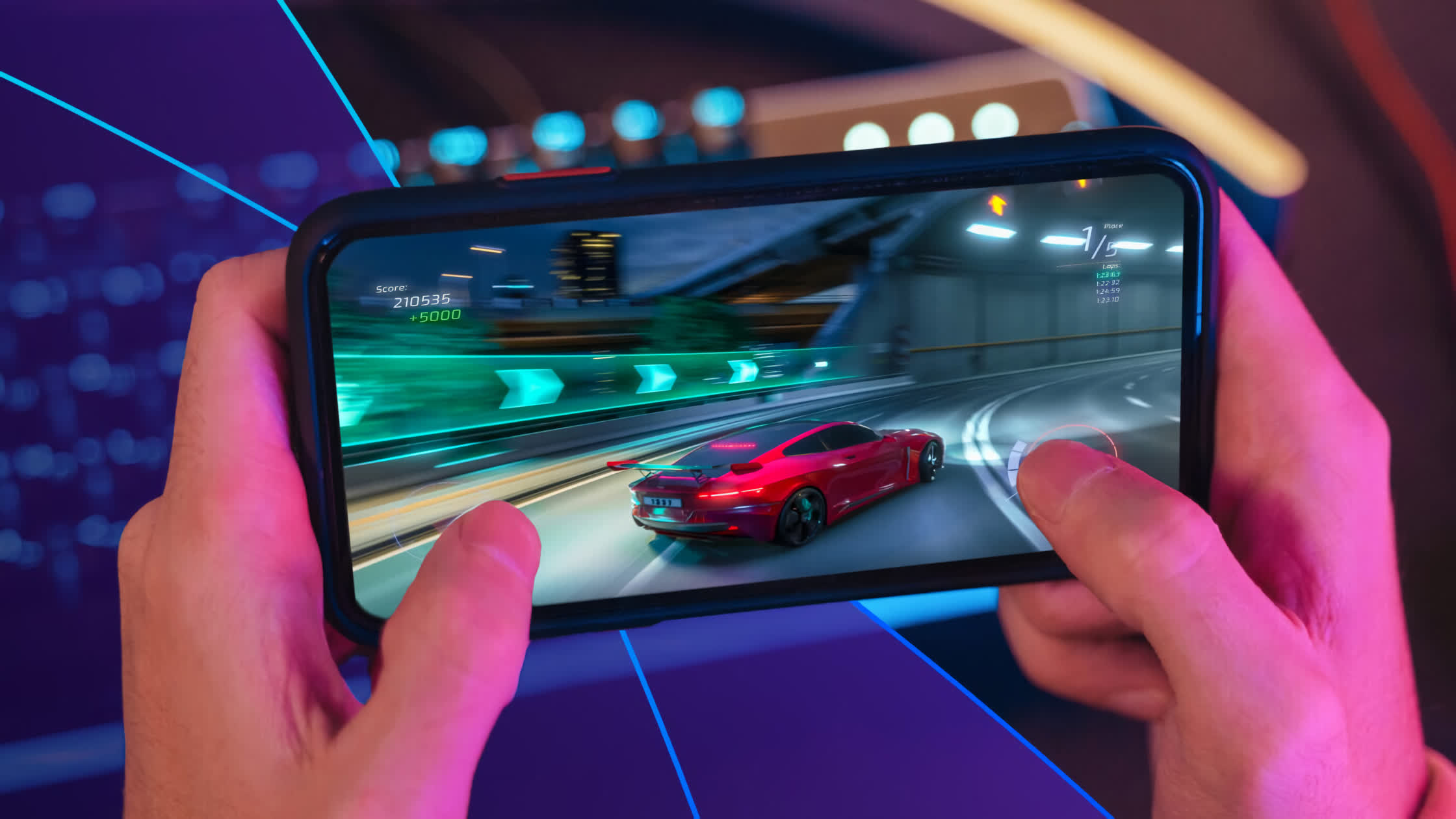
Arm has unveiled a new "neural" technology designed to upscale and enhance graphics on smartphones, tablets, and other mobile devices. The company touts its approach as an "industry first," promising PC-level visual quality on mobile – and that's just the beginning.

The first practical application of this AI-driven effort is Neural Super Sampling, a graphics upscaling method that can reportedly double resolution with just 4 milliseconds of additional rendering time per frame.

With NSS, developers can render frames at 540p while delivering output that looks like near-native 1080p. According to Arm, this can cut GPU workload by up to 50 percent, reducing power consumption or enabling significantly higher frame rates as a result.

Nvidia pioneered AI-based upscaling on GeForce RTX cards in 2019 with Deep Learning Super Sampling, and Arm's new NSS appears to offer similar capabilities to DLSS 1.0 and 2.0. The technology builds on Accuracy Super Resolution, Arm's earlier upscaling method based on AMD's FidelityFX Super Resolution (FSR) 2, already implemented in games like Fortnite and Infinity Nikki.

A key factor for mobile adoption is robust framework support, and Arm is preparing accordingly. The company has introduced a Neural Graphics Development Kit tailored for mobile, providing everything developers need to integrate NSS and other AI-powered techniques.

The new development framework includes an Unreal Engine plugin, a PC-based Vulkan emulator, updated profiling tools, and ML extensions for the Vulkan APIs. Furthermore, Arm is releasing the full AI models of its neural upscaling tech through an open source license via GitHub and Hugging Face.

Beyond NSS and the neural development kit, Arm is also planning additional AI-driven graphics technologies including Neural Frame Rate Upscaling, Neural Super Sampling, and Denoising (path tracing). These technologies should be available to app developers in 2026 ahead of proper hardware support, Arm said.

Permalink to story:

 
Just 4 ms lol! . That's 25% of the budget, so the performance uplift is minimal and you have to cut your resolution in half, so the graphical quality at such a low input resolution is terrible.
It's for the same reason we don't see dlss used much in switch 2 games yet (dlss also needs motion vectors calculated, which adds another cost to the already expensive upscaling)
(the old versions of) the tech work best when upscaling to 4k from a high input resolution, something which mobile devices are not capable of doing anyway.
Also, if you do mobile game dev right, you can have 4x MSAA implemented for an effective near 0 performance cost, which provides a way clearer image.
So I really wonder who's going to actually use this lol.
 
Last edited:
More AI crap that is not needed.

Dunno about that. I hate Big Tech-enslaved AI services with the strength of a thousand Suns, but DLSS is great at boosting performance on the latest games such as DOOM: The Dark Ages at higher resolutions (on a GeForce RTX 4080 Super, mind you).
 
Maybe using AI is too expensive in this case (4 ms!!!) so the shader based FSR2 based system would do. I mean, it's on small mobile devices and 90% of people aren't gonna notice or care too much. I'd aim for 1-2ms at most. In GFL2, it seems to use a built in Unity upscaler (might even be this FSR2 based system) and it looks totally fine. I would use it if I was targeting 60 fps but it's turn based so I'm doing native res and 30 fps for battery.
 
"With NSS, developers can render frames at 540p while delivering output that looks like near-native 1080p. According to Arm, this can cut GPU workload by up to 50 percent, reducing power consumption or enabling significantly higher frame rates as a result."

Near-native or actually native. FSR 2 was a pretty good approximation of "near-native upscaling", too, if you disregard the artifacting or other visual anomalies introduced into the image. But, FSR 2 applies to discrete GPUs or at least mobile laptop chips, where there is a limited, albeit considerable power budget. The advantage of ARM devices, and RISC more generally, is the reduced power usage and efficiency. If we start implementing upscaling technologies into ARM chips, in order to increase frame rates at the expense of better battery life (because there is a penalty incurred somewhere, or this would have already been implemented long ago), then that kind of defeats the purpose of a smartphone.

Just because the option is now on the table, doesn't mean the industry should dive in with both feet, without considering the long-term consequences. But, let's be real: in a world where, "move fast and break stuff" is the status quo in Silicon Valley, that's definitely not going to happen...
 
If this works as advertised, it could be huge for mobile gaming. Halving GPU workload without a noticeable visual downgrade means longer battery life, cooler devices, and maybe even AAA-level graphics on something you can slip in your pocket.
 
So are we ignoring Apples “MetalFX” upscaling? Or is that not AI upscaling? I thought it was?
 
Dunno about that. I hate Big Tech-enslaved AI services with the strength of a thousand Suns, but DLSS is great at boosting performance on the latest games such as DOOM: The Dark Ages at higher resolutions (on a GeForce RTX 4080 Super, mind you).
Nah, optimize better. DOOM and DOOM Eternal ran like a dream without DLSS. I prefer crisp and sharp to smeary AI upscaling.
 
Back