Arm CEO says physical AI will replace most factory workers within a decade

Alfonso Maruccia

Posts: 2,509   +934
Staff
The takeaway: Physical AI might be the tech industry's next big gamble. Arm CEO Rene Haas recently predicted that advanced robots powered by AI models will replace most human workers over the next few years. As for the ongoing issues with the global silicon supply chain? Haas suggested that we'll simply have to learn to live with them.
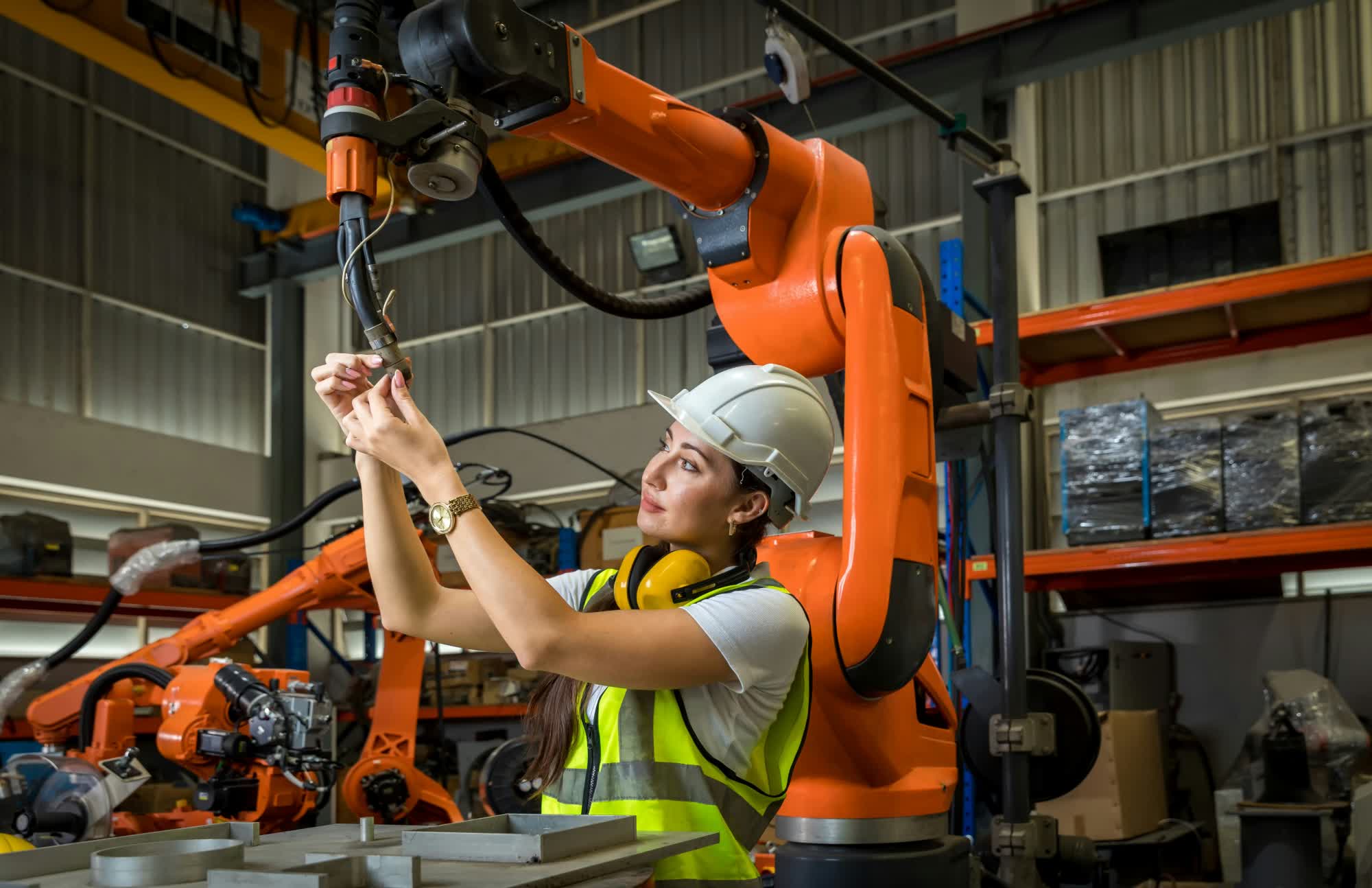
Haas shared his views on the future of factory jobs in the age of agentic AI and robotics during the recent Brainstorm AI live event hosted by Fortune in San Francisco. The Arm executive is confident that human-shaped robots, powered by advanced AI systems, will take over most factory jobs within the next five to 10 years.

"I think in the next five years, you're going to see large sections of factory work replaced by robots - and part of the reason for that is that these physical AI robots can be reprogrammed into different tasks," Haas stated during the event.

Physical AI is considered the next frontier of AI research applied to robots and other physical devices designed to mimic human workers. Nvidia explains that physical AI can give cameras, robots, self-driving cars, and other autonomous systems a much deeper "understanding" of the physical world. In theory, these systems can perceive, interpret, and act, performing complex tasks outside the virtual grid.

Automation already plays a major role in manufacturing. According to Haas, current robotics technology is still optimized for single-purpose tasks. Both hardware and software are built for specific workloads, which limits their ability to adapt easily to new jobs.
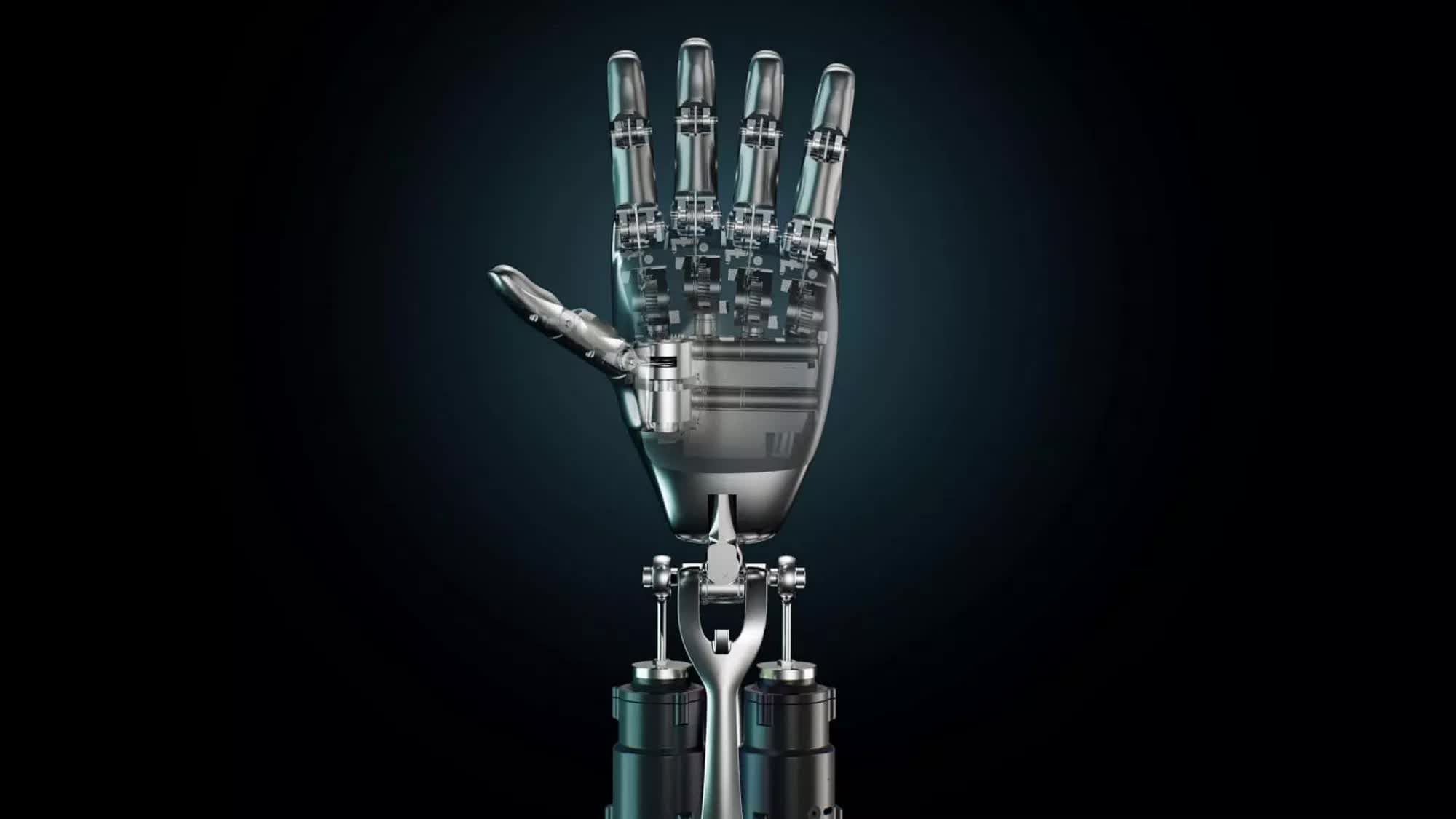
Thanks to physical AI, humanoid robots may eventually solve this limitation by "learning" what they need to do on the fly. Arm's CEO envisions a factory environment where general-purpose robots can adapt to different tasks, allowing them to replace a significant portion of the human workforce that currently works alongside single-purpose robots.

Haas illustrated physical AI's potential by pointing to autonomous taxi services. Waymo's robo taxis still rely on extensive hardware systems, including radar, lidar, and multiple cameras. Over the next few years, he suggested, these hardware requirements may shrink as more advanced AI models take over, performing complex tasks with fewer sensory inputs.

Arm is currently designing SoCs and other silicon components used in many everyday devices. Haas noted that most people rely on 50 to 100 different Arm chips across their personal gadgets and home appliances, a testament to the efficiency and growing complexity of the technology. That same efficiency, he argued, could one day make humanoid robots capable factory workers in the not-too-distant future.

Haas was also asked about ongoing issues affecting major supply chains in the semiconductor industry, with market concentration being the most pressing. A handful of large corporations control critical resources, such as chip manufacturing (TSMC) and the production of silicon-etching machines (ASML). Haas's proposed solution? The industry will simply need to learn to live with it.

Permalink to story:

 
He may be right. Or we may look back on the quotes and laugh, like some of Bill Gates famous quotes that ended up so far from the truth it was absurd. ...See you in ten years I guess.
 
It’s always funny how the people selling the tech that will “replace everyone” are the ones most loudly insisting it’s inevitable. Of course Arm’s CEO is bullish on humanoid robots replacing workers—he’s literally positioned to profit if everyone believes that future is unavoidable.

But there’s a huge flaw in this whole “robots will do everything” narrative that these execs conveniently skip: humans are the economy. You can’t strip wages out of the system indefinitely and still expect a functioning capitalist market. If most labor income disappears, who exactly is supposed to buy the products the robots are churning out? At some point the replacement of human labor hits a hard economic wall unless society steps in with massive income redistribution or subsidies to keep demand alive.

The idea that we’ll “just live with” worsening supply-chain bottlenecks while simultaneously automating away huge swaths of the workforce is wild. You can’t build a future on concentrated chip production, shrinking consumer purchasing power, and the assumption that everything will just work itself out.

If companies want robot-driven factories, cool—but they also need to acknowledge the economic math: take humans out of the labor market, and you eventually take humans out of the consumer market. Without addressing that, all this futurism is just PR for investors, not a sustainable plan for society.

This is what a growing bubble looks like. When you have:

- Industry leaders making grand, sweeping predictions (“most workers replaced in 5 years”)
- Massive capital flowing into unproven tech
- Companies talking about societal transformation with zero plan for the economic fallout
- Execs saying “we’ll just learn to live with” structural limitations like chip bottlenecks
- A narrative that must be believed for valuations to stay high

It’s a short-term gain for the companies hyping it. In the medium term, they get:

- Higher stock valuations
- More investment
- Government incentives
- Talent and media attention

But in the long term, the economics get real. You can’t remove the wage base of the economy and still expect demand to magically stay intact.

The stupid part of all this is that if you tank the economy bad enough money becomes worthless. Nobody cares if you have billions of dollars if the dollar has no value. Balance is a requirement; even for the super-rich.
 
The complexity of multi function humanoid robots is quite significant. I don't doubt his vision will eventually happen. But, in a decade? Unlikely, as people are less expensive, for now.

What business wants to buy the equivalent of humanoid EVs that have high initial cost, high repair cost and stop when the power goes out, or a server goes down. The infrastructure needs serious improvement in stabilized fixed costs of doing business and new factories to perform the rerefined jobs.

Most Western companies want to milk profits instead of investing in a longer term future. China, on the other hand.....
 
It’s always funny how the people selling the tech that will “replace everyone” are the ones most loudly insisting it’s inevitable. Of course Arm’s CEO is bullish on humanoid robots replacing workers—he’s literally positioned to profit if everyone believes that future is unavoidable.

But there’s a huge flaw in this whole “robots will do everything” narrative that these execs conveniently skip: humans are the economy. You can’t strip wages out of the system indefinitely and still expect a functioning capitalist market. If most labor income disappears, who exactly is supposed to buy the products the robots are churning out? At some point the replacement of human labor hits a hard economic wall unless society steps in with massive income redistribution or subsidies to keep demand alive.

The idea that we’ll “just live with” worsening supply-chain bottlenecks while simultaneously automating away huge swaths of the workforce is wild. You can’t build a future on concentrated chip production, shrinking consumer purchasing power, and the assumption that everything will just work itself out.

If companies want robot-driven factories, cool—but they also need to acknowledge the economic math: take humans out of the labor market, and you eventually take humans out of the consumer market. Without addressing that, all this futurism is just PR for investors, not a sustainable plan for society.

This is what a growing bubble looks like. When you have:

- Industry leaders making grand, sweeping predictions (“most workers replaced in 5 years”)
- Massive capital flowing into unproven tech
- Companies talking about societal transformation with zero plan for the economic fallout
- Execs saying “we’ll just learn to live with” structural limitations like chip bottlenecks
- A narrative that must be believed for valuations to stay high

It’s a short-term gain for the companies hyping it. In the medium term, they get:

- Higher stock valuations
- More investment
- Government incentives
- Talent and media attention

But in the long term, the economics get real. You can’t remove the wage base of the economy and still expect demand to magically stay intact.

The stupid part of all this is that if you tank the economy bad enough money becomes worthless. Nobody cares if you have billions of dollars if the dollar has no value. Balance is a requirement; even for the super-rich.
They actually hope for new slave market. These philosophers dreams were quite literally delivered to their followers. One was by Messier Guilleutine in France, another by Comrade Lenin in Russia. Way before them by Spartacus of Rome in Roman Empire. Greed always ends one way.
 
They actually hope for new slave market. These philosophers dreams were quite literally delivered to their followers. One was by Messier Guilleutine in France, another by Comrade Lenin in Russia. Way before them by Spartacus of Rome in Roman Empire. Greed always ends one way.
And hilariously, their ideals all contributed to their deaths.
It’s always funny how the people selling the tech that will “replace everyone” are the ones most loudly insisting it’s inevitable. Of course Arm’s CEO is bullish on humanoid robots replacing workers—he’s literally positioned to profit if everyone believes that future is unavoidable.

But there’s a huge flaw in this whole “robots will do everything” narrative that these execs conveniently skip: humans are the economy. You can’t strip wages out of the system indefinitely and still expect a functioning capitalist market. If most labor income disappears, who exactly is supposed to buy the products the robots are churning out? At some point the replacement of human labor hits a hard economic wall unless society steps in with massive income redistribution or subsidies to keep demand alive.

The idea that we’ll “just live with” worsening supply-chain bottlenecks while simultaneously automating away huge swaths of the workforce is wild. You can’t build a future on concentrated chip production, shrinking consumer purchasing power, and the assumption that everything will just work itself out.

If companies want robot-driven factories, cool—but they also need to acknowledge the economic math: take humans out of the labor market, and you eventually take humans out of the consumer market. Without addressing that, all this futurism is just PR for investors, not a sustainable plan for society.

This is what a growing bubble looks like. When you have:

- Industry leaders making grand, sweeping predictions (“most workers replaced in 5 years”)
- Massive capital flowing into unproven tech
- Companies talking about societal transformation with zero plan for the economic fallout
- Execs saying “we’ll just learn to live with” structural limitations like chip bottlenecks
- A narrative that must be believed for valuations to stay high

It’s a short-term gain for the companies hyping it. In the medium term, they get:

- Higher stock valuations
- More investment
- Government incentives
- Talent and media attention

But in the long term, the economics get real. You can’t remove the wage base of the economy and still expect demand to magically stay intact.

The stupid part of all this is that if you tank the economy bad enough money becomes worthless. Nobody cares if you have billions of dollars if the dollar has no value. Balance is a requirement; even for the super-rich.
The bet is that by the time actual automation is reasonably possible, the population will fall low enough that it wont matter.

Nobody is having kids, our economy is held up entirely by immigration. You'll know they hit an actual breakthrough with this tech when the uniparty does a 180 and securing the border and deporting illegals is a unified message instead of a mudfight, because they will no longer need their slave class to harvest their crops or clean their mega mansions.

There'll probably be lots of suffering and starvation involved too, ending with the upper classes in their "luxury gay automated space communism" future, with the underclasses drastically reduced through population decline fueled by laws that prescribe financial benefit to destroying families (we already have this).

Or war. War could always be used as a way to weed out substantial opposition, but its so expensive and inefficient. The nerd utopia is that of Star Trek, but everyone forgets in the lore of Trek, humanity nearly wiped itself out in WWIII and when significant automation was implemented the population had already been heavily reduced.
 
They actually hope for new slave market. These philosophers dreams were quite literally delivered to their followers. One was by Messier Guilleutine in France, another by Comrade Lenin in Russia. Way before them by Spartacus of Rome in Roman Empire. Greed always ends one way.
Well, I don’t really see anyone genuinely advocating for a “new slave market,” personally. That just doesn’t line up with what I see happening from my own perspective.

Historically, systems built on slavery or extreme exploitation always end the same way—uprisings followed by collapse. What I see now is more straightforward: people and investors chasing short-term profit while ignoring long-term consequences.

And honestly, that’s not a personal or moral failing in my view. That’s how Capitalism functions. People can’t really be blamed for acting within a system that’s functioning as intended. That’s why regulation exists in the first place—so short-term gains for the few don’t create long-term disasters for the many.

But we’ve slowly allowed our lawmakers to gut the very regulatory protections that have led to the last 80-years of economic growth. We see more and more consolidation of wealth that we’re nearly full circle at this point. I’d like to think we’ll avoid anything resembling another Great Depression, but with how little critical thinking is happening on a broad scale right now, I’m not entirely convinced.
 
The Sky is Falling!!!! Again!!!!!/s

What CEO wouldn't spout such bullcrap in an effort to create demand for a product?
 
...Of course Arm’s CEO is bullish on humanoid robots replacing workers—he’s literally positioned to profit if everyone believes that future is unavoidable.

That's the only real thing here, and everyone like this Haas says are doing the same $hit.
 
With the want of AI to please, I see a future where the wheels of the car are placed on the roof and the AI arm giving a thumbs up when asked status of build.
 
Well, I don’t really see anyone genuinely advocating for a “new slave market,” personally. That just doesn’t line up with what I see happening from my own perspective.

Historically, systems built on slavery or extreme exploitation always end the same way—uprisings followed by collapse. What I see now is more straightforward: people and investors chasing short-term profit while ignoring long-term consequences.

And honestly, that’s not a personal or moral failing in my view. That’s how Capitalism functions. People can’t really be blamed for acting within a system that’s functioning as intended. That’s why regulation exists in the first place—so short-term gains for the few don’t create long-term disasters for the many.

But we’ve slowly allowed our lawmakers to gut the very regulatory protections that have led to the last 80-years of economic growth. We see more and more consolidation of wealth that we’re nearly full circle at this point. I’d like to think we’ll avoid anything resembling another Great Depression, but with how little critical thinking is happening on a broad scale right now, I’m not entirely convinced.

The only problem with regulation is not that it's needed or not needed, it that one side sees regulation as the impediment to unrestrained wealth, while the other side sees it as a way to destroy the capitalist system that is the impediment to total control. That's the beauty of how the system worked when all the players respected the system. The problem is that neither side actually respects the system anymore. The system has become and impediment to both sides.

I come from the auto industry. They have poured billions into trying to eliminate the humans from the repair process. From the 1970's and VW's "Diagnostic Port" for their high dollar engine analyzer, to the current OBDII systems, this money has come to naught when it comes to replacing experience technicians And the aim on the auto industry at least had (and still has) the huge problem that there are not enough qualified people out their to fill the available jobs.

I could not agree more that the AI is about "Maximizing Shareholder Value", otherwise known to the rest of us as "Lining the executive's pockets at all costs". There are too many companies that are making stupid long term decisions that doom the companies. Long term health of the company is an old, quaint, notion.

My big question is: How many carcasses will be littering the tech industry as a result of this holy grail?
 
There's no doubt it's going to happen unless people take control of their destiny.(I think it's time)
 
And hilariously, their ideals all contributed to their deaths.

The bet is that by the time actual automation is reasonably possible, the population will fall low enough that it wont matter.

Nobody is having kids, our economy is held up entirely by immigration. You'll know they hit an actual breakthrough with this tech when the uniparty does a 180 and securing the border and deporting illegals is a unified message instead of a mudfight, because they will no longer need their slave class to harvest their crops or clean their mega mansions.

There'll probably be lots of suffering and starvation involved too, ending with the upper classes in their "luxury gay automated space communism" future, with the underclasses drastically reduced through population decline fueled by laws that prescribe financial benefit to destroying families (we already have this).

Or war. War could always be used as a way to weed out substantial opposition, but its so expensive and inefficient. The nerd utopia is that of Star Trek, but everyone forgets in the lore of Trek, humanity nearly wiped itself out in WWIII and when significant automation was implemented the population had already been heavily reduced.

It doesn't look like we're headed for a Star Trek type society, more like an The Expanse one. Deep inequality, UBI which keeps the majority just above the starvation level in an overpopulated planet.
 
Nope if robots start replacing people that's when we start taking the robots out with bats, I've seen Terminator we need to put these things down now
 
China will watch as the West cannot decide what to do with AI and robotics because of all the in-fighting for the Pros and Cons in this technology. All the while China will start manufacturing robots and may once again lead in manufacturing but then Japan is the top leader in industrial robotic equipment manufacturing.
 
It doesn't look like we're headed for a Star Trek type society, more like an The Expanse one. Deep inequality, UBI which keeps the majority just above the starvation level in an overpopulated planet.
Star Trek had that period just as warp drive technology was being engineered for the first time and the Vulcans saw it and made first contact. The warp drive tech brought them out of it. It was in the Star Trek movie with James Cromwell

I wouldn't actually count on those in power to share it even if we got there though
 
It doesn't look like we're headed for a Star Trek type society, more like an The Expanse one. Deep inequality, UBI which keeps the majority just above the starvation level in an overpopulated planet.
Star Trek had that period just as warp drive technology was being engineered for the first time and the Vulcans saw it and made first contact. The warp drive tech brought them out of it. It was in the Star Trek movie with James Cromwell

I wouldn't actually count on those in power to share it even if we got there though

Ok. I can’t help but respond to this.

Look. Star Trek’s “utopia” only works because we never really see the people it leaves out.

I have been a Trek fan for decades. Since I was a kid. I wouldn’t call myself a super-fan, but I generally know the lore, timeline, canon, etc. Trek was the thing that taught me to want a better future. It’s aspirational and I enjoy it when I’m feeling nostalgic.

But the older I get, the more clearly I see that the future Trek paints is basically a utopia by way of strategic camera placement. The majority of the time it pans away from anything that might complicate the feel-good vibes and it’s primary characters are fully elitist.

The Expanse is absolutely more realistic in that it nails the structural inequality part. But here’s the thing: even in Trek’s supposedly post-scarcity paradise, we only ever see the people who made it into the elite bubble—officers, scientists, engineers, diplomats. We’re told everyone’s equals, but somehow the screen time always goes to the future Ivy League graduates with impeccable grooming and ready-to-deliver Shakespearian quotes.

Trek’s Federation is like if every story about modern society focused exclusively on astronauts, ambassadors, and Nobel prize winners, and then said, “See? Utopia!”

Even Picard—who's character I adore—has that line where he basically sneers about living a common, subordinate life as “that pitiable man.” I mean, cringe. If even Jean-Luc-Federation-virtue-signaling-Picard can’t imagine dignity in being an ordinary person, what does that say about the actual social hierarchy of Trek?

We rarely see the future equivalents of grocery clerks, maintenance staff, caregivers, gig workers (or whatever the 24th-century version would be). And the few times we do, they’re generally sneered at unless they’re the most down-and-out folk imaginable. Otherwise they’re pretty much invisible. So, apparently the Federation automated everything except the jobs that conveniently give the Enterprise crew prestige and narrative relevance.

It’s meritocracy with a velvet coat of “post-scarcity” lacquer. And the show never seriously interrogates who gets the opportunity to join Starfleet in the first place. Why? Because if you applied Starfleet Academy’s standards to an entire planet’s population the majority of people would never qualify.

Which, is fine… but the show wants you to believe they’ll still somehow be fulfilled, respected, socially valued, and not living in any kind of underclass. Nonsense.

Meanwhile, The Expanse says the quiet part out loud: UBI that barely keeps you afloat, overcrowding, zero mobility for most people, elites hoarding the big opportunities.

Honestly? If you extrapolate the Trek universe realistically, and not in its polished TV framing… it ends up looking a lot more like The Expanse, just with a better PR team.

Honestly, I’m not saying Trek is bad—Trek is aspirational because it skips the messy bits. And I like it. It keeps it simple. Let’s me dream big without the messy parts clouding things up. But so many people treat that future as if it's simply a straight line from here to there. It’s not. IT’S A FANTASY. It’s a beautiful fantasy, but fantasy in every conceivable way nonetheless.

And yeah, if warp drive dropped tomorrow? I don’t trust the people currently in charge to share it either. Nor should they necessarily. They’d slap an NDA on Zefram Cochrane so fast his warp core would spin backward. And frankly, that would make good sense, in any objective reality.
 
It seems even more likely that large swaths of upper and middle management will be replaced by AI because what they do can easily be reduced to algorithms. Much human displacement may be inevitable but it is also invevitable that will come without any rational social planning. Without a radical change from current late-capitalist group think chaos is inevitable.
 
The most humorous part about these type of declarations are the sheer lack of consideration for how much maintenance robots needs and their programming. Especially AI, AI is not meant for precision, is consistently gets different results, so you're going to have to have some real programming for safety. In a day where companies are laying off all of their IT and watching their programs crumble.
 
Ok. I can’t help but respond to this.

Look. Star Trek’s “utopia” only works because we never really see the people it leaves out.

I have been a Trek fan for decades. Since I was a kid. I wouldn’t call myself a super-fan, but I generally know the lore, timeline, canon, etc. Trek was the thing that taught me to want a better future. It’s aspirational and I enjoy it when I’m feeling nostalgic.

But the older I get, the more clearly I see that the future Trek paints is basically a utopia by way of strategic camera placement. The majority of the time it pans away from anything that might complicate the feel-good vibes and it’s primary characters are fully elitist.

The Expanse is absolutely more realistic in that it nails the structural inequality part. But here’s the thing: even in Trek’s supposedly post-scarcity paradise, we only ever see the people who made it into the elite bubble—officers, scientists, engineers, diplomats. We’re told everyone’s equals, but somehow the screen time always goes to the future Ivy League graduates with impeccable grooming and ready-to-deliver Shakespearian quotes.

Trek’s Federation is like if every story about modern society focused exclusively on astronauts, ambassadors, and Nobel prize winners, and then said, “See? Utopia!”

Even Picard—who's character I adore—has that line where he basically sneers about living a common, subordinate life as “that pitiable man.” I mean, cringe. If even Jean-Luc-Federation-virtue-signaling-Picard can’t imagine dignity in being an ordinary person, what does that say about the actual social hierarchy of Trek?

We rarely see the future equivalents of grocery clerks, maintenance staff, caregivers, gig workers (or whatever the 24th-century version would be). And the few times we do, they’re generally sneered at unless they’re the most down-and-out folk imaginable. Otherwise they’re pretty much invisible. So, apparently the Federation automated everything except the jobs that conveniently give the Enterprise crew prestige and narrative relevance.

It’s meritocracy with a velvet coat of “post-scarcity” lacquer. And the show never seriously interrogates who gets the opportunity to join Starfleet in the first place. Why? Because if you applied Starfleet Academy’s standards to an entire planet’s population the majority of people would never qualify.

Which, is fine… but the show wants you to believe they’ll still somehow be fulfilled, respected, socially valued, and not living in any kind of underclass. Nonsense.

Meanwhile, The Expanse says the quiet part out loud: UBI that barely keeps you afloat, overcrowding, zero mobility for most people, elites hoarding the big opportunities.

Honestly? If you extrapolate the Trek universe realistically, and not in its polished TV framing… it ends up looking a lot more like The Expanse, just with a better PR team.

Honestly, I’m not saying Trek is bad—Trek is aspirational because it skips the messy bits. And I like it. It keeps it simple. Let’s me dream big without the messy parts clouding things up. But so many people treat that future as if it's simply a straight line from here to there. It’s not. IT’S A FANTASY. It’s a beautiful fantasy, but fantasy in every conceivable way nonetheless.

And yeah, if warp drive dropped tomorrow? I don’t trust the people currently in charge to share it either. Nor should they necessarily. They’d slap an NDA on Zefram Cochrane so fast his warp core would spin backward. And frankly, that would make good sense, in any objective reality.
So the ultimate humor is the inequality we actually see you actually see that in Picard. He lives on a large vineyard The chateau Picard, his friend Rafi lives in a trailer in the desert, as a drug addict abandoned by federation society. We also see it in some parts of season 3 where on the verge of federation society and we see the colony worlds at the federation is left behind but we can also see that when Starfleet visits certain other planets we can even see part of the failed Utopia in Paradise Lost. That's the episode where to fight the changelings Starfleet takes over Earth.

Star Trek The gilded society if you're one of the house they have nots seem to be relegated to the fringes of society where they're completely ignored and they do seem to suffer and go without.
 
Back