Arm CEO predicts CPUs will scale to extreme core counts in AI-driven future

Alfonso Maruccia

Posts: 2,568   +956
Staff
The big picture: Despite adopting a strictly multi-core design long ago, modern CPUs are still less efficient than GPUs when processing highly parallel workloads. According to Arm's CEO, however, that is likely to change significantly over the next few years.

During a recent earnings call for the fourth quarter of fiscal year 2026, Arm executives shared some interesting insights into the company's outlook on the future of computing devices. According to CEO Rene Haas, CPUs will eventually surpass GPUs in terms of total compute cores. And yes, you guessed it: the driver behind this shift is the rapidly growing "agentic AI" economy.

AI agents are being positioned as the next major step in the ongoing evolution of AI applications. Proponents believe that LLM-based agents will soon be capable of automating nearly everything, while critics warn about the systemic risks and potential failures a widespread agent-driven economy could introduce. Microsoft researchers have recently tested AI agents' ability to perform complex tasks, and the results suggest there is still a long road ahead.

Like many executives in today's tech industry, Haas is clearly optimistic about the emerging agentic future. These AI agents will require substantial computing resources to operate across diverse workloads, and the semiconductor industry is expected to adapt accordingly. As a result, CPU core counts in future systems are likely to continue increasing significantly.
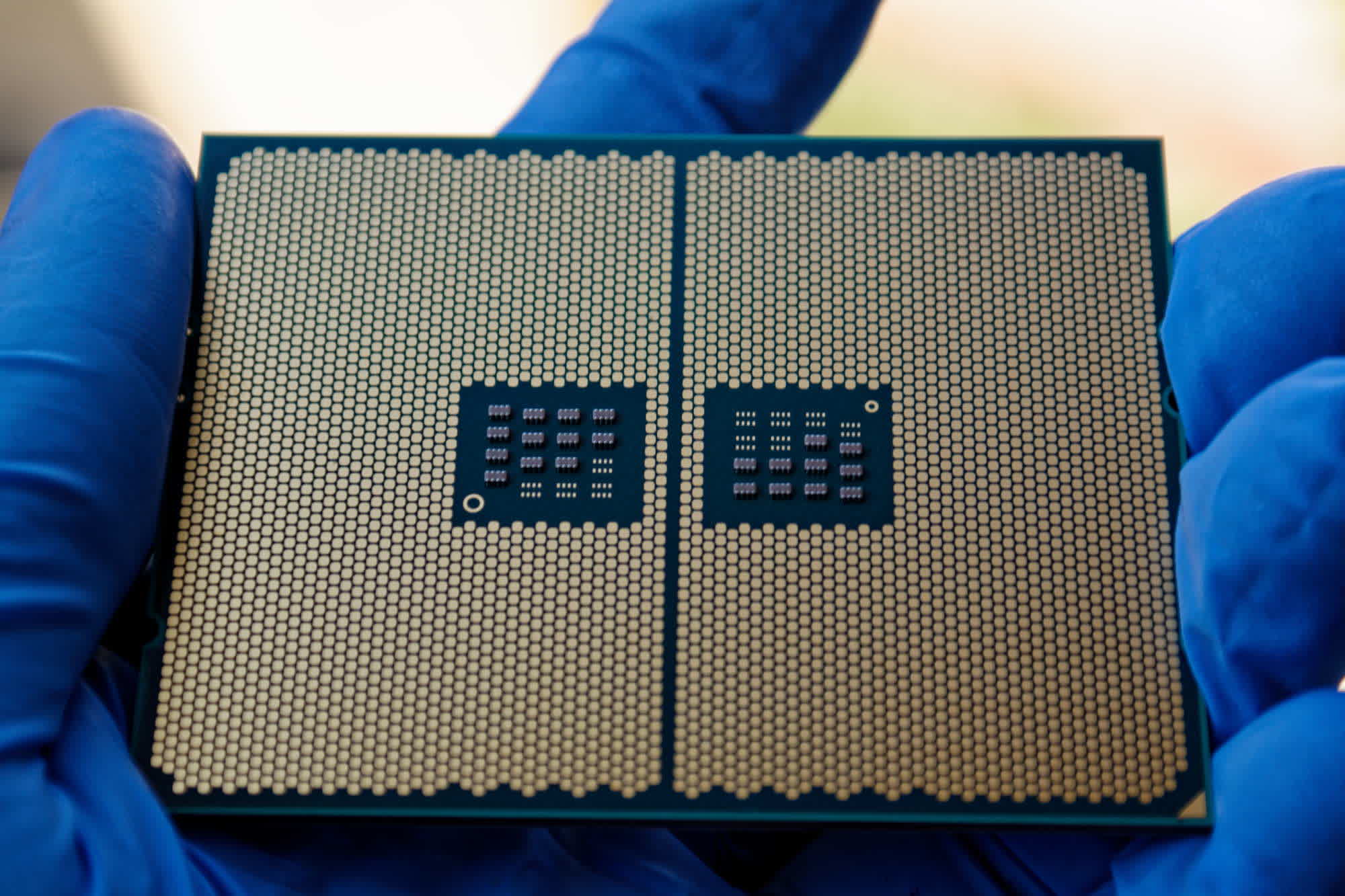
The Arm CEO said that the growing prevalence of AI agents will shift the current balance of computing cores between GPUs and CPUs. Future server CPU architectures could include up to four times as many cores as today's designs. Chip manufacturers could also see a new business opportunity worth more than $100 billion by 2030.

Modern GPU-based AI accelerators such as Nvidia's Blackwell or Rubin are approaching their reticle limit, Haas stated. Their size is now constrained by the maximum area a lithography mask can print, while CPUs still have more room to scale. As a result, core counts could double or even quadruple in a relatively short timeframe.

The Arm CEO also highlighted his company's ability to significantly increase core counts in Arm-based CPU designs. The recently launched AGI CPU includes up to 126 cores, while Intel has already developed server (Xeon) CPU designs with up to 288 x86 efficiency cores. AMD is also expected to reach up to 256 cores (with the help of SMT multithreading) with its Zen 6-based Epyc processors.

Haas envisions 256-core and even 512-core CPU designs in the future. With such a massive number of individual computing "brains," Arm is expected to benefit from its architecture's power efficiency advantages over x86-based competitors.

Permalink to story:

 
No, we are going to have AI ASICs that might happen to use ARM in an I/O chip. They said the same thing about CPUs 40 years ago when 3D graphics came out. We got GPUs instead
 
Maybe this might happen in corporate environments or datacenter, but I just don’t sense that there is presently enough consumer market interest (at least as far as Windows PCs are concerned) for users to desire hundreds of cores just to run local AI agents. Many consumers don’t even use PCs as much as they used to, it’s more phone, tablet, perhaps laptop, and perhaps Mac.
 
Maybe this might happen in corporate environments or datacenter, but I just don’t sense that there is presently enough consumer market interest (at least as far as Windows PCs are concerned) for users to desire hundreds of cores just to run local AI agents. Many consumers don’t even use PCs as much as they used to, it’s more phone, tablet, perhaps laptop, and perhaps Mac.

I would. If I can run my own local Ai and not have it trained in someone's cloud I'd sign for it.

 
Actually the future CPU's will eliminate the need for separate GPU'S, RAM and possibly others. Basically the future CPU will do the task better on CPU vs separate hardware.
 
I would. If I can run my own local Ai and not have it trained in someone's cloud I'd sign for it.

Yes local! A 128gb AI card running something like devstral medium, that’s all I would need. These corpos are too busy building data centers to see that the real market is in local computing.
 
No, we are going to have AI ASICs that might happen to use ARM in an I/O chip. They said the same thing about CPUs 40 years ago when 3D graphics came out. We got GPUs instead
There is a cycle of constant consolidation and division. New breakthrough changes the use case and further miniaturization is possible, and then it grows to the point separate modules are made. And then again. AMD cpu cache is one of the examples. Now we have apu, snapdragon, apple M apus, and they are alright. Will be interesting to see what will be next, but it will surely push the centralization and renting PCs event further.
 
No, we are going to have AI ASICs that might happen to use ARM in an I/O chip. They said the same thing about CPUs 40 years ago when 3D graphics came out. We got GPUs instead
Eh? What they actually predicted was that we'd have 1000+ core processors to handle graphics -- and we got them in the form of GPUs.

And you've misunderstood what the ARM CEO is suggesting. This isn't about operating AI models for inference, but agentic AI ... which requires general-purpose CPUs for orchestration and deterministic logic.
 
Eh? What they actually predicted was that we'd have 1000+ core processors to handle graphics -- and we got them in the form of GPUs.

And you've misunderstood what the ARM CEO is suggesting. This isn't about operating AI models for inference, but agentic AI ... which requires general-purpose CPUs for orchestration and deterministic logic.

Basically, multitasking. Exactly what large thread count CPUs are good at
 
Back