Asus addresses Ryzen 7 9800X3D failure reports on 800-series motherboards

midian182

Posts: 11,726   +177
Staff member
In a nutshell: It seems Asrock isn't the only one whose motherboards have been causing Ryzen 9000 CPU failures. Asus says it has started an internal review after several reports of Ryzen 7 9800X3D CPUs dying in its 800-series mobos.
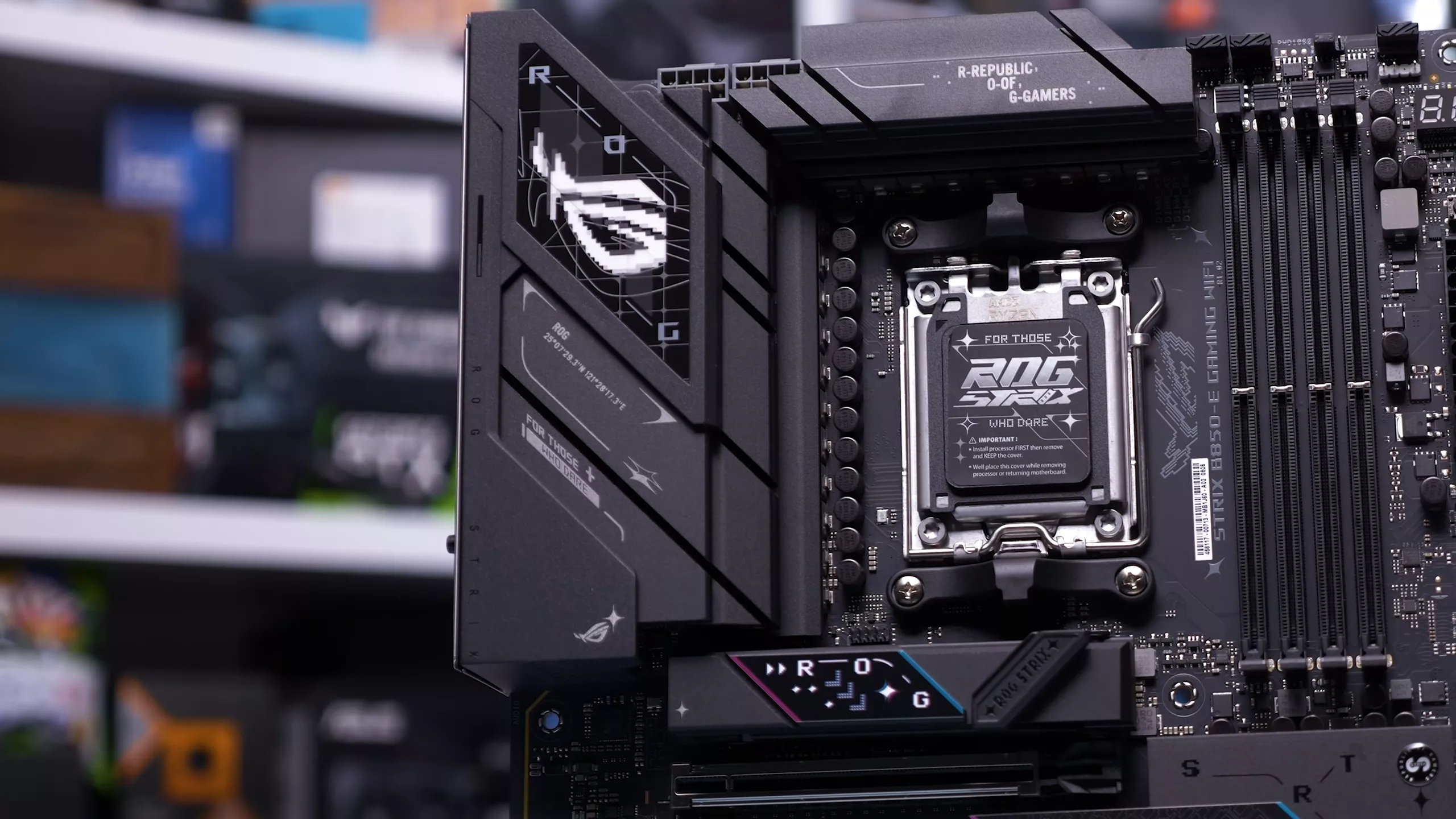
There have been at least five documented cases over the last two weeks of Ryzen 7 9800X3D systems that have stopped posting on Asus AM5 boards, including B850 and X870E models – though some reports go back to the 9800X3D's launch.

According to the reports, the problem involves the systems running normally until a reboot, waking the PC from sleep, or another desktop action causes a black screen and the board showing the 00 error code. This indicates that the system is not detecting the CPU or has failed to wake up. The usual troubleshooting steps don't fix the problem, either.

The age of affected systems ranges from one year to a new build that was a couple of days old.

Now, Asus has responded to the Ryzen 7 9800X3D CPU incidents by conducting an internal review. "Our teams are conducting preventive checks on product compatibility and performance, working closely with AMD to validate reported cases and ensure ongoing stability and quality," the company wrote.

"We are looking to provide timely solutions to ensure our products and services meet expected standards."

Asus advises users of AMD 800-series motherboards to update to the latest BIOS via ASUS EZ Flash or BIOS Flashback to help ensure system stability. It adds that any customers who are affected should contact Asus customer service.

Last year saw more than 100 cases of Ryzen 9000 chips failing in Asrock motherboards. In one case, the company blamed debris in the CPU socket for the problem, but an exec later admitted that the issue relates to Asrock's BIOS settings, and that it isn't an AMD fault.

An Asrock rep said at the time that the failures were due to the Electric Design Current (EDC) and Thermal Design Current (TDC). Essentially, it was an amperage problem in the Precision Boost Overdrive (PBO) settings. Asrock said these had been set too high for early CPU samples.

The number of cases involving Asus boards is quite low compared to how many people are using Ryzen 7 9800X3D CPUs with the company's boards, but Asus obviously feels it's enough to warrant investigating. Given some of the controversies it's been involved in over the years, Asus won't want another PR black eye.

Permalink to story:

 
Asrock dropped the ball with their AM5 boards. They account for 99% of the issues.

Asus never made good AMD boards to begin with. They got better over time tho, as consumers mostly buy AMD CPUs these days. Asus was forced to change approach to AMD boards and take them more serious.

MSI and Gigabyte is what I would buy and my 9800X3D runs on a MSI Tomahawk X870E, with full OC/PBO to ~5.5 GHz on all cores and have been running like this for a year or so, updated firmware a few times but all has been solid and 100% stable, including the firmware it came with.
 
Last edited:
I'm staying away from ASRock in the future. Possibly avoiding Asus as well as they're both Pegatron Group related.

ASRock handled the whole thing terribly from the start, ignoring the problem for months. Their first attempts at fixing the problem with BIOS updates did nothing. Not sure if the failure rate has gone down with the most recent BIOS versions. They seem to have added more shills/bots than ever to their subreddit though. Interpret that how you like.

My ASRock mainboard put to death my 9800x3d recently. I thought I was 'out of the woods' because it had worked without major issues for 13 months, but then one morning: code 00 (cpu dead). No attempts at resolving the issue worked.
 
Yes Asrock first tried to blame the buyers/users, then AMD, before they took responsibility and then (much later) claimed issues was fixed, but it was not fixed.

I won't be buying an Asrock board ever again, even tho I have one in my server which has been fine (Intel based tho)

Both Asrock and ASUS have had multiple cases the recent years. Asus mainly bad service tho. Maybe Pegatron Group companies should just be avoided.
 
AM5 has felt very messy coming from earlier sockets, and my build went through 2 mobo vendors, many bios updates, and months before it was stable. And it's still slow to boot.
 
I've had both Gigabyte and Asus motherboards fail in the past, and have been using ASRock and MSI without issue since, so everyone's mileage will vary.

Current setup is ASRock X870E Taichi Lite running a 9800X3D. The only issues I've had with this setup have been self induced when pushing OC/UV/PBO too far.
 
I've had both Gigabyte and Asus motherboards fail in the past, and have been using ASRock and MSI without issue since, so everyone's mileage will vary.

Current setup is ASRock X870E Taichi Lite running a 9800X3D. The only issues I've had with this setup have been self induced when pushing OC/UV/PBO too far.

It's not like all the MBs are doomed to fail. The failure rate will still be "relatively" low, perhaps under 10%. It's just that this figure is much higher than from the competitors, so buyer beware.
 
It's not like all the MBs are doomed to fail. The failure rate will still be "relatively" low, perhaps under 10%. It's just that this figure is much higher than from the competitors, so buyer beware.
100% agree with you. I bought my current setup knowing the landscape. The more information available to potential buyers, the better informed decisions they can make.

The underlying problem here is there has been no definite cause identified by either motherboard manufacturers or AMD themselves. We've seen both AGESA and BIOS updates but with no clear statement from anyone to say the issue is 100% resolved. To complicate things, the amount of noise in the reports made it hard to determine whether there was a single root cause for the problem, or whether there were a number of different issues all being bundled together - I personally think it was the latter.
 
100% agree with you. I bought my current setup knowing the landscape. The more information available to potential buyers, the better informed decisions they can make.

The underlying problem here is there has been no definite cause identified by either motherboard manufacturers or AMD themselves. We've seen both AGESA and BIOS updates but with no clear statement from anyone to say the issue is 100% resolved. To complicate things, the amount of noise in the reports made it hard to determine whether there was a single root cause for the problem, or whether there were a number of different issues all being bundled together - I personally think it was the latter.

Yes, though the fact that ASRock have been failing many multiples more often than competing mbs points to someone withholding information about the cause, or choosing not to find it, looking in the wrong places. Something was done differently in ASRock's process.

There's a chance that they learned what the issue was and found that it was not possible to rectify with software updates. If that was the case, they had a choice to make: offer recalls and replace the boards to anyone who wanted a new one, or sweep the problem under the rug, ignore it, carry on dishonestly as a company. I'm not sure this is the case, but it's one of the possibilities.
 
Last edited:
AM5 has felt very messy coming from earlier sockets, and my build went through 2 mobo vendors, many bios updates, and months before it was stable. And it's still slow to boot.

Zero issues at all using MSI board. Fast booting with MCR enabled. Just as fast as my Intel systems. About 10-12 seconds till desktop is ready.

My 9800X3D runs 5.5 GHz on all cores with -25 UV and I was among the first consumers to get one, rock solid since day one, even on stock mb firmware, which I ran for a few weeks.

MSI took AMD serious since Ryzen 1000, this is why MSI boards are pretty much best choice for AMD today. MSI also rivals ASUS now, in terms of sales. Tomahawk line especially has been shipping in huge numbers for years.
 
Last edited:
Zero issues at all using MSI board. Fast booting with MCR enabled. Just as fast as my Intel systems. About 10-12 seconds till desktop is ready.

My 9800X3D runs 5.5 GHz on all cores with -25 UV and I was among the first consumers to get one, rock solid since day one, even on stock mb firmware, which I ran for a few weeks.

MSI took AMD serious since Ryzen 1000, this is why MSI boards are pretty much best choice for AMD today. MSI also rivals ASUS now, in terms of sales. Tomahawk line especially has been shipping in huge numbers for years.
I tried Asus.and Gigabyte. Asus wouldn't boot with a GPU installed, and Gigabyte was BIOS hell.

If you have to go with one specific vendor to have a stable and fully functional board, the platform is suspect.
 
I tried Asus.and Gigabyte. Asus wouldn't boot with a GPU installed, and Gigabyte was BIOS hell.

If you have to go with one specific vendor to have a stable and fully functional board, the platform is suspect.
I built AM5 systems using MSI, Asus, Gigabyte, no problems but mainly uses MSI as my go to - Built 12 if not 15 AM5 systems since 2022

Avoided Asrock entirely due to their massive issues, 99% of faulty CPUs has been on Asrock boards which tells me enough
 
I built AM5 systems using MSI, Asus, Gigabyte, no problems but mainly uses MSI as my go to - Built 12 if not 15 AM5 systems since 2022

Avoided Asrock entirely due to their massive issues, 99% of faulty CPUs has been on Asrock boards which tells me enough
Anecdotes don't cancel out, as we were using different parts, mobos of doffering lifecycle ages, etc.

All I can say is that I ran into nasty issues linked to specific AM5 bios versions (e.g., problem occured with BIOS X but not Y).
 
"Asrock established in 2002, it is owned by Pegatron, a company part of the Asus group." Anyone who knew this and isn't loyal to a brand for the sake of of loyalty was already avoiding both companies. Sadly some people didn't know and didn't do their due diligence when buying a board.
 
Back