AMD Zen 6 and Intel Nova Lake could clash with massive 288 MB 3D V-Cache designs

midian182

Posts: 11,624   +176
Staff member
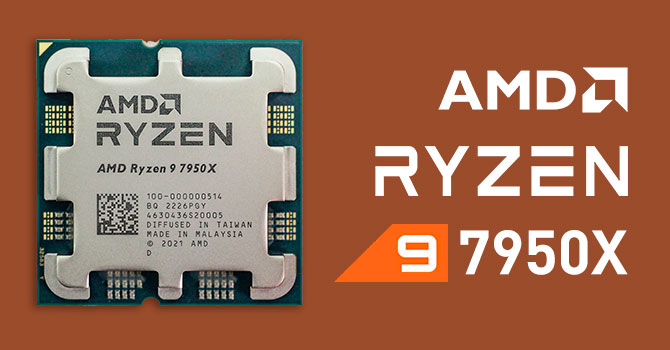
Highly anticipated: AMD's Zen 6 processors are set to arrive next year, and that means all-new 3D V-Cache CPUs. According to a new leak, one of these chips will feature a monstrous 288 MB of LLC cache, potentially making it a new gaming king and a rival to Intel's top Nova Lake SKUs.

Current AMD Ryzen desktop processors that use stacked 3D V-Cache top out at 128 MB of L3 from a single die. However, a recent post from hardware leaker HXL claims that Zen 6 will move beyond that limit.

HXL claims that a redesigned cache structure where a single 3D V-Cache chiplet could offer as much as 144 MB of cache – more than the previously rumored 96 MB. In dual-chiplet configurations, that figure could double to an eye-watering 288 MB of L3.

If accurate, this would represent a massive leap in cache capacity compared to existing X3D processors and could significantly benefit gaming and other latency-sensitive workloads.

Large last-level caches have already proven highly effective when it comes to gaming performance – it's why we called the Ryzen 7 9800X3D the new gaming king in our review last year.

Intel is reportedly planning a similar approach for its upcoming Nova Lake desktop processors. Those chips are rumored to feature big Last-Level (bLLC) cache designs that could also scale up to 288 MB on high-end models. Intel already uses a bLLC design in its Clearwater Forest server processors, where the cache is built into a passive interposer and sits directly beneath the active compute tiles.

It's important to remember that AMD hasn't confirmed any of these details. Moreover, cache capacity alone doesn't guarantee performance gains, and real-world results will depend heavily on cache latency, memory subsystem design, and clock behavior.

There are also practical considerations around cost, yields, and thermals, as stacking large amounts of 3D cache adds complexity to manufacturing and packaging. And as seen with current X3D chips, these processors don't come cheap.

Zen 6 is expected to bring broader architectural improvements beyond cache, including IPC gains and refinements. AMD plans to move the processors to a split-node design, using TSMC's 2 nm N2P process for the compute chiplets and the 3 nm N3P node for the I/O die.

AMD is dominating the consumer CPU market right now: its processors hold 19 of the 20 spots on Amazon's best-sellers chart. It'll be interesting to see if the landscape changes once Zen 6 and Intel Nova Lake arrive.

Permalink to story:

 
The only reason AMD would do this is if their little undercover minions at Intel HQ have tipped them off that Intel are coming after their gaming crown in 2026/27.
 
The only reason AMD would do this is if their little undercover minions at Intel HQ have tipped them off that Intel are coming after their gaming crown in 2026/27.
Zen1 came with 16MB L3 (2MB/core)
Zen2, Zen3, Zen4, Zen5 came with 32MB L3 (4MB/core)
3D V-cache on 1x CCD models of Zen3, Zen4, Zen5 adds 64MB (8MB/core)

Rumors say Zen6 will come with 48MB L3 (4MB/core) and new 3D V-cache with 96MB (4MB/core)

The same ratio of cores : L3 : 3D cache trough Zen2 ~ Zen6 (desktop models)

I do not think slides in presentation of Intel made anything to AMD plans.
 
AMD will remain the king for a simple reason - backwards compatibility with their huge range of AM5 boards - you can save big bucks on a last gen motherboard with 0% performance loss.

Intel needs to make sure they don't release a new socket every single generation if they want to stay relevant in the gaming community
 
AMD will remain the king for a simple reason - backwards compatibility with their huge range of AM5 boards - you can save big bucks on a last gen motherboard with 0% performance loss.

Intel needs to make sure they don't release a new socket every single generation if they want to stay relevant in the gaming community
“0% performance loss” is fantasy. Budget AM5 boards throttle via weak VRMs, worse transient response, limited PBO headroom, and inferior memory routing. Socket compatibility doesn’t upgrade PCB layers, power delivery, or BIOS quality and let's not forget new features.

And the irony? Intel did have backwards compatibility....12th, 13th, and 14th gen all ran on the same LGA1700 boards and were compatible with DDR4. So this idea that Intel “changes sockets every generation” is just wrong.

Platform longevity is useful, but it doesn’t magically erase real engineering constraints. AMD doesn’t win by default because a CPU fits an old board, and Intel doesn’t lose relevance because sockets change.

Backwards compatibility helps upgrades. It does not repeal physics.
 
“0% performance loss” is fantasy. Budget AM5 boards throttle via weak VRMs, worse transient response, limited PBO headroom, and inferior memory routing. Socket compatibility doesn’t upgrade PCB layers, power delivery, or BIOS quality and let's not forget new features.

And the irony? Intel did have backwards compatibility....12th, 13th, and 14th gen all ran on the same LGA1700 boards and were compatible with DDR4. So this idea that Intel “changes sockets every generation” is just wrong.

Platform longevity is useful, but it doesn’t magically erase real engineering constraints. AMD doesn’t win by default because a CPU fits an old board, and Intel doesn’t lose relevance because sockets change.

Backwards compatibility helps upgrades. It does not repeal physics.
Maybe so, but I have a cheap B550 board with a 5700X3D and benchmarks of the same processor on X570 boards perform about the same pretty much in both games and synthetics.
 
Maybe so, but I have a cheap B550 board with a 5700X3D and benchmarks of the same processor on X570 boards perform about the same pretty much in both games and synthetics.
A 5700X3D is cache bound and power limited ... it’s basically designed to hide motherboard differences. That doesn’t mean boards don’t matter, it means you picked the one CPU where they matter least.
 
“0% performance loss” is fantasy. Budget AM5 boards throttle via weak VRMs ...
Just tell me how possibly could VRM built to deliver sustainable 230W limit CPU with peak demand of 163W or less?

And the irony? Intel did have backwards compatibility....12th, 13th, and 14th gen all ran on the same LGA1700 boards and were compatible with DDR4.
Irony was lost on you.
Its 12th, 13th and 13th with bugs.
BTW ... 12100, 13100, 14100 are the same except name.

And real Irony is DDR4.
In (almost) all performance test DDR5 was used to show superiority. Or, at least, try to show it.
In cost/performance DDR4, because it was cheaper.

And to make it worse .... Going from s1700 to s1851 or s1954 means ... DDR4 -> DDR5.
Not very funny since October 2025.

Platform longevity is useful, but it doesn’t magically erase real engineering constraints. AMD doesn’t win by default because a CPU fits an old board ...
AM5 provides DDR5, PCIe5 for GPU and NVME.
No new tech will come into desktop in next 2~3 years.

TL;DR
When Intel delivers better product for my use case I do not have psychical issues to buy it.
But it will be very thought battle. Right now the TCO of Intel platform is very bad.
64GB DDR5 6000MT/s CL30 is not the fastest, but with extra L3 cache the need for faster is memory modules is low.

 
A 5700X3D is cache bound and power limited ... it’s basically designed to hide motherboard differences. That doesn’t mean boards don’t matter, it means you picked the one CPU where they matter least.
5700x3D is cut down on frequencies. Too much for my likes.
Big L3 cache may save a day in some cases but lose where frequency counts.

5800x3D may wrestle with 7600X within range of error (± 5%) in most cases.
5700x3D can not.
 
Just tell me how possibly could VRM built to deliver sustainable 230W limit CPU with peak demand of 163W or less?
You’re conflating power limits with actual sustained draw. The 230 W number is a platform limit, not continuous demand. If the CPU is peaking ~160 W, the VRM is operating well below its design ceiling. That’s exactly how transient headroom is supposed to work.

That said, cheaper boards are the real variable. Lower end motherboards often cut corners on VRM phase count, component quality, and cooling. Those designs can struggle even below theoretical limits...not because the CPU is too demanding, but because the board isn’t built to spec.

A properly designed VRM will handle 160 W sustained loads comfortably. If it can’t, that’s not a CPU problem...it’s a motherboard problem.

Onto the rest....and I agree with you in part, however...

I never said Intel was better...in fact, in most cases it isn’t right now. That still doesn’t make it irrelevant. Different workloads value different tradeoffs, and Intel can still make sense in specific use cases.

The issue is that today Intel has to fight uphill on TCO, higher platform power, cooling requirements, and shorter socket lifetimes hurt it outside those niches. AMD’s larger L3 cache reduces memory sensitivity, which is why DDR5-6000 CL30 is already “good enough” without chasing extreme kits.

So yes...Intel remains viable in certain scenarios. It’s just no longer the default recommendation, and that’s a platform economics problem, not brand loyalty.

Brand loyalty isn’t smart spending....buying the best product for your workload and budget is.
 
“0% performance loss” is fantasy. Budget AM5 boards throttle via weak VRMs, worse transient response, limited PBO headroom, and inferior memory routing. Socket compatibility doesn’t upgrade PCB layers, power delivery, or BIOS quality and let's not forget new features.

And the irony? Intel did have backwards compatibility....12th, 13th, and 14th gen all ran on the same LGA1700 boards and were compatible with DDR4. So this idea that Intel “changes sockets every generation” is just wrong.

Platform longevity is useful, but it doesn’t magically erase real engineering constraints. AMD doesn’t win by default because a CPU fits an old board, and Intel doesn’t lose relevance because sockets change.

Backwards compatibility helps upgrades. It does not repeal physics.
You don't have to buy a cheap board - the previous generation top boards are quite reasonably priced. You can buy X670 boards at around 150 dollars from Newegg if you buy them refurbished. And that's not a board with any "cut corners". When the X970 boards arrive - you'll be able to pick up discounted X870 boards as well.

And when looking at Intel - they changed the last gen, and they will change this gen. What they did with the 12-14 series was a good move - which is why they did well during those generations too. Now they're forcing "everyone" to make another swap with motherboard pricing reaching the same cost as the actual CPU - which will force users to make a very big investment if they want to go down the Intel route.
AMD will keep current motherboards compatible with the new gen cpu's for two more generations according to themselves. That will probably be the new X10 series and the X10 series "update" (or + if you want to call it that) - which means you can basically use Anything from the 5, 7, 9 and 10 series on the same standard of motherboards. ..Which gives you -alot- of options to save money
 
You don't have to buy a cheap board - the previous generation top boards are quite reasonably priced. You can buy X670 boards at around 150 dollars from Newegg if you buy them refurbished. And that's not a board with any "cut corners". When the X970 boards arrive - you'll be able to pick up discounted X870 boards as well.

And when looking at Intel - they changed the last gen, and they will change this gen. What they did with the 12-14 series was a good move - which is why they did well during those generations too. Now they're forcing "everyone" to make another swap with motherboard pricing reaching the same cost as the actual CPU - which will force users to make a very big investment if they want to go down the Intel route.
AMD will keep current motherboards compatible with the new gen cpu's for two more generations according to themselves. That will probably be the new X10 series and the X10 series "update" (or + if you want to call it that) - which means you can basically use Anything from the 5, 7, 9 and 10 series on the same standard of motherboards. ..Which gives you -alot- of options to save money
Older AMD boards can save money, but they’ll miss some future CPU features, so you won’t get the full upgrade benefit. Refurbished boards are hit or miss too.

Intel’s upcoming LGA1954 platform is rumored to support up to four generations, Nova Lake, Razer Lake, Titan Lake, and Hammer Lake...signaling a shift toward longer socket longevity.

Both platforms now offer ways to balance performance, cost, and upgrades, while AMD’s AM5 support still provides flexibility across multiple generations.

Who reigns supreme? Only time will tell, but Intel looks promising, and that competition could push AMD prices down if Intel executes correctly.

Everyone should stop being a fan of either company...neither cares about your dollar. Competition is what matters, as AMD has shown with the latest 9800X3D pushing prices up.
 
You’re conflating power limits with actual sustained draw. The 230 W number is a platform limit, not continuous demand.
Ryzen9 9950X has 170W TDP / 230W PPT. AM5 board has to sustain that for infinite time.
Some really cheap ones may not. The same as cheap s1700, s1851 or s1954 boards.

Not 28 seconds
Not 56 seconds
Infinite. Or at least to nearest blackout.

A properly designed VRM will handle 160 W sustained loads comfortably.
If it handles only 160W, its not properly designed.
X670, X670E, X870, X870E are designed to sustain 230W (and some margin if they are not cut down on costs).
A620 and B840 may or may not be reliable with that load. But they are the for the cost sensitive customers.

AM5 was designed to TDP of 170W for 16 cores Ryzen 9 7950X made on TSMC 5nm.
24 core Zen6 made on 2nm may or may not be limited with that.
12 core Zen6 will fit with no limitations.
 
Last edited:
Older AMD boards can save money, but they’ll miss some future CPU features, so you won’t get the full upgrade benefit. Refurbished boards are hit or miss too.

Intel’s upcoming LGA1954 platform is rumored to support up to four generations, Nova Lake, Razer Lake, Titan Lake, and Hammer Lake...signaling a shift toward longer socket longevity.

Both platforms now offer ways to balance performance, cost, and upgrades, while AMD’s AM5 support still provides flexibility across multiple generations.

Who reigns supreme? Only time will tell, but Intel looks promising, and that competition could push AMD prices down if Intel executes correctly.

Everyone should stop being a fan of either company...neither cares about your dollar. Competition is what matters, as AMD has shown with the latest 9800X3D pushing prices up.
Sure - there's always innovations between motherboards. What you'll miss out on is better USB-C support, higher speed wifi support (Wifi 7), higher speed memory support and also a higher PCI-E lane count. It doesn't necessarily give you more performance though - if you look aside from the higher memory speed, which looking at the memory prices we'll face the next year will be insanely costly as well.

And if what you're saying - that the next generation of intel boards will indeed support at least 4 generations, that will make Intel a good investment in year 2-3 once the initial motherboards on the market comes down in price.

All in all. Conclusion is - next gen, AMD will still have more options to save money. In 2-3 generations - We could be looking at the opposite as AMD will eventually be moving on to a new socket.
 
Sure - there's always innovations between motherboards. What you'll miss out on is better USB-C support, higher speed wifi support (Wifi 7), higher speed memory support and also a higher PCI-E lane count. It doesn't necessarily give you more performance though - if you look aside from the higher memory speed, which looking at the memory prices we'll face the next year will be insanely costly as well.

And if what you're saying - that the next generation of intel boards will indeed support at least 4 generations, that will make Intel a good investment in year 2-3 once the initial motherboards on the market comes down in price.

All in all. Conclusion is - next gen, AMD will still have more options to save money. In 2-3 generations - We could be looking at the opposite as AMD will eventually be moving on to a new socket.
I like and agree with most of what you said, except the idea that AMD boards automatically save money...that just isn’t consistently true in the real world. AMD’s AM5/X670/X870 motherboards launched at higher price points compared to Intel’s equivalent generations. For example, mid range and flagship X670E boards often debuted significantly above comparable Intel Z790 models...sometimes $20–$100 more for similar tiers, and entry level AM5 boards still sat high relative to past Intel prices.

What typically lowers the cost is later discounts after a platform has been on the market a while...not the launch pricing itself. Many builders avoid paying early adopter premiums, which is why you don’t see as many people buying highend X870/E boards at full MSRP. But that’s a timing and discounting effect, not inherent lower cost of AMD boards.

Ryzen9 9950X has 170W TDP / 230W PPT. AM5 board has to sustain that for infinite time.
Some really cheap ones may not. The same as cheap s1700, s1851 or s1954 boards.

Not 28 seconds
Not 56 seconds
Infinite. Or at least to nearest blackout.


If it handles only 160W, its not properly designed.
X670, X670E, X870, X870E are designed to sustain 230W (and some margin if they are not cut down on costs).
A620 and B840 may or may not be reliable with that load. But they are the for the cost sensitive customers.

AM5 was designed to TDP of 170W for 16 cores Ryzen 9 7950X made on TSMC 5nm.
24 core Zen6 made on 2nm may or may not be limited with that.
12 core Zen6 will fit with no limitations.
I think we’re mostly aligned, but there’s a distinction worth keeping clear. A board doesn’t need to continuously run at 230 W to be properly designed, that number represents platform limits and transient headroom, not typical sustained draw. Sustained ~150 to 170 W operation with margin is exactly what quality X670/X870 class VRMs are built for.

You’re right that X670/X670E/X870/X870E boards are designed for higher sustained loads than A or cost cut B series boards. At the same time, most conscientious builders actually choose B and A series boards because they’re sufficient for real workloads, more power efficient CPUs, and sensible budgets. Reliability issues there are about board quality and VRM design choices, not the AM5 platform itself.

AM5’s original 170 W TDP target for the 7950X is a reasonable baseline. How Zen 6 scales will depend on node efficiency and boost behavior...a 12-core fitting comfortably is likely, while higher core SKUs may push limits, which is true on any platform
 
I like and agree with most of what you said, except the idea that AMD boards automatically save money...that just isn’t consistently true in the real world. AMD’s AM5/X670/X870 motherboards launched at higher price points compared to Intel’s equivalent generations. For example, mid range and flagship X670E boards often debuted significantly above comparable Intel Z790 models...sometimes $20–$100 more for similar tiers, and entry level AM5 boards still sat high relative to past Intel prices.
Problem with price comparison is: AMD boards are much better. For top end, while Intel only offered 16 PCIe 5.0 lanes, AMD had 24. Normally Intel boards had 16 PCIe 5.0 lanes only for x16 slot meant for video card. With AMD additional 8 lanes were available that could be used for example for two PCIe 5.0 NVMe slots.

Some may argue PCIe 5.0 is useless but it still makes AMD boards undeniably better and more expensive to make also. That also makes price comparison irrelevant since AMD boards offer something Intel simply cannot.

As for entry level, again, AMD boards have much higher base specs because AMD low end chipsets have somewhat better specs. Basically AMD does not have trash class chipset option available that also means specs are somewhat better on lower end too. Some may argue again that some features are useless and extra cost coule be avoided etc but still better boards tend to cost more for obvoius reasons and direct comparison is hard.
 
I like and agree with most of what you said, except the idea that AMD boards automatically save money...that just isn’t consistently true in the real world. AMD’s AM5/X670/X870 motherboards launched at higher price points compared to Intel’s equivalent generations. For example, mid range and flagship X670E boards often debuted significantly above comparable Intel Z790 models...sometimes $20–$100 more for similar tiers, and entry level AM5 boards still sat high relative to past Intel prices.
It depends on when a what one bought and how long and how one plan to use that.

For Example:
I have bought two AM4 B550 boards (not top, not cheap). Before s1700 came out. With 64GB DDR4 each.
After 4 years simply changed CPUs 3700x -> 5700X3D, 5800x -> 5800X3D
Gave them to kids. They may use them for another 3~5 years as good enough with any graphic card slower than rtx 5080.
I have bought another 2 rigs for me: X870 + 64GB and B650M + 48GB.
When Zen6 comes to market they will be in use for 3 years. Zen6 with 3D V-cache will add another 3+ years.
Compared to Intel road: s1200, s1700, s1851, s1954 (which in not out yet)

Money wise (or TCO) I have paid for 1x MoBo, 1x Memories, 1+1 CPU per rig for 6~8 years of use without limitations to my use cases.

PS: My wallet is my prime counselor
1994~2002 Intel (386SX, P1, P1 MMX, P2, Dual P3)
2002~2006 AMD
2006~2019 Intel (CoreDuo, Goldmont)
2019~2024(~2027) AM4
2024~2027(~2030) AM5

I think we’re mostly aligned, but there’s a distinction worth keeping clear. A board doesn’t need to continuously run at 230 W to be properly designed, that number represents platform limits and transient headroom, not typical sustained draw. Sustained ~150 to 170 W operation with margin is exactly what quality X670/X870 class VRMs are built for.
Last time: You have got it wrong.
TDP == PL1
PPT == PL2
Every time the "Turbo" is enabled and load is high enough socket has to deliver up to PPT.
Reliably.
Any HW monitoring SW (or power meter on wall) can show you that.

AM5’s original 170 W TDP target for the 7950X is a reasonable baseline. How Zen 6 scales will depend on node efficiency and boost behavior...a 12-core fitting comfortably is likely, while higher core SKUs may push limits, which is true on any platform
Single thread can push 1 core up to 20W (Cooling is not an issue with ST load).
Even now are multi core CPUs limited on max all-core turbo.
Simply because: Amount_of_cores x 1-core max > Socket max
 
Basically AMD does not have trash class chipset option available that also means specs are somewhat better on lower end too.
A620 and B840 are not something to write home bout.

Some may argue again that some features are useless and extra cost coule be avoided etc but still better boards tend to cost more for obvoius reasons and direct comparison is hard.
AM4 boards do the low cost for now.

Sure - there's always innovations between motherboards.
AM5 provides DDR5 on all boards, PCIe v.5 and optional USB4 on more fancy boards.
USB-C providing 10 Gbps, 20 Gbps or 2x 20Gbps is independent of chipset and even CPU. More fancy older board may have it, brand new low cost may not.

... higher memory speed, which looking at the memory prices we'll face the next year will be insanely costly as well.
Not good time to finally switch from s1700 + DDR4 to anything with DDR5.

The next generation of intel boards will indeed support at least 4 generations, that will make Intel a good investment in year 2-3 once the initial motherboards on the market comes down in price.
s1954 will come with DDR5 and PCIe maxed at v.5 speed.
Except some minor features (WiFi 7+, USB4, TB4+, Etherner 1/2.5/5/10 Gbps) there wont be changes ... for how long? With 4 generations it means 2027~2030.

DDR6 and PCIe6 may come to desktop sooner than 2030.
And then s1954 will be at the point where AM4 is now.
There may or may not be 4 generations of CPU for s1954.
 
It depends on when a what one bought and how long and how one plan to use that.

For Example:
I have bought two AM4 B550 boards (not top, not cheap). Before s1700 came out. With 64GB DDR4 each.
After 4 years simply changed CPUs 3700x -> 5700X3D, 5800x -> 5800X3D
Gave them to kids. They may use them for another 3~5 years as good enough with any graphic card slower than rtx 5080.
I have bought another 2 rigs for me: X870 + 64GB and B650M + 48GB.
When Zen6 comes to market they will be in use for 3 years. Zen6 with 3D V-cache will add another 3+ years.
Compared to Intel road: s1200, s1700, s1851, s1954 (which in not out yet)

Money wise (or TCO) I have paid for 1x MoBo, 1x Memories, 1+1 CPU per rig for 6~8 years of use without limitations to my use cases.

PS: My wallet is my prime counselor
1994~2002 Intel (386SX, P1, P1 MMX, P2, Dual P3)
2002~2006 AMD
2006~2019 Intel (CoreDuo, Goldmont)
2019~2024(~2027) AM4
2024~2027(~2030) AM5


Last time: You have got it wrong.
TDP == PL1
PPT == PL2
Every time the "Turbo" is enabled and load is high enough socket has to deliver up to PPT.
Reliably.
Any HW monitoring SW (or power meter on wall) can show you that.


Single thread can push 1 core up to 20W (Cooling is not an issue with ST load).
Even now are multi core CPUs limited on max all-core turbo.
Simply because: Amount_of_cores x 1-core max > Socket max
You’re right that under sustained all core turbo the CPU can draw up to PPT, and the socket/VRM must be able to deliver that reliably. No disagreement there.

The part you’re missing is duty cycle and workload behavior. Hitting PPT doesn’t mean the CPU sits there permanently in most real world use. VRMs are designed with thermal, electrical, and transient margins so they can handle PPT bursts and sustained loads within spec, not run flat out 24/7 at the limit.

This is exactly why board tier matters...X-series boards are built to sustain PPT comfortably, while many B and A series boards are designed around typical workloads where average draw is lower which is also why most sensible builders choose them. If a board can’t sustain its advertised PPT without throttling, that’s a board design issue, not a misunderstanding of TDP vs PPT.
 
Hitting PPT doesn’t mean the CPU sits there permanently in most real world use. VRMs are designed with thermal, electrical, and transient margins so they can handle PPT bursts and sustained loads within spec, not run flat out 24/7 at the limit.
You are right. And you are not.

Sure. Most of rigs most of time do (almost) nothing.
User deciding what to write into his work report is just ... slow.

On the other side ... all of those "Rapid SW development tools" make even primitive apps so big and demanding its beyond comprehension.

PS: I am used to run tasks which take hours to do.
 
“0% performance loss” is fantasy. Budget AM5 boards throttle via weak VRMs, worse transient response, limited PBO headroom, and inferior memory routing. Socket compatibility doesn’t upgrade PCB layers, power delivery, or BIOS quality and let's not forget new features.

And the irony? Intel did have backwards compatibility....12th, 13th, and 14th gen all ran on the same LGA1700 boards and were compatible with DDR4. So this idea that Intel “changes sockets every generation” is just wrong.

Platform longevity is useful, but it doesn’t magically erase real engineering constraints. AMD doesn’t win by default because a CPU fits an old board, and Intel doesn’t lose relevance because sockets change.

Backwards compatibility helps upgrades. It does not repeal physics.

I have an x370 board I gave to a friend that's rocking a5900x just fine. Most people won't notice the older pcie bus speed loss for the most part, as ssd speed difference don't matter as much for most programs.
 
Back