Can-Am rolls out first electric ATV, packs 50-mile range and 1,830 pounds of towing capacity

Shawn Knight

Posts: 15,828   +202
Staff member
In a nutshell: ATV maker Can-Am has introduced what it claims is the world's first mass-produced electric all-terrain vehicle. The 2026 Outlander Electric is powered by a Rotax E-Power electric drivetrain that supplies 47 horsepower and 53 lb-ft of torque, the latter of which is available at any speed with instant response.
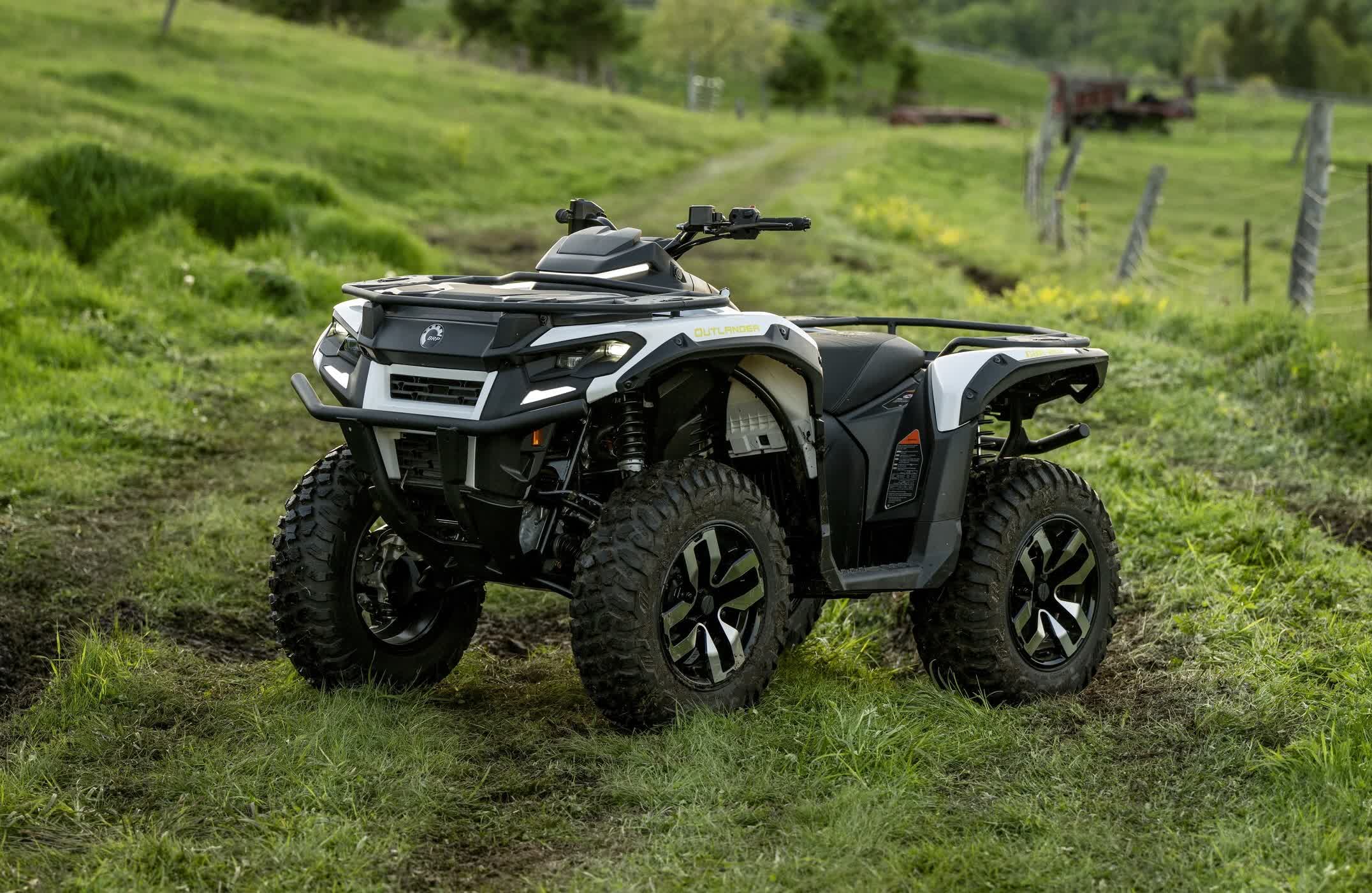
Riders can expect up to 50 miles of range (in optimal conditions) on a single charge from the 8.9 kw/h battery. A recharge from 20 to 80 percent takes just 50 minutes with a Level 2 charger, we are told. With no way to recharge out on the trails, however, you'll need to plan rides accordingly.

Can-Am's latest features an industry-leading 1,830 pounds of towing capacity, and near silent performance thanks to its electric drivetrain, noise-reducing XPS Recon Force tires, an optimized suspension, and low-noise liquid cooling system. According to Can-Am, it is perfect for exploring nature without disturbing it.
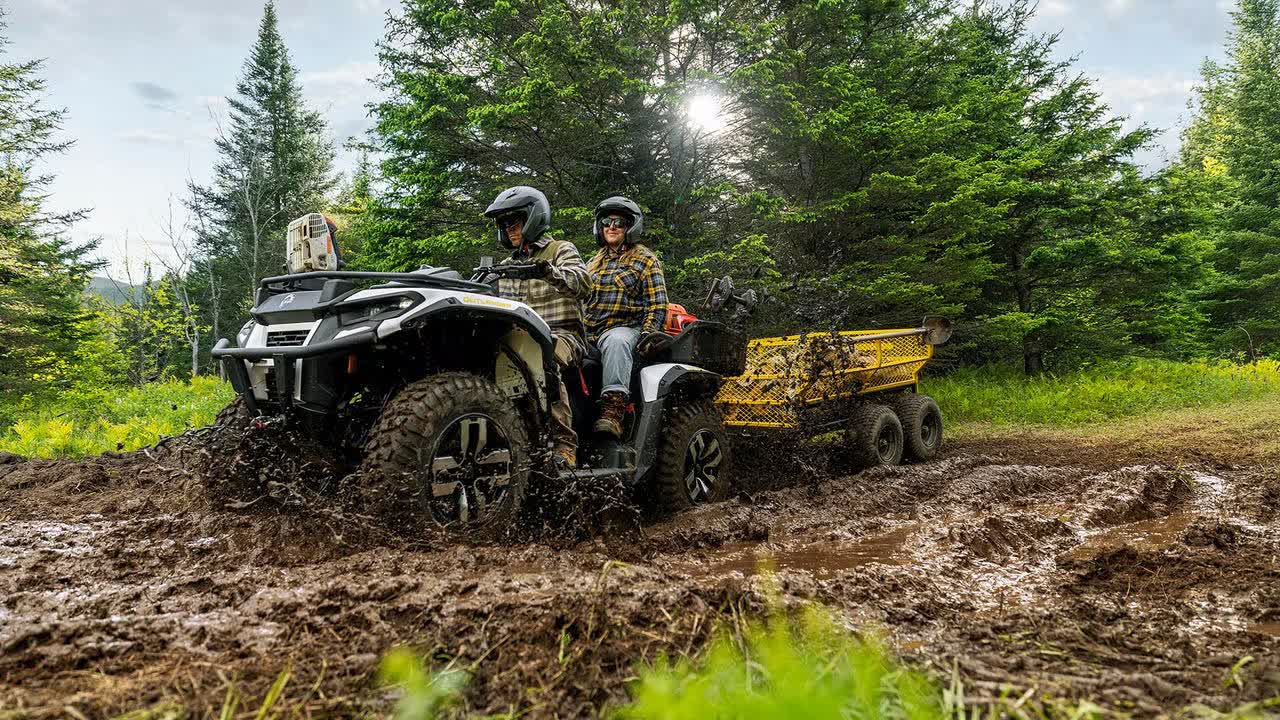
Can-Am also promises less maintenance compared to a gas-powered ATV. There's no need for engine oil changes, filters, spark plugs, or clutch work. About all you need to fool with is transmission oil and brake fluid.

Other features include a 5-inch color display to help with adjusting settings and monitoring battery power, selectable ride modes (standard, work, sport), selectable 2WD / 4WD with auto-locking front differential, 14-inch cast aluminum wheels, 12 inches of ground clearance and 10 inches of suspension travel, LED headlights and tail lights, and a full skid plate.

Others have attempted electric ATVs in the past but they almost always come up short. Tesla even teased its own version when the Cybertruck was introduced in 2019, but never actually got around to making it. The closest we got was the Cyberquad for Kids, a mini ATV for children currently priced at $1,650.

The Can-Am Outlander Electric starts at $12,999 and comes backed by a one-year warranty on the vehicle and motor, plus a five-year warranty on the battery (or up to 12,427 miles). Interested parties are encouraged to seek out a local dealer for more information.

Permalink to story:

 
The smaller the vehicle the less sense it makes to make it an EV. These small motors can run on e85 or even straight ethanol. I love the idea of EVs for basic transportation and even ebikes, but this off-road vehicles make some of the least sense of any EV attempt. At least busses and semi trucks are big enough that they have room and the capacity to carry around massive battery packs that could take advantage of megawatt charging
 
The smaller the vehicle the less sense it makes to make it an EV. These small motors can run on e85 or even straight ethanol. I love the idea of EVs for basic transportation and even ebikes, but this off-road vehicles make some of the least sense of any EV attempt. At least busses and semi trucks are big enough that they have room and the capacity to carry around massive battery packs that could take advantage of megawatt charging
If it makes it silent, then this would be perfect for hunting trips and moving around without scaring animals away. This is overall a great idea for this application.
 
Why is it that nobody can be honest about EV's and their limitations. They speak of 50 Mi range under optimal conditions, and then brag about 1,800lb towing capacity. A 1,500lbs trailer cuts a Tesla Model X range by over 30%. How far do you think you'll get towing 1,800lbs with this thing? They should have a disclaimer that towing this amount will limit your range to your front yard.

While we're at it, I wonder what using that high torque at wide open throttle does for the range?
 
Why is it that nobody can be honest about EV's and their limitations. They speak of 50 Mi range under optimal conditions, and then brag about 1,800lb towing capacity. A 1,500lbs trailer cuts a Tesla Model X range by over 30%. How far do you think you'll get towing 1,800lbs with this thing? They should have a disclaimer that towing this amount will limit your range to your front yard.

While we're at it, I wonder what using that high torque at wide open throttle does for the range?
That is what I was going to comment on. If it can tow 1800 pounds and still do 50 miles, that is fairly useful. If it cannot, it is a stupid claim.
 
Why is it that nobody can be honest about EV's and their limitations. They speak of 50 Mi range under optimal conditions, and then brag about 1,800lb towing capacity. A 1,500lbs trailer cuts a Tesla Model X range by over 30%. How far do you think you'll get towing 1,800lbs with this thing? They should have a disclaimer that towing this amount will limit your range to your front yard.

While we're at it, I wonder what using that high torque at wide open throttle does for the range?
When it comes to towing with an EV it's not the weight of what you're towing that matters it's the physical size. Wind resistance/drag saps a lot more EV energy than weight alone. Yes, if you're going to tow a giant trailer then it's going to really cut into your EV's overall distance.
 
"the latter of which is available at any speed with instant response."

Really? At ANY speed? 150 mph? Lightspeed? Impressive! ;-)
 
When it comes to towing with an EV it's not the weight of what you're towing that matters it's the physical size. Wind resistance/drag saps a lot more EV energy than weight alone. Yes, if you're going to tow a giant trailer then it's going to really cut into your EV's overall distance.

I wasn't just throwing a number out there our of the blue. It was an article I read where they took the Tesla to a place to have a hitch put on it, and actually towed a small trailer with a weight of 1,500lbs. I didn't see a picture of the set up, but I doubt the trailer was a short, tall, and wide configuration with a massive wind drag. Probably more of a two wheel, class 1 trailer with a bed and tube steel rails. The Detroit news did a similar test drive of an F-150 lightning, except that they only loaded the F-150 for what should have been a 4 hour drive in Michigan to a lake cabin. The author was going to tow a small boat, but the place he took that to for the hitch told him to forget it if he didn't want to stop multiple times.

Manufactures cheat on EV range ten times worst then the EPA fuel economy. .
 
The smaller the vehicle the less sense it makes to make it an EV. These small motors can run on e85 or even straight ethanol. I love the idea of EVs for basic transportation and even ebikes, but this off-road vehicles make some of the least sense of any EV attempt. At least busses and semi trucks are big enough that they have room and the capacity to carry around massive battery packs that could take advantage of megawatt charging
Not sure I understand the logic. Usually it's the other way around (the bigger the vehicle) that is more difficult to make electric (both technically and economically). With smaller vehicles you don't need as much power or energy density (batteries have less compared to gasoline/diesel fuel) and you can swap out fuel tanks to have similar weight profiles. If ebikes make sense, why wouldn't this?

Different industry with different requirements, but a case in point is in aviation. Electric planes have only really been possible in the small 2 seater GA category, with roughly 1 hour of flight time. Scaling that up will require batteries that can hold significantly more energy per unit mass and volume.
 
If you just need a 4 wheeler to do things around your property of a few acres, this might be a good fit for you.

If you actually need to traverse decent distances or if you have to tow something with it, forget it. ICE is the way to go, you can take extra fuel with you so you're not all of a sudden stranded somewhere because your precious battery ran out of charge.

Here's a Motor Trend article about the limitations of an electric F-150:
https://www.motortrend.com/reviews/ford-f150-lightning-electric-truck-towing-test

Here's another Motor Trend article about a short ranged getaway where the author wrote about his experience with his electric F-150 and towing his camper:
https://www.motortrend.com/reviews/...ng-lariat-long-term-update-13-how-does-it-tow

I wouldn't want to rely on an electric vehicle for towing if I had any kind of distance to travel, it just seems like an awful nightmare to deal with.
 
Why is it that nobody can be honest about EV's and their limitations. They speak of 50 Mi range under optimal conditions, and then brag about 1,800lb towing capacity. A 1,500lbs trailer cuts a Tesla Model X range by over 30%. How far do you think you'll get towing 1,800lbs with this thing? They should have a disclaimer that towing this amount will limit your range to your front yard.

While we're at it, I wonder what using that high torque at wide open throttle does for the range?
EV's are useless. They break easy and lose all of thier power in bad/cold weather. You just cant touch a good ol' combustion engine. I have a Can Am Defender and its a great machine, pushes a 6" plow with no problem and sips gas with the 700 motor (HD7).
 
Back