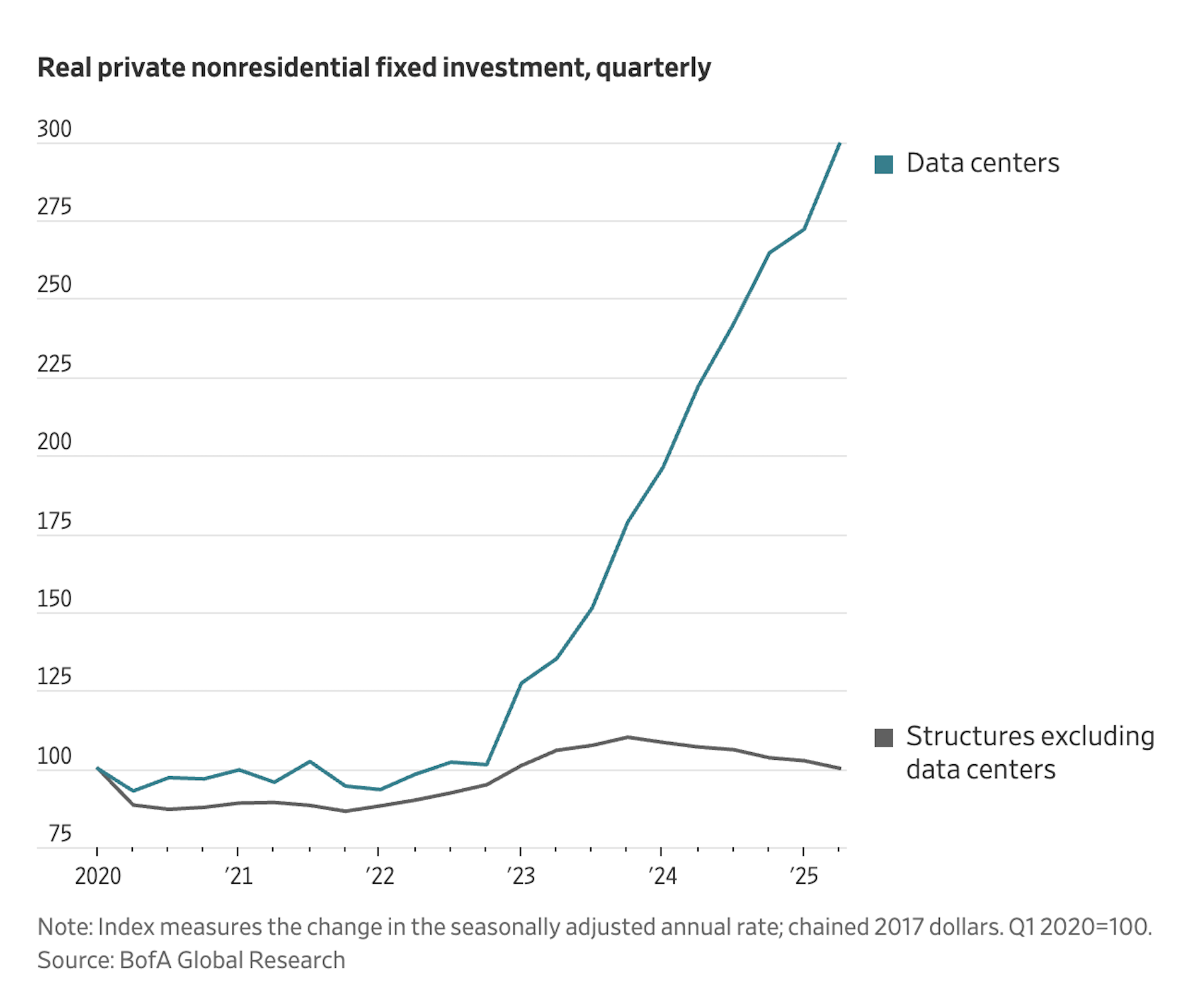
Bottom line: What began as a niche in digital infrastructure is now propping up America's construction economy. Data centers are the one sector expanding while almost every other corner of commercial real estate contracts during one of real estate's sharpest slowdowns.
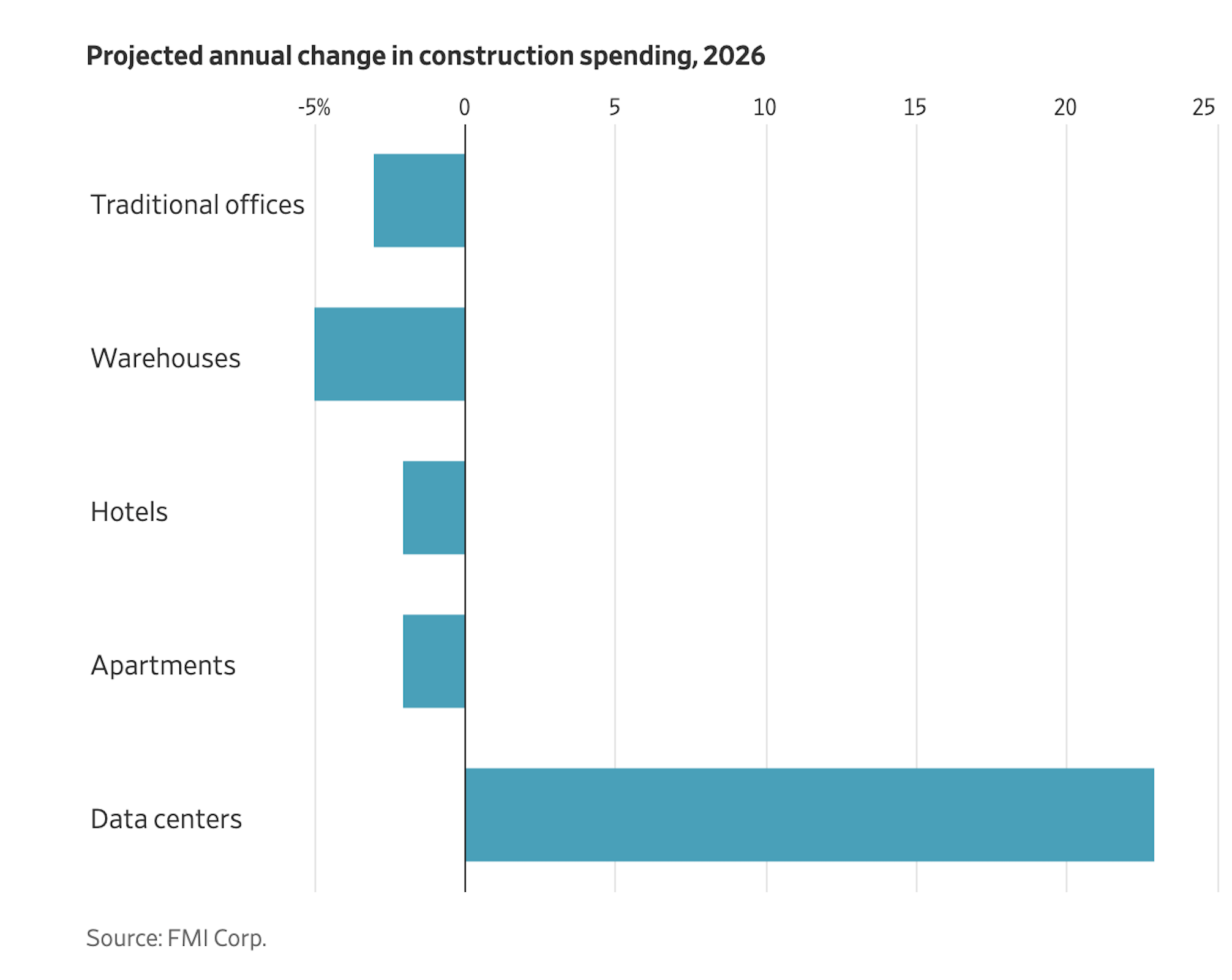
New data from FMI Corp., a Raleigh-based construction forecasting firm, shows spending on data center construction will climb 23% in 2026, even as office, hotel, apartment, and warehouse development slows sharply. That growth will bring the sector's share of total nonresidential building to more than 6%, compared with just 2% three years ago.
The technical demands of AI are reshaping the way developers build. Facilities designed for hyperscalers such as Amazon, Google, and Oracle require vast electrical infrastructure – from on-site substations to backup generators – to keep machine learning workloads operating without interruption.
The added systems make data center projects both costlier and more complex than typical commercial ones. Skender president Andy Halik told The Wall Street Journal that the infrastructure "more than doubles" what it takes to build a conventional large-scale property.
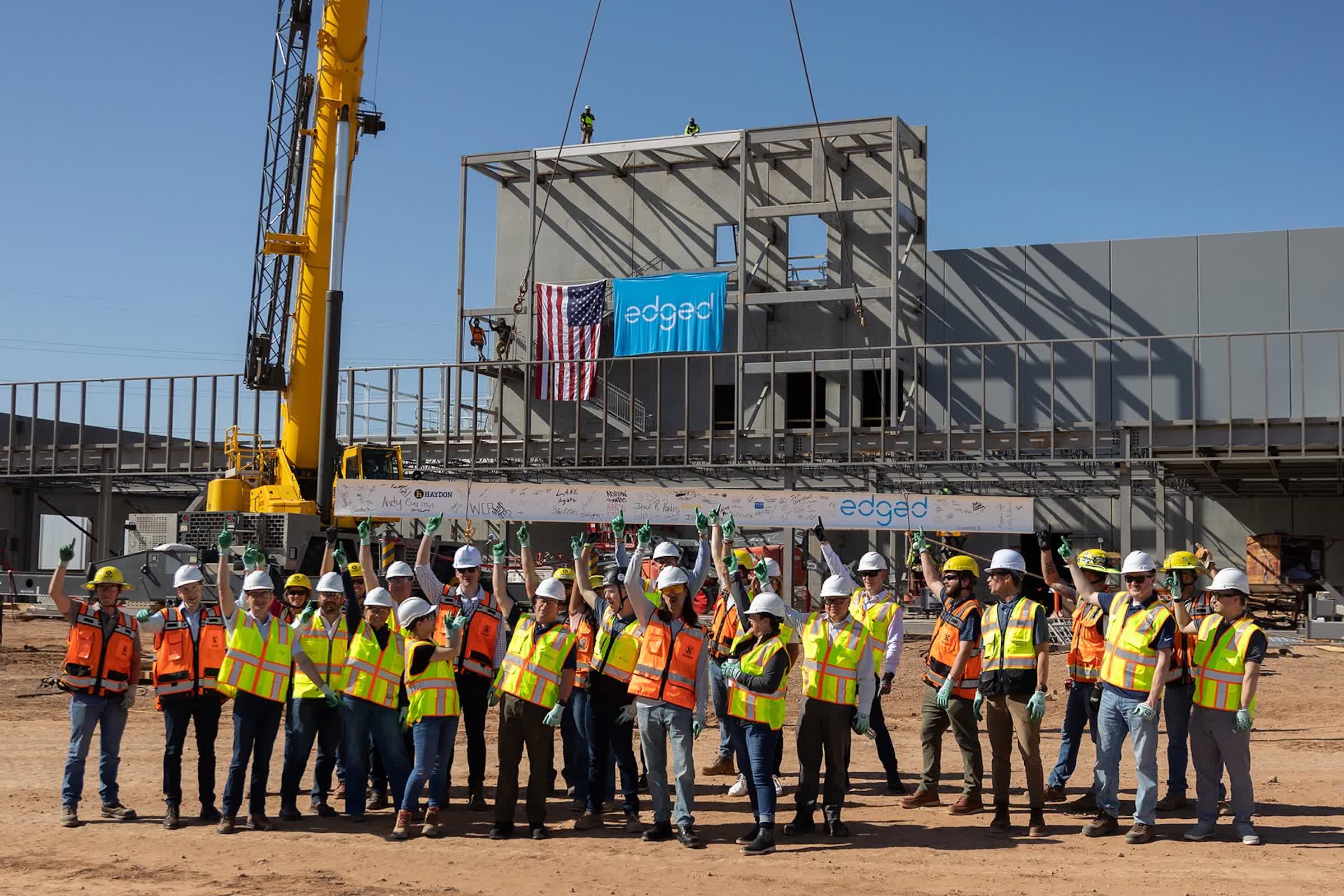
Individual data centers can cost more than $1 billion and employ thousands of workers at peak construction. Comparable real-estate projects often fall several hundred million dollars short of that scale. The demand for specialized labor, sophisticated cooling systems, and power distribution equipment has turned these builds into epic logistical operations.
Across the broader construction landscape, growth is nearly flat. FMI projects total spending on nonresidential buildings – including healthcare, education, and other public projects – at $844.4 billion this year, a nominal gain of 0.14% over 2025 that masks a real decline once inflation is factored in. For most property types, high interest rates, expensive materials, and a tight labor market have stalled new groundbreakings.
Labor remains the defining friction point. Michael Guckes, chief economist at ConstructConnect, warned that tight timelines for data-center delivery could collide with severe worker shortages. "Once you literally have every contractor within a state and every surrounding state [...] you just can't move physically any faster," he said.
Immigration constraints intensify the problem: a third of US construction firms reported being affected by immigration enforcement in the last six months, according to the Associated General Contractors of America, and nearly a quarter saw subcontractors lose workers. The group is lobbying for a new visa program to bolster the workforce.
Tariffs have added another layer of cost pressure. Forty percent of construction firms said they raised bid prices in response to existing or proposed tariffs on metals and lumber, and executives at Skanska USA Building noted steep price hikes for aluminum, steel, copper, and imported wood. Those are core components of data-center frames and mechanical systems, meaning the ripple hits hardest in the very projects still surging ahead.
Yet even with these headwinds, the digital economy's demands appear unstoppable. As AI models expand and companies race to secure computational capacity, builders are following the data. For now, the cranes over America's biggest server farms are still moving – powered by one sector the slowdown has yet to touch.
Image credit: The Wall Street Journal
Data centers are now the fastest-growing part of US construction


