Data centers are turning to $200,000 robot dogs to guard the facilities

Skye Jacobs

Posts: 2,030   +59
Staff
The big picture: Barely visible behind the steel fencing and heat exhaust of modern AI data centers, a new kind of security worker is taking shape – one made of sensors, servos, and silicon. As the demand for power-hungry artificial intelligence drives a rush to build massive computing sites, robotics firms are finding their next big market among the servers themselves.
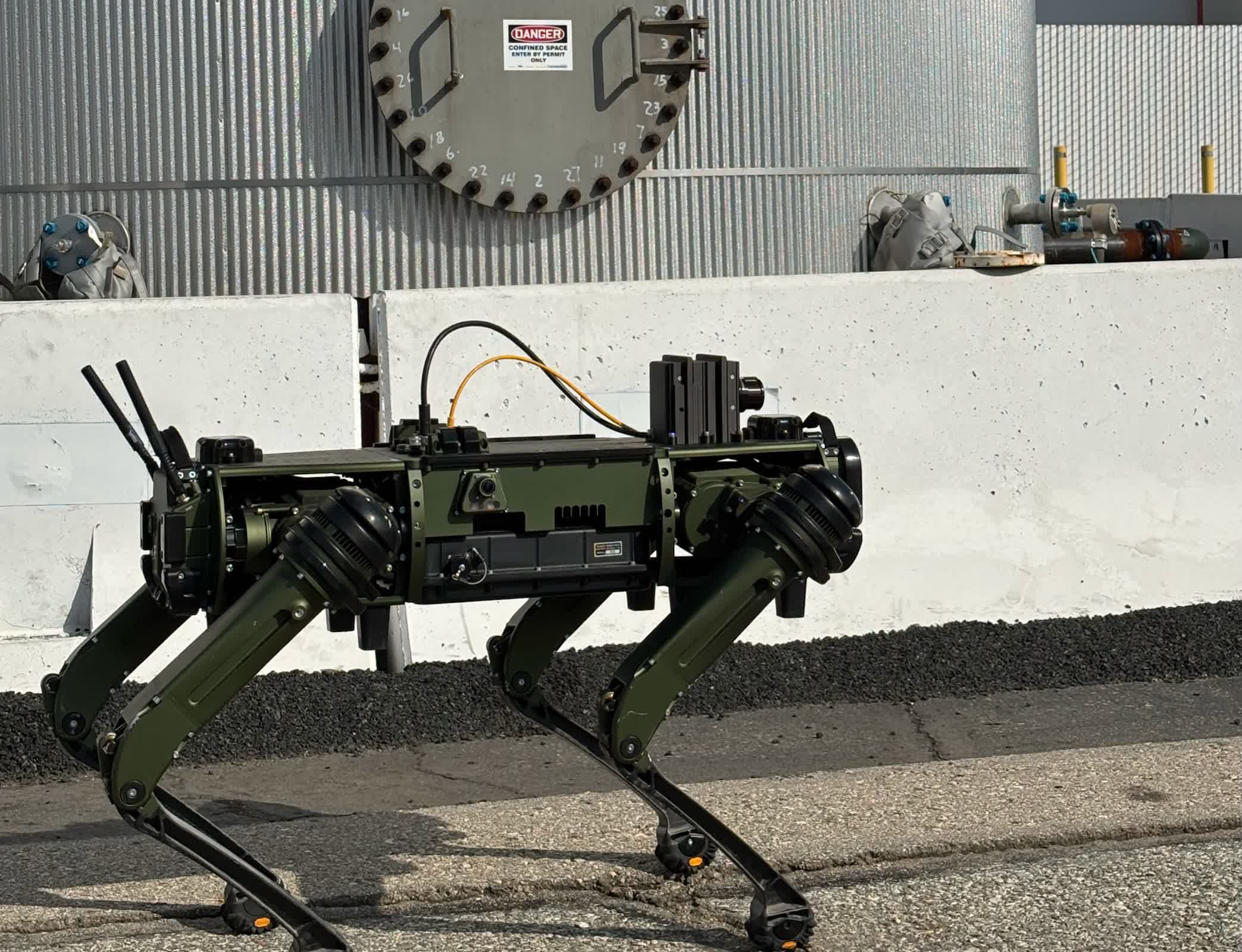
In the past year, interest in four-legged robots capable of autonomous patrols has surged, according to executives at Boston Dynamics and Ghost Robotics, two of the leading developers in the field. Data center operators, facing growing pressure to maintain 24-hour uptime and security across facilities spanning dozens of acres, see robotic quadrupeds as a practical response to the scale and cost of this new infrastructure boom.

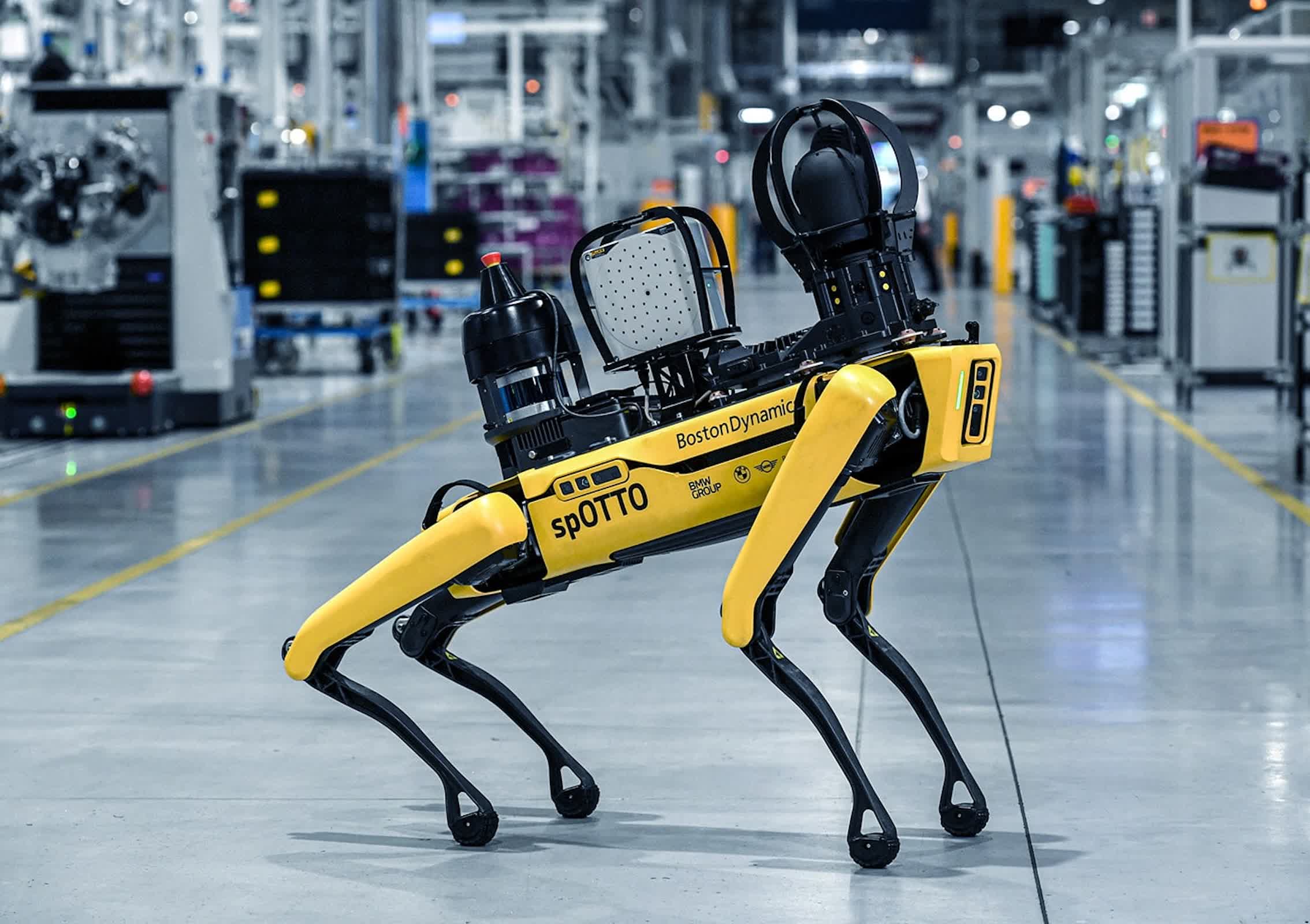
Boston Dynamics, better known for its mechanical dog, Spot, reports that inquiries from data center clients have jumped sharply. "We've seen a huge, huge uptick in interest from data centers in the last year, I'd say, which is probably not surprising given the investment in that space," Merry Frayne, the company's senior director of product management, tells Business Insider.

Spot is a compact, four-legged robot roughly the size of a medium dog, designed to handle tasks that would normally require multiple human inspections. It can navigate uneven terrain, climb stairs, and operate in heat, cold, or dust without fatigue.

Outfitted with a range of sensors, it can detect temperature fluctuations, leaks, puddles, and even unusual noises that might signal problems in server halls or mechanical rooms. Each robot can be equipped differently depending on mission requirements: security patrols, construction monitoring, or interior inspections.

Pricing ranges from $175,000 to $300,000, depending on configuration, with most customers recovering the cost within 18 months, according to Frayne.
Ghost Robotics' Vision 60 is another four-legged robot being deployed at data centers, mainly for external perimeter security. It streams video back to security staff, acting as a mobile, maneuverable camera platform that never sleeps.

Michael Subhan, chief growth officer at Ghost Robotics, said the Vision 60 has been deployed in a "handful" of data centers, mainly for external perimeter security. The Vision 60 has a one-time MSRP starting at $165,000, depending on the configuration.

For operators managing multimillion-dollar server farms, the economics are compelling: a single human guard can cost around $150,000 per year, factoring in benefits and shifts. Robots, by contrast, draw power rather than paychecks.

Subhan said the aim isn't to replace human workers outright but to extend their reach. "We sort of augment the guard," he explained. "We're not there to replace the human guard."
Robotic patrols also address a practical limitation of fixed security infrastructure. Cameras and sensors can't cover every corridor or rooftop, particularly across campuses that can stretch for tens of acres. Spot, for instance, can travel miles on a single charge while automatically performing route-based inspections. In harsh climates – from desert heat to subzero winters – that endurance matters.

One company already putting these robots to work is Novva Data Centers, based in Utah. Its 1.5-million-square-foot flagship site in West Jordan uses a team of Spots to collect environmental data, check equipment, and flag anomalies to onsite staff. Using thermal imaging, the robots can alert technicians to overheating power units or cooling system failures before an outage occurs.

Both Boston Dynamics and Ghost Robotics describe data centers as a natural fit for their evolving products. The growing density of AI clusters, combined with the complexity of the cooling and electrical systems that sustain them, requires a new level of continuous observation. With approximately 5,000 data centers already operating in the United States and up to a thousand more under construction, the potential market for robotic inspection and security is substantial.

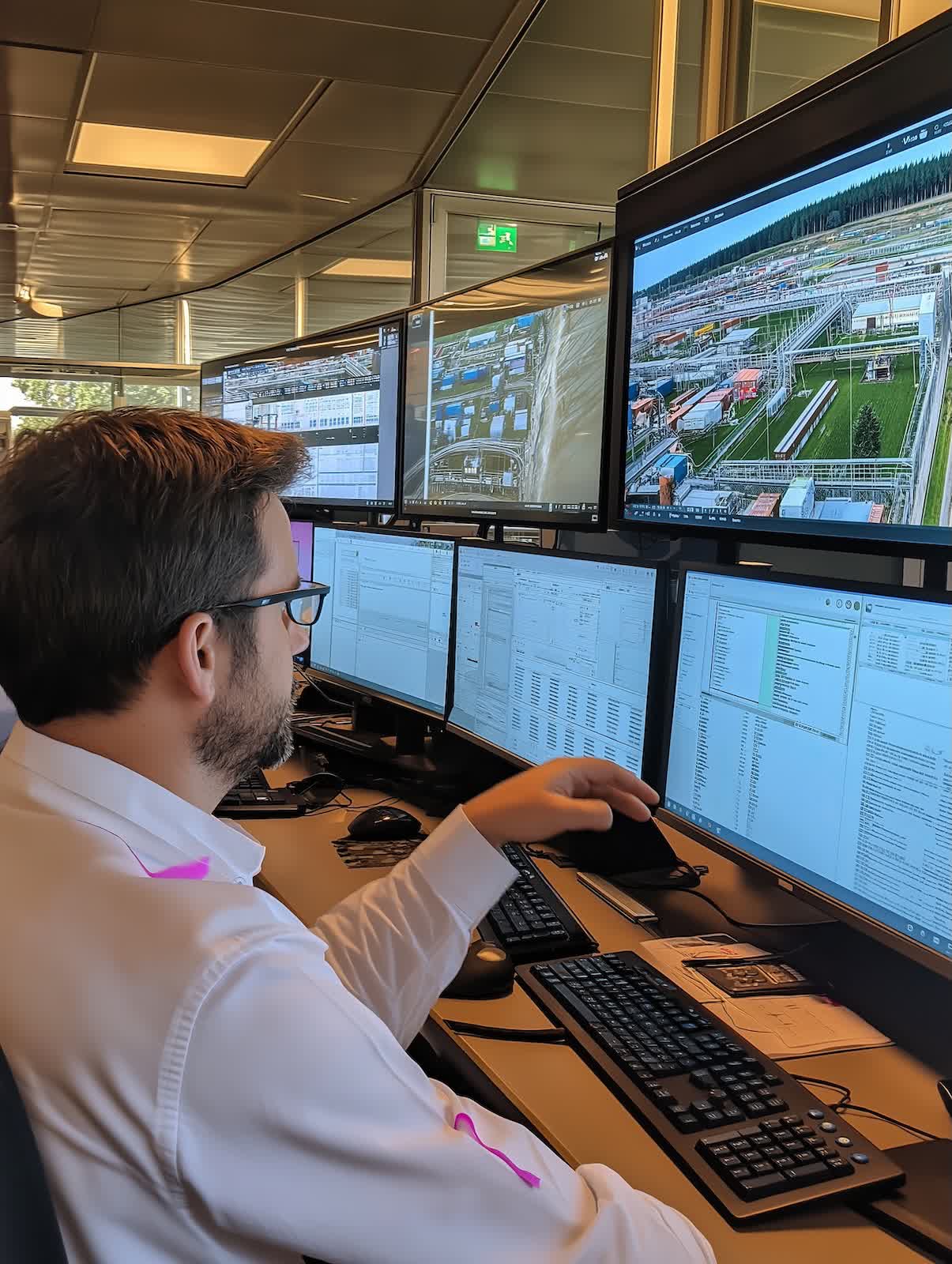
Despite their capabilities, neither company claims that human labor will disappear from the equation. Operators still monitor live video streams and make the final calls on any action the robot records. But as AI computing facilities multiply, these electromechanical dogs are becoming a familiar presence, ensuring servers stay cool, lights stay on, and data keeps flowing.

Permalink to story:

 
Using AI as a defensive mechanism with a capability to harm should be illegal outside of military use (where there is no way it could be stopped through legislation unfortunately). It's way too unreliable not to mention being ethically very dubious.
 
So much for those new jobs for the locals.
You missed this in the article:

"Subhan said the aim isn't to replace human workers outright but to extend their reach. "We sort of augment the guard," he explained. "We're not there to replace the human guard."

These robots can't stop, apprehend, or resist an intruder -- they simply monitor and pass the information onto actual security guards. In essence, they're just mobile Ring doorcams with paws.

BTW: China is building two million of these for military use -- armed with automatic weapons, mortars, and flamethrowers.
 
Last edited:
No new jobs, but the AI bros said that AI was supposed to create jobs.

Also interesting how they're saying it won't replace human guards, except it is, they may as well equip the bots with tasers and guns.
 
The article talks about employing these bots, but gives no other justification besides cost savings. I have to wonder whether there are scenarios where these bots would be outperformed by humans.

I also have to wonder just how many physical security breaches occur at data centers. I get that the equipment is high-value, but it seems like any kind of theft from a data center like this would be a challenge for just about anyone.
No new jobs, but the AI bros said that AI was supposed to create jobs.

Also interesting how they're saying it won't replace human guards, except it is, they may as well equip the bots with tasers and guns.
Maybe they will contract with that You Tube hack who strung together several high-power blu laser arrays and arm the bots with those. :laughing:
 
You missed this in the article:

"Subhan said the aim isn't to replace human workers outright but to extend their reach. "We sort of augment the guard," he explained. "We're not there to replace the human guard."

These robots can't stop, apprehend, or resist an intruder -- they simply monitor and pass the information onto actual security guards. In essence, they're just mobile Ring doorcams with paws.

BTW: China is building two million of these for military use -- armed with automatic weapons, mortars, and flamethrowers.
No I didn't miss it.

These data centers don't employ a lot of people. And the good jobs are probably going to non-locals as many are being put in fairly rural places. So security jobs would be the local impact and robots just stole 2/3rds of them because they are cheaper.
 
The article talks about employing these bots, but gives no other justification besides cost savings. I have to wonder whether there are scenarios where these bots would be outperformed by humans.
You obviously didn't even read the article, because there's a list of reasons they're using these bots and it's not just cost savings.

"Outfitted with a range of sensors, it can detect temperature fluctuations, leaks, puddles, and even unusual noises that might signal problems in server halls or mechanical rooms. "

"It can navigate uneven terrain, climb stairs, and operate in heat, cold, or dust without fatigue."

"Spot, for instance, can travel miles on a single charge while automatically performing route-based inspections. In harsh climates – from desert heat to subzero winters – that endurance matters."

"Using thermal imaging, the robots can alert technicians to overheating power units or cooling system failures before an outage occurs."

Many of those things cannot be done by humans.
 
These data centers don't employ a lot of people.
Oh, not this canard again. Most datacenters employ 100+; the largest datacenters from Amazon and Google employ 800 or even 1,000 permanent full-time direct employees. Furthermore, despite the thrust of this article, these robots are being used not just to help monitor datacenters, but facilities of all types, from warehouses to office parks to heavy industrial plants.

... And the good jobs are probably going to non-locals as many are being put in fairly rural places.
So security jobs would be the local impact....
I thought you were familiar with basic economics? When a new facility requires hundreds of non-locals to move to a depressed rural area, building and buying new homes, that's even more of a benefit to the local economy than had locals themselves been employed.
 
You missed this in the article:

"Subhan said the aim isn't to replace human workers outright but to extend their reach. "We sort of augment the guard," he explained. "We're not there to replace the human guard."

These robots can't stop, apprehend, or resist an intruder -- they simply monitor and pass the information onto actual security guards. In essence, they're just mobile Ring doorcams with paws.

BTW: China is building two million of these for military use -- armed with automatic weapons, mortars, and flamethrowers.
That's what they always say, in the beginning. And then it's a matter of cost cutting, fiscal responsibility and all that other nonsense they peddle to outsource their own responsibility on to circumstances.
 
That's what they always say, in the beginning.
They said that in the 18th century, when automated looms began to replace hand weavers. And yet today the garment industry employs far more people than then. The master weavers went from spending a full week to make one single swathe of cloth to designing and producing several a day. As the price of garments dropped, the average person went from purchasing a new outfit every year to buying several a month, vastly increasing overall demand. In 2060, I expect more security guards to be employed than there are today -- a single guard will be controlling dozens or hundreds of these semi-autonomous robots, and using that expanded reach to offer cheap patrolled monitoring to millions of locations that can't afford a full-time security staff today.

And then it's a matter of cost cutting, fiscal responsibility and all that other nonsense
If you consider the relentless drive to maximize productivity and efficiency "nonsensical", I suggest you move to one of the consumer paradises in Cuba, North Korea, or -- where I myself grew up -- a Soviet Republic.
 
Using *any* system to guard property -- AI or not -- is already illegal in the US and the EU, if the system has the potential to cause harm.

That's because the state needs to be able to assign blame to a human individual. An autonomous system cannot be blamed if it correctly follows its programming. It could create huge liability issues and legal complexity.
 
If you consider the relentless drive to maximize productivity and efficiency "nonsensical", I suggest you move to one of the consumer paradises in Cuba, North Korea, or -- where I myself grew up -- a Soviet Republic.

True. The Soviet Union collapsed because the leaders wanted a better life and better stuff. They were trapped in a static society that was producing 1950's hardware. They wanted BMWs, trips to the French Riviera, big homes and more.
 
I thought you were familiar with basic economics? When a new facility requires hundreds of non-locals to move to a depressed rural area, building and buying new homes, that's even more of a benefit to the local economy than had locals themselves been employed.
Except that isn't how it works when a datacenter is built in a rural area, it ruins existing home values because no one wants to live next to a loud datacenter producing subsonic noise, also polluting the water, even the air if they're running turbine generators. It doesn't benefit the local economy to anyone but the datacenter owners and a handful of people working in the datacenter.
New homes being built are held as a investment piece for massive investment companies as the average rural living individuals can't afford a million dollar mcmasnsion, the housing crisis is a whole epidemic, datacenters wasting land in rural areas is only exacerbating the issue.

They said that in the 18th century, when automated looms began to replace hand weavers. And yet today the garment industry employs far more people than then. The master weavers went from spending a full week to make one single swathe of cloth to designing and producing several a day. As the price of garments dropped, the average person went from purchasing a new outfit every year to buying several a month, vastly increasing overall demand. In 2060, I expect more security guards to be employed than there are today -- a single guard will be controlling dozens or hundreds of these semi-autonomous robots, and using that expanded reach to offer cheap patrolled monitoring to millions of locations that can't afford a full-time security staff today.
Ah yes, the usual defense with the industrial revolution comparisons being made, which doesn't include many people put out of work, but the masses of average people doesn't matter because progress or something, who cares when the wall street number has to go up in the name of profits.
The clothing analogy is an especially funny one as garment quality has only gone down as corporate greed has gotten greedier. Clothes made on purpose to wear out or fade faster so people are forced to buy more clothes.
If you consider the relentless drive to maximize productivity and efficiency "nonsensical", I suggest you move to one of the consumer paradises in Cuba, North Korea, or -- where I myself grew up -- a Soviet Republic.
It doesn't seem very productive or efficient to replace everyone with robots, when no jobs are left there won't be any point in Palantir surveilling everyone 24/7 while selling their data to the highest paying brokers. Or there won't be a need for datacenters to feed the masses fake slop through LLM assistants when the masses won't be able to buy the latest AI enabled gadgets.
We're quickly headed towards a techno-fuedal corporatocracy, much like any futuristic dystopian novel or movie, which all of the corpo CEO's and powers that be are using as a instruction manual instead of what not to do, things will be worse than a soviet communist republic except for the wealthy powerful corporation owners in power.
 
Except that isn't how it works when a datacenter is built in a rural area, it ruins existing home values because no one wants to live next to a loud datacenter producing subsonic noise, also polluting the water, even the air
Except that here in the real world, data centers do none of these, except for perhaps some fan noise from the cooling systems .. and even that is far less than that from windmill farms that are being so heavily advocated currently.

It doesn't benefit the local economy to anyone but the datacenter owners
Again, your facts couldn't be more wrong. Data centers not only mean significant economic growth, but an astronomical increase in the local tax base. Here's just one example, a public school district that swelled its assets from $80M to $1 billion, thanks to the contributions of a Google datacenter. That's "billion with a "B", by the way.


The clothing analogy is an especially funny one as garment quality has only gone down
Would you prefer to return to the days when a single outfit of clothing costs the average working man six months of wages, rather than 6 hours or less?

It doesn't seem very productive or efficient to replace everyone with robots, when no jobs are left there... Or there won't be a need for datacenters when the masses won't be able to buy the latest AI enabled gadgets.
Aiy yai yai ... why can people not learn simple economics? Increased productivity means increased living standards, period. But if you're truly concerned about the dystopian outcome of technological progress, why not turn in your computer and cell phone, and join an Amish community? They'll be happy to teach you how to hoe crops and build barns.
 
Looks like the locals will need to be more effective at greater ranges...as in more practice using mortars.
 
You obviously didn't even read the article, because there's a list of reasons they're using these bots and it's not just cost savings.

"Outfitted with a range of sensors, it can detect temperature fluctuations, leaks, puddles, and even unusual noises that might signal problems in server halls or mechanical rooms. "

"It can navigate uneven terrain, climb stairs, and operate in heat, cold, or dust without fatigue."

"Spot, for instance, can travel miles on a single charge while automatically performing route-based inspections. In harsh climates – from desert heat to subzero winters – that endurance matters."

"Using thermal imaging, the robots can alert technicians to overheating power units or cooling system failures before an outage occurs."

Many of those things cannot be done by humans.
Sure they can, with the right sensors, and I would not be surprised if the cost of the sensors, every one needed to do the same job as the bots, is summarily less than the cost of a bot.

The range of temperatures is also handled by the right outerwear.
 
Oh, not this canard again. Most datacenters employ 100+; the largest datacenters from Amazon and Google employ 800 or even 1,000 permanent full-time direct employees. Furthermore, despite the thrust of this article, these robots are being used not just to help monitor datacenters, but facilities of all types, from warehouses to office parks to heavy industrial plants.


I thought you were familiar with basic economics? When a new facility requires hundreds of non-locals to move to a depressed rural area, building and buying new homes, that's even more of a benefit to the local economy than had locals themselves been employed.
Relative to the cost of the facility (compared to other types) the number of jobs is small. Robots are making it smaller.

Politicians giving the datacenters sweetheart deals are selling it on new jobs (as always) which is a bad trade in the best of situations. I've personally done research on the local impact vs government tax credits, etc. back when Amazon and others were moving their HQs and states were fighting over them a few years ago. The companies get much more than their impact benefits locals.

Yes there are indirect impacts on the economy, but as I just explained they are always oversold - both figuratively by execs and politicians statements and literally in the economic impact. This occurs elsewhere too such as cities bringing the Superbowl or Olympics or FIFA never get quite as much as they think they are going to get. Economics is all tradeoffs.
 
Relative to the cost of the facility (compared to other types) the number of jobs is small.
What an absurd metric ... it's equivalent to claiming a $500K/year job for Apple or Tesla is being paid worse than a $40K waitress job at Al's Diner, because Al's net worth is thousands of times less than those firms. There's only one yardstick that's relevant:

# of jobs with datacenter: 100-1000
# of jobs without datacenter: zero.

...Robots are making it smaller.
Robotic assistance will make security cheaper (and healthcare, and most everything else) vastly expanding not only the industries themselves, but access by those who otherwise can't afford these services.

I've personally done research on the local impact vs government tax credits, etc. back when Amazon and others were moving their HQs and states were fighting over them a few years ago. The companies get much more than their impact benefits locals.
You failed your research assignment. You made the same mistake AOC did when she (rather hilariously) believed a tax credit granted Amazon meant Amazon was being given a check by New York. In reality, those credits merely mean the firms pay less in taxes than they otherwise would ... but they still pay vastly more taxes than the zero figure the community gets in their absence.
 
What an absurd metric ... it's equivalent to claiming a $500K/year job for Apple or Tesla is being paid worse than a $40K waitress job at Al's Diner, because Al's net worth is thousands of times less than those firms. There's only one yardstick that's relevant:

# of jobs with datacenter: 100-1000
# of jobs without datacenter: zero.


Robotic assistance will make security cheaper (and healthcare, and most everything else) vastly expanding not only the industries themselves, but access by those who otherwise can't afford these services.


You failed your research assignment. You made the same mistake AOC did when she (rather hilariously) believed a tax credit granted Amazon meant Amazon was being given a check by New York. In reality, those credits merely mean the firms pay less in taxes than they otherwise would ... but they still pay vastly more taxes than the zero figure the community gets in their absence.
You don't understand the difference between a tax deduction and a credit. You should google it or ask your favorite AI. Without such basic understanding it's not worth explaining the rest.
 
You don't understand the difference between a tax deduction and a credit.
Nice try, but not only untrue, but the distinction in this case is irrelevant. Neither costs a government money when offered as an incentive to a business that would otherwise be sited elsewhere. Some taxes are better than no taxes. Unlike a deduction, a credit can in theory exceed a total tax bill -- but in practice these data-center credits are always capped or otherwise structured in a manner to prevent this.
 
Back