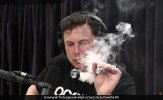
Sounding off: Elon Musk has once again sparked speculation about the future of electric vehicles, hinting at a potential flying car demonstration by year's end during an extended discussion on Joe Rogan's podcast. The Tesla CEO's comments, though characteristically vague, suggest that the long-delayed next-generation Roadster may feature technology unlike anything previously seen in the automotive industry.
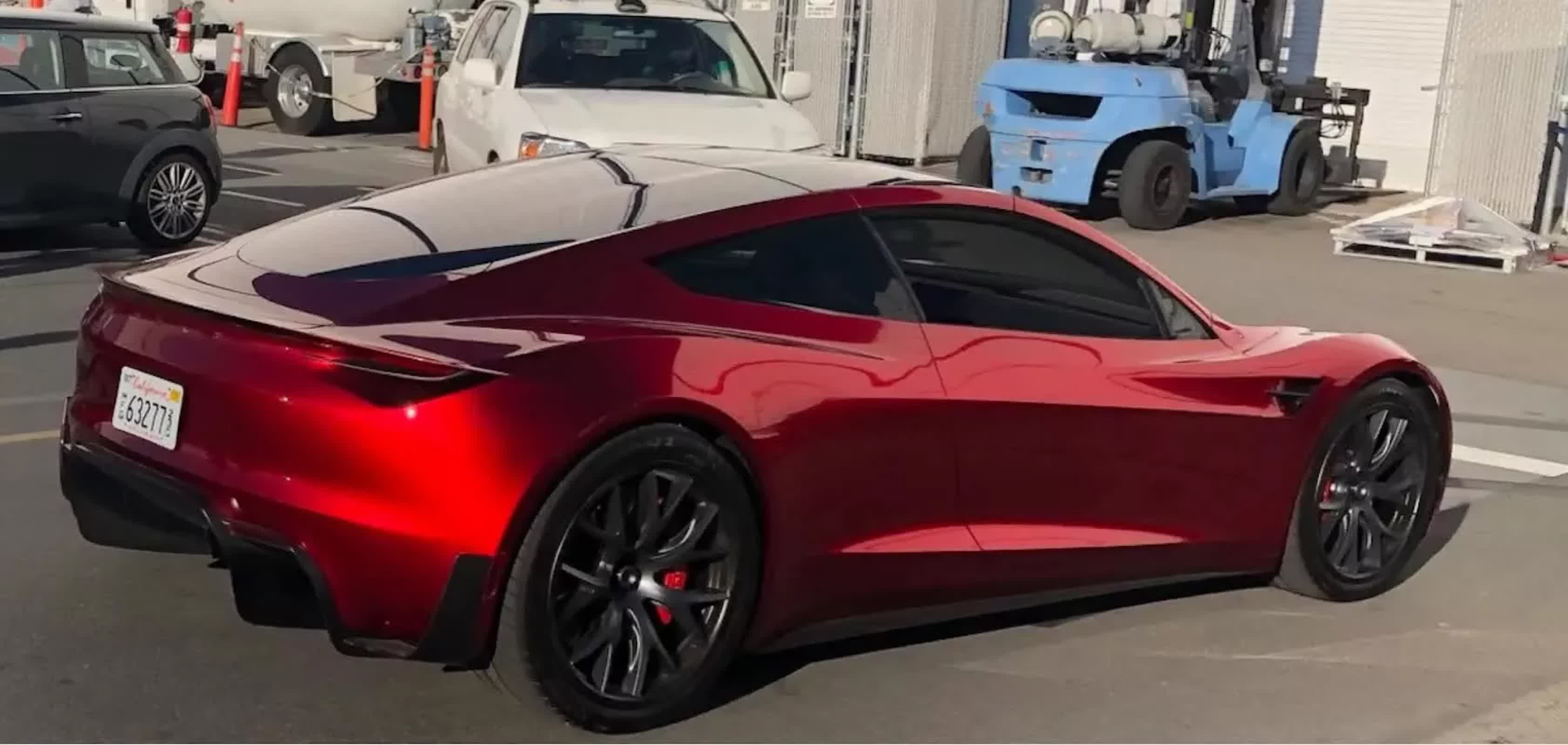
During Friday's podcast appearance, Musk was pressed by Rogan on the status of Tesla's long-promised Roadster, a model originally introduced in 2017 as the successor to Tesla's inaugural sports car, which ceased production in 2012.
Although the revamped Roadster was slated for release in 2020, production has yet to begin, with annual delays pushing the project further from its initial timeline.
In his conversation with Rogan, Musk alluded to an "unforgettable" product demonstration, repeatedly emphasizing the advanced – and unconventional – nature of the technology involved.
Musk avoided giving specifics about the new Roadster's features, only revealing, "We're getting close to... demonstrating the prototype. One thing I can guarantee is that this product demo will be unforgettable." He added, with evident amusement, that the experience would be unforgettable "whether it's good or bad."
Prompted for details, Musk cited comments from venture capitalist Peter Thiel, who once lamented that while the future was supposed to promise flying cars, none are available. Musk responded, "If Peter wants a flying car we should be able to buy one."
When Rogan asked whether the new Roadster would, in fact, be capable of flight, Musk deferred, stating that details would be withheld until the official demonstration, but insisted that the technology is "crazier than anything James Bond."
Musk's tendency to make bold promises has become familiar to industry observers. Past proposals, such as the Hyperloop rapid transit concept and the Las Vegas Loop, were initially described in ambitious terms – a 155-mile-per-hour underground transport system and automated pods ferrying up to 16 passengers – but their real-world implementations have been dramatically scaled back. The Vegas Loop currently operates with manually driven Teslas navigating tunnels at low speeds, a sharp departure from initial promises.
The Roadster project has followed a similar pattern. Since its 2017 reveal, Musk has referenced a potential "SpaceX package" for the vehicle, suggesting it might be equipped with cold-gas thrusters to enhance acceleration and possibly enable limited hovering.
It remains unclear whether Musk's latest remarks refer to this same technology or signal an even more audacious advance, such as vertical takeoff and landing (VTOL) functionality. Historically, VTOL vehicles – often described as flying cars – operate more like helicopters and don't necessarily conform to the conventional definition of an automobile.
Musk acknowledged the regulatory and technical barriers inherent to airborne vehicles. In the United States, most passenger-carrying aircraft require pilots to hold specialized licenses.
Fully autonomous flight, meanwhile, raises a host of logistical and safety challenges, notably in urban airspace management. These longstanding obstacles have prevented past "flying car" ventures from entering widespread commercial use.
Elon Musk says Tesla's next Roadster could hover or even fly